
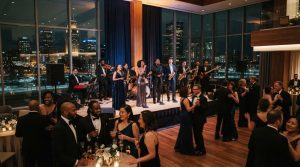
What if the most impressive event band isn’t the biggest one, but the one that fits the room, the guests, and the moment? Choosing high end event music MN means looking beyond grand claims. A polished live experience comes from the right ensemble size, musical range, and energy for your occasion, without making the performance feel out of place.
You want guests to feel the difference, whether they’re mingling at a corporate event, celebrating a wedding, or dancing at a private party. Music should support each part of the gathering and add presence without competing with it.
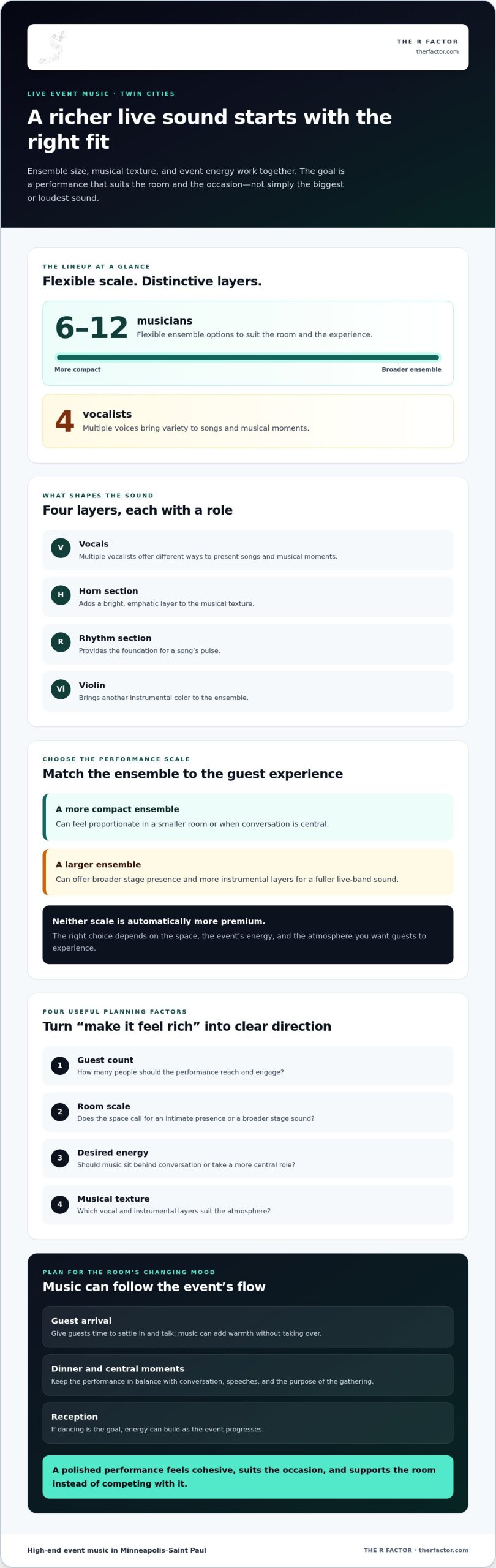
This guide explains what makes live event music feel elevated and how to choose a performance scale that suits your venue and guests. The R Factor’s flexible 6-to-12-musician lineup includes four vocalists, horns, a rhythm section, and violin. The band brings this depth and character to weddings, corporate events, and private celebrations across Minneapolis-Saint Paul.
Key Takeaways
- High end event music MN is about a precise fit and confident execution, not simply a bigger or louder performance.
- Compare live music by practical qualities such as musical depth, ensemble flexibility, event fit, and coordination.
- Choose an entertainment scale that suits your venue, guest experience, and the atmosphere you want to create.
- Plan music around the event’s different moments, from guest arrival and dinner to the reception.
- The R Factor’s flexible ensemble options bring a polished live-band experience to Twin Cities weddings, corporate events, and private celebrations.
What makes high-end event music in Minnesota feel truly elevated?
Elevated event music combines musical quality, a clear fit for the occasion, and confident execution. Skilled performers bring musical depth; thoughtful choices suit the event’s purpose; and a well-planned performance lets hosts and guests focus on the gathering instead of wondering how the entertainment fits the program.
High-end doesn’t automatically mean louder, larger, or more elaborate. A big sound can overwhelm a small gathering, while a restrained performance may be right for a formal dinner. The word “luxury” can describe an economic category, as in the definition of a luxury good, but the label alone doesn’t tell you how music will serve your event. Look for specifics: musical range, suitable performance scale, clear coordination, and the ability to support the room’s changing mood.
Premium event music is a live performance chosen and delivered to serve the occasion, the guests, and the atmosphere of the room. Focus on the experience rather than status cues. Consider what guests should be doing and feeling at each point. If conversation is central, music should add warmth without taking over. If dancing is the goal, energy can build as the event progresses.
- Musical quality: The performance sounds cohesive and engaging, not simply loud.
- Event fit: The repertoire and energy suit the gathering’s purpose.
- Confident execution: The music supports the event’s flow rather than disrupting it.
- Appropriate scale: The performance feels proportionate to the space and guest experience.
How premium music serves the occasion
A wedding reception often balances meaningful moments with a lively celebration. A corporate gala may call for polished music that supports conversation before making room for dancing. A private celebration can be more personal, shaped around the host’s preferred atmosphere. In each case, plan music to complement the occasion, not compete with speeches, conversation, or other central moments.
The atmosphere can shift over the course of an event. Guests may first want time to settle in and talk, then respond to more energetic music later. Treating these as distinct moments helps you describe the experience you want instead of relying on a vague request like “make it upscale.”
Why local event context matters in the Twin Cities
For an event in Minneapolis or St. Paul, start with the venue layout and how guests will use the space. Consider the performance area, the distance between musicians and guests, and whether conversation or dancing is the priority. Indoor and outdoor settings can shape how people move through an event and how its segments connect, so map the music to the space and schedule.
Think through transitions, too. An outdoor gathering may move inside, or guests may shift from a reception area to dinner. A suitable ensemble and clear timing help the entertainment feel intentional through those changes. That practical fit is what makes high end event music MN feel polished without being out of place.
Which musical details give Minnesota events a richer live sound?
A live band’s sound comes from more than volume. Vocal variety, instrumental texture, and ensemble size all shape what guests hear and how the music sits in the room. Together, these choices can create a sound that feels full and expressive, or one that is more restrained and intimate.
Instrumentation shapes the character of live event music by adding contrast, depth, and a distinctive feel to each song. The R Factor’s lineup shows how these elements can work together: it includes four vocalists, a horn section, a rhythm section, and a violin. The result is a range of musical voices and textures, not a requirement to make every event sound grand or loud.
What vocals and instrumentation contribute
Multiple vocalists give a band options for presenting different songs and musical moments with variety. A horn section can add a bright, emphatic layer, while a rhythm section provides the foundation for a song’s pulse. A violin brings another instrumental color. These distinct roles help explain the factors influencing musical performance quality, including tone, rhythmic accuracy, and interpretation.
How ensemble size affects the experience
A more compact ensemble can feel proportionate in a smaller room or when conversation is central. A larger group can offer a broader stage presence and more instrumental layers, which may suit a room or event designed for a fuller live-band sound. Neither option is automatically more premium. The right scale depends on the guest experience you want, the space, and the event’s energy.
The R Factor offers flexible options ranging from 6 to 12 musicians. This gives hosts a practical way to consider scale without treating headcount as a luxury scorecard. Think about:
- Guest count: How many people should the performance reach and engage?
- Room scale: Does the space call for an intimate presence or a broader stage sound?
- Desired energy: Should the music sit behind conversation or take a more central role?
- Musical texture: Which vocal and instrumental layers suit the atmosphere?
These questions turn “make it feel rich” into useful direction. For high end event music MN, focus on the sound you want guests to experience rather than choosing the largest possible lineup. A thoughtful match between musicians, room, and occasion will feel more natural than extra scale for its own sake.
For a concrete example of how lineup and musical depth come together, explore The R Factor’s Twin Cities live band as you shape the sound for your event.
How can you tell premium live music from a luxury label?
Words like “exclusive,” “luxury,” and “premium” describe an image. They don’t show whether the music will work for your event. A more useful assessment looks at details you can evaluate: how the entertainment fits the occasion, what musical depth the lineup brings, whether its scale suits the room, and how the performance fits the schedule.
Don’t use a high fee, a large band, or a particular genre as a shortcut for quality. A substantial ensemble may suit a spacious celebration but feel out of proportion in a smaller setting. A familiar style may work for one guest mix and miss the mark for another. The better question is whether the live music supports your priorities and gives guests the experience you want.
Useful signals beyond a luxury label
Look for a clear connection between the event’s goals and the entertainment choices. The band’s lineup should make sense for the atmosphere, while ensemble flexibility can help match the performance to different event scales. The R Factor offers options from 6 to 12 musicians, giving hosts a concrete range to consider instead of a vague promise of “grandeur.”
Use this simple comparison framework to assess what matters:
- Event fit: Does the planned music support the occasion’s purpose and atmosphere?
- Musical depth: Does the lineup offer a sound and range suited to the experience you want?
- Ensemble flexibility: Can the performance scale suit the room and guest experience?
- Coordination: Is the music planned in relation to the schedule and the event’s key moments?
These criteria shift attention from promotional language to practical details. They also make comparisons fairer: assess each option against the same event needs, not status signals or assumptions about what “premium” should look like.
Questions that clarify the experience you want
Before comparing options, describe the experience in plain language. Identify when music should lead, when it should recede, and what kind of energy feels right for your guests. These answers help you assess whether an entertainment plan fits the event without relying on impressive-sounding labels.
- Which moments should feel most memorable? Consider entrances, key announcements, or the point when guests are invited to dance.
- What will guests be doing? Conversation, dining, and dancing each call for a different musical role.
- Who will be in the room? Think about the mix of ages, interests, and familiarity among guests.
- How should the atmosphere develop? Decide whether you want a steady mood or a deliberate shift in energy.
For hosts considering high end event music MN, this approach replaces guesswork with a clear brief. The best choice is the one whose musical character, scale, and planning align with the event, not the one with the most polished label.
How should you plan high-end event music for a Minnesota celebration?
A smooth music plan starts with the event, not a song list. Define the occasion, describe the atmosphere you want, choose a performance scale that suits the room, then coordinate music with the schedule. This sequence gives the entertainment team useful direction and helps each musical choice serve a clear purpose.
Planning principle: Choose music for the moment it needs to serve, then shape the performance around that purpose. Share the event’s priorities early, including its format, guest experience, key moments, and planned transitions. Clear context turns broad preferences such as “elegant” or “high energy” into practical guidance.
Match music to the event’s key moments
Break the celebration into moments instead of describing the whole event with one mood. Guest arrival may call for a welcoming feel; conversation and dinner benefit from music that leaves room for guests to connect. Formal moments need attention and space, while a reception or later celebration can invite more energy. For wedding-specific decisions, use this Minneapolis wedding music planning guide to think through the musical flow.
Corporate events have their own rhythm. A product launch may need music to support a reveal or reinforce the event’s atmosphere without competing with the message. The event entertainment for Minneapolis product launches guide can help focus those choices. For broader corporate-specific planning, consult this live music for corporate events guide.
Build a simple run-of-show that identifies when music should lead, stay in the background, or pause for a formal moment. Note transitions, such as moving from drinks to dinner or from a program into dancing. You don’t need to prescribe every musical detail. A clear outline of the event’s priorities gives the entertainment team a useful basis for planning.
Align the ensemble with the room and guest experience
Guest count and room scale help determine how prominent the performance should feel. An intimate gathering may call for a different configuration than a large celebration where music is meant to anchor the room. The aim isn’t simply to fill the space. It’s to create a comfortable, coherent experience for the people in it.
Describe your preferences with concrete contrasts: relaxed or energetic, understated or celebratory, familiar or varied. Share the moments that matter most and the role you want music to play in each. The R Factor’s flexible ensemble options, from 6 to 12 musicians, give hosts a practical range to consider for weddings, corporate events, and private celebrations in Minneapolis-Saint Paul.
For high end event music MN, thoughtful planning connects atmosphere, timing, and ensemble scale. If you’re shaping a live-band plan for your Minnesota celebration, explore event music with The R Factor.
How The R Factor brings high-end event music to the Twin Cities
A polished live-band experience depends on more than a strong performance. The ensemble should suit the event’s scale, purpose, and the atmosphere the host wants guests to remember. The R Factor brings these considerations together with flexible performance options for weddings, corporate events, and private celebrations in Minneapolis-Saint Paul.
A flexible live-band format for different occasions
The R Factor’s ensemble options range from 6 to 12 musicians. This flexibility gives hosts a choice of scale instead of a single fixed lineup for every room and event. An intimate gathering and a large celebration can call for different stage presence and musical texture. The right configuration is the one that supports the event, not simply the one with the highest headcount.
The lineup includes four vocalists, a horn section, a rhythm section, and a violin. Each brings a distinct musical element, creating a varied foundation for live performance. Vocalists provide multiple voices; horns add instrumental character; the rhythm section anchors the music; and violin contributes another texture. This range suits different occasions, from a wedding celebration to a corporate function or private party.
For hosts, the practical benefit is choice. Consider the room, guest count, and role music should play. A performance intended to create a lively focal point may call for a different scale than one supporting a relaxed gathering. Sharing those priorities gives the band useful context for discussing an appropriate ensemble size.
Turn your event vision into a clear next step
Before making an inquiry, gather a few essentials: the occasion, event date and location, the atmosphere you’re aiming for, and the performance scale you have in mind. Include a rough schedule and note moments when music should take a lead role or remain more understated. These details create a clear starting point for a focused conversation about live entertainment.
High end event music MN should feel considered from the first planning decisions through the performance itself. The R Factor’s 6-to-12-musician options give Twin Cities hosts a practical way to align a live band with different event scales, while its vocal and instrumental lineup brings musical depth to the experience.
Minneapolis-Saint Paul hosts planning a wedding, corporate event, or private celebration can explore The R Factor and discuss their event. Bring your occasion, preferred atmosphere, and preferred scale to the conversation, then take the next step with a clear picture of what you want the music to contribute.
Shape the soundtrack your guests will remember
Turn your preferences into a clear event brief. Note the moments that matter, the mood you want to create, and how you’d like guests to experience the music. This gives your planning conversation a useful starting point and keeps the focus on what will make the event feel like yours.
For hosts considering high end event music MN, thoughtful choices matter more than grand labels. Let the occasion guide your decisions, and choose entertainment that feels natural in the room and meaningful to your guests.
Ready to discuss your plans? Discuss your Minnesota event with The R Factor and take the next step toward a soundtrack shaped around your celebration.
Frequently Asked Questions
What makes event music high-end?
High-end event music combines strong musicianship with choices that suit the occasion and thoughtful execution. A polished corporate reception, for example, may call for music that supports conversation, while a wedding celebration may build toward dancing later in the evening. Price, band size, and genre don’t prove quality on their own. For high end event music MN, judge how well the performance supports the occasion and the experience you want guests to have.
How many musicians are best for a high-end event?
The best ensemble size depends on the room, guest experience, and atmosphere you want, not a universal ideal. A smaller gathering may feel balanced with a more compact setup, while a larger celebration may benefit from a fuller stage presence. The R Factor offers options from 6 to 12 musicians. Consider where guests will gather and whether music should be a focal point or a supporting part of the event.
Can live music work for both a corporate event and a wedding?
Yes. Live music can suit both, with different choices shaping the experience. At a corporate event, it might support networking or mark a program transition; at a wedding, it can accompany a reception and help set the tone for celebration. The R Factor performs at weddings and corporate events in the Minneapolis-Saint Paul area. Share the event’s purpose and schedule so the musical plan reflects what guests will be doing.
What does a horn section add to an event band?
A horn section adds another layer of instrumental sound, which can give arrangements more color and presence. Its contribution depends on the song, the ensemble, and the arrangement; it doesn’t guarantee one particular mood or effect. The R Factor’s lineup includes a horn section alongside vocalists, a rhythm section, and violin. Consider how that instrumental texture fits the character of your event.
Is live music suitable for a private party in Minneapolis?
Live music can work well for a private celebration when the ensemble’s scale and energy suit the gathering. For a birthday party, hosts might want music to complement conversation early and take a more prominent role as the celebration develops. The R Factor performs at private parties in the Minneapolis-Saint Paul area. Think about your guest mix, space, and preferred atmosphere as you plan the performance.
How do I plan music for different parts of an event?
Divide the schedule into meaningful moments, then decide what music should do in each one. Guest arrival may need a welcoming tone; conversation calls for room to talk; formal moments need focus; and celebration may invite greater energy. Put these intentions beside the event timeline and note important transitions, such as moving from a program into dinner. This gives the entertainment team practical context without requiring you to choose every song.
Does high-end event music always mean a large band?
No. A large ensemble is one option, not a measure of quality. The right choice depends on the room, the musical character that fits the occasion, and how guests will experience the performance. A compact group can suit an intimate gathering, while a larger lineup may be appropriate when the event calls for more stage presence. Prioritize fit and musicianship over headcount, and let the event’s needs guide the scale.
Recent Comments