
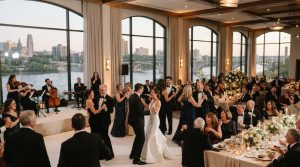
Elegant music should shape an event, not compete with it. For elegant party music in St Paul, match the sound to the occasion, venue, and guests, then plan how it will shift from welcoming arrivals to key moments and an energetic celebration. A thoughtful music plan gives the event a polished feel and makes each transition feel natural.
It’s easy to start with a favorite song or genre. A better starting point is the experience you want guests to have, from the first conversation to the final dance. This guide explains how to choose music that feels refined without becoming stiff, and how to plan wedding music around the ceremony, dinner, and dancing.
You’ll also learn how the venue, schedule, guest mix, and desired atmosphere shape the right musical setup for a wedding or special event in St Paul. With those decisions in place, you can give your performers a clear brief and enjoy a celebration where the music flows naturally from one moment to the next.
Key Takeaways
- Build the music plan around the event’s key moments, guest experience, venue, and schedule.
- Choose performers whose lineup and musical range suit the atmosphere and scale of your celebration.
- Compare genres by the mood they create, from refined background music to lively dancing.
- Plan booking early enough to coordinate the performance with your venue and event schedule.
- Weigh the energy and flexibility of live musicians against the format and musical control a DJ provides.
Music for weddings and special events
For weddings and formal events in St Paul, plan music around the ceremony, meal, and reception instead of choosing one mood for the entire day. The right format depends on the venue, schedule, guest mix, and moments that need special attention.
Live Bands and DJs
A live band brings performers into the room, while a DJ selects and plays recorded tracks. Compare the atmosphere each creates, how it handles requests, and whether it can shift smoothly from background music to dancing. A couple might choose a band for the shared energy of a reception, while a DJ may suit a tightly curated playlist. Consider the venue’s acoustics and available space before deciding.
Specialist Party Musicians
Musicians experienced in weddings and formal parties understand that each part of an event has a different purpose. Ceremony selections support entrances and meaningful moments; dinner music leaves room for conversation; reception music can invite guests to dance. In St Paul, look for performers whose repertoire and presentation suit your event. String-led arrangements can complement a formal ceremony, while a fuller ensemble can bring energy to the reception.
Reviews for Formal Events
When reading reviews of St Paul party musicians, look for specific examples of polished performances, clear communication, and smooth transitions. Feedback about handling a ceremony cue or shifting the energy from dinner to dancing is more useful than star ratings alone.
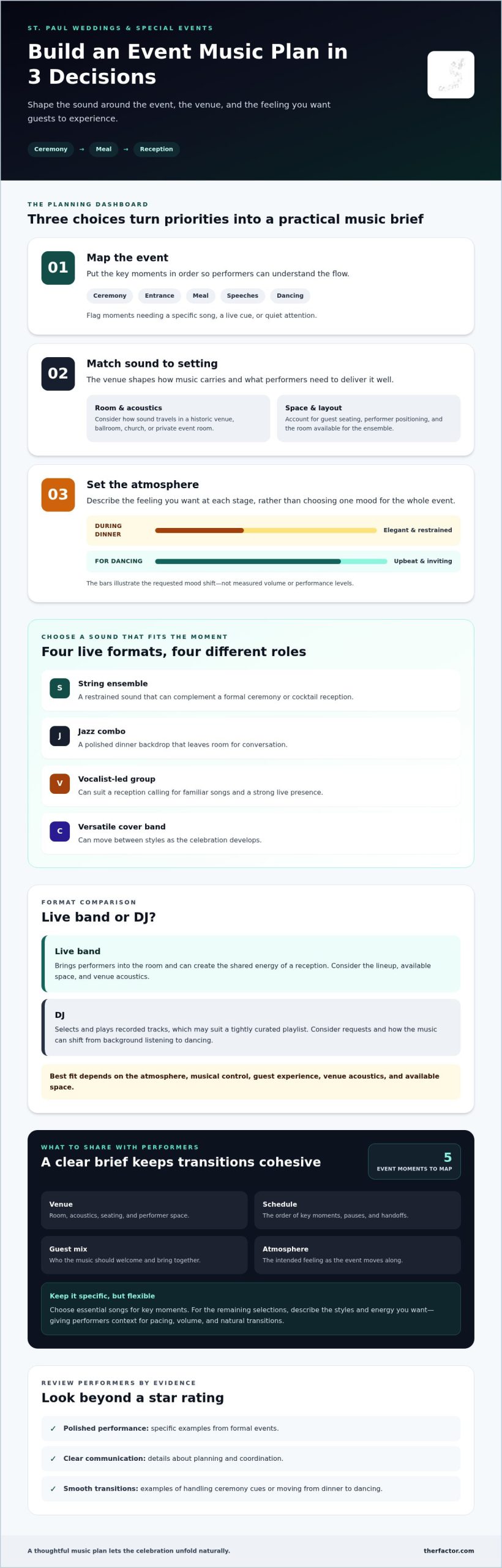
Use a simple planning sequence to turn your priorities into a practical music brief:
- Map the event. List the ceremony, entrance, meal, speeches, and dancing in order. Mark moments that need a specific song or quiet attention.
- Match sound to setting. A historic venue, ballroom, and private event room each shape how music carries. Consider acoustics, guest seating, and the space performers need.
- Set the atmosphere. Describe the feeling you want at each stage, such as elegant and restrained during dinner, then upbeat for dancing.
Share this outline with performers before finalizing selections. It gives them useful context for pacing, volume, and transitions, rather than leaving them with only a song list.
For a wedding ceremony in a local venue or church, confirm where musicians can be positioned and which moments need live cues. At the reception, identify when speeches or announcements will interrupt the music. These details help performers maintain a cohesive sound without distracting guests from the event.
Keep the plan specific but flexible. Choose essential songs for key moments, then describe the styles and energy you want for the remaining selections. This balance makes the music personal while giving the event room to unfold naturally.
Live musical meditations or special performances in local Twin Cities venues highlight the value of in-person entertainment. For anyone planning elegant party music St Paul celebrations, it is a reminder to consider how attendance arrangements and venue layouts affect the schedule. When comparing event formats, clarify how guests will participate before finalizing your plans with The R Factor.
What St. Paul musicians and bands specialize in elegant party music?
In St Paul, elegant party music might come from a string ensemble, jazz combo, vocalist with instrumental accompaniment, or full cover band. The right choice depends on the event format, desired atmosphere, and how the music should shift between conversation and dancing. Start by identifying the moments that need distinct musical treatment.
A string ensemble can provide a restrained sound for a ceremony or cocktail reception. A jazz combo can create a polished dinner backdrop while leaving room to talk. A vocalist-led group may suit a reception calling for familiar songs and a strong live presence. A versatile cover band can move between styles as the celebration develops.
Specialization matters as much as genre. A wedding-focused group should understand ceremony cues, entrance timing, and transitions into the reception. A corporate event performer should be comfortable supporting speeches and conversation, then raising the energy for socializing. For a birthday celebration, the repertoire may need to span generations and encourage guests to dance.
Use these practical criteria to narrow the options:
- Event fit: Look for examples of performances at weddings, corporate gatherings, or private celebrations similar to yours.
- Repertoire: Review the range of styles and ask whether the music can reflect your event’s mood.
- Ensemble format: Consider whether a solo performer, small group, or larger band better suits the room and schedule.
- Transitions: Find out how the performers handle shifts between background music, formal moments, and dancing.
Match the sound to your venue, too. A small room may suit a compact acoustic group, while a ballroom can accommodate a fuller ensemble. In a church, consider the ceremony’s musical requirements and how the room’s acoustics affect vocals and instruments. Share the timeline so performers can plan entrances, pauses, and handoffs without interrupting key moments.
Listen to complete performance samples when possible, not just short highlights. Notice whether vocals remain clear, the ensemble sounds balanced, and the pacing fits a formal occasion. Review a sample set list or repertoire overview, then identify essential songs and styles. This gives you a focused way to compare performers without relying on labels like “elegant” alone.
For a St. Paul event, make a short brief with the venue, schedule, guest mix, and desired atmosphere. If you’re planning a business gathering, explore live corporate event music as one option for shaping the room’s energy.
What genres of live music are popular for upscale parties in St. Paul?
Genre shapes an upscale party’s character from the first song. In St Paul, choose music for the atmosphere you want: classical or strings for a formal entrance, jazz for dinner, and soul or pop for dancing. The best fit depends on the event schedule, venue, and guests, not the genre label alone.
Jazz works well when music should add polish without taking over conversation. A piano trio can provide a light instrumental backdrop for a cocktail reception, while a vocalist can bring familiar standards into the evening. For a corporate dinner, choose arrangements that keep the room composed during remarks, then allow a livelier set afterward.
Classical and string music suit ceremonies and intimate gatherings. A string quartet can perform a traditional processional, then shift to quieter selections as guests arrive. In a church, consider how the room’s acoustics affect the balance of instruments. For a private dinner, solo violin or piano can create a focused sound without filling the entire space.
Soul, Motown, and R&B bring warmth and rhythmic energy to a reception. These styles can bridge generations with recognizable melodies and strong vocals. A set might begin with smooth, restrained songs during dinner, then move toward danceable classics after formal speeches. Choose performers who can adjust the tempo and intensity as the evening develops.
Pop and classic rock are useful when guests want familiar songs and an easy path to dancing. A live arrangement of a well-known pop ballad can suit a first dance, while upbeat rock can lift the room later. Review the performers’ repertoire for songs that fit your guests instead of assuming every band covers the same material.
Swing and big-band sounds bring a distinctive, polished character to themed events and formal receptions. Brass accents and swinging rhythms can energize a dance floor, but may feel too prominent during a quiet meal. Use this style for a dedicated set or a particular moment, such as opening the dance floor.
Use this quick selection process:
- Name the mood: Write down whether each part should feel intimate, celebratory, or high-energy.
- Match the room: Consider whether a small ensemble or fuller band fits the venue’s acoustics and layout.
- Check repertoire: Select essential songs and styles, then leave room for performers to shape the remaining set.
- Plan transitions: Decide when background music should give way to dancing, speeches, or a featured song.
For elegant party music in St Paul, combine genres deliberately instead of forcing one style into every moment. A jazz cocktail set followed by soul and pop dancing, for example, creates contrast while keeping the evening cohesive.
How far in advance should I book party music in St. Paul?
Book party music once your event date and venue are settled. There’s no single lead time that fits every St Paul celebration. Timing depends on the date, performance format, event schedule, and level of customization. A Saturday wedding with a specific ensemble and ceremony repertoire involves more coordination than a weekday gathering with a simple music plan.
Popular dates can bring multiple event inquiries, so waiting may narrow your options. Start with the date and venue, then define your performance needs. A reception with live music during cocktails and dancing, for example, has different requirements from a company dinner with background music and planned announcements.
Use this sequence to prepare an effective booking request:
- Set the event basics. Record the date, venue, event type, and approximate schedule. Include whether the music is for a wedding, corporate gathering, birthday, or private party.
- Describe the performance. Note the desired atmosphere, preferred genres, and whether music is needed for distinct moments such as an entrance, dinner, or dancing.
- Choose the format. Decide whether a solo musician, smaller group, or full band suits the room and event plan.
- Share key logistics. Explain the venue layout, access arrangements, performance location, and any timing constraints that affect setup or transitions.
A clear brief helps performers understand the full scope, not just the date. A wedding in a church followed by a reception at another venue involves distinct musical moments and transitions. A corporate event may need quieter music during dinner, followed by a more energetic reception set. Each format affects preparation.
Allow time for decisions involving several people. A couple may need to agree on ceremony songs and reception styles, while a company organizer may coordinate with venue staff and event planners. Confirming the schedule early gives everyone a shared plan and reduces last-minute changes to song choices, performance timing, and room arrangements.
If your date is approaching, gather the essentials right away: the confirmed date, venue, event schedule, desired sound, and must-play selections. A focused brief makes it easier to discuss performance details efficiently. Stay flexible on nonessential songs, but be precise about cues for speeches, entrances, and other programmed moments.
For elegant party music in St Paul, book once the date and venue are firm, then share your event brief promptly. The key is not an arbitrary number of months, but allowing enough time to match the performers, music, and schedule to your event.
How do live bands compare with DJs for an elegant party in St. Paul
A live band and a DJ create different energy at a St Paul event. A band brings visible performers and a distinctive live sound; a DJ can draw on recorded versions from a broad range of artists. Choose based on the atmosphere you want, the venue layout, and how guests should experience each part of the celebration.
Live musicians make the performance part of the room. A vocalist can connect with guests, while instruments add texture that recorded tracks cannot reproduce in the same way. A band might play a restrained jazz arrangement during dinner, then shift into familiar soul or pop for dancing. The lineup and repertoire shape the sound, so consider which styles matter most.
A DJ offers a different strength: recorded tracks preserve the original production and vocals guests recognize. That can suit a party built around specific versions, varied genres, or frequent song changes. A carefully planned playlist can move from dinner music to dance tracks. The event’s pacing still depends on how transitions, announcements, and requests are handled.
Compare the formats against your priorities:
- Live presence: Choose a band if performers and live arrangements are central to the room’s atmosphere.
- Recorded versions: Consider a DJ if hearing particular recordings matters more than live interpretation.
- Musical range: Compare the band’s repertoire with the breadth of tracks your event needs.
- Room fit: Assess the venue’s space, acoustics, and preferred sound level before choosing a setup.
- Event flow: Identify who will manage transitions around speeches, dinner, and dancing.
For an elegant birthday party, a live band can make a featured song feel personal and bring attention to the performance. A DJ may suit a celebration that moves quickly among several musical eras. Either format can work for a formal dinner if the music supports conversation and leaves space for speeches. The choice is about fit, not a universal ranking.
Before deciding, list the event’s key moments and the musical role for each. Then compare sample performances, repertoire, and setup needs against that plan. In a St Paul ballroom, a full band may create a strong focal point; in a compact private room, a smaller format may leave more space for guests.
If live musicians suit your event, plan live music for your celebration around its schedule, room, and desired atmosphere.
Choral music offers another way to consider how voices shape a room, though a worship service has a different purpose from a private celebration. During the academic year, St. Paul’s Harvard Square holds Sunday Mass with the Parish Choir at 9:30 AM. It also holds Sunday Solemn Mass at 11:00 AM with the St. Paul’s Choir of Boys & Schola. These examples show how a vocal ensemble can be part of a scheduled event.
The Exploratory Choral Meditation at the Cathedral Church of St. Paul in Boston is free to attend, with no ticket or registration required. That detail doesn’t determine entertainment costs for a party. Instead, consider whether live voices and instruments should command attention or recorded music should support conversation and movement between parts of the evening.
The R Factor: Wedding Entertainment
The R Factor provides Wedding Entertainment for couples planning live music around their ceremony and reception. Its flexible live-band format can suit different event scales, while the ensemble’s vocalists, horn section, rhythm section, and violin create options for varied musical moods. Share your schedule, venue, and key musical moments to shape a performance around the celebration. The R Factor also performs at corporate events, birthday parties, and private parties, making it a relevant option for other special occasions in St. Paul. If live music fits your plans, contact The R Factor to discuss your event.
Shape the celebration around the feeling you want
Memorable music choices begin with a clear intention. Decide what you want guests to feel as they arrive, connect, and celebrate. That vision gives each later choice a purpose and helps keep the event true to you, rather than following a formula. For elegant party music in St Paul, let your personal style guide the details while keeping the experience comfortable for your guests.
Think of the music as part of your event’s welcome. It can set a tone that feels distinctly yours without demanding attention at every moment. A few clear preferences are enough to start a focused conversation about the atmosphere you want and how a live performance can support it.
If you’re ready to explore a musical direction for your celebration, contact The R Factor to discuss your event. Take the next step with a clear vision, and give your guests a celebration that feels personal from the first note.
Recent Comments