

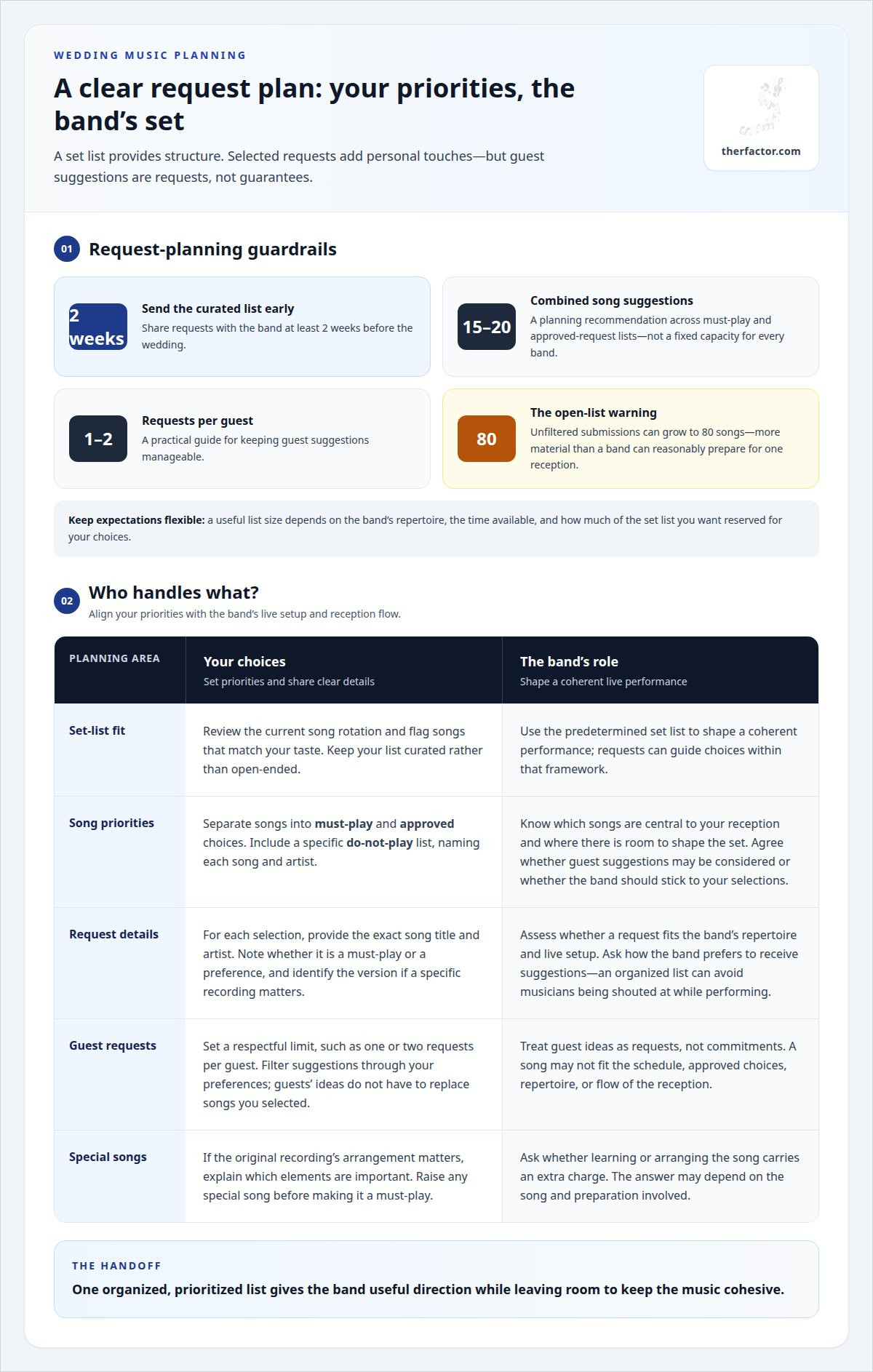
A master playlist is a starting point, not a promise that every song will work in a live set. Good wedding band song request etiquette means sharing your priorities early, treating guest suggestions as requests rather than guarantees, and giving the band a curated list at least 2 weeks before the wedding. The band can then assess which songs fit its live setup and the flow of the reception.
It makes sense to want your favorite songs heard and give guests a say in the celebration. A clear plan balances both without letting requests disrupt dinner or the dance floor. Share the details the band needs, choose must-play songs and approved requests, and consider whether a favorite will work in a live arrangement. The result is a playlist that reflects your choices while giving the band room to keep the music cohesive.
Key Takeaways
- Set a clear policy for guest requests and choose a respectful way for guests to submit them.
- Plan dinner music to suit the meal and atmosphere, then build energy as the reception moves toward dancing.
- Sort song ideas into must-play, approved, and do-not-play groups to keep your priorities clear.
- Ask how important requests can be learned or arranged for the band’s lineup, and whether that affects the booking.
How a band handles requests with a predetermined set list
A set list gives the reception musical structure, while selected requests add personal touches. Good wedding band song request etiquette means setting clear priorities and treating guest suggestions as requests, not guarantees.
-
Check the Predetermined Set List
Review the band’s current song rotation and identify songs that already match your taste. A predetermined set list helps the band shape a coherent performance; requests can guide choices within that framework. Mark must-play songs separately from other approved suggestions, and avoid sending an open-ended list. Unfiltered submissions can grow to 80 songs, creating more material than a band can reasonably prepare for one reception.
-
Share Song Requests and Details with the Band
Send a curated list at least 2 weeks before the wedding, and provide the exact song title and artist. Note whether each selection is a must-play or simply a preference, and include the version if a specific recording matters. Ask how the band wants requests submitted. Some prefer an organized list rather than guests shouting suggestions while musicians are performing. Clear wedding band song request etiquette keeps requests respectful and manageable.
- Set a clear limit for guest suggestions. A practical guide is one or two requests per guest, with a combined 15 to 20 songs across your must-play and approved-request lists. These are planning recommendations, not a fixed capacity for every band. The useful number depends on the band’s repertoire, the time available, and how much of the set list you want to reserve for your own choices.
- Give the band a do-not-play list alongside your favorites. It identifies songs to avoid and prevents guest requests from conflicting with your wishes. Be specific: name the song and artist rather than using broad labels such as “no old music.” Agree on how requests will be handled, including whether the band may consider guest suggestions or should stick to your selections.
How a Wedding Band Plans Music During Dinner
Share a clear dinner schedule and your preferred musical direction with the band. This helps place requests without disrupting the meal or the reception’s flow.
- Share the dinner timeline. Give the band the expected meal start, key transitions, and any planned speeches. A clear schedule helps musicians choose suitable moments for dinner music and anticipate when attention may shift. If a toast interrupts the meal, the band can pause or adjust rather than compete with the speaker.
- Describe the atmosphere you want. Tell the band whether dinner should feel relaxed, romantic, or lively. Offer a few examples that capture the mood, such as soft acoustic songs or familiar soul favorites. These references help the band choose appropriate music without needing a separate request for every dinner song.
- Place slow-song requests thoughtfully. A guest may request a slow song while people are still eating. Decide whether that suits your reception, then communicate your preference to the band. A dance moment can work, but it should fit the meal’s pace and not draw attention from speeches or service.
- Keep guest requests polite and flexible. Guests should approach the band respectfully rather than shout requests while musicians are performing. A requested song may not fit the schedule or your approved choices. Ask guests to respect your preferences, especially if a request would replace a song you selected.
- Coordinate dinner with live set timing. Wedding bands typically play sets lasting 45 to 50 minutes, with breaks lasting 10 to 15 minutes between sets. Share dinner and speech timing so the band can plan transitions around those sets. The music can support conversation during the meal, then build toward dancing as the reception moves on.
How the Band Uses Its Song List to Help You Select Favorites
Use the band’s song catalog to shape a playlist that reflects your taste. A focused selection also gives the band room to create a varied musical flow.
-
Review the Band’s Song List with Your Band
Ask the band to share its song catalog, then mark tracks that suit your reception. Look beyond familiar titles: note the styles and eras represented, and whether the list includes songs for different parts of the evening. A romantic ballad may suit a special dance, while upbeat favorites can help shift the evening toward dancing.
Use the catalog to spot gaps between the band’s repertoire and your preferences. If you love a particular style but see few examples, tell the band what matters most. Don’t choose songs just because they’re well known. Your selections should reflect the atmosphere you want, not simply the size of the list.
-
Choose Favorites and Ask About Special-Song Fees
Separate your selections into must-play songs and approved alternatives. This tells the band which tracks are central to the reception and where it has room to shape the set. Choose a range of songs guests can enjoy while keeping your own priorities clear. A short note about why a track matters can help the band understand its role.
Ask whether learning or arranging a special song carries an extra charge. The answer may depend on the song and preparation involved, so raise it before making that track a must-play. Share the exact title, artist, and preferred version. If the original recording has a distinctive arrangement, explain which elements matter most to you.
- Use guest suggestions to add variety without handing over the playlist. Requests can reveal what friends and family hope to hear, while your chosen favorites keep the music personal. Filter suggestions through your priorities and pass along only the ones you approve. This gives the band useful direction without turning every guest idea into a commitment.
- Send the final selections as one clear, organized list. Label each song by priority and add any special notes, such as “first dance” or “keep the original tempo.” A precise list reduces confusion between similar titles and helps the band place each favorite appropriately. Keep approved choices consistent with your do-not-play preferences.
How a Wedding Band Checks Requests for Live-Band Compatibility
A familiar recording may need a different arrangement onstage. Give the band the exact song and explain what makes it meaningful, so the musicians can consider how it fits their lineup and performance style.
-
Ask the Band About Learning Unperformed Songs
Send the song title, artist, and preferred recording, then ask whether the band can learn or arrange it. Wedding bands may be able to play, learn, or download songs that matter to the couple. A request’s fit depends on how its parts translate to the musicians and vocalists performing live.
Explain which details matter most, such as a recognizable opening, a vocal feature, or a particular feel. Don’t assume the live version will reproduce every studio sound. Clear priorities help the band assess the song and identify an arrangement suited to the performance.
-
Which Songs May Not Suit a Wedding Band?
Ask the band to assess songs that rely on distinctive studio production or a sound unlike its lineup. A track built around layered electronic effects, for example, may need a different live arrangement. The song can still be meaningful, even if its recorded version doesn’t translate directly to the stage.
Also consider whether a request conflicts with your preferred atmosphere or do-not-play list. Don’t request a song just because a guest wants it if you’ve asked the band to avoid it. The best choices fit both the musicians’ performance style and your priorities for the reception.
- Decide after hearing the band’s assessment. Keep a requested song as a priority if its live arrangement preserves what matters to you. Otherwise, choose an alternative that suits the same moment or mood. This gives the band clear direction without requiring a close copy of the original recording.
- Discuss preparation and any added charge before finalizing. Ask whether learning or arranging the requested song costs extra, and make that part of your planning decision. Share the final choice with the band alongside its role in the reception. For help shaping requests into a workable live set, discuss your wedding music plans.
The R Factor: Wedding Entertainment
The R Factor provides Wedding Entertainment for couples planning live music around their reception and song preferences. Its cover band offers flexible performance options ranging from 6 to 12 musicians, allowing the ensemble’s size to suit the scale and requirements of the event.
Turn to The R Factor when you want a live band to shape your reception’s music from dinner through dancing. Share your priorities, favorite songs, and special requests as you plan your entertainment. Based in Minneapolis, The R Factor performs weddings with four singers and an eight-piece band featuring a three-piece horn section, a four-piece rhythm section, and violin. The ensemble performs on-site in a six- to twelve-piece configuration.
For live music tailored to your wedding, contact The R Factor.
Shape a Reception That Feels Like Yours
Use wedding band song request etiquette to set a shared intention for the celebration, not to script every moment. Decide how you want guests to feel as the evening unfolds, then let that vision guide your music choices. A reception can feel personal and spontaneous at once. The strongest musical direction leaves the band room to respond to the room while keeping your priorities at the center.
Before finalizing your plans, consider which songs say something about your relationship and which simply create the atmosphere you want. That distinction makes your musical direction more personal and gives the band a clearer sense of the experience you’re shaping. You don’t need to control every transition to make the celebration feel intentional.
Ready to talk through your wedding music plans? Contact The R Factor and take the next step toward a reception that feels unmistakably yours.
Frequently Asked Questions
Can you supply a master playlist in advance?
Yes. The R Factor can shape a master playlist in advance through song selection and set-list planning. Its catalog includes over 750 songs, giving couples a broad starting point for choosing music. For a Minneapolis or St. Paul wedding, share the songs that matter most and identify which moments they suit. A playlist gives the band clear direction while leaving room to plan a cohesive live show.
How does a wedding band filter guest requests to suit its set list?
A band weighs guest suggestions against the couple’s approved songs, the event’s musical direction, and what works in a live performance. A request suited to dancing, for example, may be set aside if it clashes with your preferred mood or do-not-play list. Give guests a clear request policy, and let the band use your approved selections as its guide rather than treating every suggestion as an instruction.
When should you send your final song list to the band, and what happens next?
Send the curated final list at least 2 weeks before the wedding. Include each song’s title and artist, then label its role, such as first dance, dinner, or open dancing. The band can review your priorities, distinguish alternate versions, and fit selections into its planned performance. If a track needs a new arrangement, identify it early so the band can consider the preparation involved.
When should you send song requests to a wedding band, and how will the band use them?
Open song submissions 8 to 12 weeks before the wedding, then close them 3 weeks before the event. That window lets you gather ideas without carrying an open request list into the final planning stage. Review suggestions and forward only the songs you approve. The band can use that selected material to understand guest tastes and shape the music around your own priorities.
How does a wedding band handle song requests from wedding guests?
The band follows the request policy agreed with the couple. Guests should make suggestions politely through the preferred channel rather than call songs out during a performance. A guest request isn’t guaranteed, and the newlyweds’ choices take priority. If you don’t want guest requests, make that clear before the reception and share it with anyone helping coordinate the music.
How do wedding band song requests work with the set list and timeline?
Requests work best when assigned to a moment in the reception rather than left as an undifferentiated list. A first-dance selection, a dinner favorite, and an upbeat dance-floor choice each serve a different purpose. Share the reception schedule and note where each priority belongs. The band can then consider your selections alongside transitions such as speeches, meal service, and the move from dinner to dancing.
Recent Comments