

What if the highest star rating isn’t the best guide to choosing a band for your event? Searching for top rated live bands Minneapolis listings can turn up plenty of public concerts, but that doesn’t tell you which groups perform at private events or whether their sound and lineup suit your guests.
Reviews are useful, but a strong choice depends on more than a score. The band’s experience with your kind of occasion, its musical range, and the size of the ensemble all matter. The right fit for a wedding may differ from the right fit for a corporate function or private celebration.
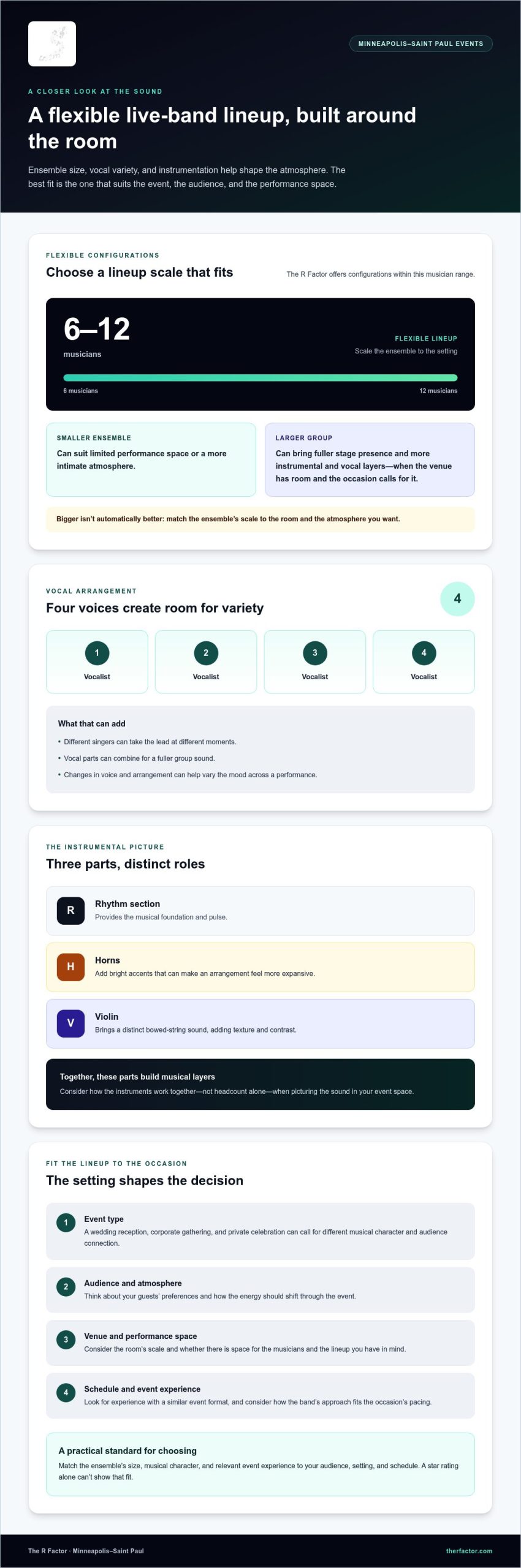
This guide explains how to assess those details and compare bands with your event in mind. You’ll learn what meaningful quality looks like beyond star ratings, how to match ensemble size and musical character to your audience, and why local event experience matters. The R Factor is a Minneapolis-Saint Paul-based band for weddings, corporate events, and private celebrations, with a flexible 6-to-12-musician lineup featuring four vocalists, horns, rhythm, and violin. Use these criteria to make a confident, well-matched choice.
Key Takeaways
- Separate private-event experience from concert listings so your shortlist reflects bands suited to your event format.
- Compare how vocalists and instrumental sections shape the sound, then match that musical character to your guests and atmosphere.
- Use event type, audience, venue scale, performance space, and schedule to create a practical selection checklist.
- Look beyond ratings when comparing top rated live bands Minneapolis, focusing on event fit, lineup, musical range, and communication.
- Explore how The R Factor’s 6-to-12-musician options can suit weddings, corporate events, and private celebrations.
What ‘Top-Rated Live Bands in Minneapolis’ Should Mean for Your Event
A high star score can be a useful starting point, but it doesn’t show whether a band can meet your event’s needs. A strong fit combines relevant feedback, clear communication, and a performance style suited to the occasion. A wedding reception, company celebration, and ticketed club show each call for a different kind of connection with the audience.
An event-ready live band is an experienced, communicative ensemble whose music, lineup, and approach fit the event’s audience, setting, and schedule. That’s a more practical standard than a ranking alone. It shifts the question from “Which band is most popular?” to “Which band can create the atmosphere this event needs?”
Minneapolis has a deep musical identity, shaped by artists, venues, and styles across generations. The Music of Minnesota offers historical context for that breadth, but a band’s connection to the local scene doesn’t, by itself, show that it’s prepared for a private celebration or corporate function.
Why concert listings do not answer event-planning questions
Choosing a public show is about deciding what to see, where to go, and when to buy a ticket. Hiring entertainment is a different decision: the band must suit a specific occasion, audience, venue, and schedule. Bandsintown helps people discover concerts through artist and venue listings, but concert discovery isn’t the same as evaluating a band for a private booking.
A popular venue can show that a band draws an audience in that setting. It can’t tell you how the group adapts to a wedding reception or corporate event. Look for evidence tied to similar event formats rather than treating public visibility as proof of private-event suitability.
Which quality signals matter beyond a star rating?
Read reviews for details that help you picture both the performance and the working relationship. Feedback that describes the occasion, audience response, musical variety, or communication gives you more to assess than an unexplained score. Relevant event experience matters because a band accustomed to a particular format may understand its pacing and atmosphere better than a group known only for public shows.
Then separate evidence from promotion. A review that identifies the type of event and describes specific details is more informative than a broad claim such as “the best band in Minneapolis” without supporting information. Compare what’s verifiable with what’s simply persuasive language. For each candidate, consider whether the feedback relates to your event type, whether the ensemble’s size and musical character feel appropriate, and whether communication has been clear and professional. These signals won’t replace your judgment, but they give it a sound basis.
How Minneapolis Event Bands Build a Sound That Fits the Occasion
A live band’s sound comes from more than the number of musicians on stage. Vocal arrangement, instrumentation, and ensemble size all affect how the music feels in the room. For event planners in Minneapolis and Saint Paul, understanding those elements makes it easier to picture whether a group will suit a reception, corporate gathering, or private celebration.
The R Factor’s lineup combines four vocalists, a horn section, a rhythm section, and violin. Those distinct elements come together in the band’s live cover performances.
What a multi-vocalist lineup adds to a live performance
With four vocalists, a band can vary the voice heard across a performance rather than relying on one lead sound throughout. Different singers can take the lead at different moments, while vocal parts can also be combined for a fuller group sound. That variety can help a cover repertoire move between contrasting moods without making every song feel alike.
For an event with guests of different ages and musical preferences, changes in vocal tone and arrangement can help keep the performance feeling varied. Think about the atmosphere you want at different points in the event. An easygoing feel during an early reception may call for a different energy from the lively part of the evening. Vocal variety gives a band more ways to shape those transitions, though the specific effect depends on the songs and arrangements.
How band size and instrumentation shape the atmosphere
The rhythm section provides the musical foundation and pulse. Horns add bright accents that can make an arrangement feel more expansive, while violin brings a distinct bowed-string sound that can add texture and contrast. Each part has a clear role. Together, they create layers that a smaller lineup may not have in the same form.
Size matters, but larger isn’t automatically better. A smaller ensemble may suit an event with limited performance space or a more intimate atmosphere. A larger group can create a fuller stage presence and offer more instrumental and vocal layers, provided the venue has room for the musicians and the event calls for that scale. The R Factor offers flexible configurations from 6 to 12 musicians, giving event planners options to consider in relation to the setting and desired atmosphere.
When comparing top rated live bands Minneapolis options, look past headcount. Consider how the instruments work together, how vocal variety supports the event, and whether the ensemble’s scale feels proportionate to the room and occasion. A strong match is one where the musical character supports the experience you want guests to have.
To see how these vocal and instrumental elements come together, explore The R Factor’s live band and its flexible lineup for Minneapolis-Saint Paul events.
How to Compare Minneapolis Live Bands, and Avoid the Ratings Trap
A high rating can signal that past clients were pleased, but it doesn’t automatically make a band right for your event. Reviews reflect particular performances and occasions. A group praised for a lively bar show may have a different format, lineup, or audience focus from what you want for a wedding or corporate gathering. Popularity is a useful discovery signal, not a complete booking assessment.
Searches for top rated live bands Minneapolis can surface star scores, ticket demand, and recognizable venues. Keep those signals separate from evidence about private-event work. A full venue or strong ticket sales show public interest, but don’t explain how a band communicates with event organizers or suits a specific celebration.
A practical framework for comparing event bands
Use the same criteria for each candidate. Record the review source and details, then judge how closely the evidence matches your occasion, audience, and desired atmosphere. This simple comparison keeps a star score from overshadowing the factors that shape the actual event.
- Event experience: Note whether the available examples or feedback relate to weddings, corporate functions, or private celebrations like yours.
- Lineup: Compare the musicians and vocal setup with the scale of your event, the available performance space, and the sound you want.
- Musical range: Look for clear information about the band’s cover repertoire and performance style. Consider whether it can suit the range of tastes among your guests.
- Audience fit: Assess whether comments describe engagement with an audience similar to yours, rather than a different public-show crowd.
- Communication: Pay attention to feedback about responsiveness, clarity, and coordination. These details speak to the planning experience, not just the music.
This isn’t a contest to find the most impressive number. It’s a way to identify which band’s demonstrated strengths match the requirements of your event.
What reviews can, and cannot, tell an event planner
Reviews offer a window into past clients’ experiences. They can’t guarantee what will happen at a future event, and a high score without context gives little insight into the performance or planning process.
Give more weight to detailed feedback that identifies the occasion and describes specific qualities, such as professional communication or audience engagement. Compare that evidence with the band’s stated lineup and event experience. Treat broad promotional phrases and unsupported “number one” claims as claims, not proof. Ticket demand and famous venues may reflect popularity, but they don’t substitute for relevant client feedback.
For wedding planners, the Minneapolis wedding music planning guide can help connect band selection with the broader decisions involved in planning wedding entertainment.
A Minneapolis Event Planner’s Checklist for Choosing a Live Band
Make the event brief the starting point, not the band’s rating or popularity. A clear picture of the occasion, guests, and intended atmosphere helps you compare live options against what the event actually needs. Use this checklist to turn broad preferences into practical decisions about musical style, ensemble size, and timing.
Match the band to the event brief
Begin by naming the occasion: a wedding, corporate function, or private celebration. Then describe the audience and the atmosphere you want, such as polished and relaxed, celebratory, or high-energy. Those priorities help narrow the musical range and performance format that make sense for the event.
- Set the event type, audience, and atmosphere. Note who’s attending and what you want guests to feel. A mixed-age celebration may call for a different musical approach from a company event with a formal program.
- Define the desired energy. Decide whether music should provide an inviting backdrop, build energy as the event progresses, or take center stage. This helps clarify how prominent and lively the performance should feel.
- Choose a musical range. Think about the styles and eras likely to connect with your guests. Look for a cover band whose range can support that brief, rather than choosing from a vague label alone.
- Match ensemble size to the occasion. Consider the room, performance area, and atmosphere together. A smaller format may suit an intimate setting; a larger ensemble may create a fuller stage presence when the event and space call for it.
- Map music to the schedule. Identify when guests will arrive, eat, hear speeches, and have time to socialize or dance. Use those moments to plan where live music will contribute most to the flow.
- Prepare a concise event brief. Share the occasion, audience, desired energy, venue layout, and schedule. Clear priorities help align the band’s format and musical approach with the run of show.
Plan the venue and performance flow
Consider the actual performance space, not just the room’s total size. Guest tables, walkways, and the stage area all affect how comfortably the ensemble fits and how the music meets the audience. A well-planned layout gives the performance a natural place in the event without disrupting how guests move through the space.
Build the music into the schedule around meals, speeches, and other key moments. For a corporate occasion, the live music for corporate events guide offers more planning context. Clear timing and priorities help everyone understand how the performance fits the event.
Use this checklist to assess top rated live bands Minneapolis choices by fit, not by score alone. To see how a flexible lineup can align with an event brief, explore The R Factor’s live band options.
Meet The R Factor: A Flexible Live Band for Minneapolis Events
The R Factor is a Minneapolis-Saint Paul-based cover band for weddings, corporate events, and private celebrations. It brings live music to occasions with different purposes and audiences, making it a local option for planners who want entertainment to be part of the event. The best fit depends on your event’s atmosphere, schedule, venue, and musical priorities.
A wedding reception may call for music that supports distinct moments throughout the celebration. A corporate function may need entertainment that complements a professional program, while a private party can be shaped around the host’s preferred energy and guest mix. Start with what the occasion calls for, then consider how the band’s lineup and performance style could serve that plan.
One local band for weddings, corporate events, and private celebrations
These event categories involve different planning needs, even when each includes live music. For a wedding, consider where the performance fits into the celebration’s schedule, from the ceremony and cocktail hour to the reception. For a corporate event, think about the role music should play alongside the program and guest interaction. For a private celebration, the desired mood and audience can help define the musical direction.
That distinction matters more than choosing a band based on a broad label alone. Set out the occasion, audience, atmosphere, and key moments first. Then use those priorities to judge whether the entertainment feels appropriate. For additional planning considerations, the Minneapolis private party band guide can help you think through the needs of a private celebration.
Choose a performance format that fits your event
The R Factor offers flexible performance options from 6 to 12 musicians. Its lineup features four vocalists, a horn section, a rhythm section, and violin. Together, these elements give the ensemble a distinctive range of voices and instrumental textures for its cover-band performances.
Use the event brief to think through the format. Consider the size of the performance area, how prominent you want the band to feel, and the musical character that best suits your guests. A smaller configuration may be a practical fit for a more intimate setting, while a larger one may make sense when the room and event call for a fuller ensemble. Neither choice is automatically right; the goal is to match the format to the occasion.
If you’re comparing top rated live bands Minneapolis, assess The R Factor through the same event-fit lens: local base, event categories, lineup options, and ensemble makeup. Share your event’s purpose, audience, setting, and schedule to start a focused conversation about its entertainment needs. Plan live music for your Minneapolis event.
Turn Your Event Vision Into a Music Plan
The most useful next step is to turn your preferences into a brief you can act on. Write down what guests should experience, which moments music should support, and what practical limits the venue or schedule creates. That gives your search for top rated live bands Minneapolis a clear purpose and makes it easier to discuss options without getting sidetracked by popularity alone.
You don’t need every detail settled before taking that step. A focused conversation can help connect your priorities to a suitable direction for the event. Bring your occasion, audience, preferred atmosphere, and key timing points, then use them to shape a plan that feels deliberate from the start.
Start planning live music for your Minneapolis event with The R Factor. Share your event details and build a music plan around what matters most to you.
Frequently Asked Questions
How far in advance should I book a live band in Minneapolis?
Start planning as soon as you have an event date and a basic outline, especially if your date is in demand. There isn’t one booking timeline that fits every Minneapolis event; the season, date, and scale of the celebration all matter. Share the date, occasion, venue status, and schedule priorities with the band. That gives you a grounded starting point for comparing top rated live bands Minneapolis.
Can a live band perform at an outdoor Minneapolis event?
Live music can suit an outdoor event when the location and setup support a performance. Consider the available space, how guests will be arranged, and what the plan is if weather changes. For example, an outdoor reception might need an indoor backup location or a schedule adjustment. Include these details in the event plan so the music can fit the setting without relying on ideal outdoor conditions.
How long does a live band usually perform at an event?
Performance duration depends on the booking arrangement and the event’s run of show. A wedding reception, corporate function, and birthday celebration may each have different timing needs. Outline when guests arrive, when formalities take place, and which moments should feature music. For example, if a company event includes presentations, identify those time blocks early so the performance schedule can be planned around them.
Can guests request songs from a live band?
Song requests depend on the band’s repertoire and the arrangements for the event. If a particular song matters to you, mention it in the planning brief rather than relying on a guest to request it during the performance. Also describe the overall musical direction you want. That context helps keep song choices aligned with the occasion, whether you’re planning a wedding reception or a private celebration in Minneapolis-Saint Paul.
What should I consider when planning live music in a Minneapolis venue?
Start with the performance area, guest layout, and venue schedule. Consider how much room is available for the musicians, where guests will sit or gather, and how people will move through the space. Then account for the venue’s event requirements and where music fits around dining or announcements. Sharing a floor plan or a clear description of the room can help make those practical details part of the entertainment plan.
Will live music be too loud for a corporate event?
Live music doesn’t have to dominate a corporate function. Its role can vary with the room, schedule, and atmosphere you want, from supporting a reception to bringing energy to a later part of the event. Be specific about whether guests need to converse, hear presentations, or focus on a performance at different points. This gives the band and event planner a clear basis for fitting music into the occasion.
How can I include a live band without interrupting speeches or dinner?
Plan the performance around the event schedule. Mark speeches, meals, announcements, and other key moments on the run of show, then identify clear transitions between them and the music. For example, set aside a defined pause for a welcome address instead of leaving the timing open-ended. Share the latest schedule with the band and designate one planner to communicate updates during the event.
Recent Comments