

The best entertainment for a company anniversary party carries the event from guest arrival through dinner and dancing without competing with every moment. Live music can welcome guests, create an easygoing dinner atmosphere, and bring the dance floor to life. Tie the music to the company’s history and milestone to give the celebration a clear rhythm and purpose.
Choosing entertainment means balancing the company’s story, guest experience, and event budget. Match live music and other options to the occasion, then decide whether speakers, an emcee, a tribute, or a photo booth will add something meaningful. A practical plan for the budget and schedule helps create a polished, personal celebration that guests can enjoy.
Key Takeaways
- Shape the music around the event’s flow, from guest arrival and dinner to dancing, and connect the theme to the company’s story.
- Choose a live music format that fits the room, guest experience, and tone of the milestone.
- Use an emcee, tribute, or photo booth to add structure and personal touches without letting activities compete with the main celebration.
- Build the budget around the event’s priorities, including venue, food, staffing, and entertainment, and decide which elements matter most.
- For an ambitious celebration, plan 6 to 12 months ahead; shortlist entertainment 9–12 months out when possible.
1. How can I incorporate live music into my anniversary celebration?
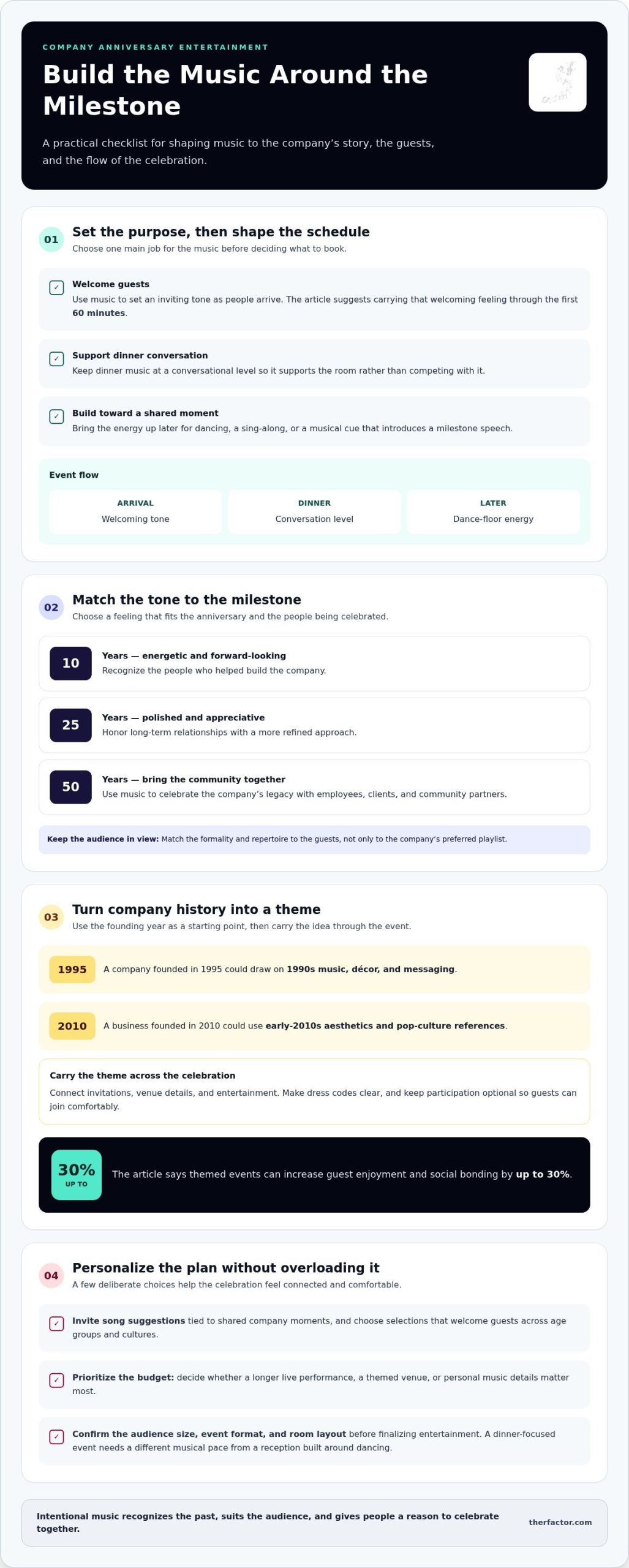
Start by deciding what the music should accomplish. A live performance can welcome guests, support conversation during dinner, create a dance-floor moment, or invite participation through a sing-along. Choose one main goal, then place the music around the event schedule. For example, set a welcoming tone from guest arrival through the first 60 minutes, keep dinner music at a conversational level, and build toward dancing later.
Next, define the audience and the milestone. A 10-year celebration can feel energetic and forward-looking while recognizing the people who helped build the company. A 25-year anniversary can take a more polished approach and honor long-term relationships. At 50 years, music can help bring employees, clients, and community partners together to celebrate the company’s legacy. Match the formality and repertoire to the guests, not only the company’s preferred playlist.
Use the company’s founding year to shape a music-themed celebration. A company founded in 1995 could draw on 1990s music, décor, and messaging. A business founded in 2010 could use early-2010s aesthetics and pop-culture references. Carry the theme through invitations, venue details, and the entertainment, rather than relying on costumes alone. Themed events can increase guest enjoyment and social bonding by up to 30%.
For a more immersive party, consider a clubbing theme with a dance-focused set, coordinated lighting, and an optional dress code. Make the dress code clear on the invitation, such as decade-inspired attire or cocktail clothing with a music-era accent. Keep participation optional so guests can join comfortably without needing a costume. A roaring ’20s theme offers another distinct direction, with jazz-inspired music, art deco details, and formal evening wear.
Let the budget reflect the company’s financial position and the significance of the milestone. Decide what deserves priority: a longer live performance, a themed venue, or details that make the music feel personal. Then confirm the audience size, event format, and room layout before setting the entertainment plan. A celebration built around dinner needs a different musical pace from a reception designed to move guests toward the dance floor.
Connect the music to the company’s story by inviting employees to suggest songs tied to shared moments or using a brief musical cue to introduce a milestone speech. Keep selections welcoming to guests across age groups and cultures. The best entertainment for a company anniversary party feels intentional: it recognizes the past, suits the audience, and gives people a reason to celebrate together.
2. Live bands, jazz bands, string quartets, DJs, and solo musicians
Match the performer to the role each part of the event needs. A jazz group can create a polished reception atmosphere, while a string quartet can suit a seated dinner or formal program. A solo musician can work well in a compact venue. For dancing, a live band brings vocals and instruments into the room, while a DJ can move quickly between styles and requests.
For a corporate event, a DJ offers flexible recorded playlists, a live band creates a fuller stage experience, and a comedian or magician can take center stage for a featured performance. Interactive acts invite participation, so schedule them when guests can join without interrupting dinner or speeches. Choose a format that fits the schedule, room, and audience rather than assuming one approach suits every celebration.
A live band can bring generations together with a set list that moves between familiar eras and styles. You might pair classic rock, Motown, current pop, and dance favorites, balancing high-energy songs with recognizable choices for guests who prefer conversation. Share preferred genres and meaningful songs in advance. A clear brief helps shape the performance around the anniversary without turning it into a string of unrelated requests.
Live music can change how guests experience a room. A jazz trio can keep a reception conversational, while a full band can mark the transition from dinner to dancing. Coordinate the stage with the seating plan and guest routes, leaving space to move between tables and the dance floor. Use warm, steady lighting for dinner and focused stage lighting when the performance should draw attention.
Professional party bands typically play two sets of 60–75 minutes each at anniversary parties. That structure can separate dinner and dancing, or create two dance-floor peaks around speeches and a company tribute. For a 10th anniversary, a live band or DJ can serve as the event’s centrepiece. For a formal reception, a jazz group or string quartet may better support conversation.
Comedians, magicians, and other noteworthy acts can add contrast to a music-led program. Place a comedy set after dinner, or schedule a magician during a reception when guests are already mingling. Build in time for introductions and transitions, and keep the act’s tone suitable for a workplace audience. If live corporate music fits your event, explore corporate event music as one way to shape the evening.
3. Motivational speakers, emcees, video tributes, and photo booths
A motivational speaker, emcee, tribute video, or photo booth serves a different purpose. A speaker can connect the milestone with a message about the company’s future. An emcee keeps the program moving by introducing executives and guiding transitions. A video tribute can share the organization’s history through employee stories, archival photos, and customer memories. Choose options that support the event’s purpose instead of adding activities without a clear role.
Give the emcee a concise run of show with speaker names, pronunciation notes, and transition cues. For example, they might welcome guests, introduce the company president, and invite longtime employees to take part in a recognition moment. A motivational speaker fits best when the anniversary has a defined message, such as thanking teams or looking ahead to the company’s next chapter. Keep the speech relevant to the audience and milestone.
For a tribute video, gather old photos, short clips, and stories from employees or customers. Arrange them in a simple timeline, from the company’s early days to its current work, and add captions so guests can follow along without narration. Test the full video, sound, and display before the event. Schedule it when guests can focus, such as after dinner and before recognition remarks.
A photo booth gives guests a low-pressure activity and a keepsake from the anniversary celebration. Offer both digital and physical photo-sharing options, so guests can save or take home an image. For a 25-year anniversary, connect the booth backdrop to an interactive timeline or message wall. Props can reflect company culture, a founding decade, or recognizable milestones, while remaining comfortable for guests who prefer a simple portrait.
A 360 video booth creates a different experience from a standard photo booth. Guests pose in a marked area while a camera captures a moving view around them. Place it where a queue won’t block entrances, dining areas, or the dance floor. Invite guests to participate without making it part of the formal program. For a quieter alternative, set up a photo wall with printed images and space for written congratulations.
Plan access and participation with the guest list in mind. Offer seated and standing photo options, clear instructions, and a quieter activity alongside more energetic entertainment. At a 25-year celebration, a message wall can collect notes from employees and clients; at a throwback party, old photographs can prompt conversation. Document the event with a planned mix of stage moments, candid interactions, and group portraits. That record preserves the celebration without requiring every guest to join every activity.
4. Anniversary budgets and early planning
Build the budget around the company’s priorities rather than a fixed template. Start with the venue, food, staffing, beverages, and entertainment, then decide which moments matter most. A formal dinner may put guest service and speeches first, while a themed dance event may focus more on music and room atmosphere. Let the company’s financial position and the milestone’s significance guide the choices.
An upscale event for 150–300 guests may reach the mid-five figures or more after décor, entertainment, rentals, and staffing. Treat these as broad event-planning examples, not a quote for entertainment.
Entertainment fees depend on the event and are provided after a quote request; the act, lineup, performance duration, travel, and production needs shape the quote. Set the entertainment budget after deciding the format and schedule. A band booked for a dance-focused evening has different requirements from a solo musician supporting a formal reception. Keep a reserve for event details that change, such as a revised run of show or added production needs.
For an ambitious anniversary, allow 6 to 12 months for planning. Shortlist entertainment 9–12 months before the event when possible, then book a DJ or band 6–9 months ahead. This sequence gives the planning team time to compare formats, align the act with the venue, and build the entertainment schedule around speeches, dinner, and dancing.
Permit, insurance, and venue requirements vary with the location, venue agreement, and event setup. Review the venue’s rules for entertainment, sound levels, access, and event insurance before finalizing the schedule.
Once the date and venue are set, create a simple planning timeline. Confirm the guest list and event format, reserve the venue, and establish budget categories. Then schedule entertainment around key moments such as guest arrival, dinner, recognition, and dancing. Share the run of show with everyone coordinating the event.
Keep the budget tied to the company’s journey. A 10-year milestone might call for an energetic gathering, while a 25-year anniversary could suit a more formal dinner. For a 50-year celebration, allocate time and resources to recognize employees, clients, and community partners. Prioritize the details guests will experience directly, and make each themed choice support the event’s purpose.
5. Hiring a guest speaker or entertainer
Choose a guest speaker or entertainer by identifying the moment they need to create. A speaker can recognize employee contributions, share a relevant leadership message, or help frame the company’s next chapter. A comedian, magician, or other featured act can add a distinct change of pace. For a 25-year milestone, for example, pair a brief message about the company’s journey with a performance that keeps the evening lively.
For a useful guest estimate, many event and wedding guides suggest that 60–75% of invited guests will attend. Apply that range to the invitation list, then plan seating and entertainment around the expected audience. If you invite 200 people, the estimate suggests 120–150 attendees. Use that figure as a planning estimate, not a reason to overlook venue capacity or the event format.
Generational range matters. A 40th or 50th anniversary party typically brings together three or four generations, so choose entertainment with broad appeal. A classic repertoire, a speaker with a clear and concise message, or an act that avoids insider references can help guests connect. Keep the program varied, and leave space for conversation alongside high-energy moments.
Make participation accessible by offering quieter and more active options. For example, place a message wall alongside an interactive game, with choices that suit different cultures, food preferences, ages, and skill levels. Give guests clear instructions and the option to observe rather than join. This makes the celebration more inclusive without expecting everyone to participate in the same way.
A family-friendly company anniversary can include live music, simple games, and activities for different ages. This format can suit a family-owned business inviting employees’ relatives. Choose positive, easy-to-understand games that don’t rely on physical ability or specialist knowledge. A music performance can give guests a shared focal point, while quieter activities offer another way for children and adults to take part.
Before hiring a speaker or entertainer, write a short event brief with the milestone, audience, schedule, desired tone, and the performer’s role. Specify whether a speaker should motivate employees, recognize clients, or welcome guests. Share the running order and agree on introduction and transition cues. This preparation keeps the performance connected to the celebration rather than making it feel like a separate program.
Invite employees to contribute ideas before making the final choice. A short poll can show whether guests prefer a classic performance, a humorous act, or a speaker with a meaningful connection to the company. Weigh those preferences alongside the event’s purpose and audience. The right choice creates a shared experience, respects different ways of taking part, and makes the milestone feel personal.
The R Factor: Wedding Entertainment
The R Factor can bring live music to a company anniversary through its Corporate Event Music offering. Its 6 to 12-piece cover band gives organizers flexible performance options for the event’s scale and format. With four vocalists, a horn section, rhythm section, and violin, the group can provide a full live-band sound for receptions and dance-focused celebrations.
Consider live music when it should carry the evening from guest arrival through dancing, or when you want a set list that brings generations together. Share the milestone, event schedule, and musical direction to shape the performance around the celebration. The R Factor performs at corporate events, as well as weddings, birthday parties, and other private parties.
Contact The R Factor to discuss live music for your company anniversary.
Set the Tone for Your Company’s Next Chapter
Choose the feeling you want guests to carry into the company’s next chapter: pride, connection, gratitude, or anticipation. Let it guide the final decisions, from the music’s energy to the moment employees and clients are invited to participate. A clear purpose makes the entertainment part of the company’s story, not just another item on the schedule.
Turn that direction into a concise event brief. Note the audience, atmosphere, schedule, and the role you want the performance to play. This gives your entertainment partner a practical foundation for creating a personal, well-coordinated celebration. The right entertainment for a company anniversary party reflects both the milestone and the people who made it possible.
The R Factor provides Corporate Event Music, alongside Wedding Entertainment and Birthday Party Performances. If live music fits the atmosphere you’re planning, contact The R Factor to discuss your company celebration. Give your milestone a thoughtful soundtrack, and let the next chapter begin on a memorable note.
Frequently Asked Questions
How can I incorporate live music into my anniversary celebration?
Plan live music around key transitions, not only the dance portion. Assign a team member to coordinate cues for guest arrival, executive introductions, recognition moments, and the evening’s close. A short musical cue can signal the start of the program, while a quieter set can support conversation during networking. Share the running order and cue notes with the performers in advance.
What types of interactive games can be included at an anniversary party?
Choose games that invite participation without requiring everyone to perform. Try company-history trivia at each table, a “name that tune” round, or a team challenge matching milestones to their dates. Keep questions positive and answerable by newer employees as well as long-serving staff. A host can explain the rules briefly, then let guests join at their own pace.
What are popular entertainment ideas for a company anniversary party?
Popular options include live music, a guest speaker, an emcee, a photo booth, and employee recognition moments. Combine formats only when each serves a clear purpose. For example, feature employee spotlights during the program, then invite guests to share memories on a message wall. A social media countdown with throwback posts and customer testimonials can also build interest before the event.
How do you choose entertainment for a corporate anniversary based on company size and budget?
Start with the expected audience, venue layout, event format, and experience you want to create. A smaller gathering may suit an intimate musical setup, while a large room may need a more visible focal point and activities that work across the space. Set the entertainment budget alongside venue, catering, and staffing priorities, then choose a format that protects what matters most.
What live music options work best for a company anniversary party?
The best option depends on the room and music’s role. A solo musician or string quartet can suit a seated reception where conversation matters. A jazz group can create a refined atmosphere, while a live band can anchor a dance-focused celebration. Consider how sound will carry through the venue and whether guests will be seated, mingling, or moving between areas.
What interactive entertainment can engage employees and guests at a corporate party?
Offer different activities so guests can participate in different ways. Company trivia can prompt conversation, while a future-message board lets people share hopes for the next chapter. At Minneapolis–St. Paul venues, place activities where guests can find them without blocking entrances or meal service. Clear instructions and the option to watch help make participation comfortable for more people.
What questions should you ask when hiring an event entertainer?
Clarify the performance’s role, the desired tone, and how it fits the schedule. Discuss music that suits your audience, meaningful company songs, and cues for speeches or recognition moments. Align on timing, breaks, and the venue layout as well. A concise event brief helps the entertainer tailor the experience to your celebration.
How do you plan an entertainment schedule for a corporate anniversary party?
Build the schedule around guest movement and key moments. Set the arrival period first, then sequence dinner, speeches, recognition, and dancing to avoid competing activities. Leave time for guests to move between the program and entertainment. Share the final run of show with the event team and performers, including cue times and the person coordinating each transition.
Recent Comments