

Last Updated: November 4, 2026
Quick Summary
Live music suits anniversary dinner parties because performers read the room, adjust volume for toasts and conversation, and can play songs tied to the couple’s history. Choose a format that fits your guest count, match the music to each course, and confirm details in writing.
- Solo musicians or duos suit intimate dinners of about 25 to 75 guests.
- Keep dinner volume low enough that guests seated across a table can talk without raising their voices.
- Stop music entirely or drop it to a quiet bed during toasts and speeches.
- Give the performer a short must-play list, a nice-to-have list, and a do-not-play list.
- Request an itemized written quote covering performance time, equipment, travel and overtime.
Table of Contents
- Why Live Music Works for an Anniversary Dinner Party
- Choosing Anniversary Party Songs That Match Your Milestone
- Matching Dinner Party Background Music to Each Course
- Choosing a Live Band for Private Party Entertainment
- Building an Anniversary Dinner Playlist and Event Timeline
- Booking Checklist, Budget and Sound Considerations
- Booking Live Music for Your Anniversary Dinner Next
- Frequently Asked Questions
Planning an anniversary dinner is about more than the menu and the venue. The right music shapes how guests arrive, how they talk, and how the night feels when it ends. Live music for anniversary dinner parties adds a human touch that a playlist rarely matches, and it gives the couple a moment to focus on each other. This guide walks through how to choose songs, match music to each course, pick the right performer, and plan the logistics so the evening runs smoothly.
Live music works because it responds to the room. A performer can read the crowd, slow down during a toast, or pick up the tempo when the dance floor opens. That flexibility is hard to replicate with recorded tracks. For anniversary dinners in particular, a few well-chosen songs tied to the couple’s history can make the night feel personal.
Why Live Music Works for an Anniversary Dinner Party
Live music gives an anniversary dinner a sense of occasion. Guests notice the difference between a room that feels planned and one that feels like background noise. A trio playing standards during cocktail hour sets a different mood than a speaker in the corner, even when the songs are similar.
The biggest advantage is control over pacing. A good performer watches the room and adjusts. They keep volume low enough for conversation during the meal and raise it for toasts, a first dance, or a sing-along. Recorded playlists cannot respond to that kind of cue.
Live music also creates a shared experience. Guests tend to remember the moment a performer dedicated a song to the couple, and couples often recall those small, personal gestures long after the party ends.
Choosing Anniversary Party Songs That Match Your Milestone
The right songs depend heavily on the anniversary itself. A first anniversary calls for something different from a 25th or 50th. Start with the couple’s story: where they met, the song from their first dance, or a track that has meant something to them over the years.
Songs for the First Few Years
Early anniversaries are often about energy and romance. Upbeat standards and modern love songs suit this stage well. A common approach is to pick two or three songs with personal meaning and fill the rest of the set with familiar tunes that keep guests comfortable.
Avoid songs that are too heavy or sad unless the couple specifically wants them. The goal is warmth and celebration.
Songs for Silver, Golden and Milestone Years
Silver (25th) and golden (50th) anniversaries invite a more reflective repertoire. Many couples choose music from the decades they were first together, which lets guests of all ages connect with the night. Big band, Motown, classic crooners, and soft rock from earlier eras often work well.
For milestone years, consider a short set built around the couple’s timeline. Playing a song from each decade they have been married can turn the music into a gentle retrospective that guests enjoy.
Matching Dinner Party Background Music to Each Course
Music should change with the meal. Think of the evening as a set of scenes, each with its own volume and energy.
- Arrival and cocktail hour: Brighter, lighter tunes help guests settle in. This is a good time for instrumental jazz or acoustic covers.
- Appetizers and first course: Keep the volume low enough that people can talk without raising their voices.
- Main course: Choose smooth, unobtrusive music. Standards and soft ballads work well here.
- Toasts and speeches: Drop the music entirely, or fade it to a soft instrumental bed under the speaker.
- After dinner: Energy rises again. This is the time for dance tracks or the couple’s first dance.
Watch the room during the meal. If guests are leaning in to talk, the music is probably too loud.
Choosing a Live Band for Private Party Entertainment
Not every anniversary needs a full band. The right format depends on the size of the room, the budget, and the kind of atmosphere the couple wants.
Live Band, Duo, Solo Musician or DJ: How to Decide
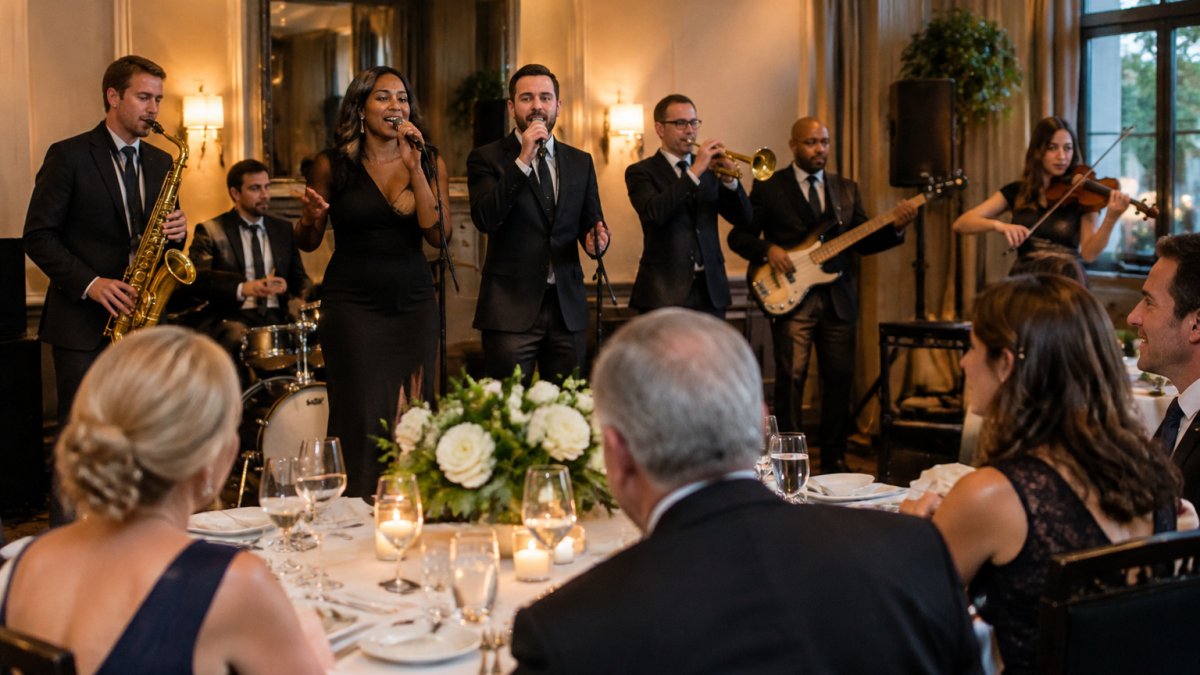
A solo musician or duo suits intimate dinners of about 25 to 75 guests. They are unobtrusive, cost less, and work well in smaller rooms. A trio or quartet adds fullness without overwhelming conversation. A full band brings energy for larger celebrations and dancing, though it needs more space and a plan for volume. Matching the scale of your ensemble to the venue remains a critical step when planning home celebrations that require a seamless transition from dinner music to a surprise reveal.
A DJ can be a good fit when the couple wants a long list of specific tracks or a dance-focused party. Some couples combine a live set during dinner with a DJ afterward.
Ask any performer how they handle volume, breaks, and set length. Experienced groups plan these details in advance so the music supports the evening instead of competing with it.
Building an Anniversary Dinner Playlist and Event Timeline
A cue sheet is only useful if it maps to the actual run of the evening. The timeline below is a realistic template for a seated anniversary dinner, with the music cue for each segment. Adjust the clock times to your event, but keep the sequence, because the transitions are what make live music feel intentional rather than background noise.
A worked timeline with music cues
| Time | Segment | Music cue |
|---|---|---|
| 5:30 | Doors and guest arrival | Solo or duo playing upbeat standards and acoustic covers at conversational volume; no amplification needed in a small room |
| 6:15 | Guests seated, welcome | Music fades under the host’s welcome; performer holds a soft instrumental bed |
| 6:30 | First course | Light, unobtrusive instrumentals; volume set so tables can talk |
| 7:00 | Main course | Smooth standards and soft ballads; performer may take a short break with recorded playlist at matching volume |
| 7:45 | Toasts and speeches | Music stops entirely or drops to a quiet instrumental bed; wireless microphone ready |
| 8:15 | Anniversary dance | Performer plays the couple’s song live, then invites other couples to join by years married |
| 8:30 | Dessert and dancing | Energy rises; band or DJ takes over, volume increases, dance floor opens |
| 9:30 | Last call and send-off | Performer closes with a slow song or the couple’s favorite; music ends on a clear cue |
Milestone-specific cues
For a first or fifth anniversary, keep the dinner set romantic and modern, and use the anniversary dance to bring the couple’s friends onto the floor early. For a 25th or 50th, build a short retrospective set: one song from each decade of the marriage, played in order, works as a gentle timeline that older guests recognize and younger guests enjoy. Ask the performer to announce each decade briefly, or have the host do it, so the room follows the thread.
Building the request list
Give the performer three lists rather than one long playlist: must-play songs (the anniversary dance and two or three personal favorites), nice-to-have songs that fit the mood, and a do-not-play list. Keep the must-play list short so the performer has room to read the room. Include the original artist and version for any song that matters, because covers and arrangements vary.
A rigid, minute-by-minute setlist can break when toasts run long or guests linger over dessert. Build in a 15-minute buffer before the dancing segment and tell the performer which cues are fixed (the anniversary dance and the toast fade) versus flexible (the dinner set list).
Sharing the cue sheet
Send the timeline and cue sheet to the performer at least a week before the event, and again to the venue contact and the person running the microphone. On the day, tape a one-page version backstage or near the performer’s setup. The goal is that everyone knows the fixed cues and who signals them, so the music supports the evening instead of competing with it.
Booking Checklist, Budget and Sound Considerations
Booking live music for an anniversary dinner goes more smoothly when you treat it like any other vendor contract: confirm the scope in writing, understand what drives the price, and plan the sound before the first note. The checklist below covers the logistics, and the sections that follow explain the budget and acoustics decisions behind it.
Booking checklist
- Performer format (solo, duo, trio, band, or DJ) and total performance time, including breaks
- Arrival, load-in, and setup time, plus soundcheck window before guests arrive
- Power access, stage or floor space, and any equipment the venue supplies versus what the performer brings
- Volume plan for arrival, dinner, toasts, and dancing, with a named person who can signal the performer
- Song requests, including the anniversary dance and any do-not-play list
- Backup plan if a performer is delayed or ill (a recorded playlist and a trusted guest to run it)
- Contract terms: deposit amount and due date, cancellation and postponement terms, final payment timing, and overtime rate
- Certificate of insurance if the venue requires one, and any noise curfew the venue enforces
What actually drives the price
Pricing depends on quantity, dates, and delivery, so the format, date, travel distance, load-in difficulty, and total hours on site all affect the quote.
When you compare quotes, line up the inclusions side by side rather than comparing headline fees, since sound equipment, microphones and break music may be billed separately by some performers.
Ask for a written quote that itemizes performance time, equipment, travel, and any overtime or break-music charges. That gives you a true comparison and a document to hold the booking to later. For current availability and pricing for your date, request a quote directly from The R Factor’s website.
Sound, volume, and conversation-friendly performance
The single most common complaint at anniversary dinners is that the music is too loud for guests to talk. Plan for it before the event. During dinner, the goal is a volume where guests seated across a standard table can converse without raising their voices; if people are leaning in or repeating themselves, the level is too high. Ask the performer to set dinner volume with that test in mind and to keep amplification modest in small rooms.
Room acoustics matter as much as the volume knob. Hard surfaces such as tile floors, glass walls, and bare walls reflect sound and make even a quiet trio feel loud and muddy; soft furnishings, drapes, table linens, and a full room of guests absorb sound and help.
Watch out: a performer who soundchecks in an empty room will often set levels too high, because empty rooms sound different from full ones. Ask for a quick level check once guests are seated, or have the venue contact confirm the dinner volume before the first course.
Finally, agree on a signal. Designate one person, often the host or the venue contact, who can catch the performer’s eye or use a prearranged hand signal to ask for a volume adjustment without disrupting the room. Performers who work private dinners are used to this and will appreciate the clarity.
Booking Live Music for Your Anniversary Dinner Next
Live music turns an anniversary dinner into a memorable evening. Start by deciding on the format and the feeling you want, then build the song list and timeline around the couple’s story. Ask for a written quote, confirm the details, and share the cue sheet with your performer.
For current availability and pricing, visit The R Factor’s website and request a quote for your date. Planning early gives you the best choice of dates and gives the performer time to learn the songs that matter most to your guests.
Frequently Asked Questions
What songs are good to play at an anniversary party?
Choose songs tied to the couple’s history: the song from their first dance, the year they met, or tunes that were popular the year they married. Standards from the Great American Songbook, such as those by Frank Sinatra, Ella Fitzgerald and Nat King Cole, suit most dinner settings because they keep conversation comfortable. For a livelier dance set later in the evening, include upbeat classics and crowd-pleasers. Ask the couple for a short list of must-play and do-not-play songs before the event so the performers can build the set around them.
Should live music play during dinner or after the meal?
Most anniversary dinners work best with softer live music during the meal and a higher-energy set after dinner. Background music at a volume that lets guests talk is ideal while people are seated. Once plates are cleared and toasts are finished, the band can shift to dance tunes. Plan the transition with your performers so the change in volume and tempo feels intentional rather than abrupt.
How do you choose a band or musician for an anniversary dinner?
Start with the size of your guest list and room. A smaller ensemble can suit intimate dinners, while a larger ensemble fits a bigger celebration with a dance floor. Ask for recent references, confirm what equipment and setup the performer provides, and request a sample set list or listen to recordings. Clarify whether they can take song requests and how they handle the couple’s must-play songs.
What should you ask a live band before booking?
Confirm the performance length, set breaks and the exact start time. Ask what sound and lighting equipment is included, who is responsible for setup and breakdown, and what the backup plan is if a musician cannot perform. Find out how many songs are in the repertoire, whether they accept requests, and how they adjust volume for conversation. Request a written quote that lists all fees, and ask how deposits and cancellations are handled. Pricing depends on quantity, dates, and delivery, so request a current quote from The R Factor’s website.

Recent Comments