
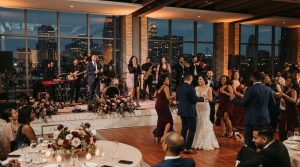
A 10 piece wedding band earns its place through musical range, not headcount. It can bring layered vocals, horns, rhythm, and violin to a reception, but the full sound still needs to suit your venue, schedule, and guest experience.
If you’re picturing a crowded stage or nonstop high-volume music, ensemble size alone doesn’t tell the whole story. A well-planned lineup can support the moments you care about, from a relaxed dinner atmosphere to a lively dance floor. More musicians can also create additional options for vocal parts and instrumental arrangements.
The R Factor serves Minneapolis-St. Paul weddings with flexible six-to-twelve-musician lineups featuring four vocalists, a horn section, a rhythm section, and violin. This guide explains what a full ensemble can add to a reception and how to weigh your venue, timeline, and priorities when choosing a lineup.
Key Takeaways
- A 10 piece wedding band can add musical texture and arrangement variety, but the lineup matters more than headcount alone.
- Vocalists, horns, rhythm, and violin can work together to shape a coordinated live sound.
- Consider the ensemble’s musical range alongside your venue’s performance space and the scale of your guest list.
- Plan music around key reception moments, including cocktail hour, entrances, dinner, and dancing.
- Compare lineup flexibility, musical range, and event coordination when choosing entertainment for a Minneapolis-St. Paul wedding.
What Does a 10-Piece Wedding Band Add to a Reception?
A 10 piece wedding band is a live ensemble of ten performers, though the mix of voices and instruments varies from group to group. The term describes the group’s size, not a standard formula. In musical terminology, a group of ten performers may also be called a musical ensemble or decet.
More musicians can create more options for arranging a song. Vocal and instrumental parts can complement one another, adding layers, harmonies, and contrasting textures. That potential range is a key benefit of a full ensemble. Headcount alone, however, doesn’t guarantee greater volume, musical quality, or a packed dance floor. The result depends on the players, arrangements, room, and how the music fits the couple’s plans.
How ensemble size changes the live sound
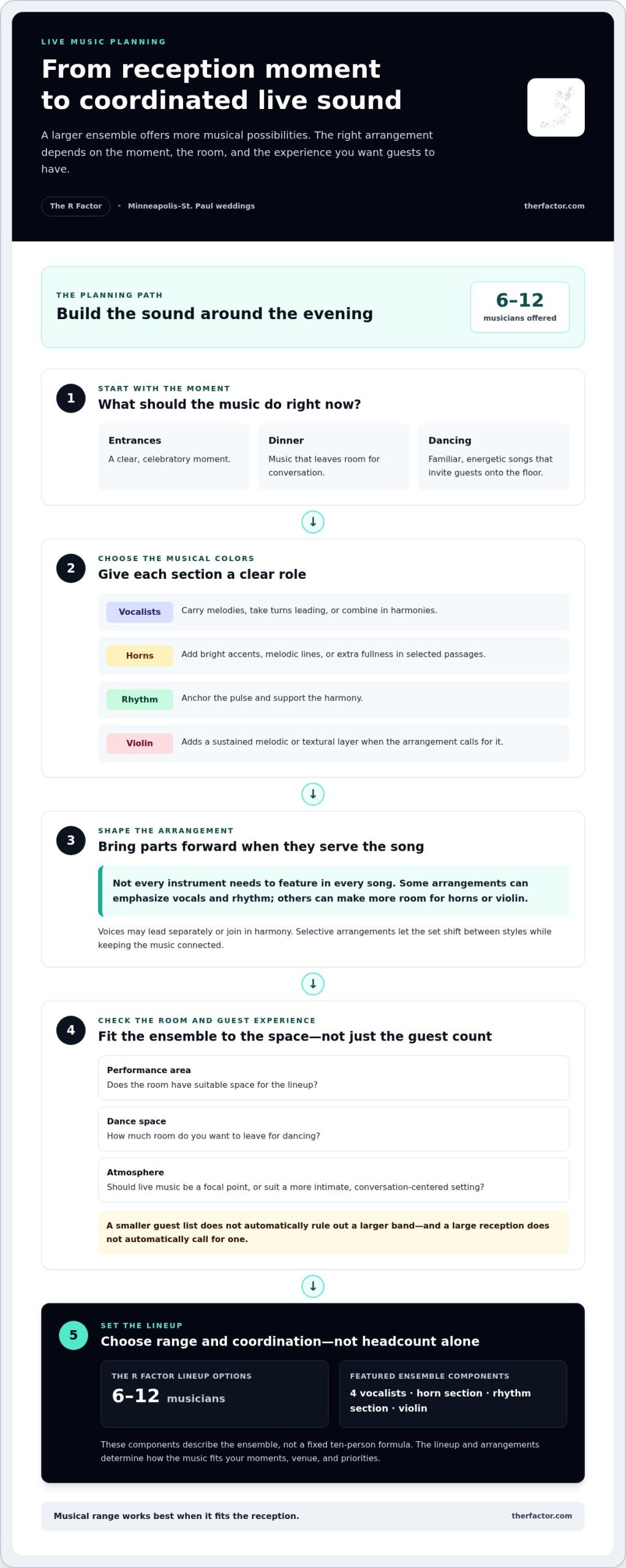
Each section can contribute a different role. Vocalists carry melodies, combine their voices in harmonies, or take turns at the lead. A horn section can add bright accents, melodic lines, or a fuller sound in selected passages. The rhythm section anchors the pulse and supports the harmony, while violin can add a sustained melodic or textural layer. Not every ten-person band uses the same sections or instruments.
The R Factor offers one example of how these elements can come together: its ensemble features four vocalists, a horn section, a rhythm section, and violin. These components create options for varied arrangements without requiring every instrument to feature in every song. The arrangement shapes the sound; the number of performers expands the possibilities.
Why a wedding reception benefits from musical range
A reception moves through different moods. An entrance may call for a clear, celebratory moment, while dinner often benefits from music that leaves room for conversation. Later, familiar, energetic songs can invite guests to dance. Live arrangements can shift in style and intensity as the evening progresses, helping each part of the reception feel distinct instead of maintaining one energy level throughout.
That flexibility is useful when it reflects the couple’s priorities. Decide which moments deserve live music, what styles should guide the evening, and how the schedule will shape transitions. A larger ensemble may offer more ways to vary vocals and instrumentation, but it isn’t automatically the right fit for every celebration. Think of a 10 piece wedding band as a broader musical palette, then choose the approach that suits your plans.
How Vocalists, Horns, Rhythm, and Violin Shape a Full Wedding Band
A full band sounds coordinated when each section has a clear role and the arrangement gives the parts room to work together. More performers don’t mean every instrument plays at once. A thoughtful arrangement can bring voices and instruments forward at different moments, then combine them for a fuller passage or chorus.
Vocalists, horns, rhythm, and violin can combine to give a wedding band a wider palette of tones, harmonies, and musical energy. The R Factor’s ensemble features four vocalists, a horn section, a rhythm section, and violin. This describes its ensemble, not a fixed ten-person lineup: The R Factor offers performance options ranging from six to twelve musicians.
What multiple vocalists can bring to wedding songs
Multiple vocalists offer flexibility in how songs are presented. One singer might lead a number, while another takes the lead on a different style. Voices can also join for harmonies or provide contrast between sections of a song. This variety can help a cover repertoire move across different vocal styles without relying on one lead sound throughout the reception.
That doesn’t mean every vocalist needs to sing every song. The arrangement and song choice determine who leads and when voices combine. Consider whether you want the evening’s music to feel consistent or shift in character across different parts of the reception.
The role of horns, rhythm, and violin
Horns can add bold accents, melodic phrases, or extra fullness to an arrangement. The rhythm section provides a steady musical foundation, supporting the pulse and feel of dance-oriented selections. Violin brings another tonal color. It may weave through a melody or add texture where the arrangement calls for it; its presence doesn’t prescribe a particular ceremony role.
These sections work best as parts of a whole, not as a checklist of sounds that must appear in every song. Some arrangements may emphasize vocals and rhythm, while others make more room for horns or violin. That variation helps a set move between styles while keeping the music connected.
Music can help mark transitions and give shared occasions their character. The University of Illinois Press explores music in wedding rituals across cultures, a reminder that music’s role is shaped by the moment and its meaning. For reception planning, start with the moments that matter most to you, then consider how different arrangements can support them. To explore live wedding entertainment in the Twin Cities, visit The R Factor’s wedding entertainment.
Is a 10-Piece Wedding Band Too Large for Your Venue or Guest List?
Not automatically. A ten-musician lineup can bring broad musical options, but it also needs a suitable performance area and should fit the atmosphere you want. The right choice depends on more than guest count. Consider the room’s layout, how much space you want for dancing, and whether live music should be a focal point or part of a more intimate setting.
A smaller guest list doesn’t necessarily rule out a larger band, just as a large reception doesn’t automatically call for one. A dance-focused celebration may suit a prominent live presence. For an intimate gathering built around conversation, a more compact lineup may feel better suited to the room. Focus on how you want guests to experience the music, not just how many will attend.
Venue layout and performance space
Stage footprint matters, but placement matters too. The band area needs to work alongside tables, entrances, service routes, and the dance floor. Twin Cities venues have different room configurations, so don’t assume a stage or floor plan will suit every ensemble. Share the venue layout and known performance-area details during planning so the setup can be considered alongside the reception design.
Match the band scale to the celebration
Picture the reception in motion. Will guests spend much of the evening dancing near the band, or should the music complement a quieter, more conversational gathering? Consider where guests will sit, gather, and move between key moments. These priorities help clarify whether you want the fuller presence of a large ensemble or a smaller group that fits more discreetly into the event.
The R Factor offers flexible six-to-twelve-musician options, giving couples a way to match ensemble size to the scale and feel of the celebration instead of defaulting to one fixed lineup.
Use this venue-fit checklist to focus the decision:
- Performance area: Identify where musicians can be placed and how much room the setup can occupy.
- Room layout: Consider the relationship between the band, guest seating, entrances, and dance floor.
- Reception schedule: Note when music is central and when the room needs to support conversation or transitions.
- Desired atmosphere: Decide whether you want an intimate musical presence or a more prominent, dance-focused experience.
A 10 piece wedding band is a strong fit when its musical presence and physical footprint support the reception you’re planning. Review the layout as well as the guest count, then choose an ensemble scale that lets the room and celebration work together.
How to Plan a 10-Piece Wedding Band Around Your Reception Timeline
A clear timeline gives live music a defined role in the reception. Start with the event schedule, then decide where music should provide a backdrop, mark a featured moment, or invite guests to dance. This helps the band and venue team coordinate the evening without forcing every moment into the same musical mood.
Map music to the key reception moments
List the reception moments in order, from guest arrival through dancing. For each, decide whether music should sit in the background, draw attention, or energize the room. For example, cocktail hour may call for a conversational atmosphere, while an entrance can feel more celebratory and the dance portion can take a more prominent role. Let your preferences guide the choices and timing.
Keep the plan clear but adaptable. Identify the featured moments that matter to you and note where the atmosphere should change. You don’t need to specify music for every minute. A useful outline gives the entertainment team direction while leaving room to shape the performance around the reception as it unfolds.
Coordinate the band with the wedding schedule
Share the current timeline and venue layout with the entertainment team. Include the order of key events, where the band will be positioned, and any changes that could affect when music begins or pauses. Clear information helps everyone anticipate transitions, such as moving from dinner into dancing or shifting attention toward an entrance.
Before the event, review how musical moments fit the venue arrangements and schedule. Changes to event timing or room setup can affect transitions, so keep the relevant people informed as the plan develops. For a more detailed planning framework, explore the live wedding music planning guide and wedding music planning checklist.
- Outline the moments: Put cocktail hour, entrances, dinner, and dancing in sequence.
- Set the musical purpose: Mark each moment as background, featured, or dance-focused.
- Coordinate transitions: Identify handoffs and schedule changes that affect the flow.
- Review logistics: Share the timeline and room layout with the people coordinating the entertainment.
Planning helps a 10 piece wedding band serve the reception rather than dictate its pace. Build the music around your priorities, then plan your wedding entertainment with The R Factor.
Choosing a 10-Piece Wedding Band in Minneapolis-St. Paul
Choosing a full-scale band takes more than counting musicians. Focus on the sound you want, how the lineup can adapt to your event, and how the entertainment fits your reception schedule and venue. A 10 piece wedding band may offer a broad musical palette, but the right ensemble is the one that suits the celebration you’re planning.
What to look for in a full-scale wedding band
Look for a clear picture of the ensemble: its vocal and instrumental range, how its musicians work together, and how the entertainment is coordinated with the event. Decide whether you want a prominent live sound throughout the reception or more musical contrast between dinner, featured moments, and dancing. Flexibility matters because room layouts, schedules, and musical priorities differ from one wedding to another.
Ensemble size alone won’t tell you how the music will feel. Consider how the lineup supports the styles you enjoy and fits the planned performance area. When comparing a larger ensemble with a smaller lineup, focus on the actual instruments and vocalists, the range of arrangements, and how well the group’s performance options suit your event.
How The R Factor approaches wedding entertainment
The R Factor is a Minneapolis-St. Paul-area cover band for weddings and other events. Its flexible six-to-twelve-musician formats give couples options for matching ensemble size to the scale of their celebration instead of relying on a single fixed configuration. The ensemble features four vocalists, a horn section, a rhythm section, and violin, providing varied vocal and instrumental colors.
As you plan, bring your priorities together: preferred musical styles, the shape of the reception schedule, and the venue layout. Those details help guide the choice of ensemble scale and how live music can fit into the occasion. The goal isn’t to choose the largest lineup by default. It’s to choose a live-entertainment approach that feels at home in your Twin Cities celebration.
Ready to explore the possibilities? Explore The R Factor’s wedding entertainment and find a lineup that fits your reception.
Choose the Sound That Fits Your Celebration
A 10 piece wedding band can offer musical variety through layered vocals and instrumentation, but the best fit depends on your venue, reception timeline, and the atmosphere you want. Plan the music around key moments, then match the ensemble’s scale to the space and guest experience you have in mind.
The R Factor brings that flexibility to Minneapolis-St. Paul weddings and events, with performance options ranging from six to twelve musicians. Its ensemble features four vocalists, a horn section, a rhythm section, and violin. The lineup can be tailored to the scale of your celebration, without assuming that every wedding needs the same number of performers.
Make your priorities the starting point: the music styles you enjoy, the moments you want to highlight, and how you want the room to feel. Explore The R Factor’s wedding entertainment and take the next step toward live music shaped around your reception.
Frequently Asked Questions
What is a 10-piece wedding band?
A 10 piece wedding band is a live ensemble of ten performers, but its exact instrumentation varies by group. A larger lineup can support fuller arrangements and more musical layers, yet it doesn’t guarantee a particular sound or atmosphere. Look beyond headcount: identify the vocalists and instruments, consider how they work together, and decide whether that musical palette suits your reception style and venue.
Is a 10-piece band too large for a small wedding reception?
Not necessarily. Guest count alone doesn’t determine whether a ten-person ensemble will fit. The venue’s performance area, room layout, guest flow, and the atmosphere you want all matter. Review the floor plan and reception schedule as you plan. The R Factor serves Minneapolis-St. Paul weddings with flexible lineups from six to twelve musicians, so the ensemble size can suit different event scales.
What instruments are usually in a 10-piece wedding band?
There’s no single standard lineup for a ten-piece band. Groups may combine vocalists, rhythm players, and additional instrumental sections in different ways. The R Factor’s ensemble features four vocalists, a horn section, a rhythm section, and violin. That’s one example, not a universal formula. Compare the actual lineup and the musical range it can bring to your reception.
Can a 10-piece wedding band play during cocktail hour and the reception?
Live music can be planned around cocktail hour and reception dancing, as well as other key moments. The schedule, music preferences, and performance arrangements determine how the band fits each part of the event. Map music to your timeline and coordinate transitions with the entertainment team. That way, the music can support the celebration’s flow instead of interrupting it.
How much space does a 10-piece wedding band need?
There’s no universal space measurement because venue layouts and band configurations vary. Placement depends on the performance area, access, room arrangement, and how guests move between tables and the dance floor. Share the venue’s layout and floor plan during planning, then consider where the band can fit without disrupting the room’s flow. A clear layout helps guide a practical setup.
Is a 10-piece band better than a smaller wedding band?
A larger band isn’t automatically better. A ten-person ensemble can offer more musical layers and arrangement options, while a smaller lineup may feel more appropriate for an intimate room or quieter atmosphere. The right choice depends on your venue, preferred sound, and reception priorities. Compare each group’s actual lineup and flexibility rather than choosing based on headcount alone.
How do you fit a live band into a wedding reception timeline?
Start by listing key moments such as cocktail hour, entrances, dinner, and dancing. Decide what role music should play at each point, then coordinate transitions with the overall schedule and venue setup. Sharing the timeline early helps the band support the event’s flow. For more planning detail, read the wedding music planning guide for Minneapolis-St. Paul celebrations.
Recent Comments