
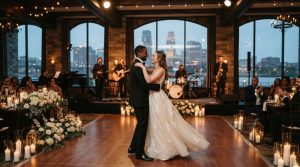
The original recording isn’t the only way to make a first dance feel personal. First dance songs for a live band can be arranged with a different tempo or instrumentation to match your mood and the way you want to dance. A live interpretation can also give a familiar song a distinctive feel.
A song’s personal meaning matters, but so do its lyrics, pace, structure, and how comfortable it feels when you move to it. Consider how to shape an arrangement, whether a live performance or the original recording suits the moment, and how to rehearse and introduce the dance. These choices can help the song feel natural as part of your celebration.
Key Takeaways
- Choose a song connected to your shared story, then consider how a change in tempo or instrumentation could make it feel more personal.
- Read the lyrics and listen for a mood that suits the moment and the way you want to dance.
- Compare the character of a live interpretation with the familiarity of the original recording before deciding which fits your vision.
- Give the band several weeks to rehearse a new song, and practice with the actual recording to get comfortable with its tempo.
- For choreography, look for a clear, steady beat and a reliable structure, then narrow your shortlist to songs that feel natural to move to.
1. Can Live Bands Create Custom Arrangements or Mashups of Multiple Songs?
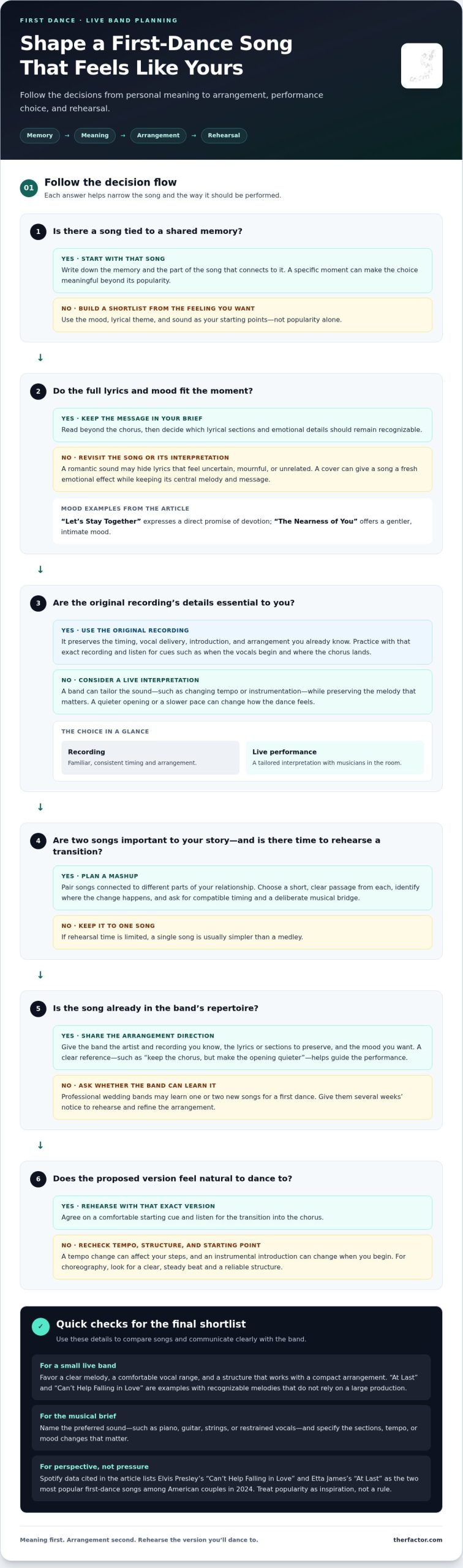
Yes. A live band can adjust a song’s tempo and instrumentation to create a custom first-dance arrangement. That can make a familiar song feel more personal while preserving the melody that matters to you. For example, a couple who loves Ed Sheeran’s “Perfect” might prefer a gentler pace or a more intimate instrumental opening. The right choices depend on the song, the mood you want, and how you plan to move together.
Start with the story behind the song. Was it playing during your first road trip, at a memorable concert, or when you realized your relationship had changed? Write down the memory and the part of the song that connects to it. Perhaps “Your Song” by Elton John recalls a favorite evening, while “Until I Found You” by Stephen Sanchez marks a more recent milestone. A specific memory can make your choice meaningful beyond its popularity.
Next, listen closely to the lyrics and structure. Mark the verse, chorus, and any instrumental passage that feels important. Then decide what should remain recognizable and what could change. An acoustic interpretation can soften a full production, while a slower tempo can make a quick song easier to dance to. A cover version also offers a fresh emotional effect while keeping the song’s central melody and message.
A mashup can bring together two songs connected to different parts of your relationship. You might pair a song from an early date with one that became meaningful later. Choose a short, clear passage from each and identify where the transition should happen. A smooth change needs compatible timing and a deliberate musical bridge. If rehearsal time is limited, a single song is usually simpler than a medley.
When choosing first dance songs for a live band, share a practical brief, not just a title. Include the artist and recording you know, the lyrics or sections you want preserved, and the mood you’re aiming for. Add a reference such as “keep the chorus, but make the opening quieter.” This gives the musicians a clear direction while leaving room to shape the arrangement for live performance.
Practice with the proposed version, not just the original track. A tempo change can affect your steps, and an instrumental introduction can change when you begin dancing. Listen for the transition into the chorus and agree on a comfortable starting cue. Whether the band performs one thoughtful arrangement or joins two songs tied to your history, the song should feel natural as you dance.
2. Matching the song’s mood and lyrics to the occasion
What first-dance songs work well for a small live band? Choose a song with a clear melody, a comfortable vocal range, and a structure that works with a compact arrangement. “At Last” by Etta James and “Can’t Help Falling in Love” by Elvis Presley are strong starting points because their melodies remain recognizable without a large production.
Match the words to the commitment you want to express. Read the full lyrics, not only the chorus. A song can sound romantic while telling a story that feels uncertain, mournful, or unrelated to your relationship. For example, Al Green’s “Let’s Stay Together” makes a direct promise of devotion, while Norah Jones’s “The Nearness of You” offers a gentler, intimate mood.
Then decide how the song should feel in the room. A slow, tender performance suits a quiet embrace; a brighter rhythm can invite guests to join after the opening. “This Will Be (An Everlasting Love)” brings an upbeat celebration, while “The Nearness of You” lasts around 3 minutes and keeps the focus intimate. Choose a mood that feels true to you, rather than selecting a song only because it appears on a popular list.
Classic choices offer familiar melodies and established arrangements. Contemporary songs can feel more personal, especially when they connect to a shared memory. According to Spotify data, Elvis Presley’s “Can’t Help Falling in Love” and Etta James’s “At Last” were the two most popular first-dance songs among American couples in 2024. Treat that as inspiration, not a rule. A less familiar song may better capture your story.
Ask the band for recommendations by describing the mood, lyrical theme, and sound you want. Mention whether you prefer piano, guitar, strings, or a restrained vocal delivery. A sample of the band’s interpretation, or a similar piece, can help you understand its musical approach. Share a shortlist and ask which songs suit the band’s instrumentation and your preferred dance style.
If your song isn’t in the band’s repertoire, ask whether they can learn it. Professional wedding bands may learn one or two new songs for a first dance. Give them several weeks’ notice so they can rehearse and refine the arrangement. Send the exact recording, identify the sections that matter, and explain any tempo or mood changes you want.
Use these details to shape live wedding entertainment around your song choice: the lyrics set the meaning, while the arrangement supports the mood. A clear brief helps the musicians create a performance that feels considered and personal.
Using a recording or live performance
Both options can make a first dance memorable, but they create different experiences. A recording gives you the exact timing, vocal delivery, and arrangement you already know. A live performance brings musicians into the room and allows for a tailored interpretation. Your choice depends on whether consistency or a personal live sound matters more for songs such as “At Last” or “Perfect.”
Choose the original recording if its details are essential to your memory. You’ll hear the same introduction, tempo, and phrasing every time, which can make practice straightforward. Rehearse with the exact recording, not a cover with a different pace. Notice when the vocals begin and where the chorus lands. Those cues help you plan your entrance and anticipate the song’s structure.
A live version can reshape the sound without changing the song’s identity. A band might play “Can’t Help Falling in Love” with a softer opening or adjust the tempo for an easier dance. That flexibility can suit a couple who wants a familiar melody with a more intimate performance. Ask for a sample recording of the chosen song, or a similar piece, to hear how the musicians interpret it.
Think through the practical differences before deciding. With a recording, the arrangement stays fixed. With live music, the performance may feel more responsive, but phrasing and instrumental details can differ from the studio version. If a specific vocal entrance or instrumental break matters, explain it clearly. Share the exact version you know and identify the moment you want preserved.
For a new song, professional wedding bands may learn one or two selections for a couple’s first dance. Give the band several weeks’ notice so they can rehearse and refine the piece. Send the artist, title, and reference recording together. Describe the mood and any preferred changes, such as a quieter introduction or a slower tempo. Clear instructions make the arrangement easier to prepare.
Use a simple rehearsal process. First, practice to the original recording and note where you naturally begin moving. Next, listen to the band’s sample and compare its tempo and structure. Then rehearse to that version, especially if its introduction differs. If the performance lasts between 3 and 4 minutes, decide whether you’re comfortable dancing for its full length or prefer a planned ending.
A recording may fit best when exact familiarity is the priority. Choose live music when you value a tailored interpretation and the presence of musicians in the room. Either way, agree on the starting cue and ending with your partner. A clear plan lets you focus on each other when the first notes begin.
4. What are the best first dance songs for a live band?
The best choice is a song that suits your story, dance style, and preferred sound. Spotify data identified Elvis Presley’s “Can’t Help Falling in Love” and Etta James’s “At Last” as the two most popular first-dance songs among American couples in 2024. Their familiar melodies give a live band a clear foundation, but popularity alone doesn’t make a song right for every couple.
For a classic, romantic feel, consider songs with a memorable melody and space for expressive vocals. “Your Song” by Elton John was originally released in 1970. Its clear lyrical focus and melodic phrasing can suit a restrained performance. A song with sustained vocal lines can create a dramatic moment. Ask for an arrangement that leaves room for the melody to breathe.
If you prefer a contemporary love song, Ed Sheeran’s “Thinking Out Loud” is another option. It won Song of the Year at the Grammys in 2016. Its measured feel can suit a close, unhurried dance. Ellie Goulding’s cover of “How Long Will I Love You,” recorded for the 2013 movie About Time, offers a softer interpretation of a familiar song. A band can shape the instrumentation to emphasize warmth rather than production scale.
Some couples want intimacy over grandeur. Norah Jones’s “Come Away With Me,” released on her debut album in 2002, has a gentle character suited to a quieter performance. Bill Withers originally released “Just the Two of Us” in 1980. Its relaxed groove can feel personal without sounding overly formal. Listen to each song’s full lyrics and structure before adding it to your shortlist.
- For classic romance: “Your Song” or “Unchained Melody” offers a strong, recognizable melody.
- For a gentle mood: “Come Away With Me” gives the performance an intimate character.
- For a relaxed groove: “Just the Two of Us” can suit couples who want an easygoing feel.
Match the song to the dance you plan to do. Foxtrot suits classic, jazzy romance associated with Frank Sinatra, Michael Bublé, and Ella Fitzgerald. Swing offers upbeat options that can translate to cha-cha or salsa. If you want guests to join later, a song with a clear transition into a livelier rhythm can help the moment open naturally.
Build a shortlist by choosing one song for its lyrics, one for its sound, and one for how it feels when you dance. Compare each song’s melody, tempo, and potential for arrangement. The right choice is one you can imagine hearing live while moving comfortably together.
5. Which first dance songs are easiest for a wedding band to perform?
Songs with a clear, steady beat and reliable structure are easier to arrange for choreography. A consistent pulse helps you find your steps, while familiar verses and choruses give the band clear musical cues. “Can’t Help Falling in Love” and “At Last” are useful examples to consider. Focus on how the song feels when you dance, not just how it sounds on a playlist.
Listen for a beat you can follow without counting every measure. Try a slow sway to Elvis Presley’s “Can’t Help Falling in Love,” then notice whether the pulse feels comfortable. Sudden tempo shifts, long instrumental passages, or an unpredictable structure may complicate planned choreography. These features can still work, but you’ll need clear cues for turns, lifts, or changes in movement.
Recognizable melodies can also make an arrangement easier to follow. Etta James’s “At Last” has a memorable vocal melody, while Elton John’s “Your Song” centers on a clear lyrical line. Ask for an arrangement that keeps the main melody and makes transitions easy to hear. A steady rhythm section can support your movement while vocals and instruments add character.
- For a slow, classic dance: Try “Can’t Help Falling in Love” and practice with its actual recording.
- For a strong melodic cue: Consider “At Last” and mark where you want to begin moving.
- For a relaxed feel: Test “Your Song” and see whether its phrasing suits your steps.
Before settling on a song, play the exact recording and dance through the sections you plan to use. Notice where the beat changes, where the chorus begins, and whether the ending feels natural. If you’re planning choreography, choose a clear starting point and ending cue. Practicing in clothing similar to your wedding outfits can reveal how a long skirt, fitted jacket, or formal shoes affect your movement.
Share those observations with the band. Identify the version you practiced, the tempo that feels comfortable, and any musical moments your routine depends on. For a new song, allow several weeks for rehearsal and refinement. A sample recording of the band’s interpretation can help you check its tempo and structure before practicing the final arrangement.
For a first dance built around a steady beat and clear cues, explore wedding entertainment that can bring your chosen song to life.
The R Factor: Wedding Entertainment
The R Factor provides wedding entertainment for couples planning a first dance with live music. Once you’ve chosen a song and its mood, share whether you want a custom arrangement. Bring the version you love, the lyrics or musical cues that matter, and how you want the dance to feel. This gives the performance a clear direction and connects your first dance with the wider celebration.
Consider The R Factor when you want live wedding music to be part of the occasion, rather than choosing a song in isolation. The ensemble offers flexible performance options, with 6 to 12 musicians to suit the scale and requirements of an event.
Contact The R Factor to plan live wedding entertainment for your celebration.
Shape the celebration around your song
Your first dance can set the emotional tone for the celebration that follows. As you finalize first dance songs for a live band, think about the feeling you want guests to carry into the evening. Decide who will introduce the dance, what they’ll say, and whether guests should join you afterward. A simple announcement and a clear cue help the moment unfold naturally without taking attention away from you.
The R Factor provides Wedding Entertainment, Corporate Event Music, and Birthday Party Performances. For your wedding, bring your preferred song and the atmosphere you want to create into the planning conversation. This gives the live music a clear role in your celebration, from the first dance into the wider event.
Contact The R Factor about your wedding and take the next step toward music that feels personal to your celebration.
Frequently Asked Questions
Can Live Bands Create Custom Arrangements or Mashups of Multiple Songs?
Yes. A live band can adjust a song’s tempo and instrumentation or join passages from multiple songs. For a mashup, choose a clear transition point, such as moving from one chorus into another song’s verse. Keep the melodies and lyrics that matter most, and share the exact recordings with the musicians. A defined transition cue helps the arrangement feel intentional rather than like two unrelated songs placed together.
What are popular first dance songs for live bands in 2026?
Elvis Presley’s “Can’t Help Falling in Love” and Etta James’s “At Last” remain useful choices to consider. Spotify data identified them as the two most popular first-dance songs among American couples in 2024. For a newer feel, compare those classics with Ed Sheeran’s “Perfect” or Stephen Sanchez’s “Until I Found You.” Choose by lyrical meaning and the mood you want, rather than popularity alone.
Which classic first dance songs sound best performed live?
“Let’s Stay Together” by Al Green, “Your Song” by Elton John, and “Unchained Melody” by the Righteous Brothers all offer recognizable melodies for a live interpretation. For a warmer, soulful sound, consider “Let’s Stay Together”; for a more dramatic vocal moment, try “Unchained Melody.” Ask the band to shape the opening and ending to fit your preferred atmosphere rather than simply copy the original recording.
What romantic first dance songs suit different tempos and dance styles?
For a classic, jazzy feel, songs associated with Frank Sinatra, Michael Bublé, or Ella Fitzgerald can suit a foxtrot. If you prefer an upbeat mood, swing offers options that can translate to cha-cha or salsa. Select the dance style first, then test whether the song’s pulse and phrasing support it. A song that feels romantic as you move is a better match than one chosen for lyrics alone.
How far in advance should a wedding band learn a special first dance song?
Give the band several weeks’ notice to rehearse and refine a new first-dance song. Professional wedding bands may learn one or two new songs for a couple. Send the exact artist and recording, then identify any essential musical details, such as a specific introduction or ending. If you have choreography, share its cues so the musicians can shape the arrangement around the moments you plan to perform.
How do you choose a first dance song that a live band can perform well?
Choose a song with a clear, steady beat and a reliable structure, especially if you plan choreography. Listen to the full recording and note where you want to begin and finish dancing. Then consider whether its melody suits the band’s interpretation and your preferred mood. A sample performance of the song, or a similar piece, can help you assess the sound before settling on your choice.
Recent Comments