

The biggest band isn’t automatically the best fit for cocktail hour. When comparing a cocktail-hour band in Minneapolis, focus on the lineup, musical style, song selection, and how the music will suit conversation. Starting prices can offer a reference point, but a quote depends on the event’s lineup, performance schedule, and venue.
It’s natural to want polished music that doesn’t overwhelm the room. A clear comparison helps you choose: consider the instruments, styles, and songs each Minneapolis-area band brings, and how they’ll fit your wedding’s cocktail hour.
Compare performance formats and song-planning options, then consider how live music can fit into the wider wedding schedule. These details help you narrow the choices and find a sound that suits the occasion.
Key Takeaways
- Compare starting-price information alongside lineup and performance details to understand what best fits your wedding plans.
- Choose a cocktail-hour setup that supports conversation and suits the atmosphere you want to create.
- Review Minneapolis-area band listings and song selections to narrow your options by sound and style.
- Consider a flexible live ensemble when you want wedding music tailored to the scale and feel of your event.
1. Band starting prices
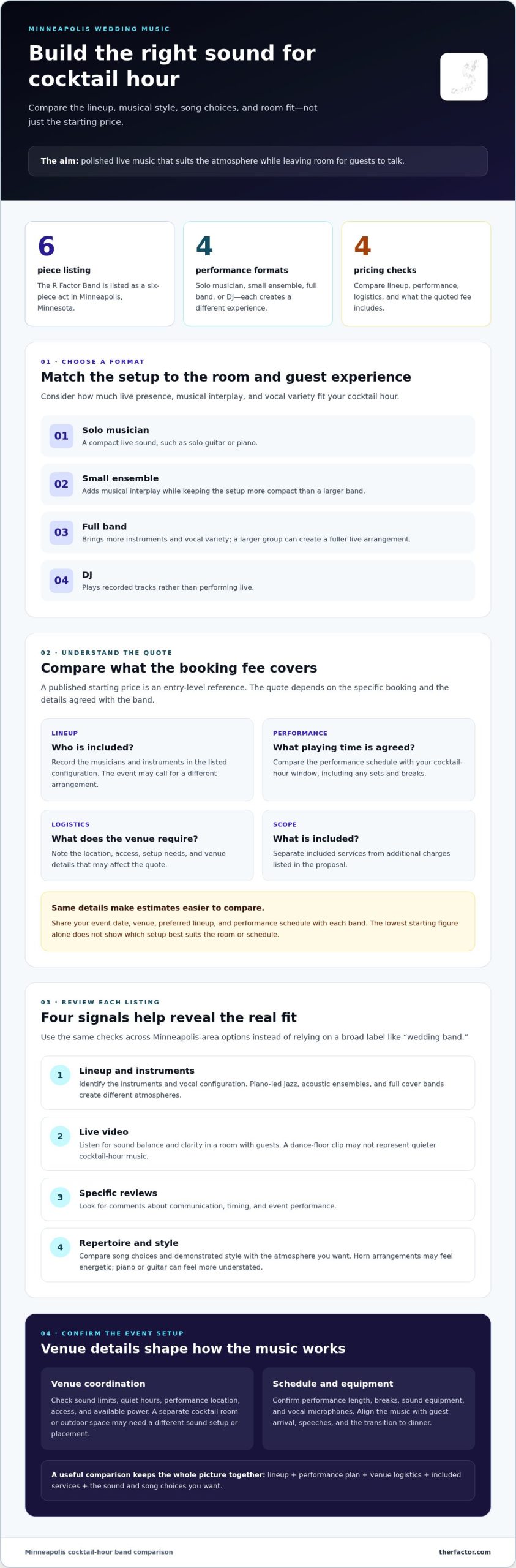
A Minneapolis cocktail-hour band’s booking fee is defined by the agreement. Compare the lineup, performance time, repertoire planning, travel, setup, and any separately listed charges. These details show what the fee covers without assuming every band bundles the same elements.
A quote reflects the specific booking. Factors include the lineup, performance schedule, event date, and venue logistics. For a useful comparison, share the same event details with each band.
A published starting price describes an entry-level configuration, which may differ from the arrangement your wedding needs. A listing might show a smaller lineup, for example, while your event calls for a different performance plan. The lowest starting figure alone won’t tell you which setup suits your room or schedule.
Use this practical comparison when reviewing a band’s pricing information:
- Lineup: Record the musicians and instruments included in the listed configuration.
- Performance: Compare the agreed playing time and how the music fits your cocktail-hour schedule.
- Logistics: Note venue location, access, and setup requirements that may affect the quote.
- Scope: Separate included services from additional charges listed in the proposal.
Compare the sound and experience each configuration offers. A compact ensemble may suit an intimate reception space, while a larger group can create a fuller live arrangement. Choose based on the room, guest experience, and musical style, not just the lowest advertised starting price.
Before requesting quotes, note your event date, venue, preferred lineup, and performance schedule. Share the same details each time so you can compare the estimates and see what each booking fee covers.
The performance schedule is agreed as part of the booking and helps shape the quote. Compare the planned playing time with your cocktail-hour schedule.
Treat these figures as broad reference points. A quote for your event depends on the lineup, playing time, date, and venue logistics.
2. Bands available for cocktail hour
A solo musician, small ensemble, full band, and DJ each create a different experience. A solo guitarist or pianist offers a compact live sound; a small ensemble adds musical interplay, while a larger band brings more instruments and vocal variety. A DJ plays recorded tracks rather than performing live. Match the format to the room, atmosphere, and guest experience you want.
Venue rules shape the setup. Ask the venue coordinator about sound limits, quiet hours, performance locations, access, and available power. A separate cocktail room, for example, may need its own sound setup, while an outdoor space may call for different placement. These details affect how musicians arrange their setup and balance volume.
Once you have a date and venue in mind, share them with the band along with your planned performance window. This gives you room to coordinate the lineup, schedule, and space, particularly when the event has several details to manage.
Equipment and microphones depend on the booking agreement and venue setup. Confirm whether the arrangement uses sound equipment and vocal microphones or the venue’s installed system. A microphone may be useful for brief announcements, even when the music itself doesn’t need one.
Performance length and breaks should be written into the schedule. A band may perform continuously or divide its music into sets with breaks; the agreed format determines how the music covers the cocktail-hour timeline. Align that schedule with guest arrival, speeches, and the transition to dinner.
Before booking, ask about the lineup, song-list planning, performance schedule, sound setup, breaks, venue requirements, and what the quoted fee includes. For corporate receptions, live music for corporate events can help create a polished atmosphere while guests mingle.
3. Minneapolis-area wedding band listings
Minneapolis-area bands can sound very different, even when their listings seem similar. Start with the format: a piano-led jazz group, acoustic ensemble, and full cover band each create a distinct atmosphere. Match the lineup to the room and the role you want music to play during the reception.
Then compare instruments, vocal style, repertoire, and performance options. A horn section can bring energy to an arrangement, while piano or guitar may create a more understated feel. Look for a clear description of the group rather than relying on a broad label such as “wedding band.”
Which Minneapolis bands have the best reviews and sample videos? Look for detailed reviews and videos that show live performances, not just promotional highlights. Compare the sound, vocals, and audience setting with your cocktail-hour plans: a dance-floor clip may not reflect quieter background music.
Use the same checklist for every listing so the comparison stays useful:
- Lineup: Note the instruments and vocal configuration shown in the listing.
- Video: Listen for balance, clarity, and how the band sounds in a room with guests.
- Reviews: Look for specific comments about communication, timing, and event performance.
- Repertoire: Compare the demonstrated style with the atmosphere you want.
For example, if one listing features lively horn arrangements and another highlights acoustic vocals, consider which better suits your venue and guests. A polished video helps, but you’ll still want to see whether the lineup and song choices suit cocktail hour.
Keep a shortlist of Minneapolis options, noting each lineup, review themes, and relevant video samples. This makes it easier to compare the experience each band presents instead of choosing by listing title alone. Take your preferred sound and event schedule into the next step: reviewing wedding songs that will set the atmosphere you want.
One concrete listing to compare is The R Factor Band, which offers a six-piece act in Minneapolis, Minnesota. Treat that lineup description as a starting point, then check the instruments, vocal arrangement, and performance examples against your reception plans. A specific lineup can make comparisons more practical, but fit still depends on the sound you want.
4. What Minneapolis bands play cocktail hour music for weddings and events?
Minneapolis bands can shape cocktail hour around jazz standards, acoustic pop, soul, or familiar classics. Choose the atmosphere first: a jazz trio can suit relaxed conversation, while a vocalist with a rhythm section brings a more prominent live sound. The right fit depends on your room and how much you want the music featured.
Build a short song list around the mood and guest experience. For a mellow opening, ask about a jazz treatment of “At Last”; for a brighter feel, consider an acoustic arrangement of a familiar pop song. These are ideas to discuss, not assumptions about every band’s repertoire. Share preferred artists, genres, and songs early.
Review the set list for variety, not just favorite titles. A balanced cocktail-hour selection can move between recognizable melodies and softer instrumental pieces. In a compact room where guests will mingle, choose arrangements that leave space for conversation. In a larger reception area, vocals and fuller instrumentation may carry more clearly.
Use these steps to make your music request precise:
- Name the mood: Describe it as elegant, upbeat, relaxed, or classic.
- Share examples: Provide favorite songs or artists as references.
- Set priorities: Identify must-play selections and styles to avoid.
- Plan the transition: Match the final cocktail-hour songs to the next reception moment.
For a wedding, coordinate cocktail-hour music with the ceremony and reception so each part feels connected. At a corporate event, consider how the music supports conversation and the gathering’s tone. The same song can feel different in a quiet lounge and a lively reception space, so describe the setting when discussing selections.
A clear brief helps a band shape a coherent set rather than assemble unrelated requests. Include the venue atmosphere, guest preferences, and desired energy. Use those details to plan live music for your wedding and create a consistent musical direction for the event.
Options include jazz trios for relaxed conversation and vocalists with rhythm sections for a more prominent live sound. Minneapolis bands can also shape cocktail-hour sets around acoustic pop, soul, and familiar classics.
The R Factor: Wedding Entertainment
The R Factor can help shape wedding entertainment around your cocktail-hour atmosphere and event scale. Its live cover band offers flexible configurations from 6 to 12 musicians, with four vocalists, a horn section, rhythm section, and violin. That range gives couples options for matching the ensemble’s presence to the reception space and desired sound.
Consider The R Factor when you want live music to connect cocktail hour with the wider wedding celebration. Share your preferred musical style, venue setting, and event schedule to guide the performance plan.
For live music tailored to your wedding, contact The R Factor.
Shape the Atmosphere You Want Guests to Remember
Define the feeling you want guests to carry into the rest of the celebration. A cocktail-hour band in Minneapolis can do more than fill a pause between events: music can welcome guests, bring family together, and set the tone for the reception.
Choose a direction that feels true to your gathering, then make it part of the event plan. A clear musical identity can connect the welcome and celebration without making either moment feel overproduced. Focus on the experience you want, rather than adding complexity for its own sake.
The R Factor provides Wedding Entertainment, Corporate Event Music, and Birthday Party Performances. If live music feels like the right fit for your event, contact The R Factor to discuss your plans.
Make your next decision with confidence, and give your guests a warm start to the celebration.
Frequently Asked Questions
How much does it cost to hire a cocktail hour band in Minneapolis?
The price depends on the event and is provided after a quote request. For a cocktail-hour band in Minneapolis, the main cost factors include the lineup, performance schedule, event date, venue logistics, and any song or arrangement planning. To make a quote more useful, share your venue, timing, and preferred musical direction together so the proposed booking reflects your actual event.
Which Minneapolis cocktail hour bands have the best reviews and sample videos?
Prioritize Minneapolis-area listings with detailed reviews and live video examples. Compare the band’s sound, vocals, audience setting, and feedback about communication and timing with your cocktail-hour plans.
How far in advance should you book a cocktail hour band in Minneapolis?
Start planning once you have a date and venue in mind. That gives you room to coordinate the lineup, schedule, and space.
Recent Comments