

A memorable party is shaped by its ending as much as its opening. To understand how to create a fun party atmosphere, build the gathering around your guests’ interests, give everyone a reason to connect, and close with a warm, personal goodbye. A thoughtful send-off helps the celebration feel complete rather than simply petering out.
Good music, thoughtful details, and room to mingle help guests relax and connect. Even a carefully planned event can lose its rhythm if the purpose is unclear or guests don’t know when it’s winding down. A few deliberate choices can make all the difference.
This guide shows you how to shape a gathering around its guests, choose a meaningful purpose, and create a welcoming flow from arrival to farewell. You’ll also learn how to use the theme, setting, and music to support the mood, then signal the close with genuine thanks and a personal goodbye.
Key Takeaways
- Build the gathering around what your guests enjoy, then plan ways to help them mingle and move comfortably.
- Give the event a clear purpose so its activities and atmosphere feel connected.
- Use the theme, room layout, decorations, and lighting to set a mood that feels intentional.
- Close the celebration with a clear signal, a sincere thank-you, and a personal goodbye.
Creating a theme based on guests’ interests
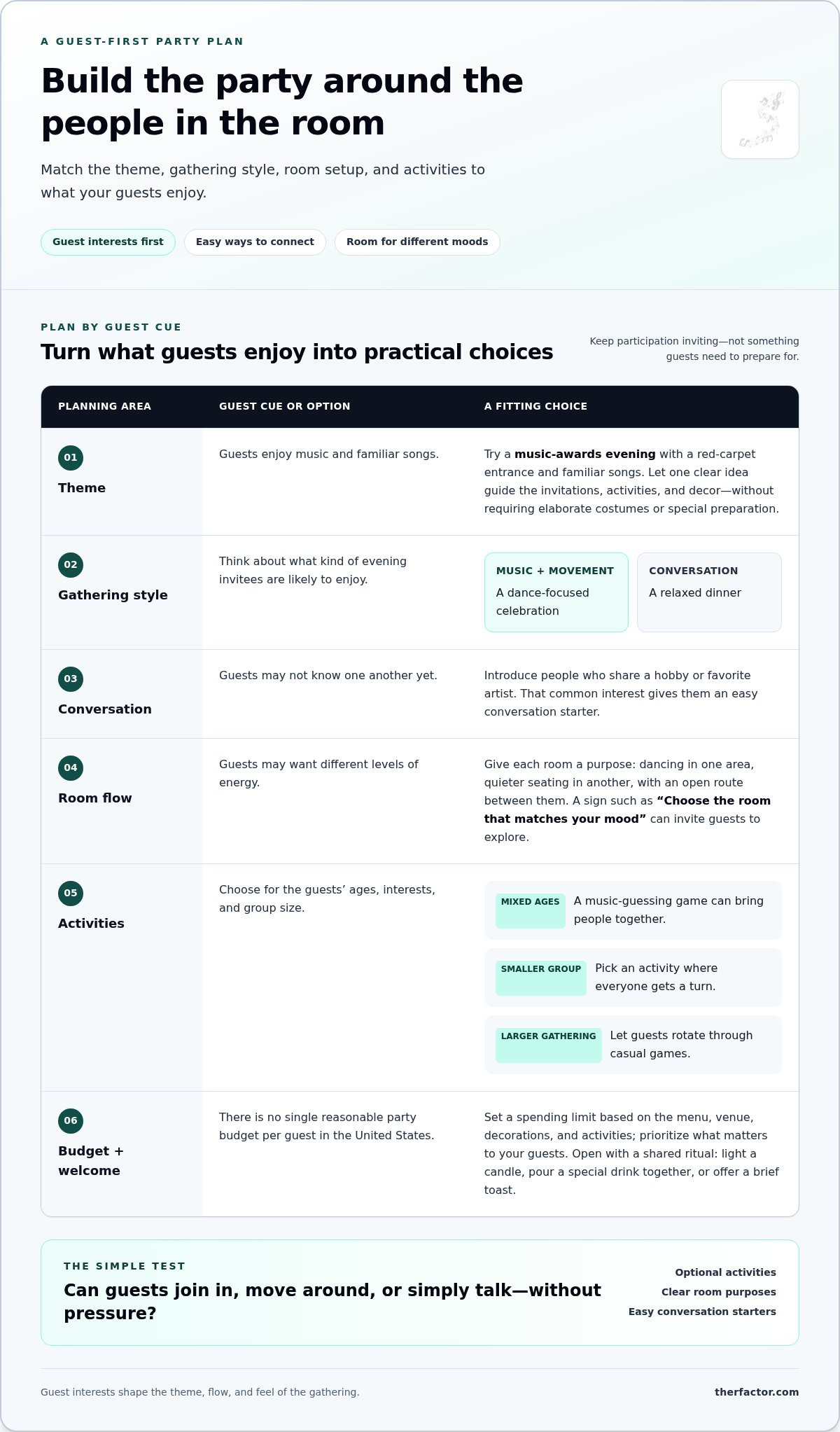
- A practical way to create a fun party atmosphere is to center the theme on something guests enjoy. For music lovers, try a music-awards evening with a red-carpet entrance and familiar songs. Choose one clear idea to guide the invitations, activities, and decor. Guests should be able to join in without elaborate costumes or special preparation.
- Invite people who are likely to enjoy the kind of event you’re planning. A dance-focused celebration suits guests who enjoy music and movement; a relaxed dinner may be a better fit for people who prefer conversation. Consider how invitees know one another, and introduce guests with a shared hobby or favorite artist to give them an easy conversation starter.
- Encourage movement by giving each room a distinct purpose. Set up dancing in one area and quieter seating in another, with an open route between them. A playful sign such as “Choose the room that matches your mood” can prompt guests to explore. At dinner, invite everyone to take turns speaking so no one is left out.
- Choose activities that suit your guests’ ages, interests, and group size. For mixed ages, a music-guessing game can bring people together; for a smaller group, pick an activity where everyone gets a turn. At a larger gathering, guests can rotate through casual games. Keep participation optional, so people can join in or continue chatting without pressure.
- There’s no single reasonable party budget per guest in the United States. Set a spending limit based on the menu, venue, decorations, and activities, then prioritize what matters to your guests. To create a fun party atmosphere, start with a welcoming ritual: light a candle, pour a special drink together, or offer a brief toast. That shared gesture gives the celebration a personal opening.
Setting a meaningful purpose for the gathering
- Write one sentence explaining why the gathering matters. A birthday might celebrate a milestone, while a neighborhood dinner could help new residents meet. Then ask “why” repeatedly to uncover the deeper objective. Priya Parker suggests that four answers can reveal a gathering’s real purpose. Use that purpose to decide which activities belong and which would distract.
- Turn the purpose into a simple invitation for guests to connect. For a welcome dinner, ask each person to make two new friends during the evening. For a celebration honoring someone’s achievements, invite guests to share a brief memory or toast. Keep the prompt relevant to the occasion, and let guests participate in a way that feels comfortable.
- Make food and drinks easy to find without interrupting conversation. Set up a buffet in the kitchen, arranging plates, utensils, food, and drinks in a clear sequence. Invite guests to help themselves and leave room for people to approach and step away. A self-serve setup gives you more time to join the gathering.
- Use table settings and decor to reinforce the gathering’s purpose. For a dinner about shared memories, place a few conversation prompts beside each setting. For a celebration, choose a centerpiece that reflects the guest of honor’s interests. Keep decorations low enough for guests to see and talk across the table.
- Give the gathering a beginning and an ending that reflect its purpose. Priya Parker’s “15 Toasts” dinner format brings 15 guests together around one table to give toasts on an open-ended theme. Adapt the idea with a short opening toast, then close by returning to the occasion’s central idea. These bookends help the event feel cohesive.
Ending the party with a clear signal and personal goodbye
- Choose a clear closing moment instead of letting the gathering fade without explanation. Once the main activity ends, thank everyone aloud and say the celebration is winding down. After a birthday toast, for example, you might say, “Thank you for making this evening special. I’m glad we could celebrate together.” A warm, direct cue helps guests understand that the event is ending without feeling abruptly dismissed.
- Recall a specific highlight connected to the gathering’s purpose. At a birthday party, mention a favorite story guests shared or a moment when everyone joined the celebration. At a housewarming, thank guests for helping make the new home feel welcoming. Keep the reflection brief and sincere. A concrete memory makes your thanks feel personal rather than routine.
- Bring the planned activity to a natural close before giving your final thanks. Finish the last game, toast, or group conversation, then announce the close. If a playlist has supported the evening, choose a final song that suits the mood. Don’t start a new activity after signaling the end. A clear sequence prevents mixed messages and gives guests time to collect their belongings.
- Walk each guest to the door and offer a personal goodbye. Use their name, thank them for coming, and mention a detail, such as a funny story or thoughtful toast. You might tell someone you enjoyed hearing about their recent creative project. This small exchange recognizes each guest and gives them a natural moment to leave.
- Make the departure practical as well as warm. Keep coats and bags accessible, and point out the exit rather than leaving guests to search. Around 11 p.m., a host might set out a pitcher or two of ice water for guests who are driving. If someone is still talking, thank them personally and repeat that you’re bringing the gathering to a close. A consistent, courteous cue ends the evening clearly.
How to choose a party theme, decorations, and lighting
- Choose a theme that sets the mood you want guests to experience. An elegant dinner might use simple linens and soft lighting, while a festive birthday could feature colorful accents. Look to current news, social media, or pop culture for a timely idea. Keep the theme easy to understand, so guests can recognize it without lengthy instructions.
- Plan the room layout before placing decorations. Move furniture to create clear routes between the entrance, seating, food, and any dance area. A central table can become a focal point, while smaller seating clusters encourage conversation. Keep the space near the doorway open so arriving guests can enter comfortably instead of crossing through a crowd.
- Use decorations to reinforce the theme without competing for attention. Match table settings, centerpieces, and other details to one visual idea, such as a garden-inspired dinner with greenery and natural textures. Keep centerpieces low enough for guests to see across the table. A few coordinated details make a stronger impression than unrelated decorations on every surface.
- Choose lighting to suit the mood and the room’s purpose. Soft uplighting or twinkling fairy lights can create a warm feel, while colorful LED accents add energy to a dance area. Warm colors such as red and orange are associated with excitement; cool blue and green tones are associated with calm. Use these associations selectively rather than throughout every room.
- Connect sound, lighting, and space so each area feels intentional. In separate rooms, play different music genres and decorate each room to match its sound. For a holiday gathering, one host invited guests to share two photos of happy moments from the past year for a tree display. This personal detail gives guests a reason to notice and enjoy the setting.
The R Factor: Wedding Entertainment
The R Factor’s Wedding Entertainment brings live music to the celebration, supporting the mood and giving guests a shared focus. A live performance can complement your theme, from a polished reception to a lively dance-floor atmosphere. The R Factor also offers Corporate Event Music, Birthday Party Performances, and Private Parties.
First, decide what kind of event you’re hosting and the atmosphere you want. Then consider how live music can fit naturally into the gathering, whether you’re celebrating a wedding, birthday, or company event. A performance that suits the occasion can connect the room’s energy to its purpose.
Contact The R Factor to discuss live music for your celebration.
Make Your Next Celebration Feel Personal
Knowing how to create a fun party atmosphere gives you a strong starting point. Choose the feeling you want guests to remember, then decide what will bring it to life. If music should help shape the experience, a live performance can add a shared focal point and give the event its own character.
The R Factor offers Wedding Entertainment, Corporate Event Music, and Birthday Party Performances. These services suit hosts planning a wedding, company gathering, or birthday celebration who want live music to play a meaningful part in the occasion.
Make your plans with your guests and the event’s purpose in mind. For live music at your celebration, contact The R Factor. A thoughtful next step can help turn your plans into a gathering guests will remember warmly.
Frequently Asked Questions
What are the key elements of a fun party atmosphere?
A fun atmosphere comes from matching the event’s mood with its music, lighting, layout, and activities. Make those choices work together: a relaxed dinner benefits from comfortable seating and softer music, while a lively birthday may call for upbeat songs and an open dance area. Give guests a shared point of interest, such as a photo display or themed conversation prompt, to spark natural interaction.
How do you create a party playlist and manage music volume?
Build a playlist that follows the gathering’s changing energy, starting with welcoming songs and adding livelier tracks when guests are ready to dance. Mix upbeat selections with mellow music so conversation still has room. Test the sound from different parts of the space before guests arrive. If people have to raise their voices to talk, lower the volume; keep the dance area energetic without overwhelming nearby seating.
How should you arrange a party space for mingling, dancing, and seating?
Arrange the room so guests can move between conversation, refreshments, and dancing without crossing the busiest spots. Keep a clear route from the entrance, group chairs into small conversational clusters, and place the dance area away from quieter seating. In an open-plan room, position refreshments along an edge rather than beside the entrance. This layout helps arriving guests settle in without interrupting people already mingling.
How can you make guests feel welcome and encourage people to mingle?
Greet each guest personally, introduce them to someone with a shared interest, and offer an easy conversation starter. For example, connect two guests who enjoy cooking, then mention a dish they might discuss. Pay attention to the flow of conversation: if one person dominates, invite another guest to share their perspective. A thoughtful introduction helps people join in without making socializing feel forced.
Recent Comments