
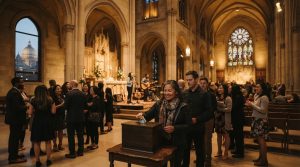
A successful fundraiser needs more than a donation link: it needs a clear purpose and a plan for using the funds raised. For a fundraiser band in St. Paul, live music can make the event more engaging, while a clear donation plan helps organizers explain how supporters can contribute. For a cathedral fundraiser, pledges can also help leaders plan budgets and ministry.
It’s natural to ask whether a pledge is the same as a payment, what donations can support, and how music fits into fundraising. These distinctions matter when supporters decide how to give and organizers build an event around a cause.
This article explains how pledges can contribute to cathedral budgeting, how donations may support worship and music, and which practical steps help organizers plan a fundraiser. It also looks at how live entertainment can shape an event and how a local band can fit into the program.
Key Takeaways
- Start planning with the fundraiser’s purpose, audience, event format, and music needs clearly defined.
- Prepare a concise performance proposal that explains how the music will support the charity event and its atmosphere.
- Understand that a cathedral pledge estimates intended giving for the year and helps with budget and ministry planning.
- Keep pledges and payments distinct: making a pledge does not automatically set up recurring donations.
- Match live entertainment to the event’s scale and guest experience to make the program feel cohesive.
How can I book a band for a fundraiser in St. Paul?
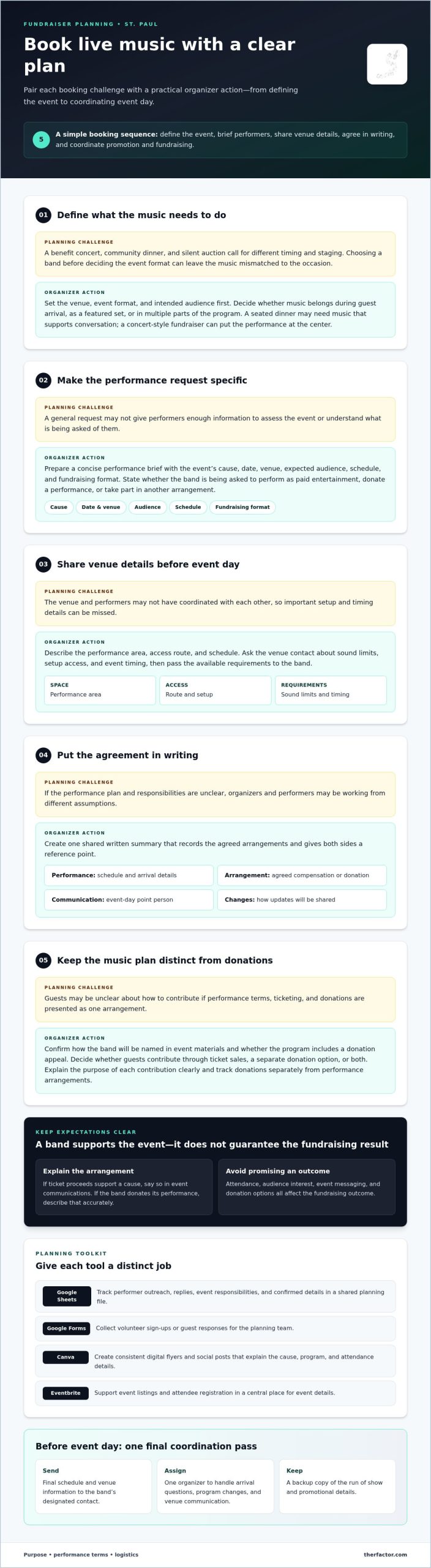
A fundraiser band in St. Paul can help make a cause-centered gathering lively and well paced. Start by defining the fundraising purpose, audience, event format, and role of the music. A benefit concert, community dinner, and silent auction each call for different timing and staging. Decide what experience you want guests to have, then use that goal to guide your booking decisions.
Use this sequence to brief performers and keep planning decisions organized:
- Set the event framework. Choose the venue, event format, and intended audience before approaching bands. A seated dinner may need music that supports conversation, while a concert-style fundraiser can place the performance at the center. Identify whether the band plays during guest arrival, a featured set, or multiple parts of the program.
- Prepare a clear performance brief. Include the event’s cause, date, venue, expected audience, schedule, and fundraising format. Explain whether the band is being asked to perform as paid entertainment, donate a performance, or take part in another arrangement. Keep the request specific so performers can assess the event accurately.
- Share practical venue details. Describe the performance area, access route, schedule, and any venue requirements already provided by the organizer. Ask the venue contact about sound limits, setup access, and event timing. Pass those details to the band rather than assuming the venue and performers have coordinated.
- Agree on the plan in writing. Record the performance schedule, agreed compensation or donation arrangement, arrival details, and the person responsible for event-day communication. State how any change will be communicated. A shared written summary gives the organizer and band one reference point.
- Coordinate promotion and fundraising. Confirm how the band will be named in event materials and whether the program includes a donation appeal. Keep ticketing, donations, and performance arrangements distinct in your records. This makes it easier to explain the purpose of each contribution to attendees.
Be clear about the fundraising arrangement. If ticket proceeds support a cause, explain that in event communications and tell guests how they can contribute. If the band is donating its performance, describe that accurately. Don’t imply that a band’s appearance guarantees a fundraising result. Attendance, audience interest, event messaging, and donation options all affect the outcome.
For a benefit in St. Paul, Minnesota, keep the music booking separate from the donation plan. Decide whether guests will contribute through ticket sales, a separate donation option, or both, then explain the arrangement in event materials. For example, a community dinner might include live music while its invitation clearly explains how attendees can support the cause. Assign an organizer to track donations and answer questions, while keeping the band’s performance terms distinct from charitable contributions.
Use straightforward tools to coordinate the work, with each one supporting a different task:
- Google Sheets helps track performer outreach, replies, event responsibilities, and confirmed details in one shared planning file.
- Google Forms can collect volunteer sign-ups or guest responses, keeping event information organized for the planning team.
- Canva helps create consistent digital flyers and social posts that explain the cause, event program, and attendance details.
- Eventbrite supports event listings and attendee registration, useful when organizers need a central place to communicate event details.
Before event day, send the final schedule and venue information to the band’s designated contact. Appoint one organizer to handle arrival questions, program changes, and communication with the venue. Keep a backup copy of the run of show and promotional details. When the purpose, performance terms, and logistics are documented, you can focus on welcoming guests and presenting the cause clearly.
How can local bands apply to perform at charity events in St. Paul?
When approaching charity events, bands can make a concise proposal that explains the performance and its fit with the cause. Start with organizations whose audiences and event formats suit your sound. A neighborhood fundraiser, school benefit, and corporate charity event each call for a different musical approach. Tailor your pitch to the specific event rather than sending every organizer the same general message.
Prepare a small, reusable application package before contacting event organizers. Keep the materials current, easy to open, and focused on the details the charity needs to make a decision. A concise, polished submission makes practical information easy to assess.
- Identify a suitable event. Review the organizer’s mission, audience, and public event information. For example, a family-focused community benefit may need a different repertoire from an evening reception. Explain briefly why your band’s style fits that particular event.
- Write a direct introduction. State the band’s name, musical format, and interest in performing. Mention the charity or event by name, then connect your sound to its audience. Avoid broad claims about being the perfect choice; give the organizer a concrete reason to consider your application.
- Show what the performance sounds like. Include a short performance video or audio sample that represents the proposed lineup and style. Choose a recording with clear sound and a complete example of the band’s work. A lengthy collection of unrelated clips makes evaluation harder.
- Describe the proposed set. Offer a practical outline, such as music during guest arrival followed by a featured performance. Include the expected performance format and any relevant repertoire considerations. Keep requests about the charity’s program distinct from the band’s own performance needs.
- Clarify the arrangement. State whether you are proposing a donated performance, a paid booking, or another specific contribution. Don’t assume the organizer can infer your terms. Clear wording lets both sides discuss the event on a shared basis.
- Follow up professionally. Record the date of your application and the organizer’s contact in a tracking sheet. If you send a follow-up, refer to the event by name and restate your interest briefly. Keep the message courteous and useful, not repetitive.
A strong application explains how the band can support the event’s purpose. For a benefit concert, describe how a focused set can anchor the program. If music is part of a dinner or reception, explain how it can complement that format. Don’t promise a particular fundraising total: proceeds depend on the cause, audience, event design, and donation process.
Minneapolis offers a notable example of artists connecting music with a community goal. Sophia Eris shared an Instagram post about Auntie’s on July 1, 2020. This was a Minneapolis initiative, not a St. Paul charity-event application. It illustrates how named artists, a clear venue goal, and public communication can give supporters a defined project to understand.
Use practical tools to assemble and manage your application:
- Instagram helps organizers discover performance clips and see concise updates about a band’s work.
- Google Drive keeps a press kit, audio samples, and event-specific proposal together in a shareable folder.
- Canva helps prepare a clean one-page band profile or event graphic without replacing the application’s written details.
- Airtable can organize charity contacts, submission dates, follow-ups, and outcomes in one application tracker.
For a corporate fundraiser in St. Paul, explain how live music can fit the event schedule and guest experience. Organizers planning that format can explore live music for corporate events as one option for shaping the program.
Where an event includes fundraising, keep the band’s performance proposal separate from donors’ personal giving decisions. Local charitable organizations in the Minneapolis and St. Paul area often highlight community impact figures in their annual reports; those metrics describe the organization’s overall work, not a promise about a particular event.
People age 70½ or older may be eligible to make a qualified charitable distribution directly from an IRA to an eligible charity. St. Paul’s Episcopal Cathedral advises donors to ask their IRA custodian or tax adviser whether a qualified charitable distribution is appropriate for them. Bands can leave questions about this giving option to donors and their advisers.
The R Factor: Wedding Entertainment
The R Factor provides Wedding Entertainment for couples planning a live music program for their celebration. The same performance expertise can also suit charity events built around a wedding, reception, or community celebration. For fundraisers with a corporate format, its Corporate Event Music can help shape the atmosphere around the program. Birthday Party Performances and Private Parties offer options for other personal events.
Choose the format that fits your event’s purpose, audience, and schedule. Live music can create a shared experience while guests arrive, celebrate, or take part in the event program. The R Factor offers flexible performance options, with 6 to 12 musicians, to suit different event scales and requirements.
Planning a wedding or fundraiser in the Minneapolis-Saint Paul area? Contact The R Factor to discuss live music tailored to your event.
Shape the Next Event Around Its Purpose
A successful benefit is more than a performance. It gives guests a clear reason to gather and a meaningful way to participate. Before setting the program, decide what atmosphere will help your audience connect with the cause, then make the purpose easy to understand in invitations and announcements. That focus can guide decisions about music, timing, and how the event welcomes supporters.
For organizers looking for a fundraiser band in St. Paul, The R Factor performs live music for weddings, corporate events, birthday parties, and other special occasions. Consider the band when your event calls for live entertainment that complements the occasion. Share the event’s purpose and program priorities to start a focused conversation about the right fit.
Contact The R Factor to discuss your event plans. A clear purpose is a strong starting point for bringing people together around a cause.
Frequently Asked Questions
What fundraiser bands are playing in St. Paul, Minnesota?
For a St. Paul fundraiser with a corporate-event format, The R Factor is a local live-music option. Public performance lineups depend on each event, so look for the band’s name in the organizer’s announcement for the specific fundraiser you plan to attend. If you’re booking rather than attending, describe the event format, audience, and role of live music to determine whether Corporate Event Music fits the program.
Which St. Paul bands perform at charity fundraisers?
The R Factor serves the Minneapolis-Saint Paul area and offers Corporate Event Music, which may suit a charity event organized as a corporate function. For example, an organization planning a benefit reception can consider live music as part of its guest experience. The band’s stated offerings include event entertainment, but that does not establish a history of performing at charity fundraisers. Match the booking request to the event’s format and program.
Recent Comments