
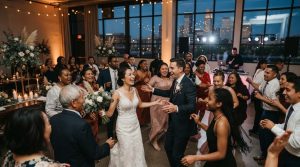
The best way of getting guests to dance at a wedding reception is to open the floor immediately after the formal dances, while guests are still together and paying attention. That segment usually takes 10 to 15 minutes, so follow it with an inviting song instead of leaving a long pause.
You don’t need a cheesy game or a string of announcements to fill the floor. A natural transition, familiar music, and the newlyweds joining in can make dancing feel like the easy next part of the celebration.
This guide explains when to start dancing, how to invite guests without putting them on the spot, and how song choices and requests can build energy. You’ll also find practical ways to shape the evening around your guests, from the first dance-floor moment to the final song.
Key Takeaways
- Use the wedding party dances to create a clear transition into open dancing, while guests are still focused on the celebration.
- Invite guests to join the newlyweds during the first dance for a warm, natural start without a forced game.
- Give the band or DJ room to read the crowd and shape the music around the energy in the room.
- Collect song requests in advance, then use them as guidance for a playlist that feels personal and keeps the evening flowing.
1. When should dancing start at a reception?
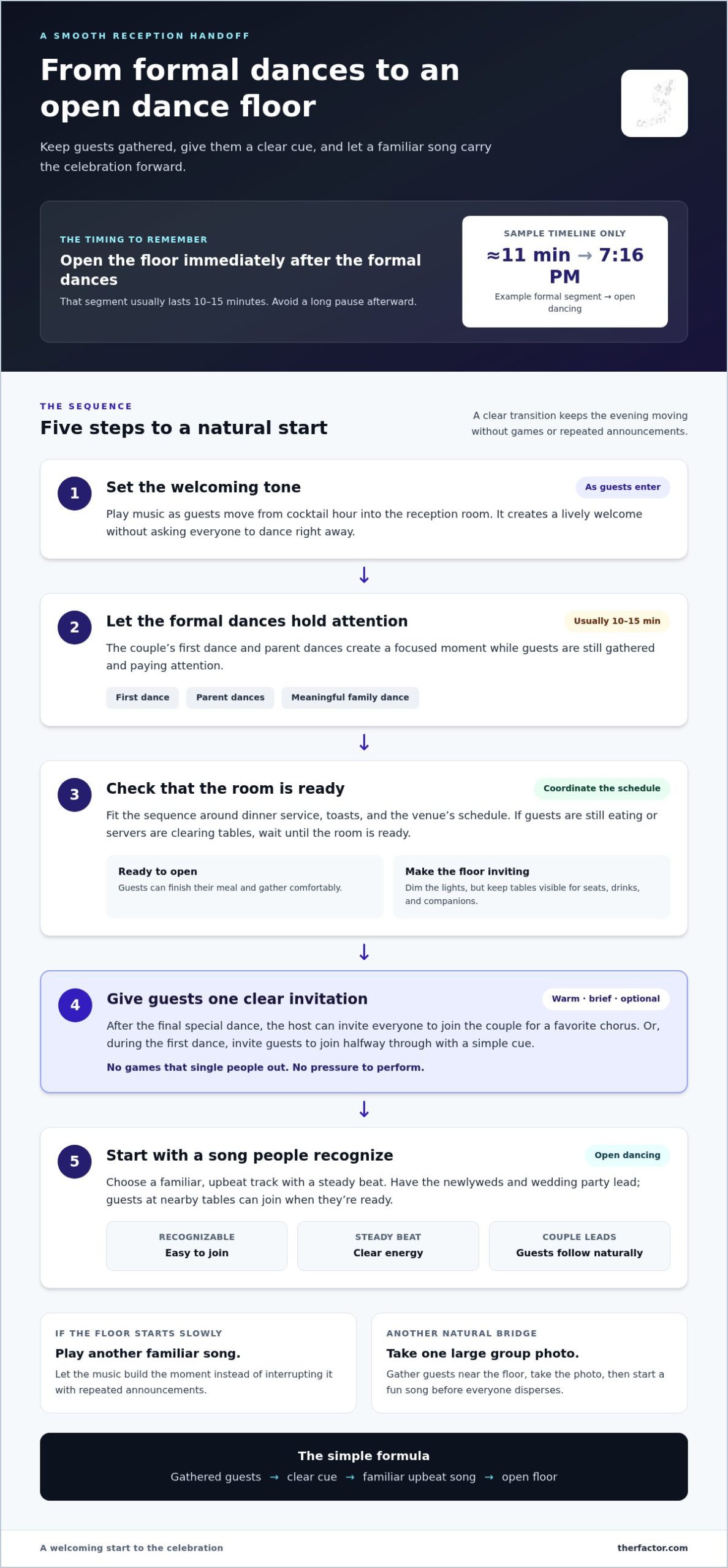
Open wedding reception dancing immediately after the formal dances, while guests are still gathered and attentive. The formal segment usually takes 10 to 15 minutes, including the couple’s first dance and parent dances, such as a father-daughter dance. Follow the final special dance with a familiar, upbeat song, then invite the wedding party and guests to join. That clear moment keeps the timeline moving instead of leaving an awkward pause.
A sample timeline opens the dance floor at 7:16 PM, after an approximately 11-minute formal segment. Treat that as an example, not a fixed start time: coordinate the sequence with dinner service, toasts, and the venue’s schedule. If guests are still eating or servers are clearing tables, wait until the room is ready. A smooth handoff gives guests space to finish their meal before dancing begins.
Start the reception with music as guests move from cocktail hour into the reception room. This creates a lively welcome without asking everyone to dance right away. Once the formal dances finish, dim the lights as the floor opens. Softer lighting can help guests feel less watched, while keeping tables visible makes it easier to find seats, drinks, and companions.
Wedding traditions can offer a natural invitation. After the newlyweds’ first dance, parent dances, or another meaningful family dance, invite everyone to join for the next song. An anniversary dance can bring couples onto the floor for a romantic song, with the longest-married couple remaining at the end. Choose traditions that suit your families and make participation feel welcoming, not compulsory.
For an easy transition, have the newlyweds and wedding party lead the first open-dance song. Choose a recognizable track with a steady beat, and let guests at nearby tables join when they’re ready. If the floor starts slowly, follow with another familiar song instead of interrupting the moment with repeated announcements. A clear cue, a welcoming floor, and a well-paced timeline make dancing feel like the natural next part of the reception.
2. How do you get guests on the dance floor without cheesy games?
Make one warm announcement, then let the music do the inviting. Skip games that single guests out or pressure them to perform. For example, the host can invite everyone to join the couple for a favorite chorus, then start an upbeat, familiar song. Keep the invitation optional and brief.
During the first dance, the newlyweds can invite guests to join halfway through the song. A simple cue from the host helps guests know when to move without interrupting the special moment. The couple can also choose a short first-dance arrangement, then transition directly into a lively track so opening the floor feels like a natural continuation.
A group photo can provide another practical bridge. After the formal dances, gather guests near the dance floor for one large photo. Once the photographer has the shot, start a fun song before guests disperse toward the tables or bar. The gathering becomes an easy first step onto the floor, rather than asking everyone to return after they’ve left.
Keep the bar in the same room as the dance floor, and place it nearby when the layout allows. Guests can move between conversation and dancing without leaving the main activity. Cocktail tables without chairs near the floor give guests a place to set drinks and pause. Choose an opening song with a recognizable beat and broad appeal, such as lively pop or classic soul, rather than a deep cut only a few guests know.
Make room for different ways to participate. Keep a clear, level route to the floor, leave space for mobility devices, and place seating at its edge. Guests sensitive to sound or lights may appreciate a quieter area away from speakers and flashing effects. A thoughtful wedding reception music plan can help coordinate the photo cue, announcement, and first open-floor song.
3. Giving the band or DJ freedom to choose songs
Give your band or DJ clear preferences, then leave room to respond to the dance floor. The couple can name essential songs, list tracks to avoid, and describe the evening’s musical direction. For example, request a mix of Motown, current pop, and country without prescribing every song or sequence. This gives performers a useful framework while allowing them to adjust as guests respond.
Use cocktail hour and dinner to establish the event’s tone. If the band plays during cocktail hour, note which styles suit that part of the reception, then explain how the mood should change for dancing. If you want a relaxed dinner followed by an upbeat dance set, say so directly. Share priorities, not a rigid playlist that leaves no room for an in-the-moment choice.
Room size also shapes the energy. A space that feels oversized for the guest count can make a dance floor seem empty, even when everyone is enjoying the evening. A room with 100 wedding guests may feel sparse if the floor and surrounding seating are spread too far apart. Choose a layout that keeps tables, bar, and dancing connected, so guests can see the action and join without crossing a large open area.
Agree in advance on how the band can adapt. If a slower song clears the floor, the musicians can switch to a familiar, more energetic track; if guests are singing along, they can sustain that mood. Discuss broad preferences, such as clean lyrics, a balance of eras, or songs that matter to family members. A short “must play” list and a clear “do not play” list are more practical than controlling every transition.
Choose the last dance together. The final song can be upbeat, sending everyone out on a celebratory note, or slow and emotional for a close shared moment. Tell the band or DJ which ending fits the couple, then let them shape the lead-in. That final choice gives the evening a deliberate finish without requiring every guest to dance to every song.
4. Collecting guest song requests in advance
Ask guests for song requests with their RSVP or wedding website response. A simple prompt, such as “What song would bring you to the dance floor?”, offers useful context without promising that every choice will be played. Ask guests to include the artist and title so similar songs don’t get confused. Then share the list with the band.
Review requests before the reception and look for patterns. If several guests name the same era or style, use that preference to guide the evening’s musical direction. Keep a short list of meaningful selections, including a parent-dance song or a track the mother of the bride especially enjoys. Personal details like these can make the music feel connected to the people in the room.
Requests are guidance, not a running order. A song that suits dinner may not work for open dancing, and a slow ballad may interrupt an upbeat stretch. Group selections by mood or moment, then give the band room to choose the right transition. For example, keep high-energy requests together as options for building momentum, rather than requiring them to play consecutively.
Set expectations clearly. Tell guests their suggestions will help shape the playlist, while final choices depend on timing, atmosphere, and how the floor responds. Keep a “must play” list for essential songs and a separate “avoid” list for tracks you don’t want. This makes your priorities clear without turning the requests into a rigid script.
Before the reception, give the completed list to the band or DJ alongside the timeline. Identify songs tied to special moments, such as a parent dance, and flag requests that suit dancing after dinner. To plan music around your guests’ preferences, discuss your wedding music plans with The R Factor.
The R Factor: Wedding Entertainment
The R Factor provides Wedding Entertainment for couples who want live music shaped around their reception’s timing and musical preferences. After planning the first dance, guest requests, and open-dancing sequence, the next step is choosing a live band that can bring those choices together for the celebration. The R Factor is a versatile cover band, with performance options ranging from 6 to 12 musicians to suit different event scales.
Share your key songs, preferred styles, and special moments, such as parent dances, so the music supports the evening’s flow. This is a natural fit when you want live wedding entertainment, rather than a standalone DJ service. Contact The R Factor to discuss wedding entertainment for your reception.
Make the music part of your wedding vision
Getting guests to dance at a wedding reception is less about controlling every moment and more about creating a personal atmosphere. Think beyond the playlist: decide what you want guests to remember, from an elegant family celebration to a lively evening where generations share the floor. That vision can guide your choices without making the reception feel scripted.
The R Factor provides live entertainment for weddings, corporate events, birthday parties, and other special events. For your wedding, share the mood you want, the songs that matter to you, and the moments you want the music to support. A clear conversation can help shape the entertainment around your celebration.
Contact The R Factor to discuss Wedding Entertainment for your reception. Build a celebration that feels like yours, and give your guests a welcoming reason to join in.
Frequently Asked Questions
How do you get guests on the dance floor without cheesy games?
Make the invitation personal, brief, and easy to accept. The couple can ask close friends or relatives to join them for a favorite song, then let others follow naturally. Avoid singling guests out or assigning them a performance. A welcoming atmosphere also means keeping a clear path onto the floor and offering nearby seating for guests who want to enjoy the music without dancing.
When should dancing start at a reception?
Start open dancing once the formal dances and dinner program are finished and the room is ready for guests to move freely. If toasts or dinner are running late, adjust the timeline instead of asking guests to leave their tables mid-course. Give the person managing the schedule a clear cue for the transition, so there’s no long gap between formalities and the first open song.
Why don’t people dance at weddings?
Guests may stay seated because they don’t recognize the music, feel self-conscious, or can’t easily reach the dance floor. A crowded layout, a floor far from the tables, or an abrupt shift from dinner to loud music can also hold people back. Pay attention to the room: if guests are talking comfortably, a gradual change in tempo may work better than a sudden high-energy set.
How do you get wedding guests to dance?
Make joining feel natural, not like a test. Getting guests to dance at a wedding reception can begin with a few confident relatives who enjoy dancing and are happy to lead by example. Offer different ways to participate, including dancing near the edge of the floor or staying seated nearby. A mixed-age crowd may respond best when the music moves between familiar styles instead of focusing on one generation.
What songs get guests dancing at a wedding reception?
Choose songs with a recognizable opening, a steady beat, and a chorus guests can sing along to. Familiar pop, soul, rock, and dance classics can appeal across age groups, while a personal favorite gives the playlist character. Avoid stacking unfamiliar tracks together. Notice whether guests sing, clap, or move closer, then use those cues to guide the next choice.
How should a DJ or band build a wedding dance-floor set list?
Build the set around the couple’s priorities, guest requests, and the reception’s changing energy. For live music in Minneapolis-St. Paul, The R Factor has over 750 songs in its catalog and recommends selecting 50-60 songs for an event. Mark essential selections and songs to avoid, then leave room to shape transitions. A thoughtful sequence can balance different styles without making the evening feel programmed.
Recent Comments