
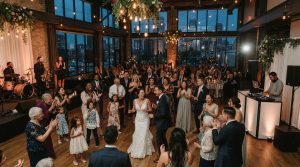
A live band is worth it for a wedding when the energy and presence of live performance matter more to you than continuous recorded music. A band can bring songs to life in the room, but it needs space and usually costs more than a DJ. The right fit depends on your budget, venue, schedule, and the atmosphere you want for your Minneapolis or St. Paul celebration.
It makes sense to weigh the cost carefully. Wedding entertainment has to suit the room, the schedule, and a crowd that may include several generations, not just sound good on paper.
This comparison covers how bands and DJs differ in cost, venue needs, and guest experience, including the trade-offs between scheduled live sets and recorded music. You’ll also find practical criteria to help choose the format that suits your celebration.
Key Takeaways
- Plan music around each part of the celebration, from the ceremony to reception dancing, rather than treating entertainment as one continuous block.
- Match the performance format to your venue: a band needs more space, while a DJ can leave more room for guests and dancing.
- Decide whether live sets and breaks or uninterrupted playback better fit your reception’s pace.
- Compare band quotes by the factors that shape them, including group size, production needs, location, and event timeline.
Live Bands at Weddings: Are They Really Better Than a DJ?
A live band and a DJ create different kinds of energy. Compare how each can support the ceremony, cocktail hour, reception, and transitions between them.
Ceremony, Cocktail Hour, and Reception Music
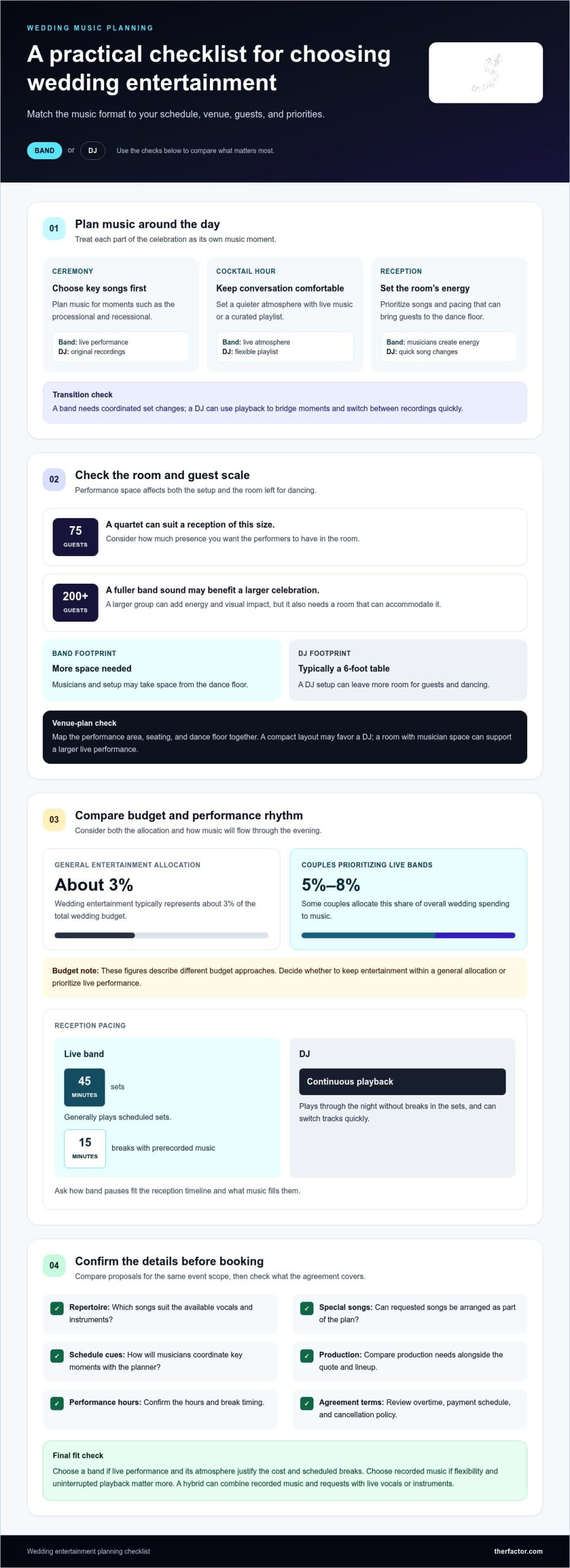
A ceremony needs music that supports key moments, such as the processional and recessional. Live musicians perform in the room, while a DJ can play selected original recordings. During cocktail hour, quieter live music or a curated playlist can keep conversation comfortable. At the reception, energy and songs that draw guests onto the dance floor often take priority.
Live music can suit each part of the day, but every part needs its own plan. Choose the ceremony songs first, set the cocktail-hour mood, then plan the reception music around the crowd and schedule. A DJ can switch between original recordings quickly; a band performs its arrangements live in scheduled sets.
| Option | Ceremony | Cocktail Hour | Reception | Transitions |
|---|---|---|---|---|
| Live band | Live performance | Live atmosphere | Musicians create energy | Coordinate set changes |
| DJ | Original recordings | Flexible playlist | Quick song changes | Playback can bridge moments |
Choose based on whether live performance or precise control over recorded versions matters most to you.
Music Spending Within the Wedding Budget
Wedding entertainment typically represents about 3% of the total wedding budget. Couples choosing live bands often allocate 5% to 8% of overall wedding spending to music. These figures describe different budget approaches, so decide which matters more: keeping entertainment within a general allocation or prioritizing live performance.
For a useful comparison, list the moments music needs to cover, then weigh the value of live musicians against the flexibility of recorded tracks. A band’s arrangement can give a ceremony song or reception favorite a distinctive feel. A DJ can play the original recording and move directly between songs. Include production and transitions in your plan, since handoffs between the ceremony, cocktails, and dancing affect the experience as much as the setlist.
Choosing entertainment for venue, crowd, and budget
Before booking, ask about repertoire, special-song arrangements, performance space, and how the band handles schedule cues. Find out which songs work well with the available vocals and instruments, and how musicians coordinate key moments with the planner. These details help you judge whether the entertainment fits the room, guest mix, and priorities for the day.
Guest count helps set the scale. A quartet can suit a reception with 75 guests, while celebrations with 200+ guests often benefit from a fuller band sound and visual impact. A large group can add energy and stage presence, but the choice should account for both the audience and the room. Consider whether guests want a prominent performance or music that leaves more attention on conversation.
Space can change the decision. Wedding bands need more venue space than DJs, and their setup may take room from the dance floor. A DJ typically needs a 6-foot table. Before choosing, map the stage or performance area, guest seating, and dance floor on the venue plan. A compact layout may favor a DJ; a room with space for musicians can support a larger visual performance.
Some couples combine formats. A DJ-and-live-band hybrid pairs recorded music and requests with live vocals or instruments. Other entertainment, such as a photo booth, interactive games, specialty lighting, or a lounge area, can complement either format. Set your budget priorities first: live musicians, a hybrid setup, or added guest activities. Then choose the combination that fits the room and leaves space for dancing.
For a live-performance option tailored to a wedding, explore wedding entertainment and consider how musicians could fit the venue and schedule.
Is a Live Band Worth It?
“Is a live band worth it for a wedding?” It depends on whether live performance matters more to you than uninterrupted recorded music. Compare the guest experience, schedule, and booking terms before choosing.
DJ and Live-Band Costs
A live band generally costs more than a DJ because it involves more musicians and production. Compare proposals that cover the same event, performance time, and production requirements. A larger lineup may have different production needs from a solo DJ setup, so look beyond the headline quote. Consider what music and hosting each proposal covers, not just the format.
Reception Energy and Guest Experience
Live musicians make the performance part of the reception, giving guests a focal point beyond the dance floor. Experienced bands can respond to the room and move among styles from different decades. DJs can switch tracks quickly and play selected original recordings. If you want guests watching musicians perform, a band may create the experience you value; if flexibility matters most, recorded music may suit better.
The evening’s rhythm is another deciding factor. Wedding bands generally play 45-minute sets, with prerecorded music during 15-minute breaks. DJs play continuously through the night without breaks in their sets. Ask how the band’s pauses fit the reception timeline and what music fills them. This helps you anticipate how the dance floor may feel between live sets.
Review the contract for performance hours, break timing, production responsibilities, overtime terms, payment schedule, and cancellation policy. These details clarify what the agreement covers and how schedule changes are handled. Make sure requested songs or extended performance time are included in writing if they are part of your plan.
For couples asking, “Is a live band worth it for a wedding?” the practical test is whether live performance and the atmosphere you want justify the cost and scheduled breaks. Choose the format that matches your preferred guest experience, then make sure the contract supports that plan.
Live wedding band price ranges
A wedding band’s quote depends on the scale and scope of the booking, not just the performance. Band size, location, production needs, and timeline all affect the proposal. A smaller group performing at the reception may be quoted differently from a larger lineup covering several parts of the day.
Start by defining what the booking needs to cover. Include the ceremony, reception, special dances, and any requested additional performance time in the schedule. Then compare quotes against the same requirements. A quote for a larger band or more production cannot be directly compared with one covering fewer musicians or simpler arrangements. Custom songs may also affect the final quote.
Location and date influence planning too. A band traveling more than 50 miles may charge mileage or require hotel accommodations. A Saturday night during peak wedding season, from May through October, can cost more than a Friday evening or Sunday afternoon. These factors can shift a quote, so compare dates and travel needs alongside the band’s size and production requirements.
Couples often ask what affects a band’s price. The main factors are the number of musicians, location and travel, production needs, performance timeline, and special requests such as custom songs. Include each requirement in the same written request so quotes reflect a comparable event plan.
Popular live wedding bands often book 12-18 months in advance. Start planning once your date and venue are set, especially if you want a particular band or a Saturday booking. Early planning gives you more room to coordinate the ceremony, reception, and special dances.
The price depends on the event details and is given after a quote request. For a clear proposal, outline the date, venue, schedule, desired band size, and production needs. Request wedding entertainment details for your celebration.
The R Factor: Wedding Entertainment
The R Factor provides wedding entertainment for couples choosing live music over a DJ-led reception. Its cover band can scale from 6 to 12 musicians, helping match the performance to the event’s size and requirements. Four vocalists, a horn section, rhythm section, and violin bring varied musical textures to the celebration.
Consider a live band when performance, a flexible lineup, and a broad mix of songs fit your plans. The R Factor performs at weddings, corporate events, birthday parties, and other private celebrations exclusively in Minneapolis, St. Paul, and the surrounding local area. Share your schedule, venue, and musical priorities to start shaping the right setup.
Contact The R Factor to discuss wedding entertainment for your celebration.
Choose the Experience You Want to Remember
If you’re deciding whether a live band is worth it for a wedding, picture the moment you want guests to remember. Is it musicians performing a meaningful song, or a dance floor moving seamlessly from track to track? Let that picture guide your choice. The right entertainment should feel connected to your celebration, not like an extra decision competing with it.
The R Factor provides wedding entertainment, corporate event music, and birthday party performances. If live music fits the atmosphere you want to create, discuss your wedding plans with the team. A clear conversation about your vision can help shape an entertainment plan around your celebration.
Contact The R Factor to discuss your wedding entertainment. Choose the sound that feels right for your day, and move forward with confidence.
Frequently Asked Questions
So…Band, DJ, or Hybrid?
A hybrid can suit couples who want recorded selections alongside live musicians for featured moments. For example, live vocals or instruments can feature during a reception set, while recorded music covers requests and transitions. Choose a full band if live performance should anchor the evening. A DJ may fit better when uninterrupted control over recorded tracks is the priority.
What Hidden Costs Should You Budget For?
Account for travel or hotel needs, custom songs, ceremony microphone arrangements, and additional performance time. A distant venue can add travel logistics, while a song outside the band’s repertoire may require extra preparation. Review the written agreement for what’s included, such as breaks, setup responsibilities, overtime terms, and cancellation policies, so you understand how event details affect the quote.
How much does a live wedding band cost in the United States?
Live-band quotes depend on band size, location, production needs, and schedule. A compact acoustic lineup and a larger show band have different requirements. For Minneapolis and St. Paul weddings, compare proposals using the same event details: date, venue, performance timeline, ceremony coverage, and desired lineup. That makes the options easier to assess without treating a general market figure as your own quote.
What is the average cost of a wedding DJ compared with a live band?
A DJ generally costs less than a live band because a band involves more musicians, gear, and production. A national average that combines wedding bands and DJs doesn’t show a separate average for either format. For Minneapolis-Saint Paul celebrations, compare quotes for the same date, venue, performance hours, and coverage. That helps distinguish the entertainment format from differences in what each proposal includes.
What are the pros and cons of a live band versus a DJ at a wedding?
A live band makes performance part of the celebration, with musicians responding to the room and creating a visual focal point. A DJ can change tracks quickly and may bring more emcee experience for announcements and formal transitions. Weigh the trade-off: do your guests value a live performance, or do precise song versions and event hosting matter more?
How many musicians should a wedding band have for different venue sizes?
Choose the lineup based on guest count, room size, and the sound you want, rather than guest count alone. A compact room with limited dance-floor space calls for a different setup from a spacious ballroom. Ask how the musicians will fit without crowding tables or reducing dancing space, then match the ensemble size to the band’s role in your reception.
Recent Comments