

A polished promo video isn’t enough to judge a wedding band. The key mistakes to avoid when hiring a wedding band are relying on edited clips, overlooking the space and sound requirements, trying to control every song, and waiting too long to book. When possible, secure your preferred band 9-12 months or more before the wedding; peak-season dates may be booked over a year in advance.
It’s understandable to focus on how a band sounds and whether it plays your favorite songs. But a strong match also depends on how the musicians perform live, fit the venue, and shape the music around the reception. This guide explains what to look for in live footage, how to plan room for the band and dance floor, and how to share essential song requests without micromanaging the set. You’ll also learn why booking early matters, so you can make a confident decision and keep the entertainment plans on track.
Key Takeaways
- Look for unedited live footage that shows how the band performs across a full reception, not just a polished highlight clip.
- Plan the band’s setup area and dance floor together so guests can move comfortably and enjoy the music.
- Share essential song choices and songs to avoid, then leave room for the band to read the crowd.
- Start booking once your venue date is set, especially if you have a particular band in mind.
1. Checking a band’s live style and full-length wedding recordings
Start with a live performance, not just a polished promotional clip. Watch a recording that shows several songs, transitions, and audience moments. Notice how the musicians work together, engage guests, and maintain energy between tracks. A studio recording can sound excellent but reveal little about the band’s live presence. Without seeing the group perform, you may miss differences in pacing, stage interaction, and how the music feels in a room.
Consider live footage and the set list together. Check whether the band’s style suits your reception and the range of guests attending. Reviews can offer context about the audience experience, while the repertoire shows the variety of music available. Look for specific comments about performance and professionalism instead of relying on promotional language alone. These checks help you decide whether the band’s sound suits your evening.
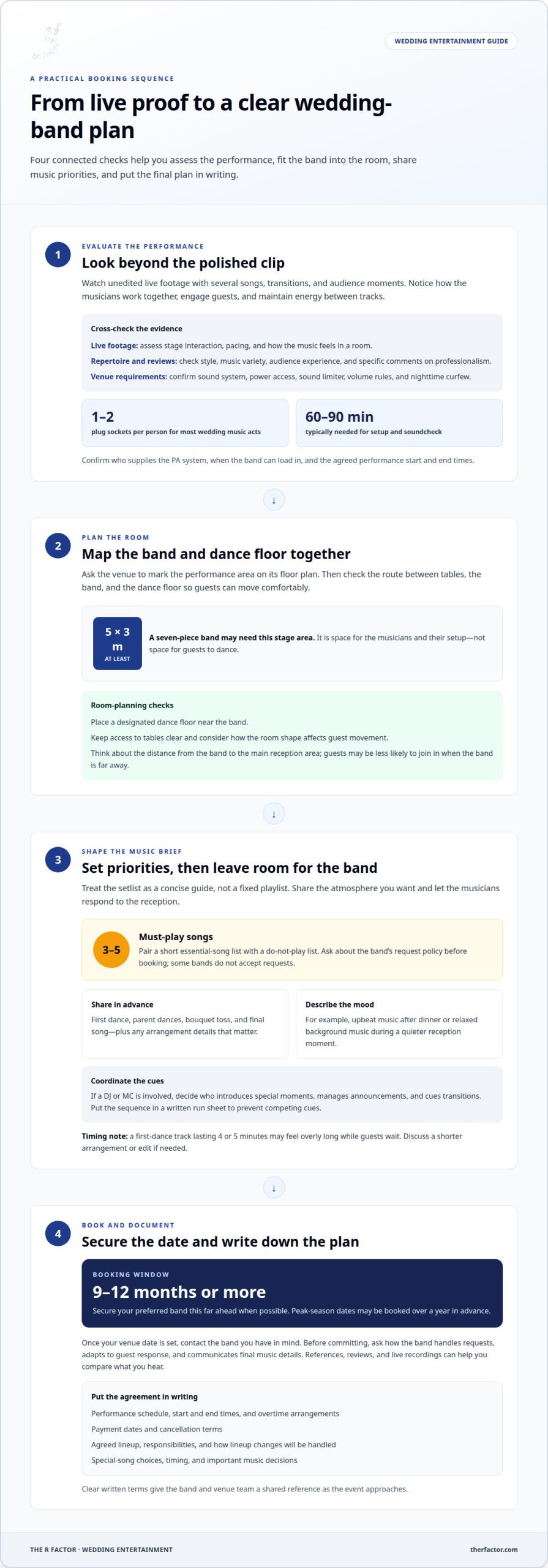
Before booking, ask the venue about its sound system, power access, sound limiter, and any volume restrictions or nighttime curfew. Wedding bands may bring their own PA system, while others expect the venue to provide one. Most wedding music acts need 1-2 plug sockets per person, and bands typically need about 60-90 minutes for setup and soundcheck. Confirm who supplies the sound equipment, when the band can load in, and the agreed performance start and end times.
Put the agreed performance schedule in writing. The agreement should also state payment dates, cancellation terms, and overtime arrangements. Clarify how changes to the lineup will be handled and what happens if the event is canceled. Clear written terms reduce uncertainty around changes and extra performance time. Also discuss volume with the band and venue, and make sure the plan follows the venue’s rules.
2. Allowing enough room for the band and dance floor
Plan the band’s footprint and the dance floor together, rather than treating them as separate venue details. A seven-piece wedding band may need a stage area of at least 5 by 3 meters. That space is for the musicians and their setup, not for guests to dance. Ask the venue to mark the performance area on its floor plan, then consider how guests will move between tables, the band, and the dance floor.
A designated dance floor gives guests a clear place to gather when the music starts. Place it near the band so guests can enjoy the performance without blocking access to tables or having to leave the room to dance. The room’s shape and guest layout affect how lively the floor feels. If the band is far from the main reception area, guests may be less likely to join in, even when they enjoy the songs.
Choose first-dance and special-song selections before the event timeline is finalized. Tell the band about the first dance, parent dances, bouquet toss, and final song in advance. A first-dance track lasting 4 or 5 minutes may feel overly long while guests wait for the party to begin. If your preferred recording runs that long, discuss a shorter arrangement or edit so the moment feels personal without delaying the evening’s energy.
For a smooth transition, decide who will introduce each special song and when the dance floor opens afterward. For example, invite guests to join the couple after the first dance, giving the band a clear cue to lift the energy. Include song choices and timing in the event plan so the band and venue team are working from the same details. Forgetting to reserve space for musicians or confirm special-song cues can lead to avoidable last-minute changes.
3. Balancing setlist requests with the band’s expertise
One of the mistakes to avoid when hiring a wedding band is treating the setlist as a fixed playlist. Give the musicians a concise musical brief, including a short list of 3-5 must-play songs and a do-not-play list. Some bands don’t accept song requests, so discuss their policy before booking. This establishes priorities while leaving performers room to respond to the reception atmosphere.
Explain the feeling you want each part of the evening to create, not just the exact tracks. For example, ask for upbeat music after dinner or a relaxed background during a quieter reception moment. Share first-dance, parent-dance, bouquet-toss, and final-song choices in advance. If a particular arrangement matters, ask how the band handles it and what alternatives could preserve the mood.
Clarify how recorded music and live performance will fit together if a DJ or MC is also involved. Decide who introduces special moments, manages announcements, and cues transitions. A written run sheet can specify whether the band should begin after an introduction or wait for another performer to finish. This prevents competing cues and gives everyone a defined role.
Before committing, ask how the band handles requests, adapts the set as guests respond, and communicates final music details. Request references from previous clients, then compare their specific comments with reviews and live recordings. Inconsistencies about the group or performance are a reason to ask for clearer documentation, not to rely on promotional claims alone.
Another of the mistakes to avoid when hiring a wedding band is leaving verbal promises out of the agreement. Make sure the written terms reflect the agreed lineup and responsibilities, and keep important music decisions in writing. A clear record gives everyone a shared reference as the event approaches and helps prevent misunderstandings during the reception.
A do-not-play list can help keep unwanted songs out of the set. Choose songs that suit your guests and the atmosphere you want, while leaving the band room to shape the set around the reception.
Booking wedding entertainment early
Once your venue and wedding date are set, contact your preferred band about the date. Couples are advised to secure wedding entertainment 9-12 months or more before the wedding when possible. This gives you time to settle the booking before attention shifts to details such as the ceremony schedule, dinner, and reception music. If a particular band is central to your plans, waiting can mean losing that option.
Timing matters especially for peak-season dates. Wedding bands may be booked over a year in advance for summer Saturdays, and waiting until 6 months before the wedding can leave your preferred band unavailable. These are reasons to start early, not a guarantee that every band follows the same booking pattern. Once your venue date is firm, make entertainment part of the next planning decisions.
Use a simple sequence: identify your preferred band, share the date and venue, review the proposed agreement, then secure the booking under its written terms. Confirm the performance schedule, payment dates, cancellation terms, and overtime arrangements before signing. Add key details, such as when the band can access the room and when music should begin. Planning early gives you more time to coordinate without rushing.
Build the music plan around the full reception, not only the evening set. Map the ceremony, cocktail hour, dinner, speeches, and dancing, then identify which moments need live music. Send special-song choices and timing details in advance so they fit the schedule. If the band needs to bring equipment, coordinate its load-in with venue access and other event preparations. A clear plan helps prevent last-minute clashes with room setup or dinner service.
Book your wedding entertainment once your venue date is set, and keep the written agreement with your planning documents. That gives you a clear reference as the schedule develops and music details take shape.
The R Factor: Wedding Entertainment
The R Factor is a natural next step when you want live wedding music shaped around your reception and venue. Its cover band offers flexible performance options, ranging from 6 to 12 musicians, so you can consider a lineup suited to your event’s scale. The ensemble features four vocalists, a horn section, a rhythm section, and a violin, bringing several musical elements together in one live performance.
If you’re planning a Minneapolis or St. Paul wedding, The R Factor can provide live wedding entertainment tailored to your event. Share your date, venue, and musical priorities to start planning a show that fits your celebration. Contact The R Factor to discuss your wedding entertainment.
Make your music plan part of the celebration
Your entertainment choice helps set the character of the event, so focus on the experience you want guests to share. A clear musical direction gives you a practical starting point for conversations with the band and helps align the music with your celebration. Keep your priorities visible as other plans take shape, and let them guide decisions without turning the reception into a rigid schedule.
The mistakes to avoid when hiring a wedding band are easier to sidestep when you make decisions deliberately and keep expectations clear. The R Factor provides Wedding Entertainment, Corporate Event Music, and Birthday Party Performances. If you’re ready to discuss live music for your wedding, contact The R Factor today. Take the next step with a plan that reflects your celebration and the atmosphere you want to create.
Frequently Asked Questions
How far in advance should you book a wedding band?
Book once your venue and date are confirmed, aiming for 9-12 months or more ahead when possible. Peak-season summer Saturdays may be reserved over a year in advance, so waiting until six months before the wedding can limit your options. If you have a specific band in mind, make entertainment one of your first planning decisions, then record the booking terms alongside your venue agreement.
How do you confirm a wedding band has the right equipment, sound setup, and backup plan?
Put the sound plan in writing: identify who supplies the PA system, what the venue provides, and which power outlets are available. Include the sound limiter, volume restrictions, load-in access, and soundcheck timing in the event schedule. Also document the response if equipment fails or a musician can’t perform, including any substitute arrangements. This gives the venue and band a shared plan for handling changes.
What should you confirm about the band’s set list, special requests, breaks, and emcee duties?
Confirm must-play and do-not-play songs, special selections, and how requests are submitted. For Minneapolis-St. Paul events, The R Factor recommends choosing 50-60 songs from its catalog of over 750. Its standard quote covers a 4-hour event with three 1-hour-and-10-minute sets and two 20-minute breaks. Break music plays through the band’s system at no cost, using your iPod or the band’s. Confirm separately who handles emcee announcements.
Recent Comments