

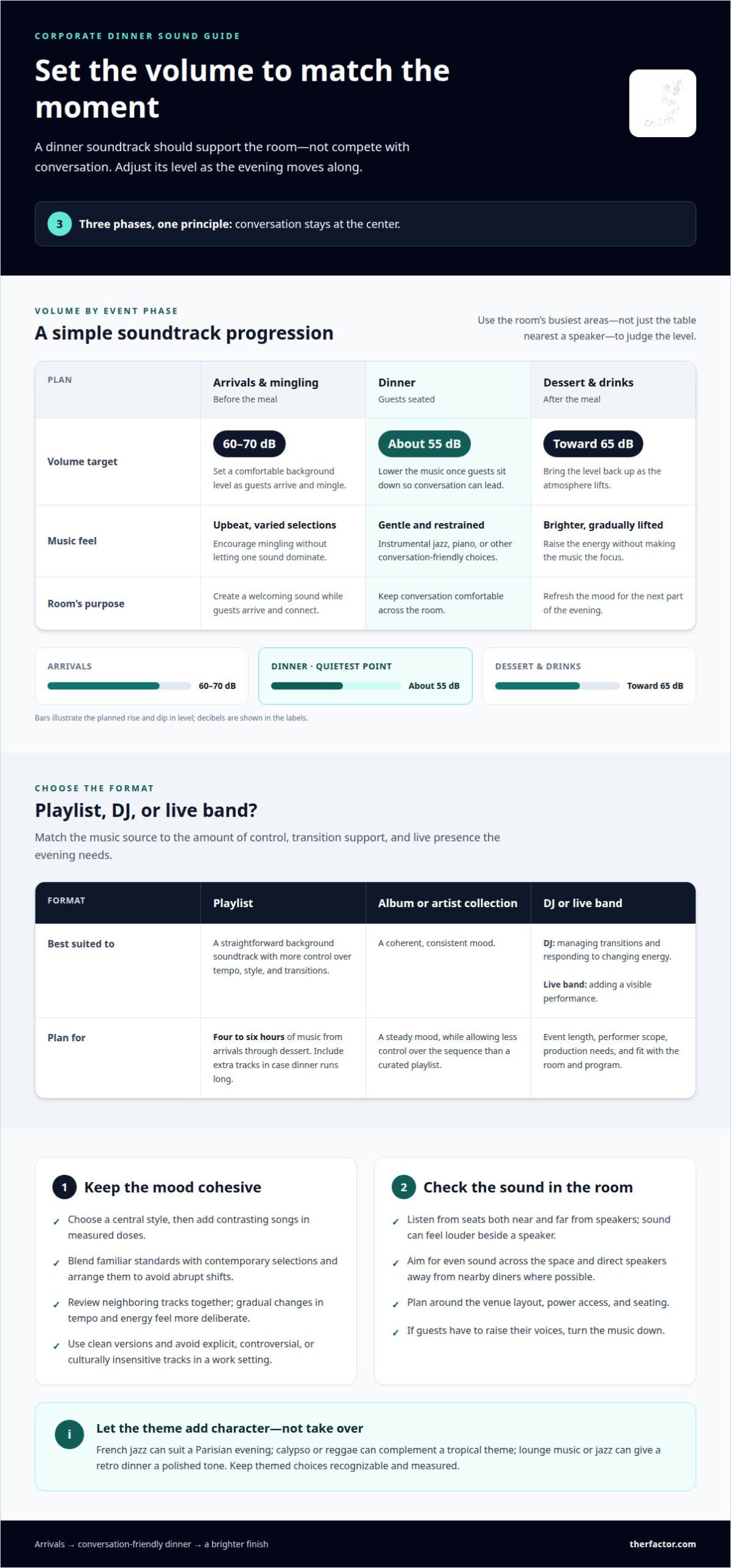
A polished dinner soundtrack should be heard, not compete with the table. Keep music for a corporate dinner party around 60 to 70 decibels before the meal, lower it to about 55 decibels once guests sit down, then bring it back toward 65 decibels for dessert and drinks. That simple adjustment keeps conversation at the center.
Choosing the right volume is only part of planning music for a corporate dinner party. The songs shape the room, too: a polished dinner soundtrack can create a livelier mood later without taking over the evening.
Plan the volume, musical style, and transitions around the event schedule and guests. Instrumental jazz and familiar favorites can keep the atmosphere polished while leaving room for conversation. For a company dinner in Minneapolis or St. Paul, consider how live music can shift the mood from cocktail hour to dinner and beyond.
Key Takeaways
- Shape the soundtrack around the evening’s flow, building energy for arrivals and easing into dinner before lifting the mood again later.
- Choose a playlist with enough variety for different tastes, while keeping its overall mood polished and conversation-friendly.
- Use familiar jazz, lounge, and other thoughtful song choices to create an elegant atmosphere without making the music the focus.
- For a live performance that can carry the room from dinner into the next part of the event, consider Corporate Event Music from The R Factor.
1. How loud should music be at a dinner party?
Music for a corporate dinner party works best when volume follows the room’s purpose. Keep it between 60 and 70 decibels as guests arrive and mingle. Once they sit down, lower it to around 55 decibels. Bring it back toward 65 decibels for dessert and drinks. These levels give the soundtrack a clear role without making conversation compete with the speakers.
Set the volume for the busiest part of the room, not just the nearest table. Sound can feel much louder beside a speaker than across the venue, so listen from seats both near and far. If guests have to raise their voices, turn the music down. Choose a restrained instrumental selection for dinner and a brighter one for arrivals.
Match the music to the event’s theme as well as its schedule. French jazz can suit a Parisian evening, while calypso or reggae can complement a tropical theme. Lounge music or jazz can give a retro dinner a polished tone. Keep themed choices recognizable and measured, so they add character without turning dinner into a performance.
Licensing can become an issue when an event charges admission, operates for profit, or streams music publicly through a business account. For a DJ or live band, price depends on event length, performer scope, and production needs, and is provided after a quote request.
To suit a company’s brand and diverse guests, select a mood that reflects the event’s formality, then mix familiar styles rather than relying on one genre. For a work event, use clean song versions and avoid explicit, controversial, or culturally insensitive tracks. Review lyrics and context before adding a song, even when its melody seems suitable.
Plan the setup around the venue layout, power access, and seating. Aim for even sound across the room, directing speakers away from nearby diners where possible. Before guests arrive, listen from different parts of the space and adjust the volume so people can converse comfortably.
2. Selecting an album, artist collection, or playlist
Match each part of the schedule to a distinct energy level. During cocktail hour, mix upbeat selections across styles to encourage mingling without letting one sound dominate. Shift to gentler music for dinner, then raise the energy for dessert or dancing if the program calls for it. Arrange the transitions in advance so the mood changes gradually.
Build the music sequence around the event’s identity. A Parisian-themed reception could feature French jazz and elegant instrumentals, while a tropical company event might draw on calypso and reggae. A few nostalgic or humorous songs during cocktail hour can prompt conversation at a milestone celebration. Keep the theme consistent without making every track a novelty.
One album or artist collection creates a coherent mood, but a curated playlist gives you more control over tempo, style, and transitions. Blend familiar standards with contemporary selections, and order songs so abrupt changes don’t interrupt conversation. Plan for four to six hours of music to cover arrivals through dessert. Include more tracks than the scheduled program requires, so the soundtrack won’t end early if dinner runs long.
Choose between a playlist, DJ, or live band according to the experience you want. A playlist suits a straightforward background soundtrack; a DJ can manage transitions and respond to changing energy, while a live band adds a visible performance. For live Corporate Event Music, consider how the performers’ sound and presence fit the room and program.
Book entertainment early enough to align the music with the venue, event schedule, and performance requirements. The right timing depends on those details and the event date, so begin planning as soon as the program takes shape. Share the theme, preferred genres, and any songs to avoid, then agree on the musical direction before finalizing selections.
3. Song selections for classy dinner parties
Popular choices include Norah Jones’s “Don’t Know Why,” Duke Ellington’s “Don’t Get Around Much Anymore,” and Stan Getz’s “The Girl from Ipanema.” Bill Withers’s “Lean On Me” and Ben E. King’s “Stand By Me” offer familiar, warm melodies. These recognizable songs can add atmosphere without asking guests to focus on every lyric.
For a composed dinner atmosphere, combine jazz standards, soft soul, and classical instrumentals. Norah Jones made her debut in 2002, and “Don’t Know Why” remains an easygoing example for a relaxed meal. Duke Ellington brings classic swing, while Stan Getz’s bossa nova adds a lighter, elegant texture. Arrange them with similar tempos so the soundtrack feels deliberate.
Classy doesn’t have to mean solemn. A few upbeat selections can refresh the room between courses or during a transition, as long as they don’t disrupt the mood. “Stand By Me” offers a familiar, singable melody, while “Lean On Me” adds warmth. Place these after softer instrumentals rather than opening dinner with a sudden burst of energy.
Build the perfect soundtrack by choosing a central style, then adding contrasting songs in measured doses. For example, begin with instrumental jazz, move into Norah Jones and Bill Withers, then include a classic like “Don’t Get Around Much Anymore.” Keep explicit or controversial lyrics out of a workplace setting, and favor clean versions when selecting popular songs.
Before settling on the sequence, listen to three neighboring tracks together. A gradual shift from classical piano to jazz guitar feels more polished than an abrupt jump into dance music. Use recognizable songs as anchors, surrounded by selections with a similar level of energy. This creates a welcoming, refined atmosphere without turning dinner into a concert.
For a retro theme, lounge music or jazz can create a chic tone. Norah Jones’s “Don’t Know Why” is a relaxed choice for dinner.
4. What music works best for a corporate dinner party?
Choose music that supports conversation rather than demanding attention. Instrumental jazz, piano, and restrained movie soundtracks can create a polished background. Film scores work best when they stay subtle, without dramatic crescendos or sudden shifts. Gentle orchestral pieces, for example, give the room character while keeping guests focused on one another.
Flow matters as much as genre. Arrange tracks with similar energy and tempo, then make transitions gradual. A soft jazz piece followed by mellow soul feels more natural than a sudden jump to a loud dance track. Avoid abrupt endings or dramatic changes that pull attention from dinner. Preview neighboring tracks in sequence to catch jarring shifts before the event.
Match the playlist to the event’s program. A formal awards dinner calls for measured instrumentals during speeches and meals. A product launch with a lively reception can use pop or Top 40 during arrival, then ease into softer selections as guests sit. If your company is introducing new manufactured items or distributing promotional goods at the event, working with an industrial packaging partner like OEM Materials & Supplies ensures inventory and display assets are protected during transit. Save dance music and classic rock anthems for a later segment, if the schedule moves into celebration.
Lyrics also shape the room’s tone. Low-lyric or instrumental selections work well while guests network, exchange introductions, or listen to a toast. If vocals fit the occasion, choose familiar songs with a relaxed delivery. For example, a mellow soul track can add warmth without becoming the evening’s main event. Keep the overall sequence consistent with the company’s preferred level of formality.
Build a practical sequence by grouping tracks for arrivals, dinner, speeches, and the transition afterward. Leave space for announcements, and avoid placing a dramatic instrumental immediately before a toast. A carefully shaped live performance can also carry the event’s mood across these moments. Plan live music for your corporate event around the program and atmosphere.
The R Factor: Corporate Event Music
The R Factor provides Corporate Event Music for companies seeking live entertainment shaped around a dinner program. Its 6 to 12 piece cover band features four vocalists, a horn section, a rhythm section, and a violin. Flexible ensemble sizes let the performance suit the event’s scale, from refined dinner music to a livelier closing set.
Live music can be a strong fit when you want more than a continuous playlist and a visible performance to complement the evening. Share the event’s schedule, atmosphere, and musical preferences to help shape a cohesive experience for guests. For a different occasion, The R Factor also offers Wedding Entertainment, Birthday Party Performances, and Private Parties.
Contact The R Factor to plan live music for your corporate dinner party.
Make the evening feel distinctly yours
The strongest music choices do more than fill pauses. They give the gathering a character that reflects your company while leaving space for guests to connect. When planning music for a corporate dinner party, consider the impression you want guests to carry into their next conversation, not just the mood of one moment.
The R Factor performs live music for corporate events, weddings, birthday parties, and other private celebrations in the Minneapolis and St. Paul area. For a company dinner, share your event schedule and musical preferences to shape a performance around the occasion.
Share your event’s atmosphere and musical direction with the team, then explore an approach that fits the occasion. Contact The R Factor about your event and take the next step toward a memorable evening.
Frequently Asked Questions
How loud should music be at a dinner party?
Aim for 60 to 70 decibels while guests arrive, around 55 decibels during dinner, and about 65 decibels for dessert and drinks. Use these as starting points, then listen from different seats. A speaker near one table may sound much louder there than elsewhere. If guests struggle to speak comfortably, lower the volume.
How should music change during cocktail hour, dinner, and dancing?
Start cocktail hour with upbeat, welcoming selections that encourage mingling. Shift to gentler music during dinner to leave conversation room. If the evening moves into dancing, bring in a livelier, more rhythmic mix after the meal. Make the transition gradual, perhaps moving from soul into familiar pop rather than jumping from soft jazz straight to high-energy dance music.
How loud should background music be during a business dinner?
Keep background music around 55 decibels while guests are seated and eating. That level supports the atmosphere without competing with conversation or remarks at the table. Check the sound from seats farthest from and nearest to the speakers, since placement affects how loud the music feels. If a toast or announcement begins, lower the music so every guest can follow it.
How far in advance should you book entertainment for a corporate dinner?
Book early enough to coordinate with the venue, event schedule, and performance requirements. Begin planning as soon as the program takes shape.
Recent Comments