
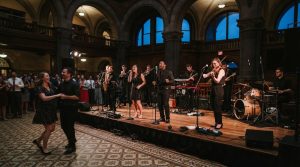
The Twin Cities’ cover-band scene has a history shaped by changing audiences and a distinct local chapter. Twin Cities cover bands include both cover and tribute acts, while an ironic wave of young-adult cover bands marked the 2010s. Since Covid, local booker Bri Becker has said she has seen more cover concerts.
Familiar songs can feel different in a live room, where a band connects shared musical memories with its own performance style. If you’re curious about local acts around Minneapolis and Saint Paul, and how the scene took shape, this article brings those threads together. It introduces local cover and tribute bands, traces the history behind the area’s cover-band culture, and explores the audiences and live-music settings that have helped sustain it. You’ll come away with a clearer sense of the scene, its roots, and what makes a cover or tribute performance distinct.
Key Takeaways
- Learn how tribute acts differ from broader cover bands and what makes the local scene distinctive.
- Trace how the Twin Cities’ cover-band culture developed, including its notable 2010s chapter.
- Plan an event booking around the occasion, venue, audience, and the performance you want.
- Clarify set length and song requests in advance to shape a live music experience that fits your event.
Local tribute and cover bands
Cover bands perform songs by multiple artists, while tribute bands focus on one act, era, or sound. A cover set might move from classic rock to pop; a tribute performance centers on one artist’s repertoire and style. That distinction helps you choose the kind of live show you want.
The Hook and Ladder in Minneapolis is associated with cover concerts, and Green Room is another named venue in Uptown Minneapolis. To find a specific performance, check the venue’s current calendar: the venue name alone doesn’t tell you which act is playing.
Hook and Ladder booker Bri Becker said she had seen more cover concerts since Covid. Becker also contrasted audience demand: an original band might sell 20 tickets, while a cover band might sell 70. Those figures illustrate why familiar songs can appeal to listeners who want an easy point of connection with a live performance.
Local musicians take different paths into performing. Jake Jackson began studying guitar tablature websites as an eighth grader. His experience points to a practical foundation of cover-band performance: learning how songs are built and developing the skills to play them with a group.
Repertoire can shape a band’s audience as much as its format. Spotify data from 2019 identified listeners aged 45-54 and 18-24 among yacht rock’s strongest age demographics. A focused tribute set can therefore attract people across age groups, while a broader cover set can offer more variety within one performance.
Start by choosing the performance format. A tribute act suits listeners who want a set devoted to one artist or sound; a general cover band offers more variety. Then look for a specific local show, such as a cover concert at the Hook and Ladder, and see whether its repertoire suits the occasion.
Twin Cities cover-band history
The local scene’s clearest documented chapter is the ironic wave of young-adult cover bands in the 2010s. These acts treated familiar songs as material for a concept, not simply as faithful reproductions. Their performances could invite listeners to enjoy the originals while also noticing the humor or commentary in the presentation. That approach gave cover bands a distinct cultural role beyond recreating a well-known sound.
Minneapolis and St. Paul’s cover-band culture is part of a much longer tradition of musicians learning and performing other artists’ work. The Beatles played four sets a night of blues and R&B covers in Hamburg. Their experience illustrates how a demanding live schedule can make covers part of a band’s development, though it is not a direct origin story for the Twin Cities scene.
For local audiences, Twin Cities cover bands can connect that tradition with the music people already know. A tribute act may focus its identity on one artist, while a broader cover group can move across styles. The 2010s wave added another possibility: a band could use recognizable songs to make a statement about taste, nostalgia, or performance itself.
Franz Nicolay of The Hold Steady published Band People: Life and Work in Popular Music in 2024. Its subject, musicians’ working lives, helps frame the practical side of a local music scene. In 2024, 64 percent of indie venues, promoters, and festivals were unprofitable. The survival of performance spaces shapes which acts audiences can see and which musical ideas reach a room.
Travel distance and fees vary according to a band’s starting point, destination, and booking terms. The Twin Cities label alone does not establish a standard travel radius or fee.
Clarify what is included in the performance before planning the event. Live music does not automatically include equipment, lighting, or a DJ between sets. Knowing how the band handles the performance and transitions helps you plan the room and schedule without making assumptions.
How do I book a Twin Cities cover band for an event?
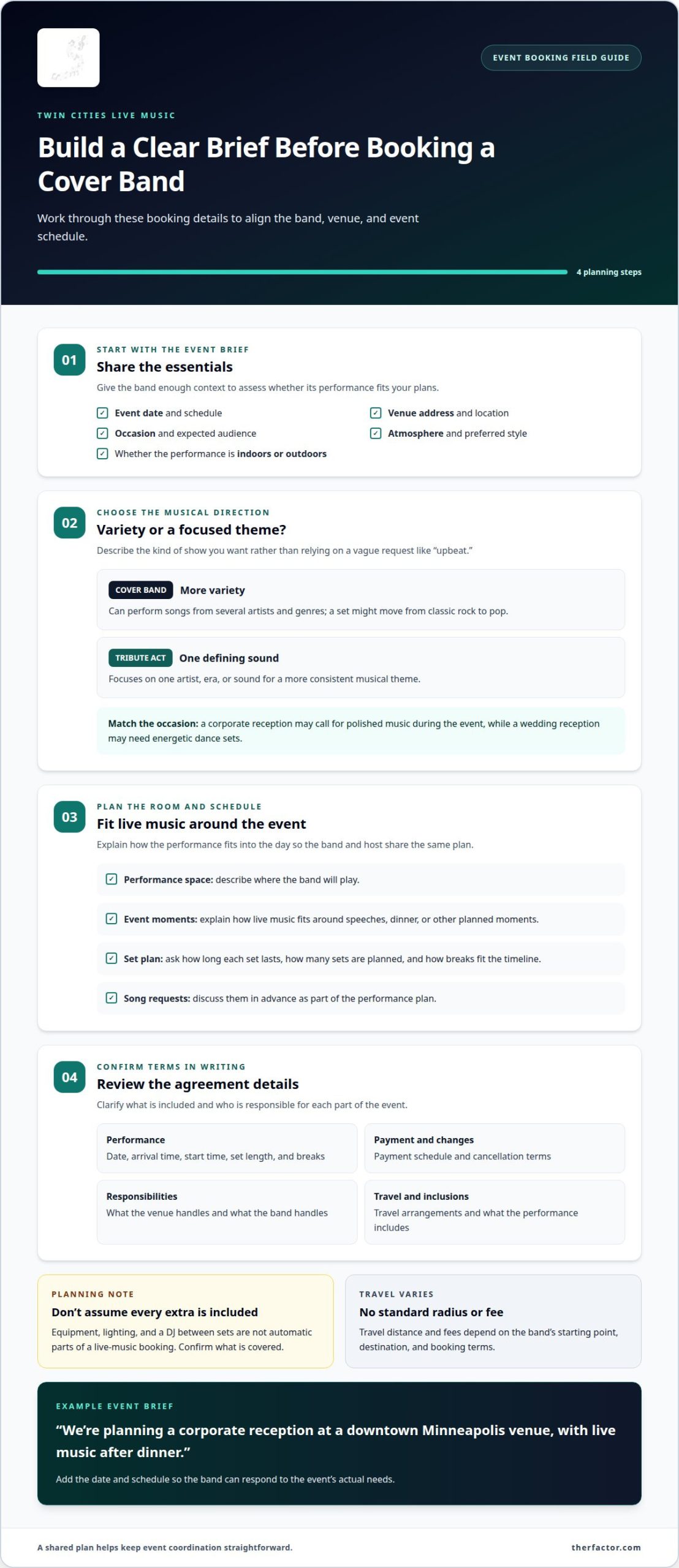
Begin with a clear event brief: share the date, venue, occasion, expected audience, and atmosphere you want. A corporate reception may call for polished music during the event, while a wedding reception may need energetic dance sets. These details help Twin Cities cover bands assess whether their performance style suits your plans.
Then define the musical direction. A general cover group can perform songs from several artists and genres; a tribute act focuses on one artist or sound. Decide whether your guests would enjoy variety or a consistent theme. Describe the direction you want rather than relying on a vague request for “upbeat” music.
- Send the essential details. Share the event date, venue address, schedule, audience, and preferred style. Mention whether the performance is indoors or outdoors.
- Describe the room and schedule. Explain where the band will perform and how live music fits around speeches, dinner, or other planned moments.
- Discuss performance terms. Ask about set length, breaks, song requests, travel arrangements, and what the performance includes. Put agreed details in writing.
- Review the agreement. Read the performance date, arrival and start times, payment schedule, cancellation terms, and responsibilities for the venue and band.
A specific inquiry gives the conversation a useful starting point. For example: “We’re planning a corporate reception at a downtown Minneapolis venue, with live music after dinner.” Include the date and schedule so Twin Cities cover bands can respond to your event’s actual needs.
Once the details align, confirm the booking in writing and keep the final schedule consistent with the agreement. A defined occasion, a suitable performance style, and clear logistics give the host, venue, and musicians a shared plan. That preparation helps keep event coordination straightforward from the first discussion through performance day.
What should I ask a cover band before booking, including set length and song requests?
Start with the performance schedule. Ask how long each set lasts, how many sets are planned, and how breaks fit your event timeline. A dinner reception may need pauses for speeches, while a dance-focused party may call for sets arranged around key moments. Get the proposed schedule in writing so everyone shares the same plan.
Set clear expectations for song requests. Ask whether the band accepts advance requests, how to submit them, and whether a particular song can be included. Share a short priority list rather than assuming every request will suit the repertoire. For example, name a first-dance song and a few crowd favorites.
- Set format: How many sets are included, how long is each, and when are breaks scheduled?
- Song choices: Can guests request songs during the event, or should requests go through the organizer?
- Repertoire: Can the band share sample set lists that show its range across artists and styles?
- Event cues: Who coordinates a first dance, announcements, or a planned pause in the music?
If you have a special request, ask how the band handles songs outside its usual list and whether it will confirm the song before the event. For a tribute act, find out how closely the set follows one artist’s catalog. A general cover group can offer broader variety, so choose requests that fit the format.
Finally, agree on how changes will be handled. Name the person who will communicate schedule updates, set the process for last-minute requests, and record the final set plan alongside the event timeline. Clear answers help prevent conflicting cues between the host, venue, and musicians. Plan your event music with The R Factor by sharing the occasion, schedule, and songs that matter most.
The R Factor
The R Factor gives event organizers a direct path from choosing live music to shaping a performance around the occasion. Its 6 to 12-piece cover band offers flexible group sizes, helping match the musical setup to the event’s scale and needs.
For a wedding, corporate event, birthday party, or private party, begin with the details that guide a strong booking: date, venue, schedule, preferred musical style, and any important song requests. These specifics help align the performance with the event rather than treating every celebration alike. The R Factor provides live music for these occasions, with a format that can suit different event requirements.
If you’re ready to discuss live music for your event, contact The R Factor.
Make the Music Part of Your Event Plan
Choose music with the experience you want guests to share in mind. Finding the right Twin Cities cover bands is about more than a familiar setlist: consider how the live performance will suit the occasion, the room, and the moments you want people to remember.
The R Factor performs live music for weddings, corporate events, birthday parties, and private gatherings. Bring your event details and musical priorities to the conversation, then discuss how the band can shape the live experience around the atmosphere you want.
Contact The R Factor to discuss your event and take the next step toward a memorable celebration.
Frequently Asked Questions
What are strong cover-band choices for weddings and events?
For a wedding or event, choose a band whose sound suits the guests and the occasion. Twin Cities cover bands differ in repertoire and performance style, so consider whether you want broad variety or a focused musical theme. The R Factor performs live at weddings, corporate events, birthday parties, and private gatherings. Share your priorities when discussing the performance.
Which Minneapolis and St. Paul cover bands play rock, pop, country, or Top 40?
Check each band’s repertoire for the genres and songs you want to hear. The R Factor has a catalog of over 750 songs, which gives event organizers a basis for discussing musical direction. Twin Cities cover bands differ in their selections, so name specific artists or styles in your inquiry. A few examples can clarify your preferences better than a broad genre label.
Where can I find live cover bands in Minneapolis and St. Paul this weekend?
To find performances this weekend, check current event calendars for Minneapolis and St. Paul venues, including the Hook and Ladder and Green Room. Search for cover or tribute shows, then review the listing for the date and performance details. Venue programming changes, so the calendar is the practical way to find a specific show.
Which local cover bands are popular, and what genres do they play?
No single popularity ranking captures what every audience prefers. Instead, compare acts by format and repertoire: tribute bands focus on a particular artist or sound, while general cover bands can offer wider variety. For an event, match the music to your guests and the atmosphere you want. Reviewing song selections and performance examples can help narrow the options.
What venues and bars in the Twin Cities regularly host cover bands?
The Hook and Ladder in Minneapolis is associated with cover concerts, and Green Room is another named venue in Uptown Minneapolis. Check current listings to see which act is playing, since the venue name alone does not identify a specific performance.
Recent Comments