
Geography can make a bigger difference than a band’s city label suggests. A wedding band based in St. Paul is 9 miles from Minneapolis, so Minneapolis-area coverage can extend beyond the city itself. When comparing the top wedding bands in Minnesota, consider whether a group serves your venue and whether its live performance suits your reception.
It’s natural to focus on sound and song choices, but practical fit matters too. This guide covers Minnesota wedding bands and DJs, explains how Minneapolis-area service coverage can shape your options, and shows what to look for in couples’ reviews.
You’ll also learn what live wedding entertainment can include and how to match a band’s lineup and performance style to your event. Use these details to build a shortlist around the celebration you’re planning.
Key Takeaways
- Use venue location and travel coverage to judge whether a band is a practical fit for your Minneapolis-area wedding.
- Read couples’ reviews for specific details about performance, communication, and how the music worked across the celebration.
- Compare live bands and DJs by the atmosphere and kind of entertainment you want, not just by their format.
- Look at ratings alongside musical style, ensemble size, and event fit to build a shortlist that suits your plans.
Minneapolis-area service coverage
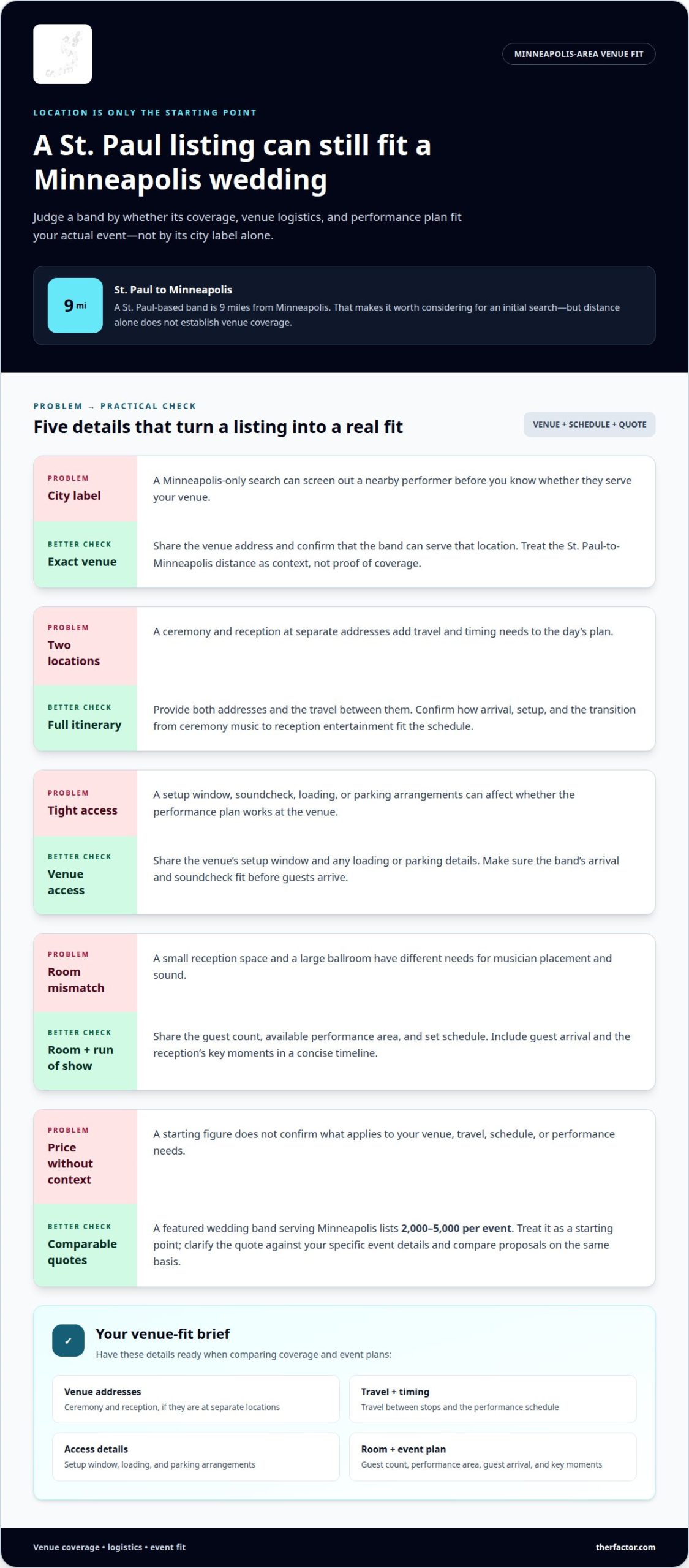
A wedding band listed in St. Paul, Minnesota, is 9 miles from Minneapolis. That distance shows why a city label alone can narrow a couple’s view. A Minneapolis venue and a St. Paul-based performer may both belong in an initial search. The practical question is whether the band can serve your exact venue and event schedule.
Start with the venue addresses. A Minneapolis reception has one destination, while a ceremony at a separate location adds another stop to the day’s plan. Share both locations when discussing the schedule. Travel between them affects arrival timing, setup, and the transition from ceremony music to reception entertainment.
Venue access matters as much as distance. A reception room may have a defined setup window before guests arrive, so the band’s arrival and soundcheck need to fit that schedule. A downtown Minneapolis venue may also have specific loading or parking arrangements. Include these details in the event plan.
The room also shapes the performance plan. A small reception space and a large ballroom have different needs for musician placement and sound. Share the guest count, available performance area, and set schedule so the band can plan around the venue. A concise timeline should include guest arrival and the reception’s key moments.
Before comparing performers, note the ceremony and reception addresses, any travel between them, and the performance timeline. Then consider whether the band’s service area and logistics fit those details. A St. Paul listing may be relevant to a Minneapolis wedding, but distance alone doesn’t establish coverage. Venue access and the event schedule matter too.
For budget planning, a featured wedding band serving Minneapolis, Minnesota, lists a price of 2,000 – 5,000 per event. Treat that figure as a starting point for a direct conversation rather than a substitute for confirming what applies to your plans. Ask the band to clarify its quote against the venue, schedule, travel between locations, and performance needs, then compare proposals on the same basis. This keeps service coverage and cost in view together.
Couple reviews and testimonials
How can couples assess a wedding band’s reviews, videos, and song lists when choosing a provider? Compare several reviews for specific details about communication, timing, and how musicians handled the reception. Then watch performance videos and compare the sound with the song list, including classic selections and the couple’s preferred style.
Specific examples are more useful than general praise. A review describing a transition from dinner music to dancing offers practical context. One that mentions coordination around a first dance may show how performers fit key moments into the evening. Look for recurring details across couples’ accounts instead of relying on a single glowing comment.
Videos provide evidence that written testimonials can’t. Listen for vocal blend, instrumental balance, and how the musicians engage with guests. Check that the recording shows a live performance, then compare it with the band’s repertoire. If you want a classic first-dance song followed by upbeat reception sets, the samples can help you judge whether the range suits your plans.
Which contract, cancellation, and overtime terms should couples discuss with a wedding band? Read the written agreement for the performance schedule, payment milestones, cancellation conditions, and how additional playing time is handled. Confirm how schedule changes are documented, and clarify any overtime rate and approval process before signing.
Use reviews to shape questions, not assumptions. If couples mention a smooth transition between ceremony and reception, ask how that timing would work for your event. If a video shows a particular lineup, compare it with the lineup described in the agreement. This connects public feedback with the booking details.
For a closer look at wedding entertainment options, consider how live performance can match your reception’s musical direction.
Minnesota wedding bands and DJs
Choosing between live musicians and a DJ starts with the sound you want for the reception, not a universal ranking. Compare musical style, lineup, what the quote covers, and your event date to find the right fit.
Genre and lineup comparisons
Match the band’s musical range to the atmosphere you want. A set moving from classic songs to dance music may suit a reception with varied tastes. Lineup size also shapes the live sound and stage presence. Consider the venue, guest experience, and whether vocals, horns, or other instruments matter to your plans.
Price inclusions
A band provides a quote based on the event details. Travel, sound, lighting, lineup, and performance schedule can affect what the quote covers. Compare written proposals by checking which elements are included, which are separate, and how setup or additional playing time is handled. A clear breakdown makes proposals easier to assess.
Discuss the venue’s sound and lighting requirements as well. A ballroom and a smaller reception room may call for different arrangements. Put agreed inclusions in the contract instead of relying on assumptions from a package description.
Top-rated band options
Minneapolis ranks second among Minnesota cities for wedding band requests, with 4,378 quotes in the past year. Those figures show local interest, but they don’t establish a quality ranking. Build a shortlist around review details, performance videos, genre range, and the lineup offered for your event. Give more weight to specific examples than to a rating alone.
Compare each option with your reception priorities. A strong classic repertoire may suit one couple, while another may prefer a broader dance set. The right fit depends on the sound and format you want.
Booking timing
In Minneapolis, the average time from request to booking a wedding band is 3.7 days. This measures the request-to-booking interval, not how far ahead couples should begin planning. Start discussions once your date and venue are set, then address availability and event details directly.
Before booking, discuss the performance schedule, travel, sound and lighting, cancellation terms, and overtime process. Confirm what the contract includes and how changes will be recorded. A written agreement gives everyone a shared plan for the wedding day.
What are the top-rated wedding bands in Minnesota?
There’s no single ranking that fits every Minnesota wedding. The right choice depends on your musical priorities and event format. Compare review patterns, performance examples, repertoire, and lineup. A high rating matters most when the comments describe details that match your reception plans.
Use a consistent shortlist process. First, group bands by musical style, such as classic pop, rock, or a broader dance repertoire. Next, compare reviews for examples of communication and performance, then watch available live videos. Finally, match each band’s proposed lineup and schedule to your venue and reception plans. This makes “top-rated” a practical measure of fit, not just a label.
Minnesota ranks 28th among U.S. states for wedding band requests. That statewide figure offers context, but it doesn’t rank individual performers or reveal which style suits your event. Diane Martinson has more than 20 years of professional singing experience. Experience is one factor to weigh alongside current performance samples and couples’ feedback.
When comparing the top wedding bands in Minnesota, separate measurable signals from personal preference. A review score summarizes one kind of feedback; comments about a first dance, transitions, or guest engagement provide specific context. A couple planning a classic set can prioritize relevant repertoire, while a reception centered on dancing may call for a different musical range.
Before settling on a shortlist, note each candidate’s review themes, performance style, and lineup details. A shortlist of the top wedding bands in Minnesota should reflect the event’s musical direction and schedule, not ratings alone. For a live-band option tailored to a wedding reception, explore wedding entertainment that fits your plans.
The R Factor: Wedding Entertainment
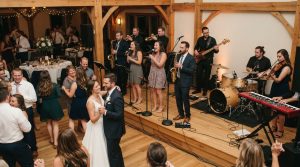
The R Factor provides wedding entertainment through live performances tailored to the scale and requirements of each event. Its cover band can range from 6 to 12 musicians, giving couples a choice of ensemble size for their reception.
The lineup features four vocalists, a horn section, a rhythm section, and violin. That combination gives the performance several musical elements to consider when shaping the event’s sound. Couples planning a Minneapolis-area wedding can discuss how the available lineup fits their venue, reception schedule, and musical preferences.
The R Factor also performs at corporate events, birthday parties, and private parties. For a wedding, the band is a fit when live entertainment suits the celebration better than a DJ-only format.
Contact The R Factor to discuss wedding entertainment for your event.
Shape the music around your celebration
Choosing among the top wedding bands in Minnesota is ultimately about finding live music that supports the feeling you want guests to remember. Think beyond the song list: consider how music can welcome guests, accompany important moments, and bring the reception together. Sharing that vision gives your entertainment plans a clear direction.
The R Factor provides wedding entertainment, corporate event music, and birthday party performances. For your wedding, discuss the venue, schedule, preferred musical styles, and the moments that matter most. These details help shape a performance around the celebration.
A strong next step is to bring your date and event priorities together and discuss the kind of live performance you have in mind. A considered plan can make entertainment feel integrated from the first guest arrival through the final moments of the reception. Contact The R Factor about your wedding to discuss your plans and take the next step with confidence.
Frequently Asked Questions
Which Minnesota wedding bands specialize in live music for receptions?
The R Factor provides live wedding music for ceremonies, cocktail hours, and receptions. Couples can shape the performance around the event’s musical direction by selecting songs from a catalog of over 750 options; the band recommends choosing 50-60 songs for the event. For example, a couple might select songs for key moments and the reception’s overall feel.
Which wedding bands serve Minneapolis, St. Paul, and greater Minnesota?
The R Factor is based in Minneapolis and serves Minneapolis-Saint Paul, Minnesota, and the surrounding five-state area. Couples planning a wedding in Minneapolis or St. Paul can discuss their venue and event plan with the band. For a wedding elsewhere in Minnesota, share the location and schedule so they can inform the performance arrangements.
Recent Comments