
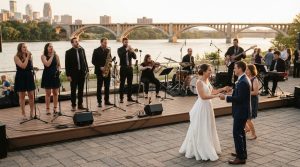
The most memorable Minneapolis receptions give guests something to enjoy between formal moments and a setting that makes the celebration feel distinctly local. For unforgettable wedding reception ideas in Minneapolis, pair lively cocktail-hour activities, such as lawn games or a shared photo moment, with a waterfront celebration shaped around the views and flow of the evening.
It’s easy to focus on the ceremony and dinner, but the guest experience often comes down to transitions: whether people have a reason to mingle, a comfortable place to gather, and a clear sense of what happens next. A thoughtful plan keeps these moments engaging without making the day feel overprogrammed.
Explore interactive cocktail-hour ideas and memorable waterfront receptions, along with practical ways to bring the pieces together. The right choices can make the celebration feel personal, welcoming, and effortless for guests from arrival through the final dance.
Key Takeaways
- Give cocktail hour a clear purpose with an activity that makes it easy for guests to mingle.
- Shape a waterfront reception around the view, guest flow, and a practical indoor plan.
- Build a realistic per-guest budget by weighing the venue, food and drink, rentals, and entertainment together.
- Choose a decor theme with a few cohesive details, then use live music to carry the celebration into the reception.
1. Cocktail-hour activities
Give cocktail hour a simple purpose: help guests mingle while the newlyweds take portraits. Choose one activity that suits the venue, then keep food, drinks, and conversation easy to reach. At an industrial setting such as Minneapolis’s Machine Shop, a photo display can highlight family milestones alongside the historic architecture. In a ballroom, a table of conversation cards gives guests an inviting indoor option.
Match the activity to the setting. The Fountain Room at Minneapolis’s Lumber Exchange Event Center has a nine-story atrium, so a shared photo moment can draw attention upward and create a natural gathering point. Windows on Minnesota sits on the 50th floor of the Marquette Hotel, where a guest book or postcard station lets people pause and take in the view. For outdoor spaces, lawn games such as cornhole can give guests a relaxed way to connect.
Make each activity optional and straightforward. Set out a sign with one clear instruction, such as “Add a note for the couple” or “Choose a song request.” A small display of ceremony photos can spark conversation without needing a host to explain it. For a contemporary celebration, offer a mocktail station alongside the cocktail bar, with clearly labeled ingredients and a nonalcoholic choice.
Keep traffic moving by placing activities away from entrances, food service, and the main path to seating. At a historic venue such as Union Depot in St. Paul, a guided photo prompt can invite guests to notice architectural details. A short live music performance also gives cocktail hour a focal point while leaving room for conversation. Choose an activity that fits the room rather than competes with its design.
Build the timeline around the ceremony and the transition into dinner. Leave enough space for guests to greet the couple, find refreshments, and participate without feeling rushed. Minnesota law requires a person to be at least 18 years old to get married, according to the Minnesota Legislature. For the marriage license timeline, the Minnesota Department of Health says a Minnesota marriage license is valid for six months before the wedding. Keep these legal details separate from the guest activities, and let the celebration remain the focus.
2. Waterfront receptions
A waterfront setting can make the Mississippi part of the reception experience, not just its backdrop. Leopold’s Mississippi Garden is located 15 minutes from downtown Minneapolis, offering a Twin Cities option for couples drawn to an outdoor garden atmosphere. Use the waterline to orient the event: place the ceremony or cocktail area where guests can enjoy the view, then position dining and dancing where people can gather comfortably.
Ask how the event space works in different weather. A strong plan pairs outdoor access with an indoor space, so guests can move inside if conditions change. At a waterfront venue, consider how windows, ceilings, and the room layout frame the view. Keep tables and gathering areas from blocking sightlines, and use lighting that suits the setting after sunset. The result can feel sophisticated without competing with the landscape.
For outdoor wedding receptions in Minneapolis, permissions and sound requirements depend on the site and event setup. Treat property permission, amplified music, event hours, and use of public space as separate planning points. The venue’s terms and applicable city requirements determine what can take place.
Plan transportation and parking around the venue’s location. Share a clear address and arrival instructions with guests, identify the venue’s parking arrangements, and include a transportation option for guests who aren’t driving. For Leopold’s Mississippi Garden, its location 15 minutes from downtown can help guests assess the trip, but the actual route and traffic still shape arrival plans. Put transportation details on the invitation or event page, and designate a clear pickup point for departures.
Connect the riverfront setting to the celebration with a few deliberate choices. A garden-inspired table arrangement, an outdoor welcome drink, or a brief sunset pause can make the scenery part of the evening. Keep the schedule flexible enough for guests to move between indoor and outdoor spaces, and let the venue’s natural features lead the design rather than adding competing decor.
4. Minneapolis wedding reception cost per guest?
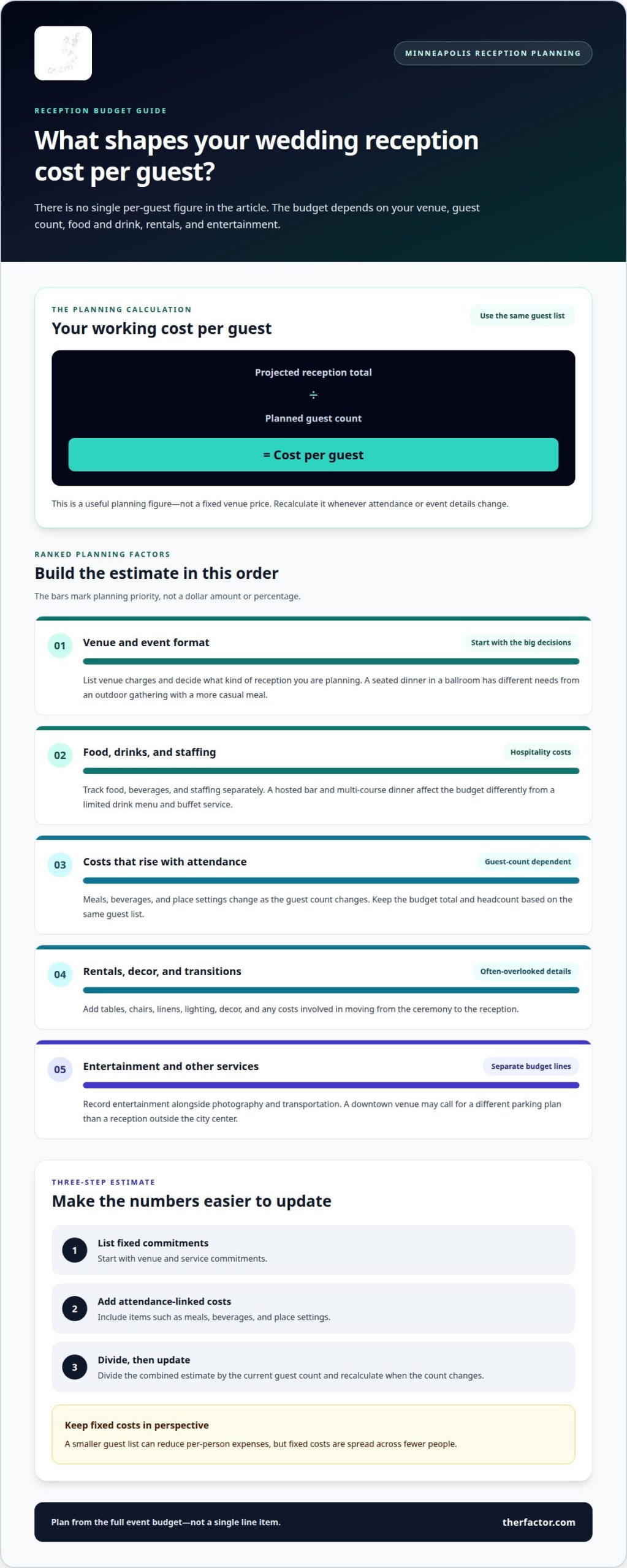
A Minneapolis reception’s cost per guest depends on what the event budget includes. Calculate it by dividing the projected reception total by the planned guest count. This gives couples a useful planning figure, but it changes when attendance or event details change. Base the total and headcount on the same guest list.
Start with the biggest venue and hospitality decisions. A ballroom reception with a seated dinner has different needs from an outdoor gathering with a more casual meal. List venue charges, food, drinks, staffing, and rentals separately. For example, a hosted bar and multi-course dinner affect the budget differently from a limited drink menu and buffet service.
Then account for details that are easy to overlook. Add tables, chairs, linens, lighting, decor, and any costs involved in moving from the ceremony to the reception. Entertainment is another distinct budget line, alongside photography and transportation. In Minneapolis, a downtown venue may call for a different parking plan than a reception outside the city center. Record each choice once to avoid double-counting bundled items.
Build a working estimate in stages. First, list fixed venue and service commitments. Next, identify costs that rise with attendance, such as meals, beverages, and place settings. Finally, divide the combined estimate by the current guest count, then update the calculation if that count changes. A smaller guest list can reduce per-person expenses, but fixed costs are spread across fewer people.
The price depends on the event and is provided after a quote request; the venue, guest count, menu, bar selections, rentals, and entertainment all shape the overall budget. Keep a separate allowance for optional enhancements, such as upgraded lighting or a late-night snack, so they don’t obscure essential expenses. This clear breakdown helps couples compare plans on equal terms and make deliberate trade-offs without relying on an unsupported citywide average.
4. What are creative Minneapolis wedding reception themes and decor ideas?
Build a theme around Minneapolis rather than choosing decor first. A Mississippi-inspired palette can pair river blues with warm neutrals, while a city-at-dusk concept can use charcoal linens and amber lighting. Choose one visual direction, then repeat it across invitations, table settings, and the reception entrance. This gives the celebration a clear identity without making every surface compete for attention.
Historic architecture offers a strong starting point. The Landmark Center in St. Paul was originally built in 1902 and has a five-story courtyard. Let that setting guide a refined heritage theme with restrained floral arrangements, candle-inspired lighting, and elegant table numbers. Keep centerpieces low where guests need to see across tables. For a contemporary contrast, use clean place cards and simple glass details instead of adding decorative elements to every architectural feature.
For an urban garden concept, draw inspiration from Peavey Plaza beside Orchestra Hall. Its two-acre setting suggests geometric shapes, greenery, and leafy tones with a single accent color. Use table runners, potted plants, or a botanical seating display to carry the idea indoors. These choices create continuity without treating a public plaza as a reception venue or relying on extensive floral installations.
Make the design work in the actual room. Begin with the venue’s existing colors and materials, then select linens, flowers, and lighting that complement them. At a historic space, highlight architectural details rather than hiding them. In a modern ballroom, use a sculptural centerpiece or focused lighting as the visual anchor. Keep the transition from ceremony to dinner in mind: a welcome sign or coordinated escort cards can guide guests while reinforcing the theme. Before finalizing decor, map the dining layout, dance area, and main paths. This sequence helps couples prioritize the details guests will notice and use.
The R Factor: Wedding Entertainment
The R Factor can shape Wedding Entertainment around the reception’s atmosphere and musical needs. Live music can carry the celebration from dinner into dancing, while a flexible lineup lets couples match the performance scale to their event. The band offers options ranging from 6 to 12 musicians, with four vocalists, a horn section, a rhythm section, and violin. Share the reception setting, preferred musical direction, and key moments you want supported, such as the first dance or the transition to open dancing. This helps establish a performance plan that fits the evening rather than competing with it. For Minneapolis couples ready to discuss wedding music, contact The R Factor.
Give your celebration its own signature
The details guests remember most often feel unmistakably personal. Choose music that reflects your relationship, then let it guide the atmosphere as the evening moves from conversation to dancing. These choices can make unforgettable wedding reception ideas in Minneapolis feel distinctive without adding unnecessary complexity.
The R Factor offers Wedding Entertainment, Corporate Event Music, and Birthday Party Performances. For a wedding, live music can help shape the reception’s character and bring guests together through shared moments. A clear conversation about the mood you want and the moments that matter gives the planning a focused starting point.
Ready to plan music that suits your celebration? Contact The R Factor to plan, and take the next step toward a reception that feels like your own.
Frequently Asked Questions
What are unique wedding reception ideas in Minneapolis?
For unforgettable wedding reception ideas in Minneapolis, build a “shared discoveries” dinner around dishes connected to places the couple has explored together. Add a brief menu note explaining each choice, then arrange seating so guests can meet someone outside their usual circle. A light trivia round about the couple between courses invites participation without taking over the evening or interrupting conversation.
What Minneapolis wedding venues have live music, dancing, or entertainment options?
Venues in the Minneapolis-Saint Paul area to consider include Bavaria Downs, Hope Glen Farm, Paikka, and Avalon. For live music and dancing, consider how the reception room can fit the musicians, dance area, dining tables, and guest movement. A clear floor plan helps the entertainment fit the event rather than compete with service or conversation.
Recent Comments