
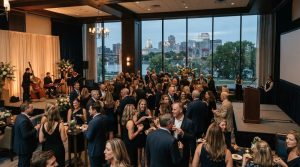
What if the entertainment at your fundraiser helped guests connect with the mission instead of competing with it? Choosing charity fundraiser entertainment in St Paul means balancing energy with purpose. A well-timed performance can bring people together, while music during a speech or giving appeal can distract from the stories and instructions guests need to hear.
It’s understandable to feel unsure about the right format, especially when you want a polished event without adding planning complexity. Start with a clear program: choose entertainment that suits the audience and atmosphere, set aside time for fundraising appeals, and give guests natural opportunities to connect.
This guide will help you plan entertainment around your mission, event scale, and fundraising goals. You’ll learn how to place live music thoughtfully, protect key moments, and consider a local option such as The R Factor, a Minneapolis and St. Paul band with flexible 6-to-12-musician lineups. The result is a more cohesive event, with entertainment supporting the cause rather than taking center stage.
Key Takeaways
- Define the event’s mission, audience, and desired atmosphere before choosing charity fundraiser entertainment St Paul.
- Compare live music, a host-led program, recorded music, and interactive activities by how each supports guest participation and fundraising moments.
- Use a practical checklist to assess event goals, venue, program flow, and performance scale.
- Map entertainment around arrivals, remarks, recognition, donation appeals, and guest interaction to create clear transitions.
- Consider The R Factor’s flexible 6-to-12-musician lineup as a local live-band option for different event scales and settings.
What Should Charity Fundraiser Entertainment Do for a St. Paul Event?
Fundraiser entertainment is part of the guest experience, not a substitute for the cause. It can set the tone, bring people together, and support the moments when guests learn about the mission and decide how to take part. A strong charity fundraiser entertainment St Paul plan starts with the event’s purpose, not with a performance choice.
Mission-aligned entertainment can make the event more engaging while keeping attention on the cause and the actions that support it.
Organizers have to shape a cohesive fundraiser, where every part of the evening has a clear role. Consider how entertainment fits the schedule, audience, and message instead of treating it as a standalone attraction.
Start with the fundraiser’s purpose and audience
Before choosing entertainment, define the cause, fundraising format, intended guests, and atmosphere. A formal gala may call for a refined tone that leaves room for conversation and prepared remarks. A neighborhood gathering may benefit from a relaxed, participatory feel. In either case, consider what will help guests feel comfortable, engaged, and ready to take part.
Think about what guests will be doing: meeting one another, celebrating supporters, or learning about the organization’s work. Those priorities help shape the entertainment brief and clarify when the energy should rise or settle.
Keep the cause at the center of the experience
Entertainment can create shared moments and a welcoming atmosphere without competing with the mission. Give performances a defined place in the program, separate from speeches, donor recognition, appeals, and giving activities. Guests should be able to hear key messages and know when it’s time to focus on the cause.
Plan the sequence from arrival through closing. Background music during arrival can establish the mood, while a planned pause gives a speaker the room’s attention. Clear transitions make the evening feel intentional rather than interrupted.
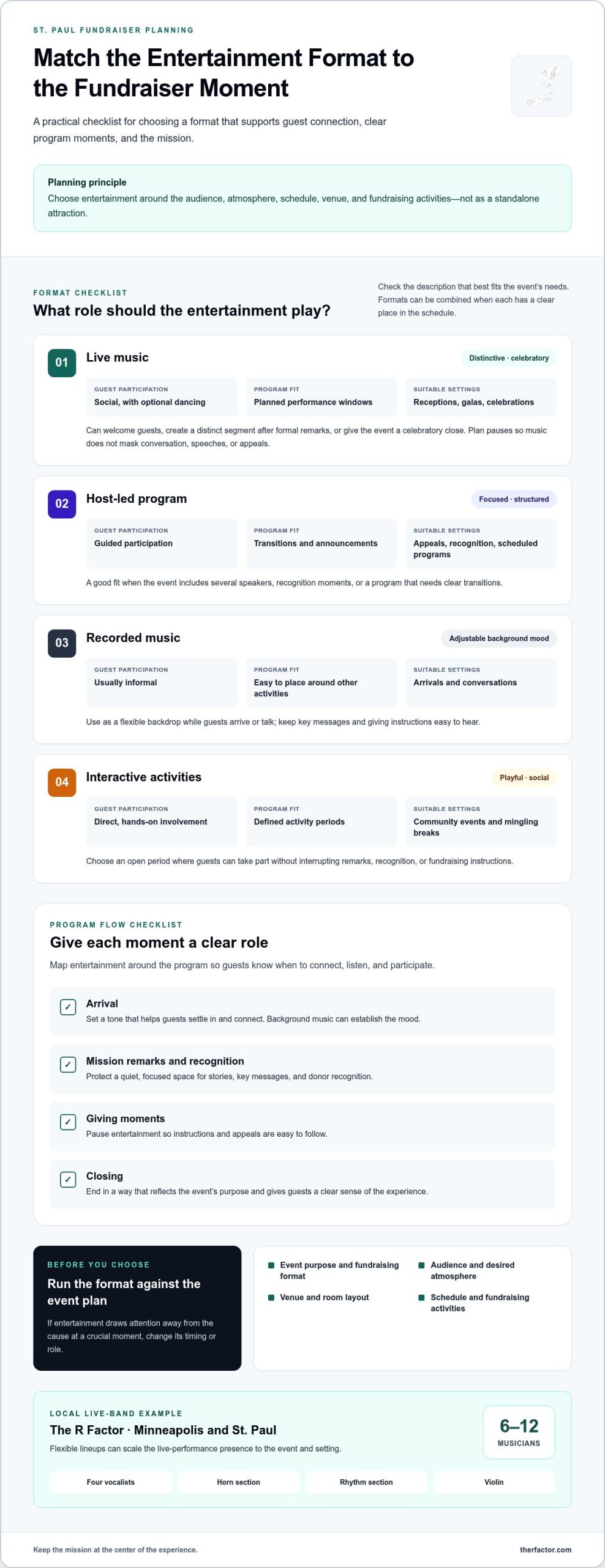
- Arrival: Set a tone that helps guests settle in and connect.
- Mission remarks: Protect a quiet, focused space for stories and key messages.
- Giving moments: Pause entertainment so instructions and appeals are easy to follow.
- Closing: End in a way that reflects the event’s purpose and gives guests a clear sense of the experience.
Use the mission as your deciding measure. If entertainment draws attention away from the cause at a crucial moment, change its timing or role. When the audience, atmosphere, and program work together, entertainment contributes to a polished event while the fundraiser’s purpose remains unmistakable.
Which Entertainment Formats Fit a St. Paul Charity Fundraiser?
The right format depends on what it needs to do. Live music can shape the room’s energy, a host can guide guests through key moments, recorded music can provide a consistent backdrop, and interactive activities can invite participation. For charity fundraiser entertainment St Paul organizers should compare each option with the schedule, audience, venue, and fundraising activities rather than assume one format suits every event.
| Format | Atmosphere | Guest participation | Program flexibility | Suitable settings |
|---|---|---|---|---|
| Live music | Distinctive, celebratory | Social, with optional dancing | Works best in planned performance windows | Receptions, galas, and celebrations |
| Host-led program | Focused and structured | Guided participation | Strong for transitions and announcements | Appeals, recognition, and scheduled programs |
| Recorded music | Adjustable background mood | Usually informal | Easy to place around other activities | Arrivals and conversations |
| Interactive activities | Playful or social | Direct, hands-on involvement | Best in defined activity periods | Community events and guest-mingling breaks |
Use the table as a starting point, then consider how guests will move through the venue and whether the format leaves room for conversation, instructions, and giving. A host-led program can suit an event with several speakers and recognition moments. An interactive activity may work better during an open period for mingling. You can combine formats, too, as long as each has a clear place in the schedule.
When live music can strengthen the guest experience
Live performance adds a visible, shared element to a reception or celebration. It can welcome guests as they arrive, create a distinct entertainment segment after formal remarks, or give the event a celebratory close. Define performance windows in advance so music adds energy without masking conversation or competing with speeches and appeals. For a corporate-hosted fundraiser, thoughtful live music for corporate events can fit within a carefully paced program.
Match the entertainment scale to the event
Consider guest count, room layout, event tone, and how prominent the performance should feel. A compact ensemble may suit a room where guests need space to talk; a larger band can create a more prominent live-performance presence. The R Factor offers flexible lineups from 6 to 12 musicians, with four vocalists, a horn section, a rhythm section, and violin. The R Factor’s live band is a local option for events where live performance fits the scale and purpose.
There’s no universal best choice. Match the format to the experience you want guests to have, then schedule it where it supports the program rather than pulling focus from it.
How to Compare Charity Fundraiser Entertainment in St. Paul
Compare options against the job your event needs entertainment to do. Start with the fundraising purpose, then assess each format against the guest experience and the venue’s practical constraints. The strongest choice is not necessarily the most noticeable. It should fit the program and leave guests able to hear, connect, and participate when it matters.
Choose entertainment by how well it fits the fundraiser’s goals, guests, venue, schedule, and appropriate performance scale.
- Event goals: Decide whether entertainment should welcome guests, create a celebratory interval, or help close the evening. Keep the fundraising purpose and key appeals clear.
- Audience: Consider guest expectations, comfort with participation, and the tone that suits the occasion.
- Venue: Account for the room layout, access routes, available performance area, and the venue’s sound expectations.
- Program: Mark speeches, recognition, appeals, and giving activities. Place entertainment where it supports the flow instead of interrupting these moments.
- Performance scale: Match the presence of the performance to the room and event tone, not just the guest count.
Assess audience, venue, and program fit
Venue logistics depend on the space. Consider how guests enter and move through the room, where a performance area can sit without blocking circulation, and how sound may affect conversation or remarks. For a St. Paul event, use the selected venue’s current guidance for access, staging, and sound. Build transitions into the schedule so a performance can begin and end cleanly.
Then test the plan from a guest’s perspective. Can people follow the host’s instructions? Is there room to talk during a reception? Does the schedule make it clear when attention should shift to a speaker or giving activity? These practical checks help entertainment complement the event instead of competing with it.
Compare the performance experience, not just the format
Live music varies in scale and character. Consider how the number of performers, vocal variety, and instrumentation will shape the room’s atmosphere. The R Factor’s ensemble includes four vocalists, a horn section, a rhythm section, and violin, with flexible lineups from 6 to 12 musicians. Organizers can consider different performance scales in relation to the room and program.
For a privately hosted benefit, private party band planning can help frame decisions about the performance experience. A corporate-hosted fundraiser calls for the same fit between event tone, space, and schedule. For organizers considering live music, The R Factor’s Minneapolis and St. Paul live band offers a local option.
Before settling on a format, make sure your plan answers three questions: what the entertainment contributes, when it belongs in the program, and how it fits the physical space. If it strengthens the guest experience while preserving attention for the mission and giving moments, it is serving the fundraiser well.
How to Plan Entertainment Around a St. Paul Fundraiser Program
A clear run of show gives each part of the evening a purpose. It helps guests understand when to socialize, listen, celebrate, and participate in giving. For charity fundraiser entertainment St Paul, plan performance around the mission’s key moments rather than fitting appeals and remarks into leftover time. Share one agreed schedule with the event team and entertainment partner to reduce last-minute coordination and clarify transitions.
Build a run of show that protects giving moments
Start with the essential program, then place entertainment where it supports the guest experience. A reception can allow relaxed conversation; a planned performance segment can add a celebratory note later. Keep appeals and recognition distinct, with the room’s attention on the speaker. A brief pause before and after important moments helps guests follow the shift without making the mission feel secondary.
- Set priorities: Identify the mission message, fundraising activities, and acknowledgements that need focused attention.
- Map arrivals: Decide whether entertainment will welcome guests or leave space for conversation as they settle in.
- Place reception or meal time: Plan how the atmosphere should support dining and guest interaction.
- Schedule mission remarks: Give speakers a defined place in the program and pause competing entertainment.
- Protect giving activities: Allow guests to hear the appeal, instructions, and recognition without distraction.
- Plan performance and closing: Set distinct entertainment windows and agree on the cues that move the event into its next segment or closing.
Build in transition points, not just start times. Decide who introduces a speaker, who signals the end of a performance, and how guests will know an appeal is beginning. These details keep the evening moving without rushing the cause’s message.
Prepare the entertainment brief and local logistics
Give the entertainment partner a concise brief with the event purpose, audience profile, desired atmosphere, schedule, and venue context. Identify the moments that require quiet and the planned performance windows. A shared brief helps align the performance with the fundraiser’s priorities.
Coordinate timing and room setup within the venue’s established plan. Sound expectations, access, staging, and room layout differ by location, so use details specific to the selected St. Paul venue and its current guidance. Decide who will communicate timing changes during the event, then share the final run of show with the people responsible for each transition.
With the program and logistics aligned, plan live entertainment with The R Factor as part of your fundraiser’s event experience.
Choose The R Factor for Charity Fundraiser Entertainment in St. Paul
Once the fundraiser’s purpose, program, and venue needs are clear, evaluate live entertainment against the experience you want to create. The R Factor is a Minneapolis and St. Paul live cover band offering flexible lineups for events where music can add an engaging element without taking focus from the cause. A strong performance plan starts with your event’s needs and places entertainment thoughtfully within the schedule.
A flexible live-band format for Twin Cities events
The R Factor serves the Minneapolis and St. Paul area with lineups ranging from 6 to 12 musicians. The ensemble features four vocalists, a horn section, a rhythm section, and violin. This flexibility lets organizers consider a more compact or larger band presence based on the event’s scale, room layout, and desired atmosphere. It’s a practical way to align the performance with the fundraiser instead of treating every event as though it needs the same setup.
For example, a reception centered on conversation may call for a different ensemble scale than a larger celebration with a dedicated performance segment. Consider the space and program, along with how prominently you want live music to feature. A clear schedule can show where performance fits and where guests need to focus on remarks, recognition, or giving.
Keep the band’s role specific in your event plan. Live music can contribute to the guest experience and create a distinct entertainment moment, while the organization’s mission and fundraising activities remain the reason everyone has gathered.
Move from fundraiser plan to entertainment conversation
Before discussing your event, gather a few practical details. A concise brief makes it easier to describe the experience you’re planning and identify where live music could fit. Include:
- Purpose: The cause and the main fundraising priorities for the event.
- Audience: Who you expect to attend and the atmosphere you want them to experience.
- Venue: The room layout and venue-specific plans relevant to performance placement.
- Schedule: Arrival, remarks, recognition, appeals, guest interaction, and possible performance windows.
Share the moments that require guests’ attention and the transitions you want to feel seamless. That context helps shape a live-performance plan around the event, not the other way around. It also creates a focused starting point for discussing lineup scale and how music can complement the evening’s tone.
Ready to discuss charity fundraiser entertainment in St. Paul? Share your fundraiser goals and entertainment needs with The R Factor to start shaping a live-music plan for your event.
Give Your Fundraiser a Clear Next Step
The most effective event plans leave room for the mission to lead. As you move from ideas to decisions, choose the guest experience you want people to carry with them, then make each entertainment choice support that intention. A focused plan for charity fundraiser entertainment St Paul can help your team move forward with clarity and keep the performance in its proper role.
Bring your event purpose, audience, venue, and schedule into one plan. From there, shape the live-music moments around what matters and give guests an experience that feels considered from start to finish.
Plan your St. Paul fundraiser entertainment with The R Factor and take the next step toward an event that keeps its mission in focus. Your cause deserves a thoughtful, welcoming celebration.
Frequently Asked Questions
Can live music work at a charity fundraiser without distracting from the cause?
Yes. Live music can fit a fundraiser when its role and timing are deliberate. Schedule a performance before a mission presentation or after the giving program, then pause music while speakers share stories or explain how to donate. Include those cues in the run of show so the band, host, and event team know when attention should shift. This keeps music part of the experience, not a rival to the cause.
What entertainment works best for a small charity fundraiser?
Choose a format that suits the room and the way guests will spend their time. For a small gathering built around conversation, a host-led program and restrained background music may be more comfortable than a long performance segment. If live music is central to the atmosphere, consider a more compact lineup. Leave enough room for guests to move easily and hear one another.
How can entertainment keep guests engaged between fundraising speeches?
Use the gaps for low-pressure ways to reconnect with the event rather than filling every pause with a performance. A host can direct guests toward a mission display, invite them to visit an activity, or signal the next part of the program. Keep instructions brief and transitions clear. After a speaker finishes, for example, allow guests time to talk before the host introduces the next scheduled moment.
When should entertainment begin at a charity fundraising event?
Begin during the planned reception or welcome period if music supports the arrival atmosphere. Keep the opening flexible enough for late arrivals and greetings. Avoid starting a featured performance while guests are checking in or finding seats. One possible sequence is welcome, settling time, opening remarks, then a defined entertainment segment later in the program. Shape the order around the event’s meal and fundraising format.
Can a live band perform at an outdoor fundraiser in St. Paul?
A live band can be considered for an outdoor fundraiser, but the site plan matters. Coordinate the performance location, guest circulation, access, and weather plans with the venue. Account for sound expectations and site-specific setup arrangements. Include an alternate plan in the schedule in case outdoor conditions change, and follow the venue’s current guidance for the site.
What information should organizers share with a band before a fundraiser?
Share the event’s purpose, audience, venue, schedule, and desired atmosphere, along with the moments when music must pause. Identify the event lead and the person cueing the program so transitions have a clear point of contact. If the schedule includes a meal, speaker handoff, or fundraising activity, mark its place in the sequence. A concise written brief helps everyone prepare around the same plan.
How do you choose entertainment for a charity gala versus a community fundraiser?
For a gala, consider a more formal guest experience, with entertainment placed around dinner, recognition, and planned remarks. A community fundraiser may call for a relaxed format that encourages mingling and participation. In either case, choose based on what guests are invited to do. A seated program benefits from clear transitions; an open gathering may need defined activity periods to keep the event organized.
Recent Comments