
What if the best wedding music plan is less about choosing more songs and more about guiding guests through the day? Creating a wedding music timeline can feel complicated when you’re deciding which moments need a specific song, coordinating ceremony and reception music, and allowing for schedule changes. A clear plan follows the guest experience, not just the playlist. It gives each moment its place while leaving room for the day to unfold naturally.
This guide will help you map music from guest arrival and the ceremony through cocktail hour, dinner, formal dances, open dancing, and the last song. You’ll learn where a selected track matters, where live music can carry the atmosphere, and how to build flexible transitions in case the schedule shifts. For Minneapolis-Saint Paul couples, The R Factor provides live music for ceremonies, cocktail hours, and receptions, with ensembles ranging from 6 to 12 musicians. Use this framework to create a soundtrack that feels connected from the first notes to the final dance.
Key Takeaways
- When creating a wedding music timeline, use the event schedule as your framework and give each cue a clear purpose.
- For every moment, note the music, mood, person responsible, and transition that follows.
- Separate must-hit cues, such as entrances, from flexible music periods that can adapt to delays.
- Keep one shared timeline so your planning team and musicians can work from the same sequence.
- Shape the live music plan around your wedding’s scale, with The R Factor offering ensemble options from 6 to 12 musicians.
Why a Wedding Music Timeline Shapes the Feel of the Entire Day
A wedding music timeline is a plan for the musical cues and performances that accompany key moments throughout the day. It connects the ceremony, cocktail hour, and reception into one considered experience. A song list names tracks. A timeline assigns music to moments, showing when a particular song matters and when the goal is simply to create the right atmosphere.
That distinction makes planning more manageable. You don’t need to select a featured song for every minute. Instead, identify moments that need a clear cue, then decide where a flexible musical mood will serve guests better. Creating a wedding music timeline gives you, your planner, and your musicians a shared framework without turning the celebration into a tightly scripted production.
Which wedding moments benefit most from planned music?
Start by identifying the points when music signals that something is happening. Ceremony traditions vary, but the sequence may include guest arrival, entrances, a signing or other ritual, and the recessional. The overview of Wedding Music describes how music can accompany these different parts of a wedding.
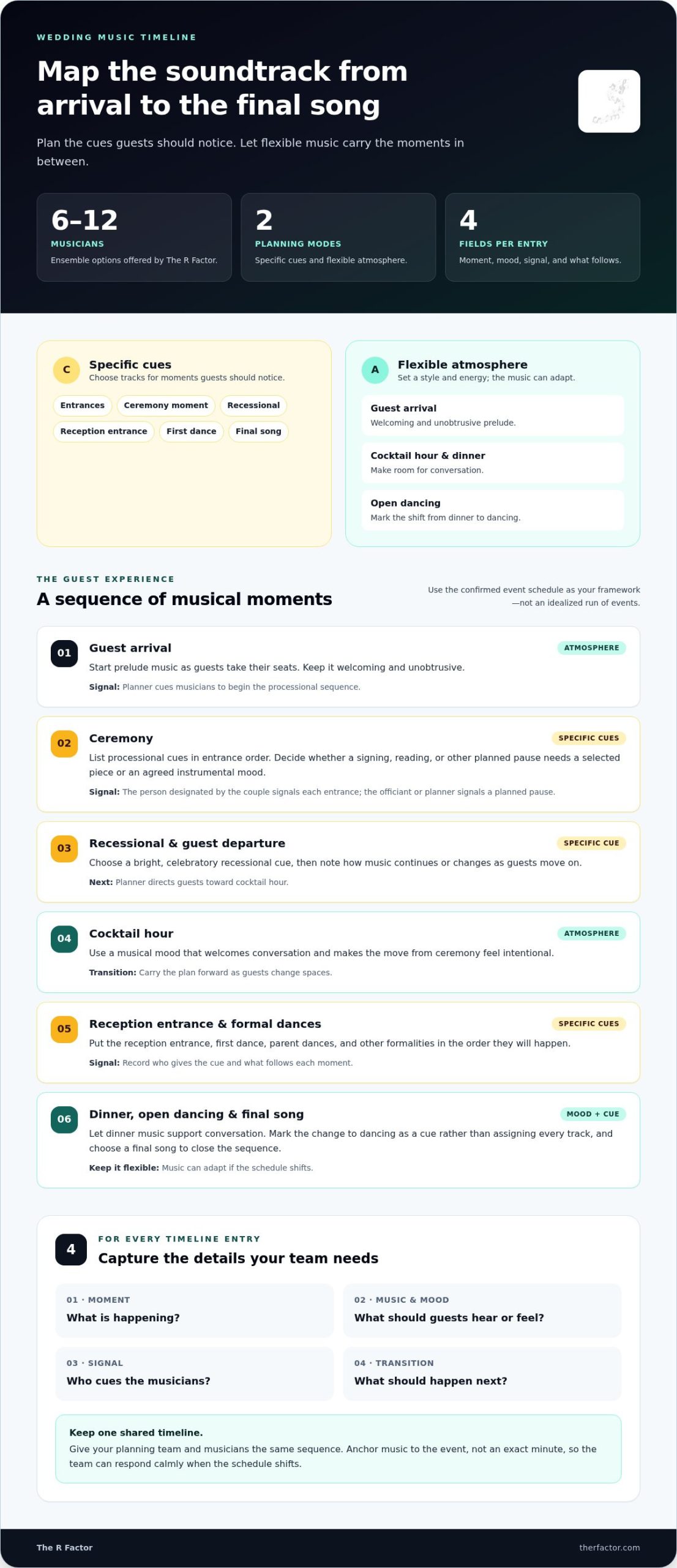
- Specific cues: Choose tracks for entrances, a meaningful ceremony moment, the recessional, the reception entrance, the first dance, and the final song. These choices mark moments guests are meant to notice.
- Atmosphere: Set a general style and energy for guest arrival, cocktail hour, dinner, and open dancing. These periods benefit from music that supports conversation or celebration without requiring every track to be assigned in advance.
This division keeps decisions focused. For example, you might select one song for the newlyweds’ entrance while giving the cocktail-hour musicians a broader direction, such as relaxed and upbeat. Let your ceremony format and personal priorities determine the final sequence.
How the soundtrack supports the guest experience
Guests experience the day as a sequence, not as a spreadsheet of scheduled events. Music helps them feel that one part has ended and another is beginning. A recessional can release the formality of the ceremony; a shift to lighter background music can welcome guests into cocktail hour. Without a planned cue or change in musical mood, a transition may feel sudden, even when the schedule is running smoothly.
A wedding music timeline is a practical guide that matches music to the moments guests experience, from their arrival to the final song. Use it to plan the energy you want at each stage. Begin with a welcoming tone as guests arrive, create space for conversation during cocktails and dinner, then build toward dancing after formalities. The progression doesn’t need to be dramatic. Small, intentional changes help the day feel connected.
Keep the timeline flexible. A ceremony may begin later than planned, or a speech may take longer. The purpose of the plan isn’t to force each moment to happen at an exact minute. It’s to make the musical decisions clear enough that the team can respond calmly when the schedule shifts. Anchor the soundtrack to the event, and let the music serve the people in the room.
Mapping Wedding Music from Guest Arrival to the Last Dance
Build the sequence around the confirmed event schedule, not an idealized run of events. Use the ceremony start and reception milestones as anchors, then assign music cues before, during, and after each one. For every entry, record the moment, musical mood, who gives the signal, and what should happen next. This makes the plan useful to the couple, planner, venue team, and musicians.
Ceremony music: arrival, processional, and recessional
Begin with prelude music for guest arrival. Note when it starts and when the ceremony is expected to begin. List processional cues in entrance order and name the person who signals each one. If the ceremony includes a signing, reading, or other planned pause, note whether it needs a specific piece or a suitable instrumental selection. End with the recessional cue, then indicate how music continues or changes as guests move to the next part of the day.
Cocktail hour and reception: shape the energy in stages
Carry the plan forward as guests change spaces. Cocktail-hour music should welcome conversation and make the transition from ceremony feel intentional. In the reception, put the entrance, first dance, parent dances, and other formalities in the order they’ll happen. Then mark the change from dinner music to dancing as a cue, rather than trying to dictate every song. Couples planning live performances can also explore this live wedding music planning guide for related considerations.
Use actual times from your schedule wherever they’re settled. The entries below are examples of the information to capture, not a fixed timetable. The Wedding Industry Professionals Association provides resources for wedding professionals, including the people coordinating the event’s moving parts.
| Time | Event moment | Music cue | Coordination note |
|---|---|---|---|
| Guest arrival | Guests take their seats | Prelude, welcoming and unobtrusive | Planner signals musicians when to begin the processional sequence |
| Ceremony start | Wedding party and couple enter | Processional cues in entrance order | Person designated by the couple signals each cue |
| Planned ceremony pause | Signing or ritual, if included | Selected instrumental music or agreed mood | Officiant or planner gives the agreed signal |
| Ceremony end | Recessional and guest departure | Bright, celebratory cue | Planner directs guests toward cocktail hour |
| Reception | Entrance, formal dances, dinner, dancing, final moment | Spotlight selections, then broad mood cues | Planner or designated reception lead coordinates transitions |
For Minneapolis-Saint Paul couples, The R Factor provides live music for ceremonies, cocktail hours, and receptions. Its lineup ranges from 6 to 12 musicians, with options for different event scales. Explore The R Factor’s live wedding entertainment as you shape a music plan around your schedule.
How to Keep a Live-Band Wedding Timeline Flexible
A detailed plan doesn’t mean your wedding day must run exactly on schedule. It means the important cues are clear and the less time-sensitive parts can adapt. A ceremony may begin late, or guests may need longer to move between spaces. If the music plan distinguishes essential moments from flexible periods, a delay doesn’t require rebuilding the entire soundtrack.
A flexible wedding music timeline protects the moments that matter while giving the day room to unfold naturally. That balance is especially useful with live musicians. They can follow defined cues for key events while shaping background music around the pace and atmosphere of the room. When creating a wedding music timeline, plan for transitions as well as start times.
Which cues need precise timing, and which can flex?
Give entrances, formal announcements, and spotlight dances clear cues. The musicians need to know what signals the start, who gives it, and whether the moment requires a specific song. By contrast, background music during guest arrival, cocktails, or open dancing can usually respond to the room’s pace. Also mark speeches, vows, and other spoken moments when music should pause or soften so it doesn’t compete.
How to prepare for delays and transitions
Look for pinch points in the schedule. Guests may take time to move from the ceremony space to cocktail hour, or the reception may be ready before everyone has arrived. Add breathing room around these transitions rather than assigning a universal number of minutes. The right allowance depends on the venue layout and event flow.
Choose one point person, such as the planner or designated coordinator, to communicate timing changes to the musicians. A single clear source of updates reduces crossed signals. Agree on a simple fallback sequence for a late start: keep the essential entrance or formal cue, then resume with the next suitable flexible music period. You don’t need a separate contingency plan for every possible delay.
Keep practical planning resources in context. The Hal Leonard Wedding Music Planner search page offers wedding music planning materials; your own timeline can complement song selection by clarifying when cues happen and how transitions work.
For Minneapolis-Saint Paul couples, The R Factor performs for ceremonies, cocktail hours, and receptions with a flexible lineup of 6 to 12 musicians. That range can help shape live music around different event scales and plans. Explore live wedding entertainment as you decide how musicians fit into your day’s sequence.
How to Build a Wedding Music Timeline You Can Share
A timeline only helps if everyone can read and use the same version. Start with the event moments the couple, planner, and venue have settled, then add music cues and approximate timing. Keep the plan in one shared document. That gives the people coordinating the day a common reference and makes updates easier to track.
Separate information into clearly labeled fields. Song choices belong in one place, cue instructions in another, and schedule updates in a dedicated notes field. This prevents a change to the ceremony start time from being mistaken for a change to the selected processional song. While creating a wedding music timeline, prioritize clarity over elaborate formatting.
A simple wedding music timeline template
Use a short set of columns or headings that team members can scan quickly. Include approximate timing, the event moment, the music cue, and the person responsible for signaling it. Add a note when the transition needs extra coordination, such as moving guests between rooms or lowering music for an announcement.
- Approximate time: Use a confirmed start time for a formal moment, or a flexible range for background music.
- Event moment: Name the occasion clearly, such as guest arrival, ceremony entrance, dinner, or final dance.
- Music cue: Record the selected song for a spotlight moment or describe the desired mood for an atmosphere period.
- Cue lead and notes: Identify who signals the musicians, then add transition instructions or a note about instrumental underscoring.
For example, a ceremony entrance might have a firm cue and a named signal person. Cocktail-hour music can instead have an approximate window and a mood, leaving room for guests to move at their own pace. Keep schedule changes separate from song preferences so the musicians can quickly see what has changed and what remains the same.
Ensemble scale can also affect how a live music plan fits the event. The wedding band planning guide offers Minneapolis-focused insight into planning around an 11-piece band. Consider the performers and the flow of your event together as you shape the schedule.
Final review before sharing the timeline
Before distributing the document, compare it with the latest wedding-day schedule and confirm that room movements still make sense. Check that every entrance, spotlight moment, and major transition has an assigned cue and a clear lead. If a detail is still undecided, label it as pending rather than presenting it as final.
Share one final version with the couple, planner, venue team, and musicians who need to coordinate timing. Give the file a clear date or version label, and direct everyone to update the same document instead of circulating separate copies. For live wedding entertainment planned around your event’s sequence, explore The R Factor’s wedding music.
Make Your Wedding Music Timeline Work with The R Factor
A well-planned music timeline gives your musicians more than a list of songs. It shows how each performance fits the wedding’s sequence, where a clear cue is needed, and where music can support the atmosphere without drawing focus. The R Factor provides live wedding entertainment for ceremonies, cocktail hours, and receptions, helping Minneapolis-Saint Paul couples plan music across the day’s key moments.
Bring your schedule and priority musical moments into the planning conversation. A ceremony entrance, a pause for a ritual, and the shift from dinner to dancing each call for different coordination. Sharing the order of events connects the music plan to the guest experience, while keeping the timeline flexible enough to follow the event as it unfolds.
Match the performance plan to the moments that matter
Start by identifying which parts of the day you want live music to accompany. Then map those performances to your event sequence: ceremony cues, the welcoming atmosphere of cocktail hour, and reception highlights. The R Factor’s lineup ranges from 6 to 12 musicians, so ensemble size can be tailored to the scale and requirements of the event. That flexibility gives couples room to consider how live music fits each setting.
The ensemble includes four vocalists, a horn section, a rhythm section, and violin. Consider these details as you discuss the sound and character you want for different moments. Keep the focus on priorities: which transitions need a defined signal, which moments call for a selected song, and where a broader musical direction is enough. A strong plan supports coordination without promising that every part of the day will run to the minute.
Take the next step with a clear event outline
You don’t need every detail finalized to begin a useful conversation. Bring the latest event sequence, approximate timing, any selected songs, and the moments you consider essential. Note where the ceremony, cocktail hour, and reception take place, along with any expected movement between spaces. These details help shape a performance plan around your wedding rather than forcing the schedule into a generic format.
For Twin Cities couples, The R Factor provides live entertainment for wedding celebrations. Creating a wedding music timeline is easier when the people performing and coordinating the music can see how each cue fits the larger event. Keep your outline straightforward and share the priorities that matter most to you.
Planning a wedding in Minneapolis-Saint Paul? Discuss your wedding entertainment with The R Factor and bring your event outline and musical priorities to the conversation.
Shape the Moments You Want Guests to Remember
The most useful next step is to decide how you want the day to feel, not just which songs you want to hear. Choose a few emotional anchors: a calm, welcoming start, a meaningful ceremony, or a lively finish. These priorities give your music decisions direction and help the soundtrack feel personal rather than assembled from unrelated selections.
As you continue creating a wedding music timeline, let those priorities guide the conversation with your musicians. Share the moments that matter most, along with any songs or musical styles that carry personal meaning. The details can then support the celebration you want to create, while leaving space for the day to unfold naturally.
For wedding entertainment in Minneapolis-Saint Paul, plan your wedding music with The R Factor. Take the next step with a clear sense of what you want your guests to feel. Your soundtrack can make those moments distinctly yours.
Frequently Asked Questions
How many songs do you need for a wedding ceremony?
There’s no fixed song count; plan for the moments in your ceremony and how long each musical passage needs to last. A simple outline might include guest arrival, one or more entrance cues, music during a pause or ritual, and a recessional. If an entrance order has several parts, decide whether each needs its own selection or whether one piece can cover the sequence.
What music should play during a wedding ceremony?
Choose music that suits the tone of your ceremony and feels meaningful to you. Instrumental arrangements can provide a personal touch while keeping lyrics from competing with vows or readings. For example, you might select a gentle piece for guest seating, a distinct song for the couple’s entrance, and a brighter selection for the exit. Consider cultural traditions and family preferences as you choose.
When should the first dance happen in the wedding timeline?
The first dance often takes place after the couple’s reception entrance or after dinner, depending on the flow you prefer. If guests are already gathered and attentive after the entrance, dancing then can make a natural transition into the celebration. If you’d rather greet guests or enjoy dinner first, place it later and coordinate its introduction with the reception host and musicians.
What happens if the wedding schedule runs late?
A late start doesn’t have to derail the music plan. Keep essential moments, such as the ceremony entrance or first dance, distinct from music that can continue while guests settle in. If dinner runs long, for example, the coordinator can shift the next announcement and tell the musicians when the formal cue is ready. A designated person should communicate changes promptly.
Can a live band play during a wedding ceremony and reception?
Yes. A live band can provide music for both parts of the celebration, with selections suited to each setting. Ceremony music may call for carefully timed cues, while reception performances can support socializing, formal dances, or dancing. The R Factor provides wedding entertainment in Minneapolis-Saint Paul, including performances for ceremonies and receptions, so couples can plan the music as part of one event.
Should wedding music play during dinner?
Yes, if it supports conversation rather than competing with it. Choose a relaxed musical mood and coordinate with the musicians or event lead around speeches, toasts, and announcements. For instance, music can continue as guests are seated, then pause or soften when someone speaks. You can also decide whether dinner should feel intimate and calm or carry a more celebratory energy.
How do you coordinate wedding music with the venue timeline?
Use the venue’s latest event schedule as the reference for music cues. Match each performance moment to the corresponding event, then account for guest travel between rooms, entrances, meal service, and planned announcements. Keep the venue’s event lead and music coordinator working from the same current version. If the schedule changes, update that document and identify who will relay the change.
Recent Comments