

A horn section can add energy to your wedding without turning every song into a big, brassy moment. That’s the distinction to look for in a horn section band for weddings. Saxophone, trumpet, and trombone can bring a song extra punch, warmth, and movement, while thoughtful arrangement keeps the music suited to the moment. If you’re concerned that horns might overpower conversation or feel too formal, remember that their impact depends on how the band uses them.
This guide explains how horns shape a live band’s sound, which musical styles and wedding moments they can complement, and what to consider when choosing an ensemble. You’ll also see how ceremony, cocktail-hour, and reception music can work together as part of one plan. For Minneapolis-St. Paul couples, The R Factor brings a flexible lineup of 6 to 12 musicians, featuring four vocalists, a horn section, a rhythm section, and violin. The result is a full, engaging sound that can suit the celebration, rather than the same volume or energy from one end of the day to the other.
Key Takeaways
- Hear how horns can introduce instrumental hooks, answer vocal lines, and give familiar covers a distinctive live interpretation.
- A horn section band for weddings doesn’t have to dominate the room; arrangement and song choice help shape its impact.
- Plan the music by identifying your preferred atmosphere, mapping key wedding moments, and choosing an ensemble scale that fits.
- The R Factor offers Minneapolis-St. Paul wedding lineups of 6 to 12 musicians, with four vocalists, horns, a rhythm section, and violin.
Why a Horn Section Band Can Transform a Wedding’s Live Sound
A horn section is a group of wind instruments, often saxophone, trumpet, and trombone, arranged to play together or take individual musical parts. Horns contribute more than volume: they can add melodic lines, rhythmic accents, and layers of texture that give a live arrangement shape. A horn section can play different roles across musical styles, depending on the song and arrangement.
In a wedding band, those parts can make a familiar cover feel newly vivid. The overall sound comes from the interaction of singers and instruments; horns don’t need to lead every song to be noticeable. They might reinforce a chorus, answer a vocal, or step forward for an instrumental moment. Used with intention, they create contrast, helping a set move between intimacy and celebration without relying on constant intensity.
What does a horn section add to a wedding band?
Layered horn parts can enrich a song in several ways. One instrument might trace a melody while others add rhythmic punctuation or supporting notes, giving the arrangement more dimension. Short phrases between vocal lines can create a sense of lift, carrying the musical thought from one lyric to the next instead of leaving an empty pause.
Picture a familiar pop song with a strong chorus. The vocal carries the lyric, the rhythm section holds the groove, and a horn phrase adds a bright accent just before the chorus returns. That detail can make a cover feel full and responsive in the room, rather than simply reproducing the original recording. The effect comes from how the parts fit together, not from adding a flourish to every bar.
How horns shape a wedding’s atmosphere
Bright, punchy accents can suit a celebratory entrance or an upbeat dance moment. But instrumentation alone doesn’t determine the mood. A horn section can play a supporting role, use a lighter touch, or stay out of the foreground while the arrangement gives space to vocals and other instruments. Dynamics and song choice matter as much as the instruments themselves.
That flexibility allows horns to complement both energetic and more measured moments. A carefully shaped phrase can bring warmth and movement without making a song feel like a showpiece. Start with the feeling you want guests to experience, then consider how the arrangement can support it. Horns add energy through musical color and timing, not by playing loudly on every song.
That distinction is useful when considering a horn section band for weddings. The question isn’t simply whether horns sound bold; it’s how their parts serve each song and the atmosphere around it. A well-balanced arrangement lets the band’s full sound come forward when the moment calls for it, while leaving room for a more restrained performance when it doesn’t.
How Horns Change Wedding Song Arrangements and Live Performance
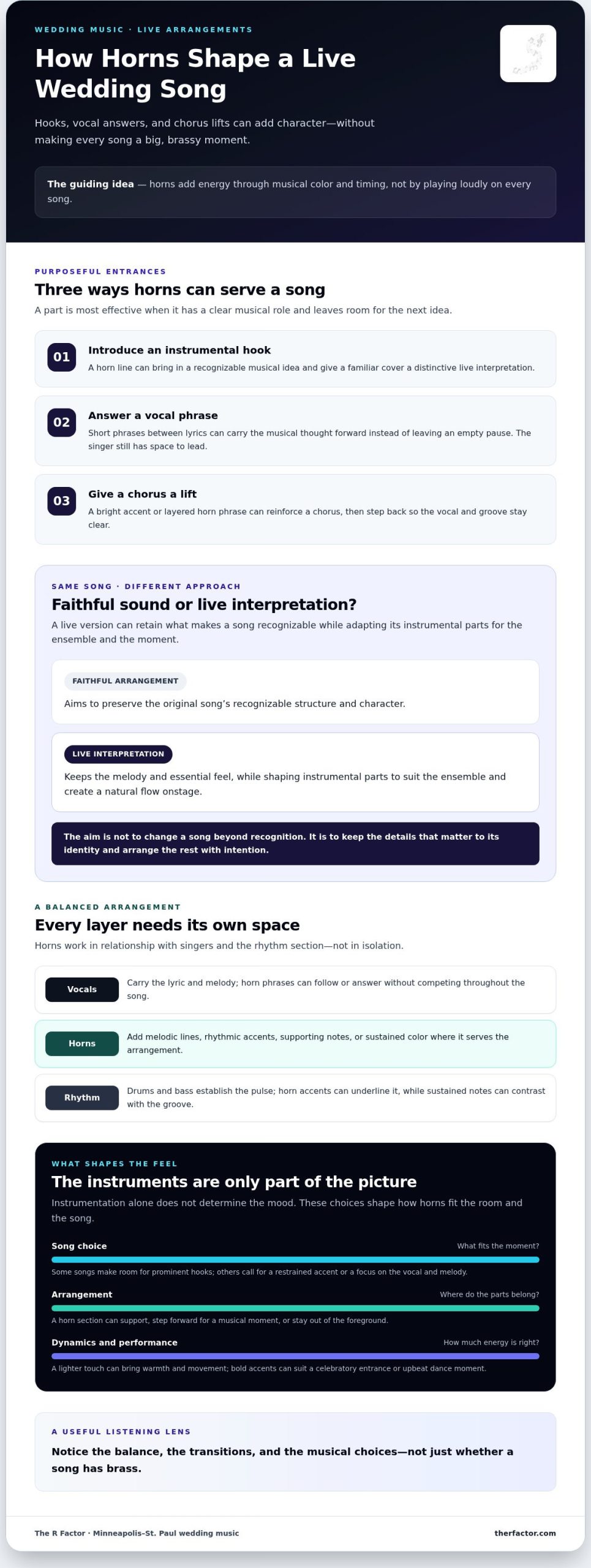
Horns can change not only a song’s sound, but also how its musical ideas unfold in the room. A horn line might introduce a recognizable instrumental hook, echo the end of a vocal phrase, or reinforce a chorus where the song needs a lift. These choices help a live performance feel shaped and responsive, rather than like a note-for-note copy of a studio recording.
A faithful arrangement aims to preserve the original song’s recognizable structure and character. A live interpretation can keep the melody and essential feel while adapting the instrumental parts to suit the ensemble and the moment. That doesn’t mean changing a song beyond recognition. It means identifying the details that matter most to its identity, then giving the performance a natural flow onstage.
How horn parts complement vocals and rhythm
A horn phrase can follow a singer’s melody, answer a lyric in the space between lines, or briefly take the lead before the vocals return. It can also add emphasis to a chorus without competing with the singer throughout the song. The arrangement works best when each entrance has a purpose and leaves room for the next musical idea.
Horns also work in relation to the rhythm section. Drums and bass can establish a song’s pulse while horns add accents that underline it, or sustain notes that contrast with a steady groove. Vocals and other instruments need their own space, too. A good arrangement balances these parts so the sound feels unified, not crowded.
Why song choice matters as much as instrumentation
The instruments don’t set a wedding band’s style on their own. Song selection, arrangement, and performance all contribute to the result. Some songs naturally make room for prominent horn hooks; others call for a restrained accent or a version that keeps the focus on the vocal and melody. A horn-led arrangement can vary in energy and character from one song to the next.
For couples, the useful question isn’t simply, “Which songs have horns?” Consider what you want guests to feel and do during each part of the celebration. A song with a strong, familiar chorus might invite guests to sing along, while a subtler arrangement can support a relaxed atmosphere. Share the moods, genres, and songs that matter to you, then think about how the band can shape them for a live setting.
Live arrangements use horns to complement vocals and rhythm, adding character where it serves the song. Assess a horn section band for weddings by listening for balance, transitions, and musical choices, not just the presence of brass. To see how that approach can fit a Twin Cities celebration, explore The R Factor’s wedding performances.
Horn Section Wedding Band Myths: Volume, Versatility, and Fit
A horn section can sound bold, but bold doesn’t have to mean loud from the first song to the last. Horns are one part of the band’s sound. Repertoire, arrangement, performance dynamics, and the room all influence how prominent they feel. For couples considering a horn section band for weddings, the goal is a musical fit that supports the celebration, not an unchanging wall of sound.
It also helps to separate energy from volume. A crisp, brief horn accent can make a passage feel lively without carrying through the entire song. A sustained, prominent part may create a bigger impression. Either can suit a wedding, depending on the moment and the atmosphere you want. Room acoustics matter, too: a reflective space can make musical details seem more pronounced, so include the venue in your planning.
Are horn section bands too loud for weddings?
Not by definition. Energetic performance is about musical drive and expression; sustained high volume is different. Song choice, how often horns play, and the dynamics of an arrangement all affect the room’s feel. A lively reception moment may call for a stronger sound, while dinner or conversation benefits from a more measured musical approach.
Think about the setting as well as the schedule. A room’s size and acoustics can affect how sound carries, and guests may be listening, talking, or dancing at different points in the event. Share the desired energy for each moment so the band has useful context. The aim isn’t to remove the horns’ character, but to place it appropriately.
Do horns limit a wedding band’s musical range?
Horns don’t lock a band into one genre or mood. Their role can shift from a prominent melodic feature to a supporting accent, or become less noticeable in an arrangement centered on vocals. The song itself helps determine what works. Some arrangements naturally highlight horn parts; others can use them sparingly or keep them in the background.
It’s more useful to discuss the guest experience than to treat instrumentation as a checklist. Consider whether you want a particular passage to feel buoyant, polished, relaxed, or dance-ready. Then talk about songs and arrangements that support that intention. The instruments don’t dictate the atmosphere by themselves; musical choices do.
Perceived volume depends on dynamics and arrangement as much as instrumentation, because a well-placed horn part can add impact without filling every moment. Describe what you want clearly: which moments should feel lively, which should leave room for conversation, and how the music should change as the celebration unfolds.
Planning a Horn Section Band for a Minneapolis-St. Paul Wedding
A clear plan starts with the atmosphere you want, not the number of instruments onstage. For a horn section band for weddings, work through three decisions: define the mood, map the moments when music will be heard, then choose an ensemble scale that fits the celebration. This sequence helps keep the sound purposeful across the day, rather than treating the reception as the only musical moment.
Minneapolis-St. Paul couples can begin by describing the feeling they want guests to experience. Then note where music will take place, who will be listening, and whether each moment calls for a more restrained or more energetic performance. The Minneapolis wedding music planning guide can help you consider how live music fits into the broader flow of the day.
Match the band’s sound to each part of the wedding
Think about the ceremony, cocktail hour, and reception as distinct musical settings. A ceremony may call for a measured atmosphere that supports the significance of the moment. Cocktail-hour music can provide a warm backdrop for conversation, while the reception may build toward a more celebratory, dance-focused feel. These are starting points, not fixed rules. Let your priorities guide the choices.
Consider the sequence as a whole. If the energy rises gradually, the reception can feel like a natural progression rather than starting at its peak. Share the mood you want for each part of the day, along with songs or musical styles that matter to you. A considered plan helps the band shape the performance around the guest experience.
Plan for the venue and guest experience
Before settling on ensemble scale, consider the performance area and how guests will be arranged around it. The band’s placement affects how music reaches the room and how close guests sit or stand to the performers. Include the venue’s sound requirements in the planning discussion so the musical approach accounts for the setting as well as the schedule.
Ensemble size is one practical part of that decision. The R Factor offers wedding lineups from 6 to 12 musicians, giving couples a way to match the group’s scale to their celebration. The 11-piece wedding band planning guide offers another perspective on lineup size in Minneapolis. Consider the space, atmosphere, and role you want live music to play together.
For a cohesive plan, connect the music across the ceremony, cocktail hour, and reception instead of making each decision in isolation. Explore The R Factor’s wedding entertainment as you shape a live music plan for your Twin Cities celebration.
How The R Factor Brings Horn-Led Live Music to Twin Cities Weddings
The R Factor is a Minneapolis-St. Paul live cover band with flexible wedding lineups ranging from 6 to 12 musicians. The ensemble features four vocalists, a horn section, a rhythm section, and violin. Horns contribute to the band’s overall sound, but they’re one part of a broader musical experience built around live vocals and familiar songs performed for a celebration.
Lineup flexibility gives couples room to consider scale alongside atmosphere. The size of the group can shape the feel of the entertainment and how it fits the occasion. Choose a lineup by considering the role live music should play in your wedding, the moments you want it to support, and the overall scale of your celebration.
A flexible live band for wedding celebrations
Wedding music can be planned across the ceremony, cocktail hour, and reception. Each moment has a distinct purpose, from setting a considered tone to supporting conversation and building toward a lively celebration. The R Factor provides wedding entertainment for these parts of the day, helping couples think about music as a connected experience.
As you consider a horn section band for weddings, focus on how the ensemble’s sound will serve the event rather than treating the horn section as the sole attraction. The vocals, rhythm section, violin, and horns contribute different colors to the live cover-band sound. Together, they give the performance breadth, while the lineup helps set its scale.
Explore live wedding music in Minneapolis-St. Paul
For couples planning in the Twin Cities, a local live band can bring the celebration’s music together in one considered plan. Start with the moments that matter most, then consider how the ensemble size and sound can fit each one. This gives you a practical way to connect your musical priorities with the day’s atmosphere.
The R Factor’s flexible lineup options let couples consider different ensemble scales while keeping the focus on live music and the guest experience. Whether you’re picturing an intimate musical backdrop or a full reception sound, choose an approach that fits your celebration. The horns are part of that sound, adding character within an ensemble that also features multiple vocalists, a rhythm section, and violin.
Explore The R Factor’s wedding entertainment to plan live music for your Minneapolis-St. Paul celebration.
Choose the Sound That Feels Like Your Celebration
As you shape your wedding music, start with one simple question: what do you want guests to feel as the day unfolds? Let the answer guide decisions about the songs, the energy, and how prominently horns feature in each moment. A horn section band for weddings is most compelling when its sound reflects your priorities, rather than following a formula.
Picture one moment you want guests to remember, then consider how live music could bring it to life. That gives you a clear starting point for choosing the right musical fit for your celebration.
Explore The R Factor’s live wedding entertainment and take the next step toward music that feels unmistakably yours. Give your Minneapolis-St. Paul celebration a live sound that brings everyone into the moment.
Frequently Asked Questions
How far in advance should you book a wedding band with a horn section?
Book once your wedding date and venue are set, especially if your celebration falls on a popular date. There’s no universal lead time that fits every wedding calendar. Early planning gives you more room to align the band, event schedule, and musical priorities before other details are locked in. For a Minneapolis-St. Paul wedding, include the performance date and the moments you want live music in your initial entertainment plan.
Is a horn section band suitable for an outdoor wedding?
Yes, a horn section band can suit an outdoor wedding if the performance plan accounts for the setting. Consider where musicians will play, how guests will be positioned, and whether the music needs to carry across an open area. Outdoor conditions can change, so include a practical alternative performance location in your plan. That keeps the music plan clear if the ceremony or reception setting needs to shift.
What should couples include in a wedding band agreement about the lineup?
Make the agreed lineup clear in writing. Include the number of musicians, the roles or instruments included, and the process for handling lineup changes. Also record which parts of the wedding the band is engaged to perform, such as the ceremony, cocktail hour, or reception, along with performance timing. Clear terms give both sides a shared reference if plans evolve and help prevent assumptions about which musicians will be present.
Can a horn section perform at a wedding with venue sound restrictions?
Often, yes, but the performance plan should reflect the venue’s specific sound requirements. Share those requirements with the band early, including any stated limits on sound level or timing. The musical approach can then be shaped around the room and event schedule, rather than leaving adjustments until the performance begins. For a horn section band for weddings in Minneapolis-St. Paul, including venue guidance in the planning conversation helps align expectations.
What happens if the wedding venue has limited performance space?
Limited space doesn’t automatically rule out live music. Review the venue layout and performance-area constraints, then plan the ensemble size and placement around the available footprint. Consider guest seating and circulation, too, so the band doesn’t obstruct key paths or feel disconnected from the celebration. A simple floor plan can make it easier to plan practical placement before the wedding day.
How can couples share their preferred wedding atmosphere with a live band?
Describe the experience you want guests to have at different points in the day. For example, explain whether you want the ceremony to feel intimate, cocktail hour to feel relaxed, or the reception to build toward dancing. Share a few reference songs or artists as mood cues, along with songs that are especially meaningful to you. This gives the band useful context for shaping the performance without relying on vague labels like “fun” or “elegant.”
Recent Comments