

What if the most important wedding-band detail isn’t the playlist, but who gives the cue? Knowing how to coordinate with your wedding band means planning more than songs. Ceremony entrances, cocktail-hour transitions, reception announcements, and schedule changes all need clear timing and a designated point person.
It’s natural to wonder when to involve the band in timeline planning, what details to share, and who should communicate with the venue and planner. A little structure helps prevent missed cues and keeps everyone working from the same plan. The band handles the performance, while your planner or another designated contact manages the wider event schedule.
This guide walks through a practical sequence from booking to the wedding day. You’ll learn what to confirm with the band, how to map music to each part of the celebration, and how to assign responsibility for announcements, cues, and updates. With a clear timeline and one agreed communication process, you can feel confident that the music supports the day as it unfolds.
Key Takeaways
- Use a five-stage coordination process, from booking through the wedding-day handoff, so everyone knows when decisions and confirmations are due.
- For each music moment, record the approximate time, cue, song choice, and person responsible.
- Separate must-play songs, do-not-play selections, and flexible preferences, then clarify who handles requests and announcements.
- Confirm access, performance space, power, and sound restrictions directly with your venue, especially for Minneapolis and Saint Paul events.
- Learn how to coordinate with your wedding band by sending one dated, final timeline and contact sheet for the planner, venue, and band to confirm.
How to Coordinate with Your Wedding Band from the Start
Coordination is easier when responsibilities and decision points are clear. The couple sets the priorities, including the atmosphere, important songs, and moments that matter most. The band confirms its performance requirements and the information it needs to prepare. A clear process keeps those roles distinct and gives everyone a reliable plan.
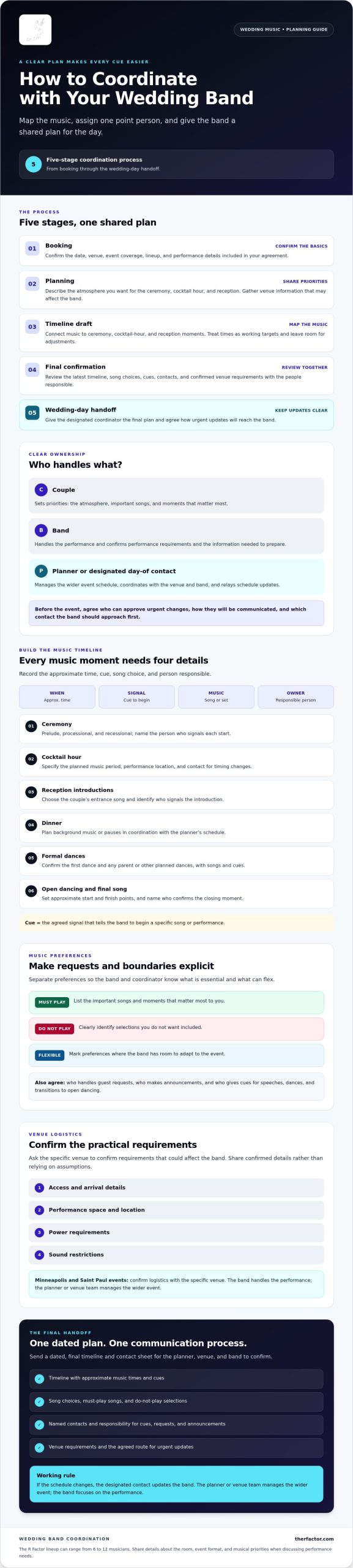
Use five stages to organize how to coordinate with your wedding band:
- Booking: Confirm the date, venue, event coverage, lineup, and performance details included in your agreement.
- Planning: Share your priorities and gather venue information that may affect the band.
- Timeline draft: Map music to ceremony, cocktail-hour, and reception moments, leaving room for schedule adjustments.
- Final confirmation: Review the latest timeline, song choices, cues, contacts, and venue requirements with the people responsible.
- Wedding-day handoff: Give the designated coordinator the final plan and confirm how urgent updates will reach the band.
Discuss the event scale and the sound you want early. The R Factor’s lineup can range from 6 to 12 musicians, so sharing details about the room, event format, and musical priorities can guide the conversation about performance needs. For broader entertainment planning, explore the live wedding music Minneapolis planning guide.
What to share with the band after booking
Send the wedding date, venue, event format, estimated guest count, and key contacts. Describe the atmosphere you want for the ceremony, cocktail hour, and reception with practical cues such as “quiet and reflective” or “lively and celebratory.” If you’re weighing ceremony traditions, a traditional wedding music overview can help you identify moments such as the prelude, processional, and recessional to discuss.
Flag known venue rules and schedule constraints, but verify them rather than relying on assumptions. Ask the venue to confirm any requirements that may affect the band, then share the confirmed details.
Who should lead wedding-day music coordination?
Name one primary contact, usually your planner or designated day-of coordinator. That person can relay schedule updates and coordinate with the venue and band, while you stay available for artistic decisions instead of routine messages. Before the event, agree on how urgent changes will be communicated, who can approve them, and which contact the band should approach first.
For Minneapolis and Saint Paul weddings, confirm logistics with the specific venue. The band handles the performance, while the planner or venue team manages the wider event. Clear ownership lets each person focus on their role.
Build a Wedding Timeline Around the Band’s Music Moments
A useful music timeline does more than list performance times. It connects each song or set to an event moment, identifies who gives the cue, and leaves room for the day to unfold naturally. Treat times as working targets, not fixed guarantees. If dinner or a toast runs long, the planner can adjust the sequence and tell the band what has changed.
A music cue is the agreed signal that tells the band to begin a specific song or performance. For each moment, record the approximate time, cue, song choice, and responsible person:
- Ceremony: Prelude, processional, and recessional, with the signal for each start.
- Cocktail hour: The planned music period, location, and contact for timing changes.
- Reception introductions: The couple’s entrance song and who signals the introduction.
- Dinner: Background music or pauses, coordinated with the planner’s schedule.
- Formal dances: First dance and any parent or other planned dances, with song choices and cues.
- Open dancing and final song: Approximate start and finish, plus who confirms the closing moment.
Coordinate ceremony and cocktail-hour cues
List the processional and recessional songs, then name the person who signals each start. Confirm where the musicians will perform and how they’ll receive timing updates if the ceremony begins early or late. Agree on a backup method, such as asking a designated venue contact to relay the change if the planner isn’t nearby. A guide to traditional wedding music can help you identify ceremony moments to include in the plan.
Plan reception transitions with the planner
Agree on who introduces the couple and who signals formal dances, speeches, and the transition to open dancing. The band can follow the agreed cues while the planner coordinates the overall sequence. Sharing these musical cues across your vendor team also ensures visual storytellers, such as Thomas Kim Photography, are seamlessly positioned to capture each entrance and special dance. Include dinner pacing in the shared schedule, but don’t assume the band controls catering service. Confirm meal timing with the planner or venue. Add setup and soundcheck times to the working timeline only after the venue approves them.
If you’re considering live music for your ceremony, cocktail hour, or reception, review The R Factor’s wedding entertainment options as you shape the music plan.
Setlist, Requests, and Announcements: Agree on the Details
A useful setlist brief gives the band direction without prescribing every moment. Separate essential songs from selections you’d enjoy and styles the band can interpret. This distinction helps preserve the atmosphere you want while leaving room for the performance to respond to the room.
Give the band useful music direction
Be specific about energy, genres, and your guests’ tastes. Instead of writing “fun music,” you might request upbeat sing-alongs across several decades, with a few slower songs between energetic sets. Put must-play songs, do-not-play selections, and flexible style preferences in separate lists. For key moments such as a first dance, provide the exact song and, if relevant, the version or edit you want. Label optional requests clearly so they don’t compete with essential choices.
Agree on requests and special announcements
Use one approved document for announcement wording, names, pronunciations, and order. Include the details the announcer needs, such as the correct pronunciation of a wedding party member’s name. Assign a decision owner for each item so the band isn’t left to resolve conflicting instructions during the reception.
| Item | What to confirm | Decision owner |
|---|---|---|
| Must-play and do-not-play songs | Exact titles, versions, and which list takes priority | Couple |
| Guest requests | Whether requests are considered and who approves them | Couple or designated contact |
| Introductions and announcements | Approved wording, name pronunciations, and order | Couple supplies details; planner confirms timing |
Ensemble size can also shape the planning conversation, including how the group fits your event’s musical goals. The 11-piece wedding band planning guide takes a closer look at that consideration. Keep your brief clear, confirm who can approve changes, and share the same approved version with the band and planner.
Coordinate Venue Logistics and Last-Minute Changes
Venue details can affect where and when a band performs, so confirm them directly with venue staff instead of relying on assumptions. Minneapolis and Saint Paul venues may differ in access, space, power, and sound requirements. As part of planning how to coordinate with your wedding band, make sure the venue, planner, and band work from the same confirmed information.
Confirm venue requirements before wedding week
Ask the venue to confirm practical details, then check that they align with the band’s needs. A concise checklist can help surface conflicts early:
- Arrival and access: Confirm the band’s permitted arrival window, entrance, load-in route, and any parking instructions.
- Performance space: Verify the available footprint and location with venue staff, then share those details with the band.
- Power and sound: Ask about available power access and any sound restrictions that apply to the event.
- Setup and soundcheck: Confirm when the band can access the space and schedule setup or soundcheck within the venue’s approved window.
Don’t treat arrangements for a past event at the same venue as confirmation of current requirements. Once details are verified, add them to the current planning document and share it with both the band and planner. If a requirement is unclear, name the person who will follow up and record the answer before finalizing the schedule.
Use a simple process for day-of changes
Choose one person, usually the planner or designated day-of coordinator, to relay schedule changes to the band. Agree in advance on the communication channel, such as a direct call or message, and identify who at the band should receive it. For important updates, ask the recipient to acknowledge the change so the sender knows it was received, not just sent.
Keep updates focused. If dinner runs late, the coordinator can send a revised time for the next planned cue instead of circulating a rewritten schedule to every vendor. The band can follow the confirmed adjustment while the planner manages the broader timeline. If the primary contact can’t reach the band, define a backup contact and method before the event.
Clear venue information and one change process make logistics easier for everyone involved. If you’re planning live music for a Twin Cities wedding, discuss your event’s performance needs with The R Factor.
Make the Final Band Handoff Simple and Stress-Free
The final handoff should leave the band, planner, and venue working from the same clear plan. It’s the last practical step in how to coordinate with your wedding band: gather confirmed information, identify anything still unresolved, and make responsibilities clear before the wedding day. The couple makes personal decisions, while the coordinator manages schedule communication and routine updates.
Prepare a final wedding-band information sheet
Send one consolidated timeline and contact sheet rather than a trail of separate messages. Label it with a version number or date, and replace older copies when details change. Include:
- Event timings and locations for each performance moment.
- Music cues, approved song choices, and announcement wording.
- Names and contact details for the band, planner, and relevant venue representative.
- Confirmed venue logistics that affect the band’s arrival, setup, or performance.
- Any open decisions, with a named person responsible for resolving each one.
Before the event, ask the planner, venue contact, and band to confirm the details assigned to them. The band can verify performance-related information, the venue can confirm its requirements, and the planner can check that the schedule and handoff process align. If a decision remains open, mark it clearly so an outdated draft doesn’t appear final.
Take the next step with a live wedding band
Review the timeline with the band and invite questions about performance requirements, cues, and the information it needs. Your role is to settle personal choices, such as important songs and the overall atmosphere. The coordinator can handle routine schedule updates and direct approved changes to the right people.
Event scale may be relevant when discussing the sound and setup you have in mind. The R Factor’s lineup can range from 6 to 12 musicians, so share your expected guest count, event format, and priorities when discussing which arrangement may suit your celebration. For broader planning context, see the Minneapolis live wedding music guide.
With one current document and clear confirmations, everyone can focus on their part of the day. If you’re considering live music for your wedding, discuss your event’s performance needs with The R Factor.
Put Your Wedding Music Plan Into Motion
A smooth music plan comes down to clear cues, confirmed venue details, and one person responsible for sharing schedule changes. Decide which songs and moments matter most, then give your band and coordinator a current timeline they can follow. That’s the practical core of how to coordinate with your wedding band.
The R Factor is a Minneapolis and Saint Paul-based live band for wedding ceremonies, cocktail hours, and receptions. Its flexible lineup ranges from 6 to 12 musicians, with four vocalists, a horn section, a rhythm section, and a violin. Discuss your event’s scale and musical priorities with the band as you shape the plan.
Discuss your wedding music plans with The R Factor and explore the lineup that may suit your celebration. With clear communication in place, you can focus on enjoying the music and the moments it brings to life.
Frequently Asked Questions
When should you start coordinating with your wedding band?
Start coordinating as soon as you book the band. Share the date, venue, event format, key contacts, and any known schedule or venue constraints, then refine the music plan as other details become clear. Early communication gives you time to confirm performance requirements and resolve questions with the venue. A practical approach to how to coordinate with your wedding band is to set priorities early and confirm the final timeline closer to the event.
What information should I give my wedding band?
Share your wedding date, venue, estimated guest count, event format, and the names and contact details of your planner or day-of coordinator. Describe the atmosphere you want for the ceremony, cocktail hour, and reception. Include important songs, songs to avoid, announcement details, and approximate timing for key moments. Pass along venue rules only after they’re confirmed, including access instructions or sound restrictions that may affect the performance.
Who coordinates the wedding band on the day?
Your planner or designated day-of coordinator should usually be the band’s primary contact on the wedding day. They can relay timing changes and coordinate with the venue without asking you to manage routine updates. You and your partner should remain available for meaningful artistic choices, such as approving a song request if you’ve agreed to do so. Before the event, confirm who contacts the band, which communication method to use, and who acts as backup.
How do you create a wedding reception timeline with a live band?
List each music moment in order, from introductions and dinner through formal dances, open dancing, and the final song. For every item, note the approximate time, song or music direction, cue, and person responsible for signaling it. Coordinate introductions and dance cues with your planner, and align dinner timing with the venue or catering team. Keep the schedule flexible, since speeches, service, or other moments may shift the planned sequence.
Can you request specific songs from a wedding band?
Yes, share specific song requests with the band and ask which selections can be accommodated. Mark essential songs separately from optional requests and broad style preferences. For a first dance or another key moment, include the exact title and version or edit if that matters to you. Ask how the band handles guest requests, too. Confirm its approach directly rather than assuming requests are accepted or that every selection can be performed.
What happens if the wedding schedule changes during the reception?
The designated coordinator should send the band essential timing or cue changes through the communication method agreed on in advance. Ask the recipient to confirm the update so there’s no uncertainty about whether it arrived. For example, if a toast runs late, the coordinator can relay a revised cue for the next planned moment. Keep changes focused and make sure the planner, band, and relevant venue contact refer to the current timeline.
What should we confirm with a Minneapolis or Saint Paul wedding venue?
Confirm the band’s arrival window, load-in route, parking instructions, performance space, power access, sound restrictions, setup access, and approved soundcheck timing directly with venue staff. Requirements can differ from one Minneapolis or Saint Paul venue to another, so don’t rely on assumptions or details from a different event. Once confirmed, share the logistics with the band and planner in the same current document, and identify who will relay any day-of changes.
Recent Comments