

How do you make a corporate event not boring without turning it into a show? Start with the guest experience. Long speeches, unclear transitions, and unplanned gaps can drain a room, while activities that don’t suit the audience may feel forced. A strong event balances useful content, natural opportunities to connect, and well-timed moments of shared energy.
You don’t need to fill every minute. You need a guest-focused plan that keeps the day moving and gives attendees more than one way to take part. The right choices depend on the event’s purpose, audience, and format.
This guide covers how to build a smooth flow from arrival to close, keep presentations and downtime in check, and choose activities that feel relevant rather than generic. It also explains when entertainment, including live music, can bring guests together while leaving room for conversation and different preferences.
Key Takeaways
- Identify the event’s main purpose before selecting activities, so each agenda choice supports a clear outcome.
- Map the guest experience from arrival to close, with clear transitions between program segments.
- To understand how to make a corporate event not boring, match each activity to the audience, event goal, room setup, and available time.
- Prepare a practical run-of-show with cues, assigned responsibilities, and a plan for likely changes.
- Consider live music when shared energy suits the occasion, and weigh it against conversation-led or hands-on formats.
Why Corporate Events Feel Boring, and What Guests Need Instead
A polished venue, thoughtful catering, and a full program can still leave guests disengaged. The issue is often a schedule built around what organizers need to present, rather than what attendees need from the experience. Long stretches of listening, uncertain transitions, and activities that feel obligatory can make even a well-produced Minneapolis corporate event feel flat.
First, separate the event’s purpose from its entertainment. A celebration should feel different from a learning session. Recognition calls for moments that make people feel seen, while a networking event needs enough structure to help conversations get started. These goals can overlap, but naming the primary one gives each activity a reason to be there. It’s a practical first step in event management, which involves coordinating different elements around the event’s needs.
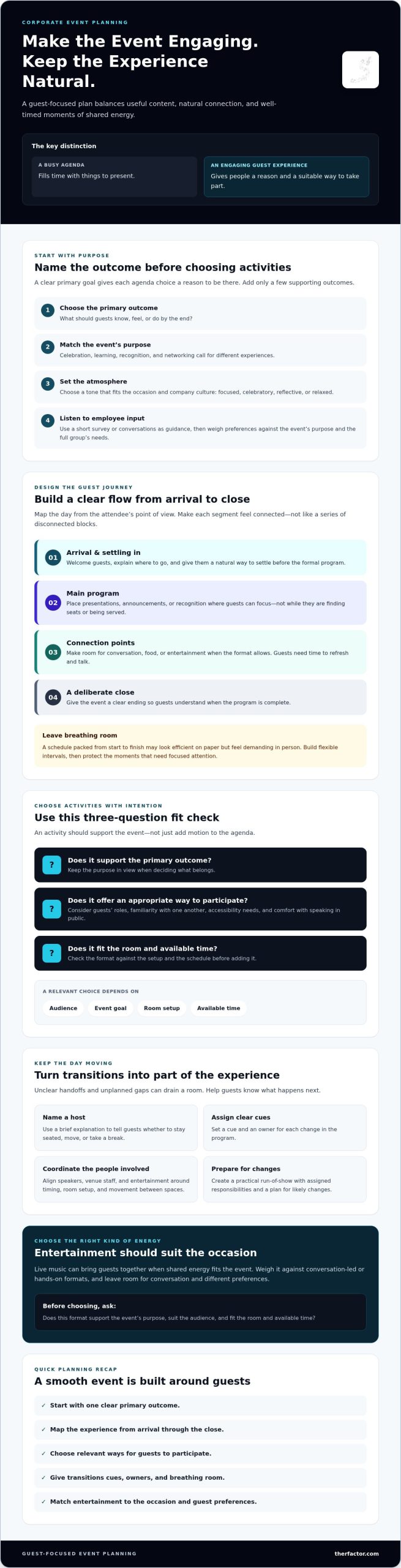
A busy agenda fills time; an engaging guest experience gives people a reason to take part. That distinction is central to how to make a corporate event not boring. Engagement doesn’t mean keeping guests occupied every minute. It means creating a clear flow, relevant moments, and choices that suit the gathering.
How to Spot the Moments When Guests Disengage
Review the schedule from an attendee’s point of view. Mark every stretch of listening, waiting, or downtime where guests have no clear cue about what happens next. Then check the arrival and transition moments. Will people know where to go, whether to find a seat, and how to move into the next segment? Consider guests’ roles, how well they know one another, accessibility needs, and comfort with speaking in public. An activity that puts people on the spot won’t suit every group.
Set an Event Goal Before Choosing Activities
Write down one primary outcome, such as celebrating a milestone, recognizing employee contributions, supporting networking, or sharing useful learning. Add only a few supporting outcomes. Then decide what atmosphere fits the event type and company culture: focused, celebratory, reflective, or relaxed. Ask employees for input through a short survey or conversations, but treat their responses as guidance, not a binding vote. Weigh preferences against the event’s purpose, format, and the needs of the full group.
Once the goal is clear, assess each proposed agenda item with three questions: Does it support the primary outcome? Does it give guests an appropriate way to participate? Does it fit the room and available time? If an activity misses those tests, it may add motion without meaning. This filter helps planners choose deliberately before building the schedule.
How to Build a Corporate Event Flow That Holds Attention
A strong event flow is designed, not improvised. Start with the primary goal, then map what guests will experience from arrival to departure. Choose formats that support the goal and plan the transitions between them. This keeps agenda items from feeling like disconnected blocks.
- Define the goal: Decide what guests should know, feel, or do by the end.
- Map guest moments: Sketch arrival, the main program, connection points, and the close from the attendee’s perspective.
- Choose formats: Select presentations, conversation, food, recognition, or entertainment to serve those moments.
- Confirm transitions: Assign cues and owners so guests know where to go and what happens next.
Leave breathing room. Guests need time to settle, refresh, and talk. A schedule packed from start to finish may look efficient on paper but feel demanding in person. Build in flexible intervals, then protect the moments that need focused attention.
Design the Event Around Guest Energy
Make arrival easy to understand. Welcome guests, explain where to go, and give them a natural way to settle in before the formal program begins. When the format allows, alternate listening with conversation, food, or entertainment instead of stacking similar segments together. Place a keynote, announcement, or recognition moment when guests can focus, not while they’re finding seats or being served.
Make Transitions Feel Intentional
Plan transitions as guest experiences, not gaps between agenda items. Name a host or assign a clear cue for each change. Coordinate speakers, venue staff, and entertainment around timing, room setup, and movement between spaces. A brief explanation from the host can tell guests whether to stay seated, move, or take a break.
Adapt the sequence to the occasion. A gala might move from a welcoming reception to dinner, remarks, and a deliberate close. An awards event needs enough time for each recognition moment without losing momentum. A company party may call for a shorter formal segment, followed by more room for socializing and entertainment. The format changes, but the logic stays consistent: guide guests through a clear beginning, meaningful middle, and satisfying finish.
If live music is part of the plan, decide where it supports the flow, such as during a transition or at the close. Confirm timing and event details with the performers. Minneapolis planners considering corporate event music in Minneapolis can explore how a live band might fit the occasion. Keep music in service of the event, rather than letting it compete with moments that call for conversation or attention.
Which Corporate Event Ideas Engage Guests Without Feeling Forced?
The right activity depends on what the event should accomplish and how guests are expected to take part. A networking mixer needs different energy from an awards dinner or a learning-focused meeting. To decide how to make a corporate event not boring, compare ideas using the same practical criteria: event goal, participation level, room setup, timing, and planning demands.
This simple comparison can clarify the trade-offs before you commit:
- Conversation-led: Supports networking and connection. Keep participation low-pressure with open conversation areas or optional prompts. Check whether the layout makes it easy for people to move and mingle.
- Hands-on: Can make a shared task or demonstration more memorable. Check whether the activity suits the group size, space, schedule, and range of comfort levels.
- Recognition-focused: Fits celebrations and awards. Plan a considerate format that gives recognition its due without making guests feel they must perform or speak unexpectedly.
- Learning-focused: Serves a knowledge-sharing goal. Balance listening with discussion or practical participation, and make sure the subject is relevant to attendees.
- Entertainment: Can add shared energy to a celebration or company gathering. Assess the room, timing, and whether guests should be listening, talking, or enjoying the performance.
Choose Activities That Fit Your Audience
Consider group size, how well guests know one another, the mix of seniority, and whether people are there mainly to work or socialize. Offer more than one way to engage: guests might join a discussion, take part in an activity, observe, or simply talk with others. Employee feedback can reveal preferences, but use it alongside the event’s purpose and practical constraints. A vote can inform the choice; it shouldn’t replace planning judgment.
Low-pressure participation gives guests agency. An optional conversation prompt invites interaction; calling on someone without warning puts them on the spot. Before selecting an activity, ask whether guests can comfortably opt in, observe, or step away without disrupting the experience. Even for bold team-building outings or milestone reward trips—such as an experience day with UK Skydiving—ensuring participation feels optional helps everyone feel included and respected.
Use Entertainment to Support the Event, Not Compete With It
Match entertainment’s volume and timing to the room and the conversations guests should be able to have. Keep speeches, recognition, and networking distinct from high-energy moments so each gets the attention it needs. For Minneapolis and St. Paul events, this corporate live music planning guide can help you consider where a performance may fit. The R Factor offers corporate event music with flexible ensembles of 6 to 12 musicians, an option for planners considering different event scales.
How to Plan the Details So Engagement Works on Event Day
Good ideas need reliable execution. A guest may be ready to participate, but unclear directions, hard-to-hear remarks, or a room that’s difficult to navigate can get in the way. Use this checklist to test the details before event day:
- Schedule: Confirm segment start times, realistic transition periods, and which moments can shift if the program runs late.
- Space: Check seating, movement between areas, sightlines, and whether the layout supports conversation or focused listening.
- Sound: Plan how speakers and entertainment will be heard without making it difficult for guests to talk during social segments.
- Staffing: Assign an owner for guest questions, room changes, technical cues, and timing decisions.
- Contingency: Prepare an alternative if a screen, internet connection, activity material, or planned segment isn’t available.
Create a Run-of-Show the Whole Team Can Use
A useful run-of-show coordinates timing, owners, transitions, and technical cues so every event partner knows what happens next. List each segment’s start time, responsible person, location, and essential cues, such as a microphone handoff or room change. Share the current version with speakers, venue contacts, and entertainment providers. Name who can make timing decisions onsite, and allow guests and staff enough time to move between segments.
Keep the document clear enough to scan quickly. If a speaker runs over, the team should know which transition can be shortened and who has authority to adjust the schedule. Confirm performance timing and event-specific requirements directly with the entertainment provider instead of relying on assumptions.
Prepare for Attendance, Access, and Unexpected Changes
Walk through how guests will enter, move through the space, find seating, and access each activity. Check accessibility needs with the venue and plan a layout that keeps routes clear. Match the room setup to the purpose: tables can support conversation, while a presentation may need unobstructed sightlines. Consider whether guests can hear key remarks without sound overwhelming networking or dining.
Have a workable fallback. If an activity depends on screens or connectivity, prepare a verbal or printed alternative. If attendance changes, know which parts of the setup can be adjusted. If materials are missing or the schedule slips, identify a segment that can be simplified without undermining the event’s main purpose.
If live music is part of your plan, share the event schedule and room details with the band as you coordinate cues. Explore corporate event music with The R Factor as an option for a Minneapolis and St. Paul gathering.
When Live Music Can Make a Corporate Event More Memorable
Live music can suit a company celebration, gala, awards event, or gathering where a shared moment of energy supports the occasion. It isn’t automatically the right choice. Start with the event’s purpose, venue, audience expectations, schedule, and available performance space. If guests need to hear a presentation, recognize colleagues, or build new connections, give those moments priority over music.
Think of entertainment as one tool among several. Conversation-led formats give guests room to connect directly. Hands-on activities invite participation around a shared task. A live band can bring people together through a common experience, especially at a celebratory point in the program. None is a universal winner. Choose the format that serves the event and gives guests a comfortable way to engage.
Decide Whether a Live Band Fits Your Event
Ask what the room should feel like during the performance. Is the goal to create a lively close, add atmosphere to a celebration, or give guests a shared focal point? Consider whether the room has space for a performance without blocking guest movement or conversation. Music can shift the energy, but it needs thoughtful timing and sound coordination. Keep remarks, awards, and networking distinct from higher-energy entertainment so each gets the attention it deserves.
Plan Entertainment Around the Program
Confirm performance timing, transitions, and room arrangements with the event planner, venue, and entertainment provider. Decide in advance whether music belongs during a social portion, after formal remarks, or as part of the close. For a product launch, consider how live music may fit the program without competing with the product presentation or key announcements.
The R Factor is a Minneapolis and St. Paul band offering corporate event music with flexible ensemble options of 6 to 12 musicians. That range gives planners options to discuss for different event scales. Confirm performance formats and event-specific details directly, then consider how the ensemble size, room, and schedule align with your plans.
As you decide how to make a corporate event not boring, focus on fit rather than adding entertainment for its own sake. If live music could support your event’s purpose, discuss your corporate event entertainment needs with The R Factor and explore whether a performance is a suitable match.
Build an Event Guests Remember
A memorable corporate event doesn’t need a packed schedule. It needs a clear purpose, a considered flow, and activities that fit the people in the room. Decide what guests should take away, then shape the agenda around meaningful connection, focused program moments, and enough breathing room to enjoy the experience.
That’s the practical answer to how to make a corporate event not boring: make each choice serve the event goal, and coordinate the details so guests can participate comfortably. Live music can add shared energy at the right moment, while conversation, recognition, or learning may deserve the spotlight at others.
The R Factor is a Minneapolis and St. Paul live band for corporate events, with flexible ensemble sizes from 6 to 12 musicians. Its lineup includes four vocalists, a horn section, a rhythm section, and violin. To discuss your plans and whether the band may fit your event, contact The R Factor about corporate event entertainment.
With a clear plan and choices suited to your audience, you can create an event that feels purposeful, polished, and genuinely engaging.
Frequently Asked Questions
How do you make a corporate event fun but still professional?
Make the event enjoyable by tying social and entertainment elements to a clear business purpose. Keep remarks focused, allow time for conversation, and choose activities that fit your company culture rather than relying on gimmicks. For Minneapolis and St. Paul teams, a recognition dinner might pair concise awards with relaxed conversation and a planned entertainment moment. That balance shows how to make a corporate event not boring while keeping the occasion polished.
What are some non-awkward activities for a corporate event?
Choose activities guests can join without being singled out. Optional conversation prompts, small-group discussions, guided demonstrations, or a shared creative activity can give people an easy starting point. Explain how each activity works and let guests participate, observe, or talk instead. Consider the group’s size and familiarity: an exercise suited to a close-knit team may feel uncomfortable for a mixed group of employees, clients, and leaders.
How do you keep employees engaged at a company event?
Give employees a clear reason to attend and make the program relevant to their roles and interests. Alternate presentations with discussion, breaks, recognition, or social time so the experience isn’t passive from start to finish. Share the schedule in advance, make participation expectations clear, and account for accessibility needs. Employee feedback can help you choose formats, but balance preferences with the event’s purpose and practical requirements.
How long should a corporate event program be?
There’s no single ideal length. Set the program around the event’s purpose, the time guests can reasonably give, and the attention each segment needs. A focused meeting may call for a shorter formal agenda, while a gala or company celebration may include multiple program moments alongside dining and conversation. Avoid filling every minute. Include realistic transitions and breaks, then remove segments that don’t contribute to the intended outcome.
How can a company event encourage networking without forcing it?
Create comfortable opportunities for people to talk, rather than requiring every guest to introduce themselves or join a structured exercise. Use a layout that supports conversation, allow time between formal segments, and offer optional prompts or small-group discussions. At a Minneapolis or St. Paul gathering with colleagues from different teams, a host can make introductions or explain where guests can connect, while leaving them free to choose how they participate.
Is live music a good idea for a corporate event?
Live music can suit a celebration, gala, awards event, or company gathering when a shared musical moment supports the occasion. Consider the venue, schedule, audience, and whether guests need to hear remarks or hold conversations. The R Factor is a Minneapolis and St. Paul live band offering ensembles of 6 to 12 musicians, with four vocalists, a horn section, a rhythm section, and violin. Confirm event-specific details with the band.
How do you plan a corporate event run-of-show?
Build the run-of-show around the guest journey, from arrival through the closing moment. For each segment, record its start time, location, owner, transition, and any essential technical cue. Share the latest schedule with speakers, venue contacts, and entertainment providers. Identify who can make timing decisions onsite, allow realistic time for room changes, and prepare an alternative if technology, materials, or the schedule changes.
Recent Comments