

The most impressive corporate event isn’t necessarily the biggest or most elaborate. If you’re wondering how to impress clients at a corporate event, start with what makes guests feel genuinely welcome: thoughtful details, room for easy conversation, and an atmosphere that suits the occasion. Spectacle can catch attention, but hospitality is what makes an event feel personal rather than generic or overly promotional.
It’s natural to want clients to leave with a strong impression without making every moment feel like a sales pitch. Start with a clear plan built around your guests, not just your company’s message. This guide covers practical ways to help clients feel valued, create space for real conversation, and make the event polished and memorable.
We’ll look at personal touches, pacing, entertainment, and coordination. You’ll also learn how to match the atmosphere to the event’s purpose, so each detail feels considered rather than added for show. A client-focused approach can strengthen relationships without relying on hard selling.
Key Takeaways
- Learn how to impress clients at a corporate event by prioritizing welcome, relevance, and ease over scale alone.
- Set a clear relationship goal and learn what clients value before choosing the event format, schedule, or entertainment.
- Compare live music, recorded music, and no entertainment based on the atmosphere you want and the conversation your event needs.
- Use a practical planning sequence to clarify responsibilities, prepare in advance, and check essential details on the day.
- Continue meaningful conversations after the event with timely, specific follow-up, and gather feedback without over-surveying guests.
How to Impress Clients at a Corporate Event by Making Them Feel Welcome
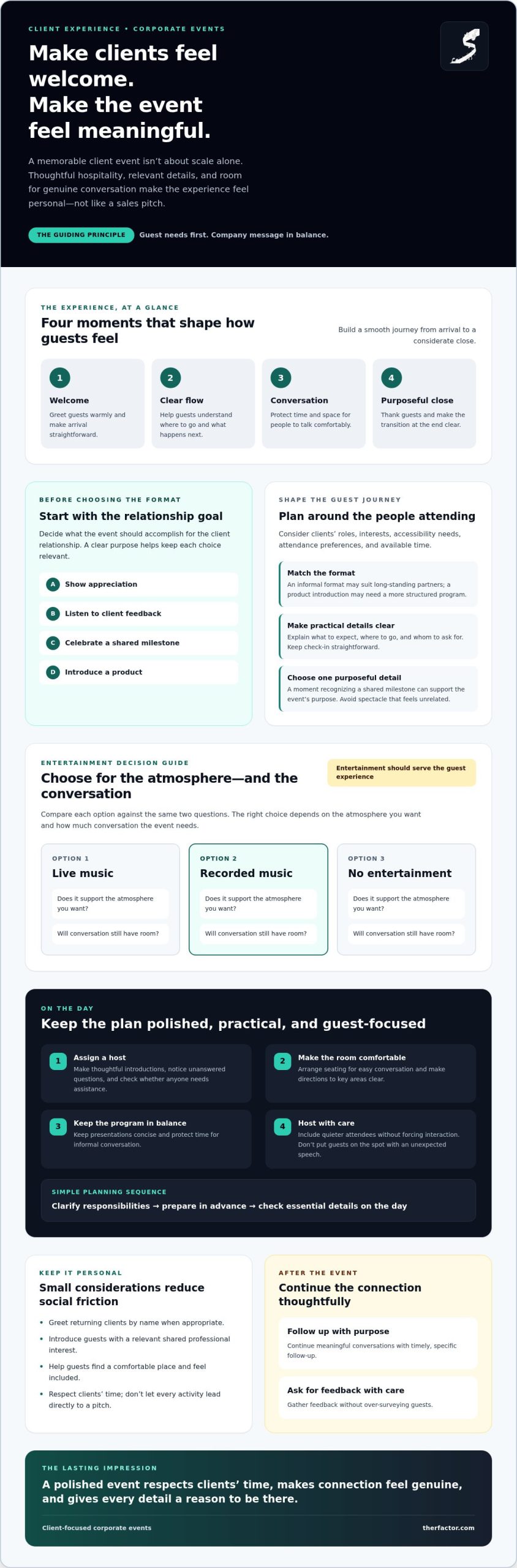
Clients rarely judge an event by its scale alone. They notice whether they feel expected, comfortable, and included. That is the foundation of how to impress clients at a corporate event: make the experience relevant, easy to navigate, and welcoming to conversation. Thoughtful hospitality makes a client feel like a valued guest. A long sequence of presentations and product messages can make the same event feel like a sales pitch in a different setting.
Use this simple welcome checklist to keep the experience grounded:
- Welcome: Greet guests warmly and make arrival feel straightforward.
- Clear flow: Make it easy to understand where to go and what happens next.
- Comfortable conversation: Give guests space and time to talk without competing with the program.
- Purposeful close: End with a clear, considerate transition rather than an abrupt finish.
Entertainment can help shape an event’s atmosphere, but it should serve the guest experience rather than dominate it. The broader idea of corporate entertainment includes more than performance. Hosting and the setting also influence how guests experience the occasion.
What makes a corporate event feel personal to clients?
Personalization starts before guests arrive. Learn what you can about their roles, interests, accessibility needs, and attendance preferences, then use that information to make practical decisions. A host might greet a returning client by name or introduce two guests who share a relevant professional interest. Keep introductions low-pressure. Don’t put someone on the spot with an unexpected speech or public recognition.
Comfort also depends on the room. Arrange seating so guests can speak without straining, and provide clear directions to key areas. These details reduce social friction, especially for people who don’t know many others in the room. A personal event isn’t necessarily elaborate. It’s one where guests don’t have to work hard to feel at ease.
How can the event feel valuable without feeling like a sales pitch?
Give the event a purpose clients can recognize. A shared industry interest, a meaningful milestone, or an occasion to express appreciation can provide a natural focus. Keep any presentation concise, then protect time for informal conversation. If every activity leads directly to a pitch, guests may feel targeted instead of included.
Attentive hosting is often simple: notice who has arrived, help guests find a comfortable place, and include quieter attendees without forcing interaction. Close by thanking guests and explaining what comes next, if anything. The result is a polished event that respects clients’ time and makes connection feel genuine.
Plan the Client Experience Around Their Priorities
Before choosing a venue or booking entertainment, decide what the event should accomplish for the client relationship. Is the priority to show appreciation, listen to client feedback, celebrate a shared milestone, or introduce a product? A clear goal keeps decisions focused and helps the event feel relevant rather than like a collection of impressive but disconnected details. For a useful planning perspective, Wealth Management’s guide to strategic brand building treats client events as an intentional part of the relationship.
Next, map the guest journey from invitation to departure. Consider what clients need to know before they arrive, how they’ll enter and orient themselves, where conversation fits into the program, and how the event will close. Choose one memorable detail that supports the purpose, such as a moment recognizing a shared milestone. An unrelated spectacle may draw attention, but it won’t necessarily deepen the connection.
How do you tailor an event to the clients attending?
Review the guest list by relationship, role, and likely interests. A group of long-standing partners may appreciate an informal format, while a product introduction may call for a more structured program. For instance, treating guests to an evening of live music or comedy at a dedicated venue like The Vermont Hollywood can offer a relaxed, memorable setting for relationship building. Match the format to guests’ available time, expected level of formality, and willingness to participate. Assign a host to make thoughtful introductions, notice questions that haven’t been answered, and check whether anyone needs assistance. That role helps the experience feel considered without putting guests under pressure.
Which event details shape a polished first impression?
Make practical details clear. Invitations should explain what to expect, and arrival instructions should cover where to go and whom to ask for. Keep check-in straightforward, and begin the program when guests are ready, not while they’re still trying to find their way. Inside the room, align the layout, lighting, sound, and pacing with the event’s purpose. A conversation-focused gathering needs a different setup from a formal presentation.
Entertainment is one part of that planning. Consider whether live music fits the audience and schedule, and how it can complement rather than compete with conversation. The 2026 Guide to Live Music for Corporate Events can help you think through those choices. For Minneapolis and St. Paul events, The R Factor performs corporate event music with lineups ranging from 6 to 12 musicians. Explore live music for corporate events as one option for shaping the atmosphere, while keeping the event’s relationship goal at the center.
Compare Corporate Event Entertainment by the Experience It Creates
Entertainment should support the event’s purpose, not compete with it. Live music, recorded music, and no entertainment can each be the right choice, depending on the audience, agenda, venue, and timing. Compare them by atmosphere, flexibility, and how much conversation the event needs. This makes the decision more practical than choosing an option simply because it seems impressive.
- Live music: Creates a distinct, responsive atmosphere for receptions, galas, award ceremonies, and company celebrations. It can mark transitions in the program, but volume and performance windows need to leave room for guests to speak.
- Recorded music: Offers a consistent background and can be adjusted to suit different portions of an event. It may work well when the schedule needs simple transitions, though the atmosphere is less responsive to the room.
- No entertainment: Keeps attention on presentations or conversation. It can suit focused meetings, but consider whether the room may feel too quiet during arrivals or breaks.
Use those trade-offs as a comparison framework, not a ranking. A reception with informal networking has different needs from a presentation-led gathering. No format guarantees stronger relationships or business results. Choose an atmosphere that makes the event comfortable and appropriate for its purpose.
When might live music suit a client-facing event?
Live music can suit a reception, gala, award ceremony, or company celebration where atmosphere is part of the experience. Plan its role across the schedule: a welcoming presence as guests arrive, a quieter approach during dining, or a more prominent performance during a social portion. Agree on volume expectations and performance windows in advance. The R Factor performs corporate functions in Minneapolis and St. Paul with ensembles ranging from 6 to 12 musicians, allowing the event’s scale and program to inform lineup discussions.
How do you choose an entertainment format that fits the event?
Assess the room, guest count, level of formality, and agenda before making a selection. Then ask prospective performers about repertoire, performance windows, setup needs, and coordination expectations. For a product launch, entertainment should complement the reveal and leave room for guests to absorb key information. The article Professional Event Entertainment Services for Product Launches in Minneapolis explores that event-specific planning question. For broader preparation, the Maritime Conference Center’s corporate event planning guide offers a useful planning reference. Choose the format that supports the program and the conversations clients came to have.
Use a Practical Checklist to Deliver a Smooth Client Event
A polished event depends on clear ownership, not last-minute improvisation. Use this sequence to turn the client experience into manageable decisions, then separate advance planning from day-of checks. That structure helps the team respond calmly if the schedule shifts, an accessibility request comes up, or a technical issue needs attention.
- Set the goal. Define the intended outcome, such as client appreciation, a milestone celebration, or time for meaningful discussion.
- Understand the guests. Confirm who’s attending, their relevant preferences, and any access requirements that should shape the arrangements.
- Choose the format. Match the venue, schedule, and entertainment to the event purpose and the time guests have available.
- Assign owners. Name a lead for guest questions, venue coordination, the run of show, and day-of decisions. Make sure each person knows when to escalate an issue.
- Review the plan. Walk through the guest journey, identify possible friction points, and confirm backup options before event day.
For a broader planning framework, use this corporate event planning guide alongside your team’s own run of show.
What should the host confirm before the event?
In advance, verify attendee details, arrival instructions, the schedule, and which team members will act as client hosts. Review the room setup, sound checks, transitions, and entertainment timing with the relevant venue contacts and vendors; if hosting an outdoor celebration that requires supplemental catering or beverage refrigeration, check out KC Frost Wagon. Confirm one primary contact for event-day decisions and identify a backup. Plan simple alternatives for schedule changes, accessibility requests, or technical problems, so the team knows what to do without making guests manage the disruption.
Before guests arrive, brief staff on names, introductions, assigned responsibilities, and escalation points. During the event, watch the pace and make transitions without rushing conversations. If a delay occurs, the designated lead can adjust the run of show while hosts keep guests informed and comfortable. Invite feedback discreetly, and resolve small issues promptly rather than letting them distract from the occasion.
Live music is one detail to coordinate within that plan. If it fits your program, explore corporate event music in the Twin Cities with The R Factor, and confirm performance details and availability directly.
Make the Event Memorable With the Right Follow-Through
The event may end when guests leave, but the relationship can continue through thoughtful follow-up. Send a concise thank-you that refers to a real conversation or shared moment, such as a client’s comment during dinner or a milestone you celebrated together. Specific details show that the message is personal, not a mass email sent simply to check a box.
Keep the next step relevant. If a guest expressed interest in a particular topic, share a useful resource or suggest a conversation about that subject. Don’t attach unrelated sales materials or ask for several actions at once. Respecting clients’ attention after the event is part of how to impress them during it.
What should you do after the corporate event?
Gather feedback with a light touch. Ask a few guests for a brief comment if it feels appropriate, and collect more detailed observations from internal hosts and staff. Review what clients responded to, where the schedule felt rushed, and whether any needs went unmet. Use those insights to improve the next event. A long survey isn’t necessary to learn what worked.
How can a live band support a polished client event?
Entertainment can help establish the atmosphere and mark transitions, but it can’t replace attentive hosting or meaningful conversation. Treat it as one coordinated part of the experience. For a Minneapolis and St. Paul corporate event, consider the venue, guest count, program, and moments when music should be present or give way to conversation. Confirm repertoire, performance timing, setup requirements, and coordination expectations directly with the band.
The R Factor performs live cover music for corporate functions, including galas, award ceremonies, and company holiday parties. Its lineup can range from 6 to 12 musicians, so the ensemble size can be considered alongside the room and event program. That flexibility helps you assess fit without assuming a larger performance is automatically better.
If live music suits your event, contact The R Factor to discuss your event’s fit, availability, and performance requirements. Confirm current availability and details as part of your planning. Thoughtful follow-through with clients and event partners helps carry a well-hosted experience beyond the evening itself.
Make Your Next Client Event Count
Strong client events are built around people, not spectacle. Set a clear relationship goal, shape the experience around what guests value, and choose entertainment that complements the room and program. A thoughtful follow-up then carries a genuine conversation beyond the event. These choices offer a practical answer to how to impress clients at a corporate event without making the occasion feel like a sales pitch.
For Minneapolis and St. Paul corporate functions, The R Factor is a live band option with a flexible lineup of 6 to 12 musicians, including four vocalists, a horn section, a rhythm section, and violin. Match the ensemble and performance timing to your venue and event needs, and confirm availability and details directly.
Discuss live music for your corporate event with The R Factor. With clear priorities and considered details, you can create an event that feels welcoming, polished, and worth remembering.
Frequently Asked Questions
How do you impress clients at a corporate event?
Impress clients by making the event feel relevant, welcoming, and easy to navigate. Start with a clear relationship goal, then shape the format, schedule, and atmosphere around your guests’ needs. Thoughtful greetings, comfortable conversation, and a considerate close matter more than scale alone. To understand how to impress clients at a corporate event, focus on how guests experience the occasion, not how many details you can add.
What makes a corporate event memorable for clients?
A corporate event becomes memorable when its details support a clear purpose and make guests feel considered. A personal welcome, an easy-to-follow program, and one meaningful moment tied to a shared milestone can leave a stronger impression than unrelated spectacle. Leave room for genuine conversation, too. The aim isn’t to make every element extraordinary; it’s to make the experience coherent, comfortable, and relevant to the clients attending.
Is live music a good choice for a corporate event?
Live music can suit a corporate event when it complements the program and doesn’t interfere with conversation. It may work particularly well during a reception, gala, award ceremony, or company celebration. Decide when music should be prominent and when it should give way to speaking or dining. Discuss volume, performance timing, repertoire, and venue requirements in advance, and treat music as one part of the guest experience, not a substitute for attentive hosting.
How do you make a corporate event feel less like a sales pitch?
Give the event a client-relevant purpose, such as appreciation, listening, or celebrating a shared milestone, rather than making every moment a product presentation. Keep formal remarks concise and leave meaningful time for informal conversation. Share product information only when it fits the occasion or responds to a guest’s interest. Attentive hosts should help clients feel included, not tracked through a sales agenda or pressed to take the next step.
What entertainment is best for a corporate client event?
The best entertainment depends on the audience, venue, schedule, and amount of conversation the event requires. Live music can bring character to a reception or celebration, while recorded music may suit a simpler background; a presentation-focused event may need no entertainment. In Minneapolis and St. Paul, The R Factor is a local live-band option for corporate functions, with ensembles ranging from 6 to 12 musicians. Confirm the event fit and performance details directly.
How can I make clients feel welcome at a corporate event?
Make clients feel welcome by preparing for their arrival and reducing the small uncertainties that can make an event uncomfortable. Provide clear directions, greet guests personally, and offer introductions where they feel natural. Make seating and wayfinding straightforward, and ensure hosts know who is attending and where to direct questions. If a guest prefers not to be singled out, respect that. A considerate welcome feels personal without putting anyone on the spot.
When should you follow up with clients after a corporate event?
Follow up promptly while the event and its conversations are still fresh. A message within a day or two is a practical target, especially if you’re responding to a specific question or sharing something a client requested. Keep it concise: thank them, refer to a genuine moment, and offer one relevant next step if appropriate. Gather broader feedback from your team, and invite client feedback discreetly rather than sending an unnecessary survey.
Recent Comments