
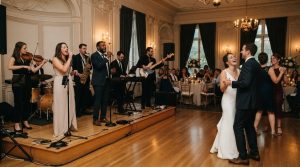
A luxury wedding doesn’t need a 10-piece band to feel polished. A live band for a luxury wedding in St. Paul can be smaller than that, with the right lineup and music planned around the venue, guest count, and flow of the celebration. The goal is a performance that feels considered at every moment, not simply a large stage presence.
When choosing a live band for a luxury wedding in St. Paul, consider more than sound. Ceremony music should suit the setting, while cocktail hour, dinner, and the reception each call for a different energy. One ensemble can help make the day feel cohesive and keep the music aligned with the atmosphere you want.
This guide explains how to match live music to each wedding moment, assess a band’s performance, and choose a lineup that suits your venue and guests. It also covers practical points for comparing St. Paul wedding bands, from musical range to how the group fits the room.
Key Takeaways
- Plan music as a progression, choosing a distinct feel for the ceremony, cocktail hour, dinner, and reception.
- Match the band’s lineup and stage footprint to the room layout and guest experience, not guest count alone.
- Evaluate performance videos for vocal quality, ensemble cohesion, and how the band handles transitions between songs.
- Compare Saint Paul wedding-band listings by musical range and performance format to narrow your options with confidence.
Ceremony, cocktail-hour, dinner, and reception music
Plan music as a sequence, not a single reception set. Choose cues for guest seating, the processional, and the recessional, then plan the transition to cocktail hour and dinner before the reception shifts toward dancing. A written timeline helps the band and venue coordinator align each cue with the day’s schedule.
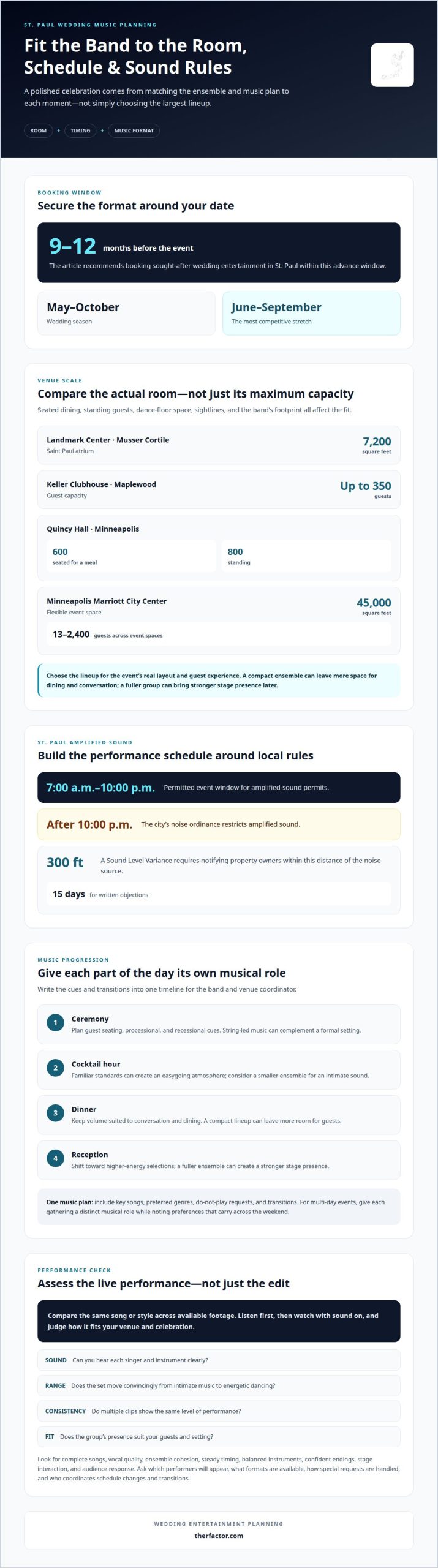
For sought-after wedding entertainment options in St. Paul, book 9 to 12 months before the event date. The wedding season runs from May through October, with June through September the most competitive stretch. Set the date and venue first, then secure the musical format that best fits your schedule.
Match each moment to its purpose. String-led music can complement a formal ceremony, while familiar standards create an easygoing cocktail atmosphere. During dinner, keep the volume suited to conversation; for the reception, choose higher-energy selections. Share key songs, preferred genres, and do-not-play requests in one music plan.
A smaller ensemble can create an intimate sound for cocktail hour and dinner. Consider how its instrumentation suits the room and whether the same musicians should continue into the reception. A smaller lineup leaves more space for conversation and dining, while a fuller group can create a stronger stage presence later.
For multi-day wedding events, map each gathering separately. Give the welcome party, ceremony, and reception distinct musical roles, then note shared preferences that should carry across the weekend. This keeps each event fresh without making the overall entertainment feel disconnected.
At Como Lakeside Pavilion, music booking applicants are asked to confirm dates for yearly events or performances by Sunday, February 13. For a wedding there, include the venue’s date and event schedule in your planning timeline.
Compare DJ-only and DJ-plus-live-musician packages by the experience each creates. DJ-only entertainment centers on recorded tracks and continuous song selection. A DJ-plus-live-musician format adds a performing musician alongside those tracks. Decide whether live vocals or instruments are central to your vision, then match the format to each part of the celebration.
Choosing a band based on venue and guest count
Start with the room, guest count, and atmosphere you want. A ballroom may suit a fuller ensemble, while an intimate setting may call for a more compact lineup. Consider sightlines, dining tables, dance-floor space, and where guests will gather during cocktail hour. The right fit supports your vision without crowding the room.
Saint Paul-area venues illustrate how differently a room can shape the choice. Landmark Center’s Musser Cortile is a 7,200-square-foot atrium. Keller Clubhouse in Maplewood accommodates up to 350 guests. At Quincy Hall in Minneapolis, capacity reaches 600 seated for a meal or 800 standing. Compare the event layout, not capacity alone: seated guests and a standing crowd use space differently.
Saint Paul amplified-sound permits cover events between 7:00 a.m. and 10:00 p.m., and the city’s noise ordinance restricts amplified sound after 10:00 p.m. A Sound Level Variance requires notifying property owners within 300 feet of the noise source, with a 15-day window for written objections. Build the performance schedule around the venue’s rules and event timing.
Coordinate the band’s setup with the venue manager and planner early. Share the room layout, performance location, schedule, and planned transitions. The stage footprint, power access, and sound setup depend on the ensemble size, room arrangement, and venue systems. Align these details with the planner so musicians can perform without disrupting guest movement or service.
Venue minimums and entertainment budgets are separate planning considerations. Compare what each venue’s package includes, then assess the band’s lineup against the actual guest experience. For example, Minneapolis Marriott City Center lists event spaces for 13-2,400 guests across 45,000 square feet of flexible event space. Match the space and ensemble to your event’s scale, rather than choosing by maximum capacity.
Live-performance video and performer evaluation
Choose performance footage that includes a complete song, not only a polished highlight reel. Listen to how the vocals, instruments, and transitions work together. A close-up can reveal musicianship, while a wide shot shows stage presence and audience response. Both views help you judge whether the live music suits your wedding.
Compare contrasting moments in the band’s footage, such as a quiet ballad and an upbeat dance song. Listen for clear vocals, steady timing, balanced instruments, and confident endings. Notice whether musicians connect with guests naturally. Wedding footage can show how the band engages a celebration; corporate-event footage can demonstrate how it performs in another setting.
Ask practical questions before booking: Which performers will appear, what music formats are available, and how are special requests handled? Clarify who coordinates timing with the venue and planner, how the group manages transitions, and what happens if the schedule changes. These answers reveal the band’s ability to organize details as well as perform.
Use a consistent process to compare performances. First, choose the same song or musical style across the available videos. Listen without watching, focusing on sound and vocal blend. Then watch with the sound on, noting stage interaction and audience response. Finally, consider how the performance suits your venue and celebration.
- Sound: Can you hear each singer and instrument clearly?
- Range: Does the set move convincingly from intimate music to energetic dancing?
- Consistency: Do multiple clips show the same level of performance?
- Fit: Does the group’s presence suit your guests and the setting?
For a St. Paul wedding, look for evidence of the experience you want, not production polish alone. A well-edited clip can introduce a band, but complete songs and clear answers to your questions give you a stronger basis for evaluating the performance.
Saint Paul wedding band listings
Listings can help you compare musical style, lineup, and event fit across St. Paul and Minneapolis. Treat “luxury” as a description to assess, not proof of a band’s specialty.
Bands for Luxury Weddings
A listing alone does not establish that a Twin Cities band specializes in luxury weddings. Look for details relevant to an elegant celebration: ceremony and reception options, repertoire, ensemble format, and coordination with planners. Compare these with your venue and schedule. A useful listing explains what the musicians perform and how the format can suit different wedding moments.
Use a consistent comparison process. Save listings that match your preferred musical feel, then compare their performance examples and event details. Note whether each description addresses both formal moments and lively dancing. This helps distinguish a suitable fit from a profile that relies mainly on luxury-focused wording.
Genres and Lineup Sizes
St. Paul wedding-band listings may feature cover bands, specialty ensembles, or particular musical styles. Check whether the music suits your celebration, such as jazz for a cocktail hour, soul during dinner, or pop and classic rock for dancing. Treat these as examples to guide your repertoire review, not as claims about every local band.
Lineup size affects the sound and stage presence. A cover-band configuration of 6 to 12 musicians provides a practical comparison range. Look at the listed instruments and vocal setup, then consider whether the sound suits your room and guest experience. A larger lineup isn’t automatically the better choice.
For each listing, record the ensemble size, musical focus, and ceremony or reception coverage. Compare those details with your venue plan. This makes the decision more specific than choosing by a headline or promotional label.
Build your shortlist around the music and format your event calls for. Explore wedding entertainment options as you compare listings for your Saint Paul celebration.
The R Factor: Wedding Entertainment
The R Factor provides Wedding Entertainment for couples choosing live music for a Saint Paul celebration. Its flexible ensemble ranges from 6 to 12 musicians, helping match the performance scale to the venue, guest experience, and musical vision. Turn to The R Factor when you want a live band shaped around the wedding rather than a one-size-fits-all lineup.
Share your wedding’s key moments, preferred styles, and venue setting to shape the entertainment plan. The R Factor also performs at corporate events, birthday parties, and private parties. For your wedding, focus on the ceremony and reception format you want, then choose a lineup suited to the occasion.
Contact The R Factor to discuss live wedding entertainment for your celebration.
Set the tone for the celebration ahead
Choosing a live band for a luxury wedding in St. Paul comes down to the feeling you want guests to remember. Let that intention guide your decision. A clear musical direction gives planning conversations a shared focus, from the atmosphere you want to create to the moments that deserve special emphasis.
Before choosing a band, write a short creative brief for your celebration. Describe the mood, the songs or styles that feel personal, and how you want the evening to unfold. Share it with the band to discuss how the performance can support your plans. This turns a collection of preferences into a focused conversation about your wedding.
The R Factor can help shape that conversation around your event. Contact The R Factor to discuss your wedding entertainment and the experience you want to create. Take the next step with a clear vision, and build a celebration that feels distinctly yours.
Frequently Asked Questions
What are the best live wedding bands in St. Paul, Minnesota?
There isn’t one best band for every St. Paul wedding. The right choice suits your venue, music preferences, and event style. Include The R Factor among the local options you consider, then compare complete performance footage, repertoire, and how clearly each band describes its wedding work. Prioritize a polished fit over promotional labels.
How much does a luxury live wedding band cost in St. Paul?
There’s no single price for a luxury live wedding band in St. Paul. The quote depends on the event details, including the requested lineup, performance duration, event date, and travel requirements. The R Factor provides pricing after a quote request. When comparing proposals, review what each covers and whether the performance format aligns with your timeline and venue needs.
How do live wedding bands compare with DJs or band-and-DJ packages in St. Paul?
A live band gives the event a performed, onstage sound; a DJ plays recorded tracks, while a combined format brings both elements together. Think about which experience matters most: live vocal and instrumental performance, recorded versions of specific songs, or a mix. Also consider how announcements, special dances, and transitions will be handled so the format supports your run of show.
What contract, cancellation, overtime, and travel fees should you expect?
Expect contract terms to vary, so read the written agreement before booking. Look for the cancellation and payment schedule, overtime approval process, travel coverage, performance hours, and any extra charges. Don’t assume a fee applies or is included unless the proposal says so. For The R Factor, the quote depends on event details and is provided after a quote request.
How can you verify a wedding band’s reviews, experience, and performance videos?
Look for consistent, specific details in reviews, such as communication, coordination, and how the musicians handled event transitions. Give more weight to comments describing an actual wedding than to general praise alone. In videos, compare the audio, vocals, and ensemble performance across complete songs. Check that the footage reflects the style and atmosphere you want for your celebration.
Recent Comments