
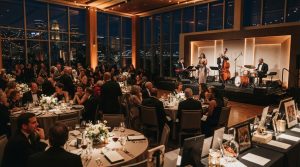
Live music for charity gala events should support the cause, not compete with it. The right plan gives guests a warm welcome, leaves room for fundraising moments, and brings the evening to a fitting close.
That balance is the central planning challenge. Donors need to hear the appeal, guests should feel welcomed, and entertainment has to fit around speeches, auctions, and giving moments. Music can lift the room, but its timing, volume, and style need to support the evening rather than compete with it.
This guide will help you choose music that suits your audience and mission, map performance windows around key program moments, and coordinate sound, timing, and expectations with the band and venue. A clear run of show matters as much as the music itself. For Minneapolis and St. Paul organizers, flexible ensemble options, including The R Factor’s six-to-twelve-musician lineups, can be part of the planning conversation. The right setup depends on your venue and program.
Key Takeaways
- Set clear entertainment goals so the music enhances the guest experience while keeping the gala’s charitable mission central.
- Map speeches, auctions, and performance windows in a written run of show, with clear cues for organizers and performers.
- Choose live music for charity gala programming based on the atmosphere you want, guest participation, and the space available.
- Confirm venue access, setup timing, sound limits, power access, load-in procedures, and event-day contacts before the gala.
- Prepare a booking brief with your date, venue, guest count, program outline, and music goals, then discuss ensemble options and availability directly.
Live Music for a Charity Gala: Impact on the Event
Live music can shape a gala from guest arrival through the final moments of the evening. Its role is to support the charitable mission, not compete with it. Music can welcome guests, signal a transition between program segments, and create a fitting close. A benefit concert connects performance with fundraising; at a gala, the same principle applies when entertainment serves the event’s purpose and keeps attention on the cause.
Mission-aligned live music for a charity gala is selected and timed to support the organization’s purpose, guest experience, and fundraising program. Use that as a practical test: does this music help the evening work better for its guests and its cause?
Start with the organizer’s priorities. A formal reception may call for a restrained atmosphere that encourages conversation, while a lively dance-floor finish may suit an event designed to end on a celebratory note. Neither is automatically the right choice. Let the audience, schedule, and fundraising moments guide the decision.
Match the music to the cause and guest experience
Before discussing musical style, clarify the event’s purpose, who is attending, the tone the organization wants to set, and how guests should feel as the evening unfolds. A donor gathering centered on reflection may need a different atmosphere from a community celebration. Avoid assuming that all donors or charity events prefer the same approach.
Consider how each choice supports the intended experience. A polished reception sound can leave conversation comfortable; a more energetic finish can invite guests to celebrate together. Keep the organization’s identity in view, and choose music that feels appropriate rather than imposing a mood that doesn’t fit.
Where live music can fit into a gala
Music may suit guest arrival, a cocktail reception, a transition into dinner, or dancing after the formal program. These are options, not requirements. Select performance windows that complement the event’s flow and allow the room to shift naturally between social time, fundraising, and celebration.
- Arrival and reception: Set a welcoming tone while guests greet one another.
- Dinner transitions: Use a brief musical moment to mark a change in the program.
- Post-program: Offer a more celebratory close if it fits the audience and event goals.
Keep speeches, appeals, awards, and auction moments audible and central. Treat music as one part of the full program, with clear pauses when guests need to listen, respond, or give.
How to Coordinate Live Music with a Charity Gala Program
Live music for charity gala events works best when each performance has a defined place in the schedule. Plan it as part of the program, not as an extra to fit in later. A written run of show gives the event lead, emcee, venue, and musicians a shared reference for what happens next.
A run of show coordinates gala music by listing program moments, performance windows, transitions, and the person responsible for each cue. Nonprofit event planning also means aligning practical decisions with the organization’s purpose. The Event Planning for Nonprofit Organizations resource offers a broader planning framework; apply that same deliberate approach to the entertainment schedule.
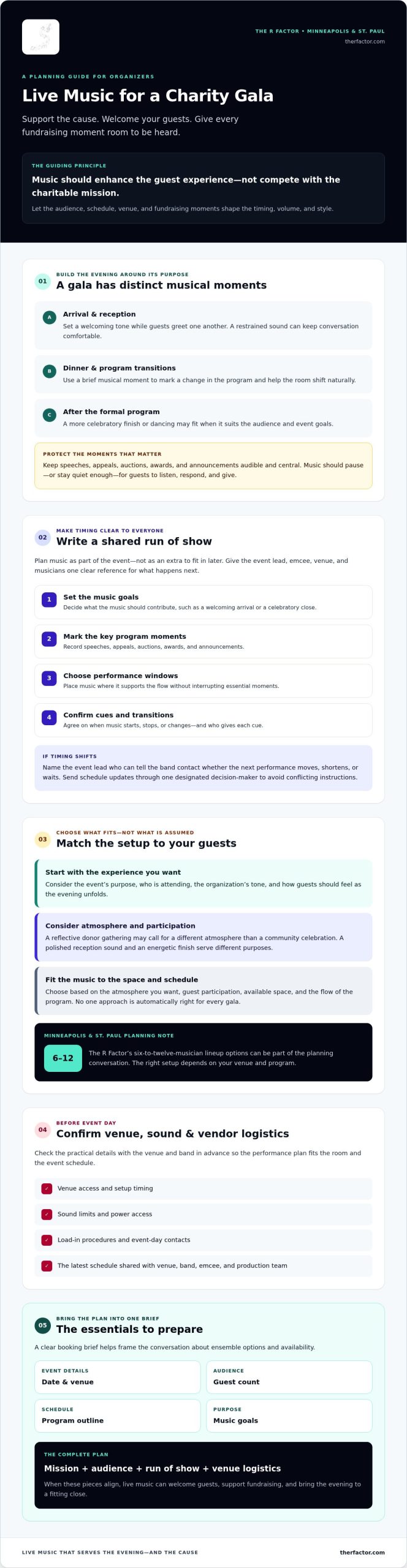
- Set goals: Decide what music should contribute, such as a welcoming arrival or a celebratory close.
- Map key moments: Record speeches, appeals, auctions, awards, and announcements.
- Choose performance windows: Schedule music where it supports the flow without interrupting essential program moments.
- Confirm transitions: Agree on start, stop, and changeover cues with the event lead and band contact.
Plan performance windows around speeches and fundraising
Mark every moment when guests need to listen or respond as a priority. During a live appeal, auction, award presentation, or announcement, music should pause or stay quiet enough for speakers and guests to be heard. Identify exact cues in advance, such as the emcee’s introduction or a signal from the event lead, rather than relying on an improvised handoff.
Allow for timing to shift. If an auction runs long, the named event lead should tell the band contact whether the next performance moves, shortens, or waits. Confirm in advance who can approve that change.
Build a smooth event-day handoff
Send the latest schedule to the venue contact, band contact, emcee, and production team. Use one designated decision-maker to communicate updates so performers don’t receive conflicting instructions. Build in transition time between the meal, formal program, and dancing, giving guests and event teams a clear moment to move between parts of the evening.
Organizers can also review corporate event music options and share their program outline, key cues, and event goals when discussing whether the available ensemble and timing may suit their gala.
Choose the Right Live-Music Setup for Your Gala
The right format depends on what the music needs to do, how the evening is structured, and how much room performers can use. Background music, a featured set, and dance-focused entertainment each create a different guest experience. None is automatically the best choice for every gala.
Use this comparison to narrow the options, then check your choice against the schedule, audience, and venue:
| Format | Mood | Program fit | Guest participation | Space needs |
|---|---|---|---|---|
| Background music | Welcoming and unobtrusive | Arrival, cocktail reception, or conversation-led moments | Guests can mingle and talk | Can suit a smaller performance area; confirm placement with the venue |
| Featured set | Focused and celebratory | A defined entertainment window, often after formal proceedings | Guests turn their attention to the performance | Needs a clearly identified performance area |
| Dance-focused entertainment | Energetic and social | A possible finale, if it fits the event’s goals | Guests may join the dance floor or watch | Requires room for performers and guest movement |
Background music, featured sets, or dancing?
Background music can welcome guests during arrivals or a reception while leaving conversation comfortable. A featured set creates a distinct entertainment moment, which may work after speeches and fundraising are complete. Dancing can provide a lively close, but it should be an intentional choice, not an assumed expectation. Consider the guests and the organization’s preferred tone before selecting a format.
Account for the schedule and fundraising priorities, too. If the evening’s focus is a live appeal or auction, avoid a format that pulls attention away at the wrong time. The music should fit the program’s purpose and the audience’s likely comfort with participation.
How to assess ensemble size and sound
Before selecting an ensemble, ask the venue about room capacity, stage or performance area, guest seating, and sound requirements. Consider how much space should be dedicated to music, especially if you’re planning dancing. A larger group may create a more prominent live presence, while a smaller ensemble may better suit the available space and schedule.
The R Factor, a Minneapolis and St. Paul cover band, offers flexible ensembles from six to twelve musicians. Its lineup includes four vocalists, a horn section, a rhythm section, and violin. Discuss the specific ensemble configuration rather than assuming it. Share the venue layout and program goals when exploring live music for charity gala options, and confirm which setup may fit the event.
Plan Venue, Sound, and Vendor Logistics in Minneapolis-St. Paul
Good logistics make the performance easier to deliver and help protect the gala schedule. For live music for charity gala events in Minneapolis and St. Paul, confirm details with the specific venue and relevant local contacts. Don’t assume that access rules, sound policies, or equipment arrangements are the same at every location.
Start with the practical details. Confirm the performance area and how musicians and equipment will reach it, then coordinate the band’s schedule with catering, the emcee, auction team, and production staff. A meal running late can affect a planned set, while an unclear load-in route can complicate setup. One shared plan helps each vendor understand what needs to happen and when.
Questions to confirm with a Minneapolis or St. Paul venue
Ask the venue contact for specific instructions rather than relying on assumptions. Clarify stage dimensions, access routes, vendor arrival procedures, and the setup window. Ask about sound limits and venue-specific policies, including whether amplified sound is permitted in the planned space.
- What are the performance-area dimensions, and what routes can musicians use to reach it?
- When can the band load in, set up, and access the room?
- What sound limits, power access, or other site requirements should vendors know?
- Does the venue provide sound equipment, or should the organizer coordinate an event production provider?
- How should vendors receive the schedule and arrival instructions?
Clarify equipment responsibilities directly with the venue and band contact. The R Factor does not offer audio-equipment rental, so organizers should establish who is responsible for any required production equipment.
Keep planning details in one event brief
Put confirmed details in a single brief that vendors can reference. Include the venue address, arrival and setup windows, performance schedule, venue contact, band contact, and key cues. Note who is authorized to approve timing changes. If the event timeline shifts, have that person send the approved update promptly to every affected vendor, including catering, the emcee, auction team, and production staff.
For broader planning context, review this 2026 guide to live music for corporate events. Then discuss your gala’s venue and music needs with The R Factor, a Minneapolis and St. Paul band offering corporate-event and special-occasion performances.
Book Live Music for Your Charity Gala with a Clear Plan
A focused event brief makes it easier to discuss whether a band may suit your gala. It gives prospective performers the information they need to consider the schedule, venue, and musical presence you have in mind. It also helps you compare options against the event’s needs, rather than choosing on reputation or sound alone.
What to share when requesting a band conversation
Prepare the essentials before reaching out. Include the event date, venue location, expected guest count, and whether the schedule is confirmed or still changing. Describe the audience and the atmosphere you want, such as welcoming music during arrivals or a performance after the formal program.
Be specific about timing. Identify when music should begin, when it needs to pause for speeches or fundraising, and whether dancing is part of the plan. Then ask which ensemble options may suit the venue and program, what event details still need confirmation, and whether the band is available for your date. Treat these as points to discuss, not assumptions.
- Event details: Date, venue location, attendance, and schedule status.
- Music goals: Desired atmosphere, performance windows, and pause cues.
- Open questions: Ensemble options, venue requirements, timing, and availability.
Move from planning notes to a confident next step
Compare options using the same criteria: fit with the program, venue logistics, communication, and the guest experience you want to create. A clear answer about timing and setup is as useful as a musical fit. If details are still being finalized, share what’s confirmed and ask what needs to be settled before making a decision.
The R Factor is a Minneapolis and St. Paul cover band that performs for corporate functions and special occasions. Organizers can use the same practical planning approach described in this guide to professional event entertainment services for product launches while evaluating their own gala’s needs.
Once your brief is ready, Discuss live music for your event with The R Factor. Share the date, venue, guest count, and program outline to discuss ensemble options, performance timing, venue needs, and availability directly.
Bring Your Gala Music Plan Together
Effective live music for charity gala events supports the mission and fits the evening’s rhythm. Choose a setup based on your guests, venue, and program, then schedule performances around speeches, appeals, auctions, and other moments that need the room’s full attention. A clear run of show and shared event brief help organizers, performers, and venue staff stay aligned.
For Minneapolis and St. Paul organizers considering a live band, The R Factor offers ensemble options from six to twelve musicians. Its lineup includes four vocalists, a horn section, a rhythm section, and violin. Discuss your event details directly to explore which options may suit your space and schedule. Availability and fit need to be confirmed.
Discuss live music for your charity gala with The R Factor, and have your event date, venue, guest count, and program outline ready. With clear priorities and careful coordination, you can create an engaging evening that keeps the cause at its center.
Frequently Asked Questions
Can live music work at a formal charity gala?
Yes. Live music can suit a formal gala when its volume, timing, and style support the evening rather than compete with it. A band might provide a welcoming atmosphere during guest arrival, pause for speeches and fundraising, then play a featured set after the formal program. Decide what the music should contribute, and keep the cause and key program moments at the center.
How do you schedule a band around a charity auction or fundraising appeal?
List the auction, appeal, speeches, awards, and announcements as priority moments in a written run of show. Schedule music before or after them, and agree in advance on clear start, stop, and transition cues. Name one event lead who can approve timing changes and communicate them to the band contact. If an auction runs long, send the band one clear update rather than conflicting instructions.
What type of live music is appropriate for a charity gala?
The right style depends on the organization’s identity, guest preferences, venue, and intended atmosphere. Subtle background music can suit a reception where conversation matters; a featured performance or dance-focused finish may fit a more celebratory program. Consider what guests should experience at each point in the evening, and choose accordingly. Don’t assume every donor group or charity event will prefer the same musical approach.
How much does live music for a charity gala cost?
There isn’t one standard fee for a band performance. The quote may depend on details such as ensemble size, event schedule, venue requirements, and the performance arrangements being discussed. To compare options fairly, share the date, location, expected attendance, program outline, and music goals with prospective bands. Ask each provider what the quote includes and which venue or production needs the organizer must confirm separately.
How far in advance should I book live music for a gala?
For a large gala, plan to book six to twelve months ahead if possible. For a smaller event, three to six months may be sufficient, though timing and availability vary. Earlier planning gives you more opportunity to compare options and coordinate the performance with the venue and program. Contact prospective bands with your date and event details, then confirm availability directly rather than assuming a preferred lineup is open.
What should a Minneapolis-St. Paul charity gala confirm with its venue?
Confirm the performance-area dimensions, access route, vendor arrival and setup windows, power access, sound limits, and any venue-specific sound policies. Ask whether the venue provides sound equipment or expects the organizer to coordinate an event production provider. Also clarify how vendors receive arrival instructions and schedule updates. Venues in Minneapolis and St. Paul can have different procedures, so verify details with the specific venue and relevant local contacts.
Can a live band perform during dinner and dancing at the same gala?
Yes, a band can be scheduled for both if the room, event timeline, and sound requirements support the plan. Discuss whether music during dinner should remain unobtrusive, when it should pause for program remarks, and when dancing may begin. Allow time for the transition between the meal and dancing. Confirm the performance schedule and sound expectations with the band contact and venue before event day.
How do I choose the right band size for a charity gala?
Base the decision on the venue’s performance space, guest seating, room capacity, sound requirements, and how prominent you want the music to feel. The R Factor, based in Minneapolis and St. Paul, offers flexible ensembles from six to twelve musicians. Share your layout and program goals, then discuss which ensemble options may fit.
Recent Comments