
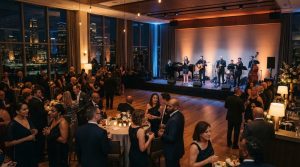
What makes Minneapolis fundraiser entertainment work is not simply how lively it is. Music should welcome guests, add warmth between program segments, and make room for the speeches, auction, and fundraising appeal that bring supporters together.
Choosing the right fit takes more than matching a playlist to the guest list. Entertainment needs to suit the cause, the event’s scale, and its schedule. A thoughtfully planned performance can set an engaging tone without competing with the mission.
This guide explains how to choose live music that supports your fundraiser from guest arrival through the final moments. You’ll learn how to match the band and lineup to your audience, coordinate music with key program points, and plan a smooth guest experience. Minneapolis-St. Paul-based The R Factor offers flexible lineups of 6 to 12 musicians, with four vocalists, a horn section, a rhythm section, and violin. That range gives organizers options for shaping the live-music experience around an event’s format and desired atmosphere.
Key Takeaways
- Choose Minneapolis fundraiser entertainment that complements the cause and guest experience instead of competing with the program.
- Build the music plan around the agenda: identify key moments first, then decide where live performance or quieter background music fits.
- Compare a live band, background playlist, and speaker-led programming by atmosphere, flexibility, guest engagement, and coordination needs.
- Prepare your date, venue, audience, desired atmosphere, and performance window to make booking discussions more focused.
- Match the band’s lineup and performance approach to your fundraiser’s scale, format, and schedule.
Minneapolis Fundraiser Entertainment: Match the Music to the Event
A fundraiser needs to welcome guests while keeping the cause and program at the center of the evening. The right entertainment supports both. It gives the event a deliberate atmosphere without competing with speakers, auctions, or moments when organizers need guests’ attention.
Fundraiser entertainment means music or performance chosen to suit the event’s mood, audience, venue, and schedule. The concept of live music covers many kinds of performance, so organizers can consider more than one format. The practical question is how each option fits the guest experience, from arrival through the final program segment.
The event format helps determine the right musical style, while the schedule shows when it belongs. A formal gala or benefit dinner may call for a measured atmosphere during guest arrival and dining, with more energy reserved for a later reception or dance portion. An auction needs clear shifts between conversation, bidding, and announcements. A community celebration may benefit from a welcoming, participatory feel, while a corporate charity event may need music that complements a structured program and varied guest list.
Which Minneapolis fundraiser formats use live music?
Live music can play different roles at a gala, benefit dinner, or corporate charity event. It can welcome guests during a reception, provide transitions between program segments, or create a lively close after formal remarks. At a community-focused celebration, performers can help establish a shared, festive atmosphere. The same approach won’t suit every event: a dinner built around speeches needs a different energy level from a celebration designed to bring guests onto the dance floor.
Consider the room as well as the format. Will guests be seated, moving between spaces, or gathering near the performance area? The venue and audience affect how music will feel, while the agenda clarifies when it should be prominent and when it should recede.
What should fundraiser entertainment accomplish?
Set a clear entertainment goal before choosing a performance style. You might want relaxed ambience for conversation, active guest participation, or a dance-focused finale. Each goal gives music a different role. A quieter reception soundscape can make arrivals feel warm and intentional; an energetic closing set can signal that the formal program has ended and give guests room to celebrate.
Keep the purpose clear: entertainment shapes the experience, but it doesn’t guarantee fundraising results. Choose music that reflects the event’s tone and leaves the cause in focus. That balance helps Minneapolis fundraiser entertainment feel considered and suited to the people in the room.
Plan Fundraiser Music Around the Program, Not Over It
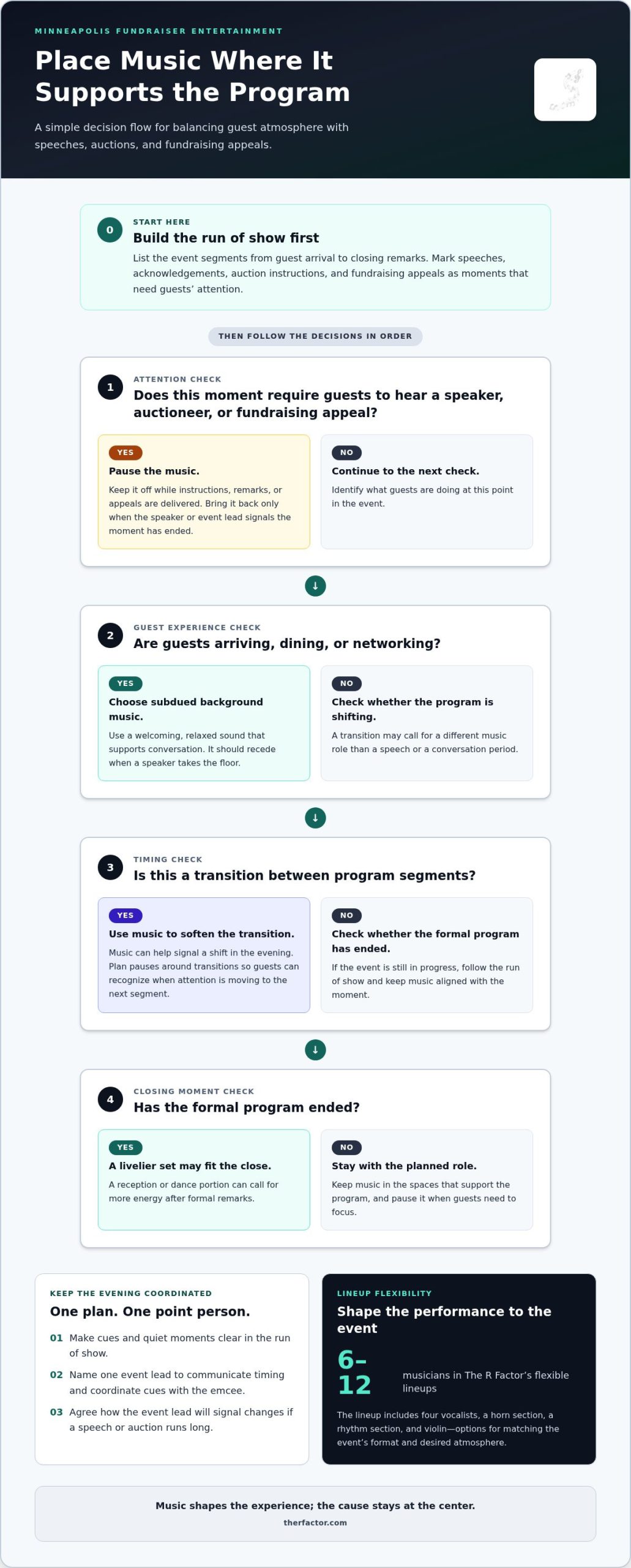
Good timing makes live music feel like part of the event, not another item competing for attention. For effective Minneapolis fundraiser entertainment, plan the program first, identify moments that need quiet or focus, then assign music a clear role in the remaining spaces. This gives performers and event staff a shared plan while leaving room to adjust as the evening unfolds.
- Define the program. List the main segments, from guest arrival to closing remarks.
- Mark key moments. Identify speeches, acknowledgements, auction instructions, and fundraising appeals that need guests’ attention.
- Assign music roles. Decide where music should welcome guests, soften transitions, or signal the start of a celebration.
A run of show helps prevent music from competing with announcements by making cues and quiet moments clear in advance. Name one event lead as the point person for performers. That person can communicate timing, coordinate cues with the emcee, and share updates if a speech or auction runs long.
Where can live music fit in a fundraiser timeline?
Build the timeline around your event rather than forcing it into a standard schedule. Music might greet guests as they arrive, stay subdued during dinner, pause for remarks, and return between fundraising activities. After the formal program, a livelier set may suit a reception or dance portion. Share cue points and likely transitions with performers, and agree on how the event lead will signal a timing change.
Background music can support conversation during arrival, dining, or informal networking. It should recede when a speaker takes the floor. Plan pauses around transitions, too. A short break helps guests recognize that attention is shifting from conversation to the next part of the program.
How can music support auctions and fundraising appeals?
During an auction, guests need to hear the auctioneer’s instructions, item details, and bidding cues. During a fundraising appeal, spoken remarks should remain clear and easy to follow. Pause the music before an announcement begins, keep it off while instructions or appeals are delivered, and bring it back only when the speaker or event lead signals that the moment has ended.
These choices protect clarity and respect the purpose of each segment. Music can shape the atmosphere, but it can’t promise higher bids or donations. If you’re planning a live performance, consider how The R Factor’s live band performances can fit into a carefully timed program.
Compare Fundraiser Entertainment Options by Venue and Guest Experience
The right format depends on what guests should experience and what the room can support. A band creates a live performance atmosphere, a background playlist provides a consistent musical layer, and speaker-led programming keeps attention on the event’s message. Compare each option against your venue, agenda, and desired level of guest participation rather than assuming one choice suits every fundraiser.
| Format | Atmosphere | Flexibility | Guest engagement | Coordination needs |
|---|---|---|---|---|
| Live band | Distinctive, energetic, and shaped by live performance | Can shift between reception ambience and a livelier set | Creates a shared performance experience; can support dancing | Requires planning for performance placement, stage footprint, and program cues |
| Background playlist | Subtle and consistent | Easy to use for a steady sound throughout a segment | Supports conversation without making performance the focus | Needs clear timing and appropriate volume for the room |
| Speaker-led programming | Purposeful and focused on the message | Best suited to planned remarks and presentations | Centers attention on speakers and the program | Requires a clear agenda and transitions between speakers |
When is a live band a strong fit for a fundraiser?
A live band can bring vocal and instrumental variety to a reception or create a celebratory atmosphere after formal remarks. These are different roles: reception music can sit behind conversation, while a later dance-oriented portion invites guests to focus on the performance. Let the agenda determine when the band plays and the room setup determine where it performs. Keep paths, seating, and sightlines in mind so the performance area feels integrated rather than obstructive.
How should organizers think about band size and sound?
Ensemble size affects both the stage footprint and the musical presence in the room. A smaller lineup may suit a compact event layout, while a larger ensemble can offer a fuller visual and musical impact when the venue has room for it. Guest count matters, but it isn’t the only factor. Consider the room’s shape, where guests will gather, and whether the performance area is near dining or conversation zones.
The R Factor offers flexible lineups of 6 to 12 musicians. The ensemble includes four vocalists, a horn section, a rhythm section, and violin, providing a range of vocal and instrumental colors. For Minneapolis fundraiser entertainment, that flexibility gives organizers a starting point for matching the band’s scale and placement to the event format, venue, and desired guest experience.
Use a Minneapolis Fundraiser Entertainment Booking Checklist
A clear event brief turns an entertainment idea into a coordinated plan. Before booking Minneapolis fundraiser entertainment, gather the details that shape the performance: event format, audience, venue, schedule, and the atmosphere you want guests to experience. Share the plan early, then update it if timings or logistics change.
What information belongs in a fundraiser entertainment brief?
Give performers the context behind the event, not just its start time. Note the cause, whether the gathering is a gala, benefit dinner, auction, or community celebration, and who is expected to attend. Describe the intended mood, from refined reception ambience to an upbeat close, and clarify the performance window.
- Event details: Date, venue, event format, audience profile, and desired atmosphere.
- Program: Agenda and timing for speeches, appeals, auction segments, acknowledgements, and other moments that need quiet.
- Performance setup: Proposed performance area, available footprint, venue access, and relevant sound coordination details.
- Point of contact: Name the event lead who will share schedule updates and coordinate day-of cues.
These specifics help align the performance with the event’s purpose and practical needs. For example, a room layout that changes between dinner and a reception may affect where the band performs and how transitions are handled. Sharing those details during booking discussions helps shape a performance plan around the space and program.
What should Minneapolis-St. Paul organizers coordinate locally?
Confirm venue-specific logistics with the people responsible for the space. Include load-in instructions, access routes, parking arrangements, setup timing, and any requirements for the performance area or sound coordination. Build an arrival buffer into the schedule, especially when seasonal conditions could affect travel. Make the plan specific to the selected venue rather than relying on assumptions about the Twin Cities area.
Before event day, give the event lead and performers the same current timeline. Identify who will communicate a delay, move a cue, or signal that a speech or auction segment is ready to begin. Clear responsibilities reduce last-minute uncertainty and help the program stay composed.
For a live music option shaped around your fundraiser’s format and performance window, Explore live event entertainment with The R Factor.
Choose a Minneapolis Live Band That Fits Your Fundraiser
The right choice comes down to fit. Match entertainment to your fundraiser’s purpose, schedule, venue, and audience. A performance should contribute to the guest experience while leaving room for the program’s essential moments.
The R Factor is a Minneapolis-St. Paul live cover band providing music for corporate events and private celebrations. Its flexible lineups range from 6 to 12 musicians, giving organizers options to match the ensemble’s scale to the event format and performance area. The band includes four vocalists, a horn section, a rhythm section, and violin, offering a varied live sound for an evening’s entertainment.
Why consider a flexible local band for a fundraiser?
A Minneapolis-St. Paul-based band brings local relevance to planning and event coordination. Lineup flexibility can help organizers align the ensemble’s footprint and musical presence with the venue, whether the plan calls for reception music or a livelier portion after the formal program. The right configuration depends on the room, audience, and schedule, not simply the event’s guest count.
For broader planning ideas, see this 2026 guide to live music for corporate events. Its event-planning perspective can help clarify how live performance fits alongside the agenda and guest experience.
How to move from planning to booking
Bring a concise event brief to your booking conversation. Include the tentative schedule, venue details, audience profile, preferred atmosphere, and performance window. Mark speeches, appeals, auction instructions, and other moments when music should pause. Sharing these details gives the band a practical picture of how the performance should fit the evening.
Then outline the performance area and relevant access or timing details. If parts of the schedule are still being finalized, identify the event lead who will communicate updates and cues. Clear information at the start makes it easier to shape the performance around the fundraiser rather than treating the music as a separate attraction.
For Minneapolis fundraiser entertainment that fits your event’s format and program, Discuss live music for your Minneapolis fundraiser.
Shape a Fundraiser That Feels Like One Cohesive Evening
The strongest Minneapolis fundraiser entertainment fits the event’s purpose, venue, audience, and schedule. Choose a format that welcomes guests, then plan its role around speeches, auctions, and appeals so the music supports the program instead of competing with it. A clear brief and a named event contact help keep timing and cues coordinated.
A live band can adapt its presence to different parts of the evening. The R Factor is a Minneapolis-St. Paul-based cover band providing entertainment for corporate functions and private celebrations. Its flexible lineups of 6 to 12 musicians include four vocalists, a horn section, a rhythm section, and violin, offering options for different event scales and formats.
With entertainment aligned to your run of show, you can create a welcoming atmosphere while keeping the cause at the center. Discuss live music for your Minneapolis fundraiser and take the next step toward a well-coordinated evening for your guests.
Frequently Asked Questions
What entertainment works best for a Minneapolis fundraiser?
The best choice supports your event’s purpose, schedule, venue, and audience. A live band can create a welcoming reception atmosphere or a more energetic finale, while background music may suit dining and informal conversation. Speaker-led programming keeps attention on the cause and key messages. Decide what guests should experience at each stage, then choose entertainment that complements the program instead of competing with it. That’s the foundation of effective Minneapolis fundraiser entertainment.
Is a live band a good fit for a charity gala?
Yes, a live band can suit a charity gala when its performance is planned around the formal program. It can welcome guests during a reception, add atmosphere between segments, or provide livelier music after speeches and fundraising activities conclude. Consider the gala’s room layout, audience, and schedule before choosing performance placement. Keep music paused or subdued during remarks and appeals so guests can hear the speakers and stay focused on the cause.
How do you plan music around a fundraiser auction?
Plan the auction’s spoken moments first, then place music around them. Keep the sound off while the auctioneer explains items, bidding instructions, or timing. Use a clear pause before the auction begins and wait for the event lead’s cue before restarting music afterward. If music plays during a break between auction segments, make sure it stops promptly when instructions resume. This approach protects clarity without assuming music will affect bids or donations.
How many musicians should a fundraiser band have?
Choose a lineup that fits the venue, performance area, event format, and musical presence you want. A compact room or reception may call for a different scale than a larger event with a dance-focused close. The R Factor offers flexible lineups of 6 to 12 musicians. Its ensemble features four vocalists, a horn section, a rhythm section, and violin, giving organizers options for tailoring the band’s scale to the event.
What should I include in a fundraiser entertainment brief?
Include the event date, venue, format, audience profile, desired atmosphere, and performance window. Add a tentative agenda and mark speeches, auction instructions, appeals, acknowledgements, and other moments that require quiet. Describe the performance area and relevant access or setup details. Name one event contact who can communicate schedule changes and day-of cues. A concise, current brief helps performers understand both the event’s purpose and their role in it.
Can a live band perform at a Minneapolis-St. Paul nonprofit event?
Yes. A live band can be part of a Minneapolis-St. Paul nonprofit event when the performance style, lineup, and timing suit the occasion. The R Factor is a Minneapolis-St. Paul-based cover band providing live entertainment for events. Share the event format, venue setup, audience, and program moments so the performance can support the guest experience while keeping the cause and key announcements in focus.
When should we book fundraiser entertainment?
Start planning once you have a likely event date and venue. Early conversations give you more time to align the entertainment with the schedule, room layout, and guest experience, then include performance details in the event plan. Popular dates and in-demand bands can require advance planning, so avoid leaving the decision until the final stages. Even if the agenda is still developing, share the known details and update the brief as plans take shape.
Recent Comments