
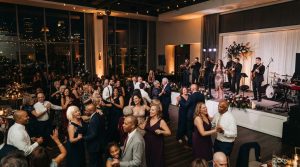
What if the key to a full wedding dance floor isn’t one perfect song, but the right song followed by another guests recognize? Choosing music to get everyone dancing at a wedding can feel daunting when ages, tastes, and energy levels vary. It’s natural to worry that the floor will stay empty or that a string of similar songs will lose its spark.
A lively reception doesn’t require every guest to love every track. Familiar sing-alongs, current favorites, and throwbacks from different eras can give more people a reason to join in. The order matters, too: a well-paced mix builds momentum without making the night feel repetitive.
This guide will help you choose music that welcomes different generations, shape a varied sequence, and understand how live performers can respond to the room. The R Factor’s Minneapolis-Saint Paul wedding ensemble brings together four vocalists, a horn section, a rhythm section, and violin. With flexible lineups of 6 to 12 musicians, the band can bring varied live sound to your celebration. Thoughtful song choices and pacing can help make the dance floor feel inviting from the first song to the last.
Key Takeaways
- Explore styles from Motown and classic rock to country and Latin dance to find musical directions that fit your guests.
- Use familiar crowd-pleasers, personal favorites, and less familiar selections to balance shared appeal with your own musical identity.
- Plan the dance-floor sequence around reception timing, meal service, and announcements so the transition into dancing feels natural.
- Music to get everyone dancing at a wedding works best when the mix can shift with the room instead of following a rigid sequence.
- Live performers can change musical color and energy in real time, helping the celebration respond to guests.
What Makes Music to Get Everyone Dancing at a Wedding?
Music to get everyone dancing at a wedding isn’t a secret list of guaranteed hits. It’s a thoughtful mix of recognizable sounds, contrasting styles, and choices that fit the guests and the moment. A popular song can still feel out of place if it interrupts a quieter part of the reception or doesn’t suit the room’s energy.
Think of the celebration as a sequence of musical moments, not one long dance set. Music that supports conversation during dinner serves a different purpose from a lively chorus after the meal. The overview of Wedding Music Traditions and Stages illustrates how music can shape different parts of a wedding, from the ceremony to the reception.
Clear rhythms, memorable choruses, and a considered fit for the moment give guests an easy invitation to join in. They’re useful ingredients, not a promise that every person will dance.
Which musical qualities invite guests onto the dance floor?
Clear rhythms make it easier to find the beat, while memorable choruses give guests something to sing along with, even if they don’t know every verse. An accessible tempo can also help. Music that feels neither rushed nor difficult to move to offers a comfortable starting point for occasional dancers.
Familiarity lowers the social barrier. A guest who recognizes the chorus may feel more comfortable joining friends on the floor than facing an unfamiliar track alone. Still, recognition isn’t the same as suitability. A well-known slow song may fit a special moment, but it won’t necessarily help launch an energetic dance set.
Why does one wedding crowd respond to different songs?
Guests bring different reference points to the same celebration. Age, cultural background, personal taste, and how people know the couple all shape what feels familiar or inviting. Even a shared favorite can land differently depending on the atmosphere. Guests may be ready to dance after dinner, while a formal announcement or a change in reception plans can shift their attention.
Plan for variety rather than assuming one genre will appeal to everyone. A balanced selection can offer different entry points without trying to represent every guest through a single song. The goal is to create invitations, not obligations. Some guests will prefer conversation, and others may join for only a few songs.
- Check the rhythm: Is the beat clear enough to follow?
- Check the chorus: Does it offer a familiar moment to sing along?
- Check the timing: Does the song suit the mood and activity at that point in the reception?
These checks help distinguish a song people know from one that fits the dance floor right now. The strongest choices make participation feel natural, while leaving room for guests to enjoy the celebration in their own way.
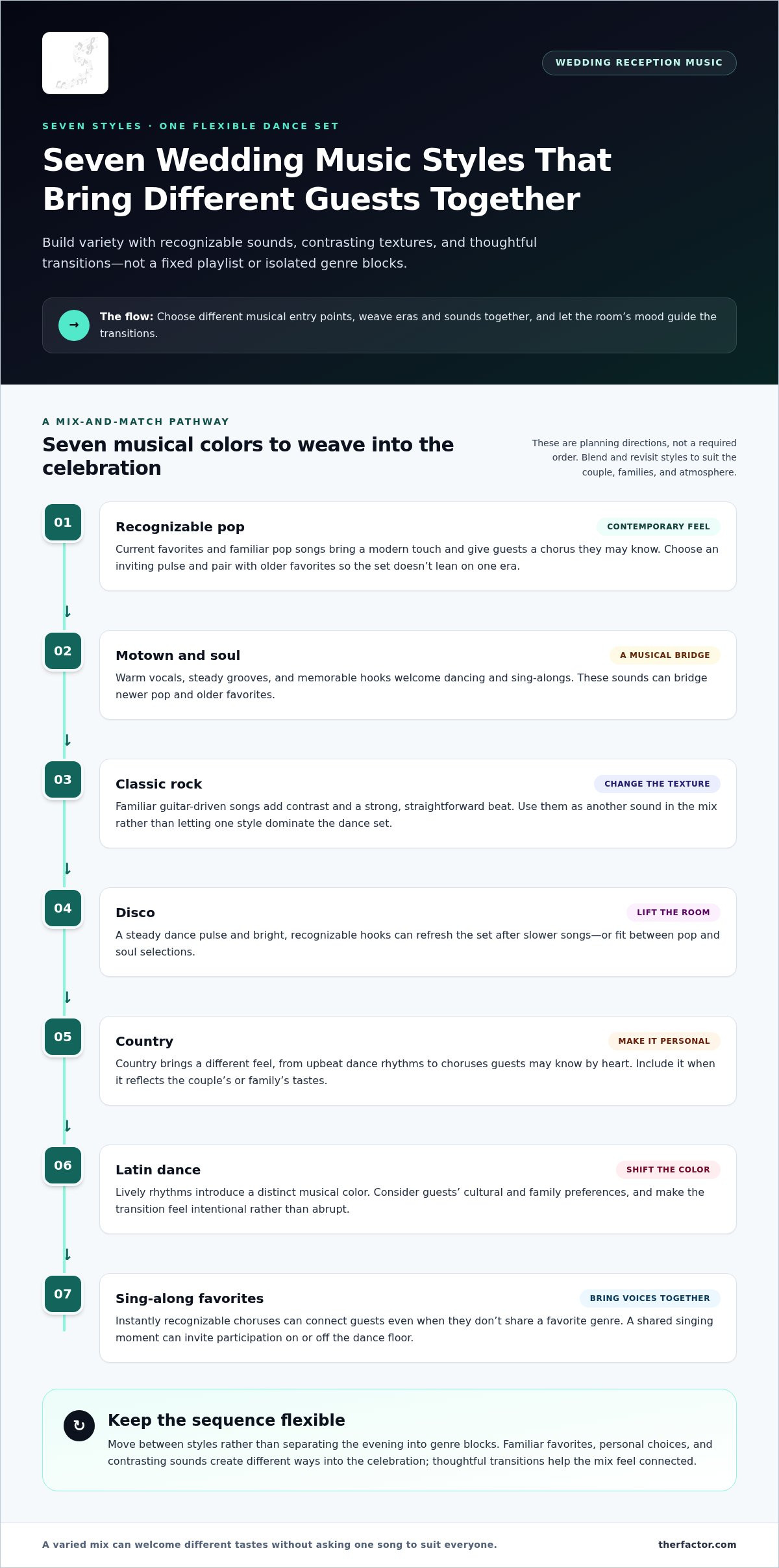
Seven Wedding Music Styles That Can Bring Different Guests Together
Use these styles as planning directions, not a fixed playlist or a promise that every song will suit every reception. The aim is to create different ways into the celebration, then move between them so guests can enjoy variety without feeling that the music has been divided into isolated genre blocks. The best mix reflects the couple, their families, and the atmosphere they want to create.
- Recognizable pop: Current favorites and familiar pop songs can add a contemporary feel and give guests a chorus they know. Choose tracks with an inviting pulse, and place them alongside older favorites so the set doesn’t lean on one era.
- Motown and soul: Warm vocals, steady grooves, and memorable hooks can suit a celebratory set that welcomes both dancing and singing along. These styles can bridge newer pop and older favorites.
- Classic rock: Familiar guitar-driven songs can bring a change of texture and appeal to guests who enjoy a strong, straightforward beat. Use them to add contrast, rather than letting one sound dominate the entire dance set.
- Disco: A steady dance pulse and bright, recognizable hooks can make disco a natural choice for lifting the room. It can refresh a set after slower songs or sit between pop and soul selections.
- Country: Country offers a different feel, from upbeat dance rhythms to choruses guests may know by heart. It can be a meaningful inclusion when it reflects the couple’s or family’s tastes.
- Latin dance: Latin styles can introduce lively rhythms and a distinct musical color. Consider guests’ cultural and family preferences, and use transitions that make the shift feel intentional rather than abrupt.
- Sing-along favorites: Songs with instantly recognizable choruses can bring guests together even when they don’t share the same favorite genre. Couples considering live wedding entertainment can explore The R Factor’s Minneapolis-Saint Paul wedding entertainment. Its flexible 6-to-12-musician lineup brings together vocalists and instrumental sections for a varied live sound.
How can familiar favorites connect generations?
A well-known chorus can give guests a reason to sing together, whether they choose to dance or stay near their table. Mix favorites from different eras without assuming that age determines taste. One guest’s throwback may be another’s new discovery. For signature songs, consider the lyrics and personal associations, too. A familiar tune can carry a meaning the couple didn’t intend.
How can contrasting genres keep the set feeling fresh?
Changing styles can renew attention when the transition feels considered. For example, an upbeat classic could lead into a current pop favorite, connecting distinct sounds through a lively mood. Treat this as a sequencing idea, not a guaranteed song pairing. Let cultural and family preferences guide the final mix, and avoid playing each genre as a long, separate block.
How to Balance Song Choices When Wedding Guests Have Different Tastes
A wedding soundtrack doesn’t need to make every guest love every song. It needs enough variety for different people to find moments that feel familiar, meaningful, or simply fun. Think in three categories: songs with broad recognition, choices that reflect you as a couple, and less familiar selections that add personality. The balance should suit your guests and priorities, not follow a universal formula.
| Song category | Role in the mix | Trade-off to consider |
|---|---|---|
| Familiar crowd-pleasers | Offer guests an easy point of connection and can help bring people together. | A set built only on familiar favorites may feel generic or predictable. |
| Personal favorites | Make the celebration feel distinctive and reflect the couple’s story. | A more personal or niche choice may connect strongly with some guests but less with others. |
| Less familiar selections | Introduce musical color and give the set room to feel fresh. | Guests may need time to warm to a song they don’t already know. |
Recognizable songs give guests a shared starting point; personal and less familiar choices make the mix feel like yours. Music to get everyone dancing at a wedding comes from thoughtful variety, not a requirement that every track satisfy every person. A guest might skip one song and join the next. That’s a natural part of a reception, not a sign that the selection has failed.
How much should couples prioritize their own favorite music?
Include the songs that matter to you. A track tied to a shared memory or an important moment can give the reception a personal character that a purely familiar selection can’t. During planning, separate must-plays from optional requests. This makes it easier to protect meaningful choices while leaving room for songs that serve the wider guest experience. Personal and broadly familiar music can complement each other.
What if some guests prefer different eras or genres?
Use brief shifts in style to make space for different preferences across the reception. A change in sound can create a fresh moment without turning the dance floor into a series of long, disconnected blocks. Don’t assume that age or family background predicts what someone will enjoy. Invite a small set of guest requests, then keep the overall direction couple-led. Weigh requests against the mood you want and the flow of the event.
For a practical planning pass, mark each song as a crowd-pleaser, a personal favorite, or a less familiar choice. Look at the whole sequence rather than judging each track alone. If one category dominates, decide whether that reflects your intentions or simply the songs that came to mind first. This review keeps the selection personal while making room for guests with different tastes.
How to Arrange Wedding Songs So Dance-Floor Energy Builds Naturally
A strong dance set has a shape. It welcomes guests, gives them an easy way to join, moves through contrasting sounds, and makes room for a change of pace when the room needs one. The sequence should serve the celebration, not run on a rigid schedule. Dinner, speeches, formal dances, and announcements all affect when guests are ready to dance, so coordinate the music plan with the reception timeline.
- Welcome guests into the moment. As dinner or formalities wrap up, use the timing and announcements to signal that dancing is coming. Avoid starting a high-energy set while guests are still being served or focused on a speech.
- Open with an accessible favorite. Choose an upbeat song that suits the couple and feels easy to recognize or follow. An inviting first choice gives guests a comfortable reason to step onto the floor.
- Vary the musical style. Move between different tempos and sounds rather than staying with one genre for too long. A thoughtful shift can give guests with different preferences a chance to connect with the set.
- Refresh the energy. If the floor thins, change the musical feel or build toward a more familiar chorus. A reset is often more effective than repeating the same approach, and guests should have room to return naturally.
How should the first dance-floor songs set the tone?
Make the opening feel welcoming, not demanding. An upbeat, recognizable choice can help guests understand that the dance floor is open, while a sudden jump into a niche selection may feel like a harder invitation to accept. Keep the plan flexible. If guests respond differently than expected, adjust the next choice rather than forcing the original sequence.
Timing matters as much as song order. A dance set may need to wait until meal service is finished or an announcement has wrapped. Build a flexible outline with the couple’s key moments marked, then leave space around them. For a more detailed local planning perspective, use this live wedding music Minneapolis planning guide as you map music to the reception flow.
How can couples plan for a lull without forcing the energy?
A quieter stretch isn’t automatically a problem. Guests may be getting refreshments, talking, or taking a break. Let those pauses happen. If the floor stays quiet, try changing tempo or style instead of simply increasing intensity. A live band can shape transitions and performance energy in response to the room. The R Factor’s four vocalists, horn section, rhythm section, and violin support varied musical color across a reception.
Music to get everyone dancing at a wedding is about creating invitations, not keeping every guest on the floor every minute. Build a flexible sequence, coordinate it with the reception schedule, and let the night breathe. The R Factor provides live wedding entertainment in Minneapolis-Saint Paul, with lineups from 6 to 12 musicians.
How Live Wedding Music Can Keep a Varied Dance Floor Engaged
A fixed playlist follows a predetermined sequence. Live performers can respond to what’s happening in the room, adjusting dynamics, transitions, and musical feel as the reception unfolds. That flexibility can help the entertainment feel connected to the celebration rather than separate from it. It doesn’t mean every guest will dance, but it gives the music more room to adapt as guests join, take a break, or return to the floor.
For couples considering music to get everyone dancing at a wedding, the distinction is useful: a sequence sets a plan, while live performance can bring that plan to life with changes in emphasis and delivery. A 11-piece wedding band planning guide can also help couples consider how ensemble size contributes to the overall sound and experience.
What can a live band contribute to dance-floor momentum?
Performance dynamics give musicians ways to shape a transition, build intensity, or create a softer moment without treating every song the same way. The R Factor’s ensemble includes four vocalists, a horn section, a rhythm section, and violin. These parts create options for changing the musical color across a reception, from the character of the vocals to the sound of the instrumental sections.
That range is a resource, not a guarantee of participation. Guests still choose how and when they want to join in. A responsive performance can support the atmosphere, while leaving space for conversation, breaks, and the natural movement of the celebration. The strongest approach is attentive rather than forceful: keep the set connected to the room instead of trying to compel a reaction.
How can couples choose a performance scale for their celebration?
The R Factor offers flexible lineups from 6 to 12 musicians. The right scale depends on the kind of live sound and presence the couple wants for the celebration. A larger ensemble brings more performers into the overall musical texture, while a smaller lineup offers a different balance. Consider how each option supports the reception’s atmosphere and the musical variety you value, without assuming that one configuration suits every event.
Think of lineup size as one part of a broader decision, alongside the celebration’s style and the role live music will play. The R Factor’s four vocalists and instrumental sections provide a foundation for variety across its lineup options. Couples can explore the ensemble and its wedding entertainment with The R Factor as they consider the right fit for their celebration.
Shape a Soundtrack That Feels Like Your Celebration
Before finalizing the music, decide how you want the celebration to feel as it moves from formal moments into open dancing. Choose a few songs that carry personal meaning, then leave room for the energy in the room to guide what follows. That balance gives your plans direction without making the evening feel tightly scripted.
Music to get everyone dancing at a wedding isn’t about controlling the dance floor. It’s about creating welcoming opportunities for guests to join in, sing along, or enjoy the moment in their own way. A clear sense of your priorities can also make conversations about pacing, musical variety, and live performance more focused.
The R Factor provides wedding entertainment in Minneapolis-Saint Paul, with flexible lineups of 6 to 12 musicians, four vocalists, a horn section, a rhythm section, and violin. Its live ensemble can bring varied musical color to the atmosphere you have in mind.
Explore wedding entertainment with The R Factor and take the next step toward a celebration that feels unmistakably yours.
Frequently Asked Questions
What songs get guests dancing at a wedding?
Choose songs with a clear beat, an easy-to-recognize hook, and lyrics that suit the occasion. A familiar chorus can help guests participate even if they’re not ready to dance, while an upbeat rhythm gives the floor an easy starting point. Build choices around the couple’s taste and the people they’ve invited. For music to get everyone dancing at a wedding, think of songs as invitations, not guaranteed crowd reactions.
How do you get older and younger wedding guests dancing together?
Offer different musical entry points across the reception, and let guests decide what feels familiar to them. Try pairing an older favorite with a newer song that has a similarly lively feel, rather than separating the music into age-based blocks. Shared memories, family traditions, and individual taste matter more than assumptions about generations. A brief sing-along moment can also bring people together even if only some guests choose to dance.
When should dancing start at a wedding reception?
Start dancing when the reception schedule gives guests a clear opening, not at a fixed time that ignores the evening’s flow. Dinner service, speeches, the first dance, and other planned moments can all affect the transition. Coordinate with whoever is managing the timeline so guests aren’t pulled away mid-meal or surprised by music during an announcement. If formalities run late, adjust the order rather than rushing guests onto the floor.
Can a wedding band adapt its music to the crowd?
Live performers can adjust musical dynamics and transitions in response to the room, though no band can guarantee how guests will respond. The R Factor provides wedding entertainment in Minneapolis-Saint Paul with flexible lineups of 6 to 12 musicians. Its four vocalists, horn section, rhythm section, and violin create varied musical color for a live reception performance.
How many slow songs should a wedding reception include?
There’s no fixed number that suits every reception. Consider the overall timeline and the moments you want to make space for, such as a first dance or time for couples to share the floor. Too many slow songs close together may interrupt an upbeat stretch; too few may leave little room for a quieter change of pace. Mark essential moments, then place other slower selections where they support the evening’s flow.
Is it better to give wedding guests a chance to request songs?
Yes, a selective request option can help guests feel included while keeping the couple’s priorities in charge. Invite requests through a simple planning form or a designated family contact, then review them together. Decide which fit the celebration and which don’t. A short request list can reveal meaningful favorites or family traditions without turning the music plan into an open-ended collection of demands.
What should couples do if guests are not dancing?
Stay calm and give guests room to respond in their own time. They may be listening to a speech, getting refreshments, or enjoying conversation. If the floor remains quiet, try a different musical direction or pause briefly rather than repeating the same approach at higher intensity. The couple can lead by joining in if they feel comfortable, but no guest should feel pressured to dance to make the reception successful.
Recent Comments