

The calmest wedding plans aren’t the ones with the most moving parts. You can make stress-free wedding entertainment planning more manageable by keeping vendor details together, setting clear spending priorities, and agreeing on music and backup arrangements before the day. A simple plan gives you decisions to rely on instead of last-minute guesswork.
It’s reasonable to want a personal celebration without letting planning take over. Start with one folder or binder for contracts, receipts, and vendor contacts. Share your preferences, and ask vendors to clarify details that could lead to crossed wires. When family or friends suggest spending more, thank them for their input and stick to the priorities you and your partner chose.
This guide covers practical ways to organize vendor information, manage budget pressure, and prepare music logistics, including song requests, playlists, and backup plans. It also breaks planning into smaller decisions, so entertainment fits the day without taking over the process.
Key Takeaways
- Keep contracts, receipts, and vendor contacts in one place so key details are easy to find and share.
- Set priorities with your partner and use them to respond calmly when others encourage extra spending.
- Clarify music requests, playlists, event logistics, and backup plans before the wedding day.
- Break planning into manageable steps, delegate where it helps, and protect time away from wedding decisions.
1. Organizing contracts, receipts, and vendor contacts
Create one digital folder or binder for signed contracts, receipts, invoices, and vendor contact details. Use clear filenames, such as “Reception music agreement” or “Venue final payment,” and save a backup copy. Add each vendor’s name, role, email, and wedding-day phone number to a shared contact sheet. An organized record makes details easy to find and keeps coordination on track.
Wedding entertainment can include a DJ, live band, solo performer, or a mix suited to the reception style. Consider the guest age range, preferred genres, cultural traditions, and whether you want dancing, background music, or both. Compare DJs, bands, and other performers by their musical range, performance format, emcee approach, event experience, and how they handle requests. Match those details to your priorities, not just the format.
Book once your date and preferred entertainment are settled enough for you to decide. Availability depends on the event date, location, and performer’s schedule, so there is no single lead time that suits every wedding. For an online booking, keep the inquiry, written offer, agreement, and payment receipt together. Check that the confirmed date, venue, performance times, and agreed services match across the records.
Before signing, ask about song requests, playlists, no-play songs, emcee style, setup logistics, backup equipment, and what the contract covers. Clarify the cancellation terms, payment schedule, performance duration, and who handles changes. Ask whether the entertainer carries insurance and what documentation is available. Keep the answers in writing so both partners and the vendor team can refer to the same details.
Choose music and arrangements that welcome guests with different ages, mobility needs, and cultural preferences. Share relevant access needs and key moments with the venue and entertainer, then confirm practical details such as accessible routes and seating near the dance area. Agree with your partner on one point of contact for vendor updates. This person can share the schedule, relay changes, and help prevent conflicting instructions on the wedding day.
2. Avoiding pressure to spend more
Agree on your priorities before outside opinions shape the plan. Each partner can name the wedding details that matter most, such as live music, a relaxed meal, or time with guests. Separate those priorities from optional upgrades. A written list gives you a shared reference when someone suggests adding another performance feature or expanding the reception plan. Decide together which changes support the day you want.
Set a spending limit for each category and record proposed changes before agreeing to them. If someone suggests extra entertainment, for example, consider whether it supports a priority or simply adds another decision. Review the effect on the rest of the plan, including the venue schedule and other commitments. If the change doesn’t fit your priorities, you can decline without reopening every choice.
Family members may offer opinions because they care about the celebration. Thank them for their input, then compromise only as much as feels right to both partners. You could say, “We appreciate the suggestion. We’ve chosen to focus on the music and guest experience.” This acknowledges the person without promising a change. Agree on a shared response in advance so one partner isn’t left to handle every conversation.
Use a pause before approving additions. Write down what the upgrade includes, why it appeals, and what it would displace. Revisit the decision together after reviewing the original plan. This brief reset helps distinguish a meaningful improvement from pressure in the moment. For entertainment decisions, a concise event brief can keep conversations focused on your priorities. Explore wedding entertainment options as one way to frame those choices around the experience you want.
3. DJ logistics and backup equipment
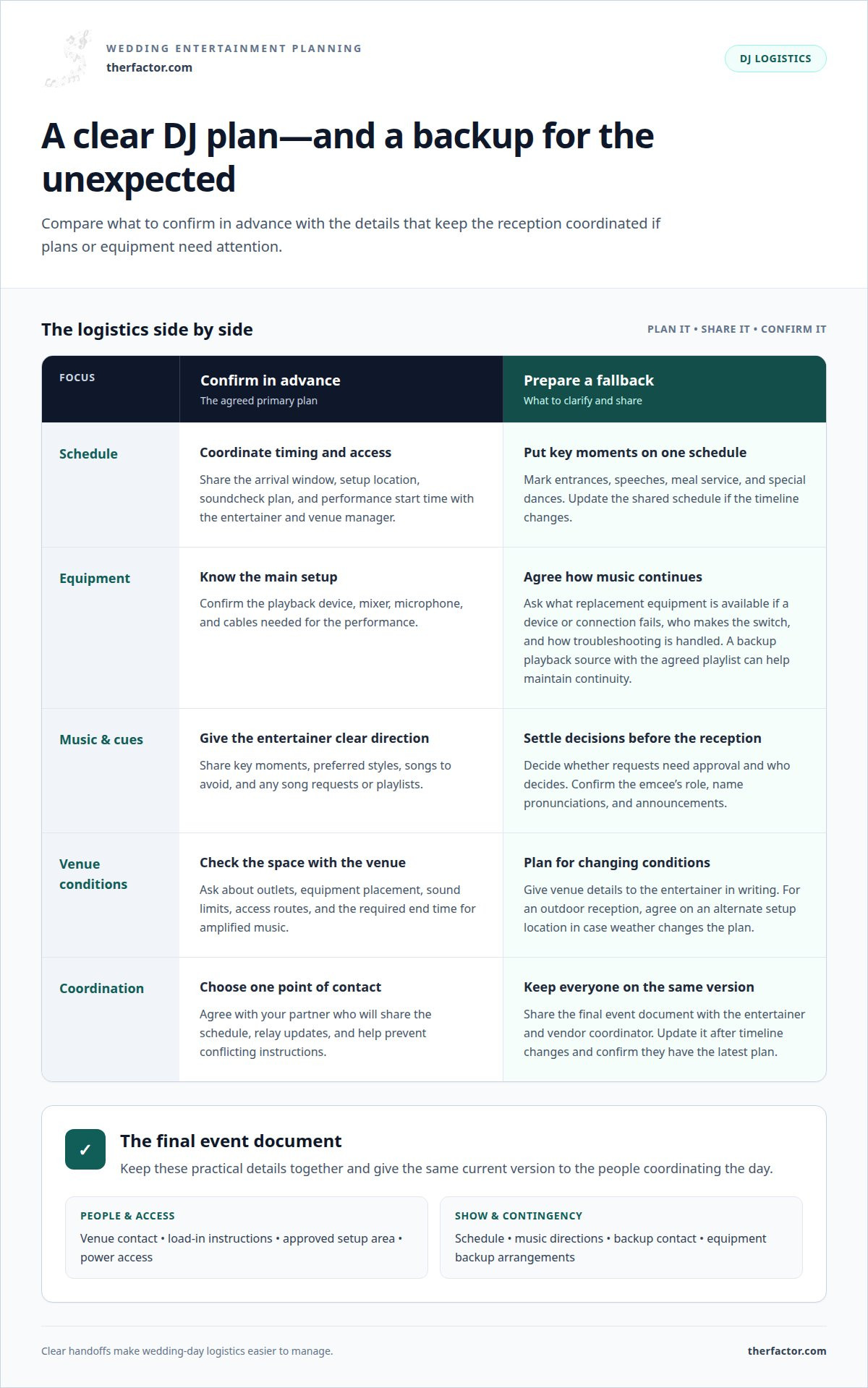
Stress-free wedding entertainment planning starts with a schedule that accounts for the venue’s access times and reception timeline. Share the arrival window, setup location, soundcheck plan, and performance start time with the entertainer and venue manager. Mark entrances, speeches, meal service, and special dances on one shared schedule. Clear cues help the music lead coordinate with other vendors and keep setup from interfering with guests.
Agree on a backup plan before signing the contract. Ask what happens if the primary playback device, mixer, microphone, or cable fails, and which replacement equipment is available. Clarify who makes the switch and how music continues during troubleshooting. A backup playback source with the agreed playlist can help maintain continuity if the main system has a problem.
For the music, provide a list of key moments, preferred styles, and songs to avoid. Decide how requests are handled, whether they need approval, and who makes that decision during the reception. Confirm the emcee’s role, name pronunciations, and any announcements. Specific instructions reduce uncertainty during transitions.
Sound, power, noise, and venue rules depend on the space. Ask the venue manager about available outlets, equipment placement, sound limits, access routes, and the required end time for amplified music. Give the entertainer those details in writing. For an outdoor reception, agree on an alternate setup location in case the weather changes the plan.
For stress-free wedding entertainment planning, put final logistics in one event document. Include the venue contact, load-in instructions, schedule, power access, approved setup area, and backup contact for the wedding day. Share the same version with the entertainer and the person coordinating vendors. Update it after any timeline change, then confirm everyone has the latest plan. Clear handoffs make logistics easier to manage and keep attention on the celebration.
4. Planning a wedding without stress
Turn the wedding plan into a timeline, then assign each task to a month. A spreadsheet, planning app, or paper planner can track decisions, deadlines, and completed work. Start with fixed commitments, such as the venue date, then schedule vendor bookings and reception details around them. During a weekly partner check-in, discuss progress, concerns, and changes before small questions become urgent. For stress-free wedding entertainment planning, keep music decisions tied to the event schedule and your shared priorities.
Set shared priorities before polishing minor details. If a relaxed reception matters most, for example, protect time for dinner and conversation before adding optional activities. Mark decisions “essential,” “flexible,” or “not needed.” That simple filter helps you decide what deserves attention and where compromise feels acceptable. It also gives you a clear answer when new suggestions come along.
Delegate specific tasks to people who are willing and suited to them. A trusted friend might handle family questions, while a day-of coordinator manages vendor timing and setup logistics. Agree on each person’s responsibilities and share the relevant schedule. Route minor concerns through the designated contact, so you aren’t pulled into every disagreement during the celebration.
Remove or delegate planning tasks that cause unnecessary strain. If comparing décor options becomes exhausting, ask a willing helper to narrow choices against your preferences. Protect time away from planning, too: schedule a date night when wedding talk is off-limits, or set aside an afternoon for a favorite hobby. When plans change, pause, identify the next practical decision, and let the designated coordinator handle logistics. This approach keeps stress-free wedding entertainment planning focused on the celebration, not every small disruption. If you want support shaping the music around your priorities, talk through your wedding entertainment plans.
The R Factor: Wedding Entertainment
The R Factor provides live wedding entertainment for couples who want a band-led celebration rather than a standalone DJ service. Its 6 to 12 piece cover band offers flexible performance options, allowing the lineup to suit the scale and requirements of the event. With four vocalists, a horn section, a rhythm section, and violin, the group brings a full live sound to the occasion.
Turn to The R Factor when live music fits your priorities, guest experience, and event style. Share your vision for the celebration and the atmosphere you want to create, then discuss which performance option suits the event. A clear conversation helps connect your plans with the right live music format.
To discuss live wedding entertainment for your celebration, contact The R Factor.
Choose the experience you want guests to remember
The next decision isn’t about adding more to the schedule. It’s about choosing the atmosphere you want guests to remember: a lively dance floor, a relaxed evening with background music, or a celebration that moves between both. Let that picture guide the details you revisit, and set aside choices that don’t support it. A clear sense of the experience keeps planning focused on what matters to you.
The R Factor provides live entertainment for weddings, corporate events, and birthday parties. For your wedding, consider how live music could complement the venue, timeline, and atmosphere you want. The band offers customizable musical packages, including song selection and set-list creation, to help shape a show around your celebration. Stress-free wedding entertainment planning starts with choices that reflect your priorities.
When you’re ready to discuss the music for your celebration, contact The R Factor. Take the next step at your own pace, and keep the focus on a celebration that feels like yours.
Frequently Asked Questions
Do you have any advice to give?
Yes. Decide what matters most, then let those priorities guide your choices and any changes. Agree, too, on how to handle unexpected issues: pause, identify the next practical decision, and assign it to the person best placed to act. A trusted friend can field guest questions, for example, while you focus on the ceremony. The plan should support the celebration, not demand your attention at every moment.
What should a wedding entertainment contract include, and what cancellation terms are common?
A clear contract identifies the event date, venue, performance hours, agreed services, payment schedule, and cancellation or postponement terms. Read the cancellation clause for notice deadlines, refund or payment conditions, and what happens if the performer cannot attend. Check how changes must be communicated and whether the agreement describes a substitute performer. Keep the signed copy with your booking records so you and your partner can refer to the same terms.
How can you plan music and announcements with a DJ or band stress-free?
Prepare a concise run-of-show that pairs each announcement with its cue, timing, and responsible person. Note who introduces the couple, signals the first dance, and tells guests when dinner begins. Share name pronunciations and any sensitive details in writing. Keep final music choices in one approved document, and name one person to relay last-minute changes instead of letting several guests send conflicting requests.
What backup plans should you make for entertainer cancellations, bad weather, or equipment failure?
Write a simple fallback for each risk. If a performer cancels, identify who will notify the venue and guests, and decide whether a playlist can cover essential moments. For outdoor weather changes, agree on an indoor location and a decision point with the venue. For equipment failure, clarify the entertainer’s troubleshooting and replacement process. Give the day-of contact the plan so they can coordinate without interrupting the couple.
Recent Comments