

What if the best conference reception band is the one that knows when not to take center stage? Networking comes first. A live band for conference reception Twin Cities planners choose should support conversation early, then help the room’s energy rise when the schedule and audience are ready.
Live music can compete with introductions or feel too prominent for a venue if its sound, timing, or lineup is a poor fit. Start by considering the reception schedule, room layout, guest mix, and role you want music to play. When those details guide the plan, live music can create a polished atmosphere while leaving room for comfortable conversation.
This 2026 booking guide explains how to align entertainment with your conference schedule, venue, audience, and desired mood. You’ll find practical ways to plan music’s role and choose an ensemble that can build energy at the right moment. Minneapolis-Saint Paul-based The R Factor provides live music for corporate events, with a flexible lineup of 6 to 12 musicians, four vocalists, a horn section, a rhythm section, and violin.
Key Takeaways
- Plan music around the reception’s purpose, keeping conversation central while shaping the atmosphere.
- Map arrival, networking, announcements, and later entertainment to the schedule so each phase has the right musical role.
- Compare ensemble configurations by considering the room, event format, and desired musical presence, rather than relying on fixed venue rules.
- Prepare key logistics in advance, including access, performance area, sound-check timing, and announcement coordination.
- Use this guide to choose a live band for conference reception Twin Cities events that fits the audience and supports a polished, memorable gathering.
What Makes a Live Band Work for a Twin Cities Conference Reception?
A conference reception is a hosted gathering built around conversation, networking, and hospitality before, between, or after conference sessions. It may begin with welcome drinks or give attendees time to mingle after a full day of programming. The goal is to help guests connect, not to replace the conference agenda with a performance.
A reception band sets the room’s tone, supports guest interaction, and builds energy without taking focus from the event’s purpose. That’s the standard to use when considering a live band for conference reception Twin Cities planners are organizing. Unlike a keynote, the band isn’t there to deliver the central message. And unlike a dance-focused party, a reception doesn’t need to begin at peak energy.
What should live music add to a conference reception?
Live music can make a reception feel welcoming and give the gathering a sense of occasion. Music also shapes emotional reactions to music, which is one reason its style and intensity matter. Choose an approach that leaves space for introductions and conversation, then let the energy rise as guests settle in and the event moves toward its later moments.
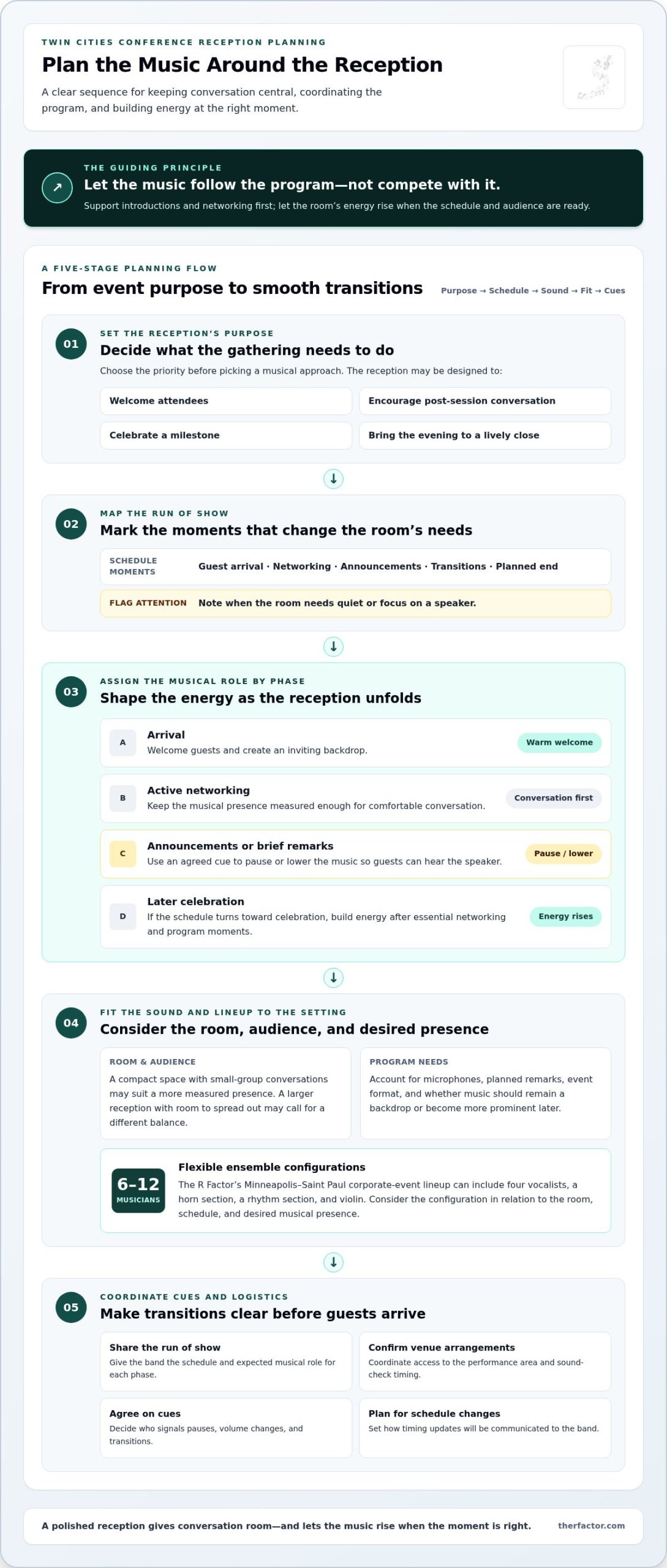
Plan music in phases. During arrival and active networking, it should complement conversation. For announcements or brief remarks, agree on a cue to pause or lower the music so guests can hear the speaker. If the schedule later shifts toward celebration, the band can take a more prominent role. The music should follow the program, not compete with it.
How is a conference reception different from a corporate gala?
A reception is usually networking-led, while a gala may center on formal awards, presentations, or a structured program. That difference should guide the musical approach. Welcome drinks call for an inviting backdrop. Post-session mingling benefits from music that supports a comfortable flow. A closing celebration may call for a stronger sense of occasion. Match the sound to the purpose and schedule instead of treating every corporate event like a dance party.
Getting that distinction right helps avoid two common mismatches: music that distracts from the conversations guests came to have, and entertainment that feels too subdued for the event’s final celebration. Set the reception’s priorities first, then make music part of the guest experience with intention.
Matching Live Music to Reception Flow and Audience
A reception has several distinct phases, and each places different demands on the room. Plan the music around the purpose of each phase rather than choosing one energy level for the entire event. A live music booking guide from Berklee College of Music also emphasizes practical planning, including venue fit.
- Define the reception’s goal. Decide whether the priority is welcoming attendees, encouraging post-session conversation, celebrating a milestone, or bringing the evening to a lively close.
- Map the run of show. Mark guest arrival, networking periods, announcements, transitions, and the planned end time. Note when the room needs quiet or attention focused on a speaker.
- Align music with each phase. Set expectations for the band’s role at arrival, during conversation, around announcements, and in any later high-energy portion of the reception.
Reception music should follow the program, not compete with it. Share the run of show with the band and coordinate timing with the venue’s requirements, including access to the performance area and sound-check arrangements. Agree on who will give cues and how schedule changes will be communicated. Clear signals help manage transitions without interrupting the guest experience.
When should a band play during a conference reception?
Music can welcome guests as they arrive and bridge transitions between scheduled conference activities. During active networking, keep its presence measured enough for comfortable conversation. For announcements, agree on a cue to pause or lower the music so the speaker has the room’s attention. If the closing portion is intended to feel more celebratory, build energy after the essential networking and program moments are complete.
How can music support networking without overpowering conversation?
Consider the room layout and how closely guests will gather. In a compact space where attendees will speak in small groups, a more measured musical presence may suit the setting. A larger reception with room to spread out may call for a different balance. Account for microphones and planned remarks, too. Discuss sound expectations, announcement cues, and transitions with the event team and venue before the reception.
Let the purpose of the gathering guide the musical approach, not just the size of the audience. A welcome reception calls for a different feel than a closing celebration. The R Factor is a Twin Cities corporate event band with a flexible lineup, so planners can consider the desired atmosphere and schedule when shaping the music plan.
Choosing a Conference Reception Band: Lineup, Sound, and Professional Fit
A professional reception band doesn’t have to mean a loud or distracting performance. The fit comes from the lineup, musical presence, and timing. A live band for conference reception Twin Cities planners can consider should suit the room and guest experience, with enough flexibility to support networking or make a later celebration feel more vibrant.
What band size suits a conference reception?
There’s no universal lineup for a particular venue size. Consider the room’s layout, audience, reception schedule, and desired atmosphere together. A compact room with conversation at the center may call for a more restrained musical presence. A larger gathering or a reception that builds toward celebration may benefit from a fuller ensemble. Treat these as planning cues, not fixed rules.
| Lineup scale | May suit | Consider |
|---|---|---|
| Smaller ensemble | More intimate rooms and conversation-led receptions | A focused musical presence that leaves space for mingling |
| Medium ensemble | Receptions balancing networking with a stronger live-music feel | How the room and guest flow support both music and conversation |
| Fuller ensemble | Larger gatherings or events building toward a more celebratory finish | Performance-area needs, sound balance, and the event schedule |
The R Factor offers a flexible lineup of 6 to 12 musicians, giving planners options for different reception scales and atmospheres. The right choice depends on the event’s needs, not on a standard every Twin Cities reception must follow.
Which musical qualities fit a professional reception?
Look beyond headcount. Consider repertoire variety, vocal presentation, and instrumental texture, then choose a cohesive musical direction that suits the organization and guest mix. A polished performance can feel professional when its volume and timing respect the room. During networking or remarks, music should support the occasion without demanding attention.
The R Factor’s lineup includes four vocalists, a horn section, a rhythm section, and violin. These elements offer varied live arrangements and musical textures. Their value depends on how the sound fits the reception, not simply on how many musicians are onstage.
Before choosing a lineup, picture the guest experience. Will attendees mostly talk in small groups, gather for announcements, or move toward a more energetic close? A clear answer helps align the ensemble and musical character with the event’s purpose. The best fit is the one that sounds intentional in the room and supports the reception from welcome to closing moment.
A Twin Cities Planner’s Checklist for Booking Conference Reception Music
A clear brief helps the band, event lead, and venue team work from the same plan. Before booking a live band for conference reception Twin Cities event, organize the details that shape the performance and guest experience:
- Date and venue: Share the event date, venue location, and relevant access or load-in details.
- Audience: Describe the guest profile and the kind of gathering you’re hosting.
- Schedule: Note arrival, networking, speeches, announcements, transitions, and the planned finish.
- Event goals: Define the atmosphere you want guests to experience, from a welcoming backdrop to a more celebratory close.
- Venue setup: Identify the performance area and coordinate access, sound-check timing, and microphone use.
What event details should be ready before booking?
Bring the date, venue, guest profile, and reception timing together with a draft run of show. Mark when guests will arrive, when remarks or announcements are planned, and where the schedule may change. Be specific about the intended atmosphere. “Comfortable networking, followed by an upbeat close” gives a clearer direction than “music for the reception.”
These details also help shape the performance plan. The R Factor’s lineup ranges from 6 to 12 musicians, with four vocalists, a horn section, a rhythm section, and violin. Consider the ensemble scale and music’s role in relation to the room, audience, schedule, and event goals.
How can the band coordinate with the conference venue and team?
Set a communication path between the band, event lead, and venue operations team. Align performance timing with the run of show and venue schedule, including access to the performance area and time for a sound check. Decide who will cue announcements, signal transitions, and share schedule changes. Clear responsibility helps prevent missed cues and keeps the reception moving smoothly.
For wider planning context, the 2026 Guide to Live Music for Corporate Events covers how live music for corporate events fits into professional gatherings. Keep the brief practical: the lineup and performance plan should serve the event, not complicate it. Plan your Twin Cities corporate reception with The R Factor.
Book The R Factor for a Live Conference Reception Band in the Twin Cities
Once you’ve defined the reception’s goals, schedule, and desired atmosphere, choose a band that can fit those details. The R Factor is based in Minneapolis-Saint Paul and provides live music for corporate events. Its flexible lineup gives conference planners options for shaping the musical presence to the reception, rather than forcing the event into a one-size-fits-all format.
What makes The R Factor a fit for conference receptions?
The R Factor’s lineup ranges from 6 to 12 musicians. It includes four vocalists, a horn section, a rhythm section, and violin. That combination offers a varied live cover-band sound, with ensemble scale to consider alongside the room, audience, and event flow. An intimate gathering may call for a different musical presence than a larger reception building toward a celebration.
The number of musicians is only one part of the decision. Consider how the performance should fit into the schedule: supporting conversation as guests arrive, making room for announcements, or helping create a more energetic close. The R Factor performs corporate event music in Minneapolis-Saint Paul, making the band a local option for planners seeking a live band for conference reception Twin Cities events.
How do planners take the next step?
Start with the essentials: the event date, venue, audience, reception schedule, and the atmosphere you want guests to experience. Share key transitions, speeches, or announcements, too. These details provide a practical foundation for discussing an ensemble and performance approach suited to the event’s scale and timing.
Each reception has its own priorities. A gathering focused on networking needs a different musical balance from a closing celebration, and the performance plan should reflect that difference. Use the event details to shape a lineup and musical presence that fit the occasion without pulling focus from the conference program.
Planning a conference reception in the Twin Cities? Share your date, venue, audience, and schedule with The R Factor to discuss live music for your event.
Shape a Reception That Welcomes Guests and Builds Energy
A successful conference reception makes room for meaningful conversation while creating an atmosphere guests remember. Choose music to support the event’s purpose, then align its timing and energy with the run of show. The right lineup depends on the venue, audience, and how the reception should feel, not on a fixed rule about band size.
For planners seeking a live band for conference reception Twin Cities events, The R Factor brings local corporate-event experience and flexible ensemble options from 6 to 12 musicians. Four vocalists, a horn section, rhythm section, and violin create a varied live sound to consider in light of the reception’s scale and atmosphere.
With the booking details organized, planning the music can feel straightforward. Share your event date, venue, schedule, audience, and goals, then shape the approach around the gathering. Plan your Twin Cities conference reception with The R Factor. A thoughtful music plan can help guests connect, enjoy the occasion, and leave with a strong impression.
Frequently Asked Questions
Is a live band appropriate for a conference reception?
Yes. A live band can create a polished, welcoming atmosphere while guests meet and network, provided the music supports rather than competes with the reception’s purpose. Plan the band’s role around the schedule: a measured presence can suit arrivals and conversation, while a more celebratory feel may fit the closing portion. For a live band for conference reception Twin Cities events, match the musical approach to the audience, venue, and program.
How do you keep a live band from overpowering networking?
Coordinate the band’s musical presence with the room, guest density, and event schedule. During networking, agree on sound expectations in advance so conversation remains comfortable. Plan clear cues for announcements and speeches so the music can pause or recede while attendees focus on the speaker. Share the run of show with the band and venue team, including microphone use and transitions, to help the reception flow smoothly.
What size band is best for a conference reception?
The best size depends on the room, audience, schedule, and atmosphere you want, rather than a fixed venue rule. A smaller ensemble may suit an intimate, conversation-led gathering, while a fuller lineup can bring more presence to a large reception or closing celebration. The R Factor offers flexible options from 6 to 12 musicians, with four vocalists, a horn section, a rhythm section, and violin.
When should a live band play at a conference reception?
Live music can welcome guests as they arrive, support transitions between conference activities, and accompany the reception’s networking period. Coordinate its timing with the run of show. For announcements or speeches, use agreed cues to lower or pause the music. If the event is designed to finish on a celebratory note, the closing portion may be the right time to build energy, once key program and networking moments are complete.
What should I ask a conference reception band before booking?
Discuss the event’s date, venue, audience, schedule, and desired atmosphere, then align the performance plan with those details. Review the band’s lineup options and musical direction, and coordinate the performance area, access, sound-check timing, microphone use, and announcement cues with the venue team. Clarify who will communicate run-of-show changes on the day. These practical details help the music fit the event rather than disrupt it.
Can a live band perform at a corporate event in Minneapolis or St. Paul?
Yes. The R Factor is based in the Minneapolis-Saint Paul area and performs live music for corporate events. Its flexible ensemble options range from 6 to 12 musicians, with four vocalists, a horn section, a rhythm section, and violin. Planners in Minneapolis or St. Paul can shape the performance approach around the venue, schedule, audience, and atmosphere they want for their reception.
How far in advance should I book a band for a conference reception?
Start planning once your event date and venue are taking shape. There isn’t one lead time that suits every conference reception, so early planning gives you room to coordinate the lineup, schedule, venue access, and performance details. The date, event format, and planning timeline all matter. Share the event brief early, then use the run of show to guide the remaining decisions as they develop.
Recent Comments