
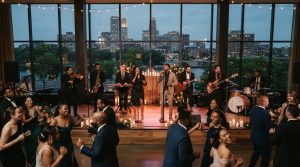
What if the band that sets an elegant tone for your ceremony could also fill the dance floor later, without making your wedding feel like two different events? Couples looking for versatile wedding entertainment want music that feels polished during cocktails, lively at the reception, and welcoming to guests of different ages. The key is finding a live group that can shift its sound and energy with the day.
A broad song list is only part of the picture. A flexible ensemble can adapt its lineup and musical textures to the venue and the mood of each moment, helping the day flow from one part to the next. The R Factor offers configurations of 6 to 12 musicians, with four vocalists, a horn section, a rhythm section, and violin for a range of sounds across ceremonies, cocktail hours, and celebrations.
This guide covers how to plan music for each wedding phase, what to look for in a group with genuine musical range, and how one ensemble can simplify entertainment coordination. It also explains how to choose a lineup that fits your Minneapolis or St. Paul venue and helps bring guests together throughout the celebration.
Key Takeaways
- Plan music around the changing energy of your wedding day so transitions feel intentional rather than abrupt.
- Choose versatile wedding entertainment with genuine genre range to engage guests with different tastes.
- Match the ensemble size to your venue, guest count, and preferred atmosphere for a balanced sound.
- Coordinate ceremony, cocktails, dinner, and dancing as one musical arc to create a cohesive guest experience.
- Explore how The R Factor’s Minneapolis-based live ensemble can tailor its lineup and sound to your celebration.
What Defines Truly Versatile Wedding Entertainment?
A long song list is only one part of versatility. A truly versatile wedding ensemble can move between genres and energy levels while keeping each performance convincing. A Motown classic needs its characteristic groove and vocal feel; a ceremony selection should feel measured and intimate, not like a dance set played quietly.
That range depends on more than individual talent. Musicians need to read the room, shape the energy, and understand how each part of the wedding connects to the next. The R Factor’s configurations bring together four vocalists, a horn section, a rhythm section, and violin, creating a range of musical textures for a celebration. For context on how ensemble size and instrumentation shape a group’s sound, see this overview of orchestra sizes and instrumentation.
A band’s musical skill matters, but wedding entertainment also needs to work around the room, schedule, and guests. The mood at cocktails is different from the mood on a dance floor. A group that can adjust its sound and performance to those moments makes versatile wedding entertainment feel cohesive rather than like a series of unrelated sets.
The Transition Problem in Wedding Planning
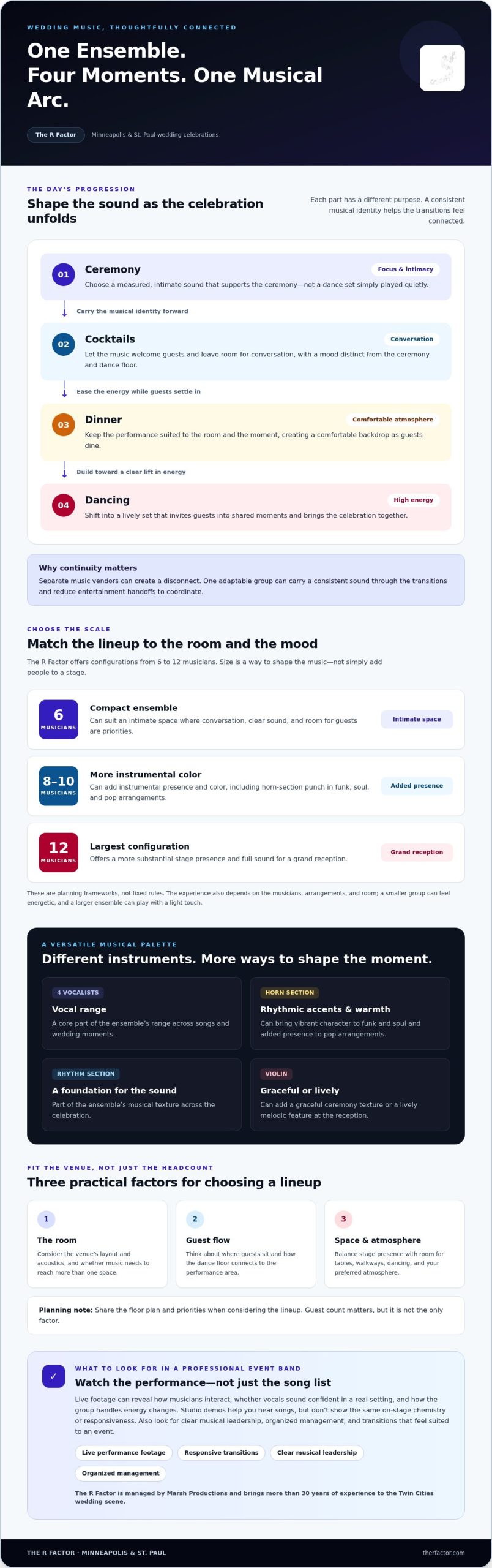
Music starts setting the mood as guests arrive, well before the first dance. The ceremony calls for focus and intimacy; cocktails invite conversation; dinner needs a comfortable atmosphere; dancing asks for a clear lift in energy. Each phase has a different purpose, but the day should still feel connected.
Separate music vendors can create a disconnect if their styles, sound, or approach don’t align. One adaptable group can carry a consistent musical identity through each transition. That can make the day feel more considered and reduce the number of entertainment handoffs you need to coordinate.
Key Indicators of a Professional Event Band
Look beyond promotional language. Live performance footage can show how musicians interact, whether vocals sound confident in a real setting, and how the group handles changes in energy. Studio demos are useful for hearing songs, but they don’t reveal the same on-stage chemistry or responsiveness.
Clear musical leadership and organized management also help keep a performance coordinated. When reviewing a band, pay attention to how it handles transitions and whether the performance feels suited to an event, not just a stage. The R Factor is managed by Marsh Productions and brings more than 30 years of experience to the Twin Cities wedding scene, with lineup configurations ranging from 6 to 12 musicians.
Live wedding music can respond in the moment. Musicians can shape a transition, invite guests into a shared chorus, or ease the energy while people settle in. A playlist provides songs; a live ensemble can make those moments feel connected to the celebration around them.
Scaling the Sound: From 6 to 12 Piece Ensembles
A larger band isn’t automatically a better fit. The right ensemble size depends on how sound carries through the venue, how many guests are attending, and whether you want an intimate musical backdrop or a high-impact dance set. A well-chosen lineup helps versatile wedding entertainment feel rich and engaging without overwhelming the room.
Think of ensemble size as a way to shape the music, not simply add people to a stage. A smaller group can suit an intimate celebration, while a larger lineup can bring more instrumental color and stage presence. The R Factor offers configurations from 6 to 12 musicians, giving Minneapolis and St. Paul couples options for different venues and celebration styles.
- Six-piece ensemble: A compact lineup can suit an intimate space where conversation, clear sound, and room for guests are priorities.
- Eight to ten musicians: A larger lineup can add instrumental presence and color, including the punch of a horn section in funk, soul, and pop arrangements.
- Twelve musicians: The largest configuration offers a more substantial stage presence and a full sound for a grand reception.
These are planning frameworks, not fixed rules. The experience depends on the musicians, arrangements, and room as well as the number of performers. A smaller group can still feel energetic, and a larger ensemble can play with a light touch.
The Role of the Horn Section and Violin
A live horn section adds rhythmic accents and warmth that can make funk and soul feel especially vibrant, while giving pop arrangements added presence. Violin offers a different kind of range, bringing a graceful texture to a ceremony or a lively melodic feature to the reception. The R Factor combines a horn section and violin with its vocalists, creating musical colors for both refined moments and energetic sets. Live instruments bring natural phrasing and interaction to the performance.
Matching Band Size to Your Minneapolis Venue
Consider the room as well as the guest count when choosing a lineup. Minneapolis and St. Paul venues vary in layout and acoustics, so think about where guests will sit, how the dance floor connects to the performance area, and whether music needs to reach more than one space. A flexible ensemble gives you options to weigh these factors together rather than choosing a size by headcount alone.
Make sure the performance area leaves enough space for tables, walkways, and dancing. Share your floor plan and priorities as you plan the music, then choose a lineup that balances presence with practical use of the room. The R Factor’s wedding ensemble configurations range from 6 to 12 musicians.
Genre-Hopping Mastery: Repertoire and Vocal Range
A broad repertoire matters only if a band can perform each style with the right character. Motown, classic rock, 90s favorites, and today’s Top 40 call for different vocal colors, rhythms, and dynamics. A polished set moves between them without making every song sound alike. That range gives guests with different tastes a reason to join the dance floor.
The R Factor’s four vocalists give the ensemble multiple lead voices to draw on across its repertoire. A warm, expressive vocal approach may suit a soul standard, while a brighter, contemporary delivery can fit a modern pop hit. The rhythm section supports those changes by shifting the groove, pace, and feel rather than relying on one arrangement for every genre.
Authenticity Across Eras
Musical versatility means honoring the character of a song while bringing the immediacy and energy of a live performance. A song associated with Etta James calls for a different vocal texture and phrasing than a Dua Lipa hit. The goal isn’t imitation for its own sake. It’s to preserve the qualities that make each style recognizable while giving the performance its own vitality.
That distinction helps genre changes feel convincing. The rhythm section can move from a relaxed soul groove to the tighter pulse of contemporary pop, while the lead vocal shifts with the song. Medleys can connect familiar songs through a compatible tempo or feel. A well-shaped transition keeps momentum moving instead of interrupting the dance floor with a hard reset.
Customizing Your Wedding Setlist
Give the band a clear starting point: share the songs that matter most, along with a concise “do-not-play” list. Include why a must-play matters when that context can help, such as a family connection or a particular moment you want the song to suit. Those priorities help shape the set while leaving room to respond to guests.
A fixed list can’t anticipate every room. If guests respond to a particular era or style, an experienced band can build on that energy; if the floor needs a change of pace, the music can shift direction. That balance between your preferences and live judgment is central to versatile wedding entertainment. For more on live performance at a Minneapolis celebration, explore why a live band beats a DJ for your Minneapolis wedding.
Logistics and Timeline: One Band, Multiple Vibes
A smooth wedding soundtrack is planned around the day’s schedule, not added as an afterthought. Map music to each phase: ceremony, cocktail hour, dinner, and dancing. Decide what each moment should feel like, when music needs to begin or pause, and who will cue key transitions. A versatile wedding entertainment plan helps guests experience the day as one celebration, even as the atmosphere changes.
Using one ensemble across multiple phases can simplify coordination. Instead of aligning separate music vendors, you can discuss the musical arc, timing, and room layout with one performance team. You’ll still coordinate the schedule with your planner and venue, but one shared music plan gives everyone a clear framework.
Account for volume as well as timing. During dinner, music should support conversation rather than compete with it. Dancing calls for more energy and presence. Share the room setup and schedule with the band, then coordinate announcements, speeches, and service with your planner and caterer. Let your photographer know when entrances and first dances are planned so they can be ready without interrupting the flow.
Ceremony and Cocktail Hour Elegance
Early music should welcome guests while leaving space for conversation. Violin can bring a refined live texture to a ceremony or cocktail hour, and a suitably scaled arrangement can work well in quieter parts of the day. Plan where musicians will perform and where guests will be positioned, especially if the ceremony and reception are in different spaces. Use this wedding music planning checklist for Twin Cities couples to organize decisions and timing.
The Reception Kick-Off
Give the reception a clear turning point. Choose entrance music that signals a change in energy, then decide how it should lead into dinner or the first dance. A live first dance offers a personal interpretation; an original recording preserves the familiar version. Choose the approach that suits you, then share the cue with your planner and photographer.
Build toward a strong stretch of dancing rather than trying to keep every song at maximum intensity. A “power hour” can be a useful planning idea: group crowd favorites and high-energy selections at the point when guests are ready to dance. The band can still adjust to the room, shifting tempo or style if the dance floor needs a lift or a change of pace.
Planning your wedding music with The R Factor can start with your timeline, venue, and preferred atmosphere.
The R Factor: Minneapolis’ Premier Versatile Ensemble
Choosing wedding entertainment in Minneapolis or St. Paul means planning around the people, venue, and schedule that make your celebration distinctive. The R Factor brings more than 30 years of experience to the Twin Cities wedding scene and is managed by Marsh Productions. The ensemble’s lineup options let couples plan the music around the scale and character of their event.
The R Factor can be configured from 6 to 12 musicians. Four vocalists, a full horn section, a rhythm section, and violin provide a range of musical textures, from refined ceremony selections to energetic reception arrangements. The result is versatile wedding entertainment with a cohesive live sound and options for different celebration styles.
Local planning details matter, too. The venue’s layout, the sequence of wedding events, and the space available for musicians all affect how entertainment fits into the day. A flexible group gives you options to consider those details together, so the lineup supports the celebration and its setting.
The Marsh Productions Standard
Marsh Productions manages The R Factor and brings an established presence in Minnesota entertainment to the planning relationship. As you shape the musical plan, discuss the event schedule, key moments, and preferred atmosphere, then align those priorities with the ensemble configuration. That preparation keeps entertainment decisions organized and gives the team a clear plan to work from.
Experience is most useful when it leads to thoughtful preparation and a performance that feels assured. The R Factor’s experience in the Twin Cities wedding scene, combined with its varied instrumentation and vocal range, supports a complete live music experience. Couples can make the music part of the event plan from the start, rather than treating it as a last-minute detail.
Booking Your 2026 Minneapolis Wedding
Start planning when your wedding date and venue are set. Early planning gives you time to discuss the room, timeline, and lineup without rushing decisions. In your planning conversation, outline the guest count, room layout, ceremony and reception needs, must-play songs, and the atmosphere you want at each stage.
Use those details to choose a configuration that feels right for your celebration. An intimate setting may call for a different scale than a large reception, while your musical priorities can guide how the ensemble’s instruments and vocalists contribute. The aim is a considered fit, not simply the largest possible lineup.
For a more coordinated celebration, plan your Minneapolis wedding music with The R Factor around your venue, schedule, and vision.
Shape the Soundtrack Around Your Celebration
Before settling on your wedding music, write down three moments you want guests to remember. Note the feeling you want each moment to create, whether that’s warmth as loved ones arrive, anticipation before your entrance, or an invitation to dance. This turns broad preferences into useful direction for your entertainment planning.
Then consider how those moments should connect. A celebration feels personal when the music reflects your priorities, not just a standard schedule. Share the songs, styles, and transitions that matter most, while leaving room for the musicians to respond to the atmosphere in the room. That balance gives the day a clear sense of your personality without making the experience feel over-scripted.
With versatile wedding entertainment, you can plan more than a playlist. You can shape a live experience that helps guests feel included and gives the celebration its own character. Discussing your vision, timeline, and preferred atmosphere is a practical next step.
Plan your Minneapolis wedding entertainment with The R Factor and start shaping a celebration that feels distinctly yours.
Frequently Asked Questions
What does “versatile wedding entertainment” actually mean for a live band?
Versatile wedding entertainment means a live band can adapt its music and performance to the occasion, not simply play songs from several genres. It can make a familiar song feel appropriate for a relaxed reception moment, then shift to a more energetic arrangement as guests begin dancing. Look for range in the vocals, instrumentation, and performance style, as well as the ability to suit different parts of your wedding.
Can a 10-piece band fit into a smaller Minneapolis wedding venue?
It can, depending on the room’s usable performance area and how much space you want to reserve for tables, walkways, and dancing. A 10-piece lineup falls within The R Factor’s 6-to-12-musician range, but guest count alone won’t determine the best fit. Compare the venue’s floor plan with the performance area and the dance floor you want. In a compact room, clear circulation may matter as much as the band’s sound.
How many vocalists do we need for a diverse wedding playlist?
There isn’t one ideal number for every wedding; the right choice depends on the repertoire and variety of vocal styles you want. The R Factor features four vocalists, giving the band options for different lead voices, harmonies, and song interpretations. That can help a set move among soul, rock, and contemporary pop without relying on one vocal character throughout. Identify the songs where the singer’s tone matters most to you as a useful starting point.
Does The R Factor provide music for the ceremony and cocktail hour as well?
Yes. The R Factor provides live music for wedding ceremonies, cocktail hours, and receptions. As you plan, note whether those moments happen in one space or separate rooms, and include the timing of guest arrival, the ceremony, and the move into cocktails. This gives the musical plan a practical framework and helps each part of the celebration feel considered.
What are the benefits of having a horn section at a wedding reception?
A horn section adds live brass and reed sounds that can give dance arrangements more punch, color, and rhythmic emphasis. That’s especially effective for styles such as funk and soul, and it can add a bold layer to familiar pop songs. The R Factor’s full horn section contributes an expressive instrumental sound that can help make a reception feel dynamic. Consider whether you want that richer ensemble texture to feature in the dance portion of your celebration.
How far in advance should we book a live band in the Twin Cities for 2026?
Begin planning once your wedding date and venue are set. There isn’t one booking interval that fits every Twin Cities wedding, and demand can vary by date and season. Starting early gives you more time to plan the lineup, discuss the event schedule, and coordinate entertainment with your other vendors. If you’re organizing a 2026 celebration, make live music part of your early planning rather than leaving it until the final details.
Can the band learn a specific song for our first dance?
Include your first-dance song among your planning priorities and decide whether you prefer a live interpretation or the exact original recording. Share the song title and version you have in mind as you discuss the music. That makes your preference clear and helps you choose the approach that best suits the moment.
How do you manage the volume level so guests can still talk during dinner?
Plan for dinner to have a different sound level and energy from dancing. Tell the band and wedding planner when dinner service, speeches, and announcements are scheduled, and share how the room is arranged. The room’s acoustics and guest seating affect how music carries, so a clear timeline helps the music suit the activity and keeps conversation comfortable before the reception shifts into dance music.
Recent Comments