

What makes a wedding band with multiple vocalists a good fit? It’s not simply a bigger sound. Several singers can give different parts of your wedding their own character, from a relaxed dinner to a lively dance floor. The key is whether their voices and arrangements work together.
Distinct vocalists can bring contrast to a set, shift the mood between songs, and add depth through harmonies. But singer count alone doesn’t guarantee a cohesive performance. Listen for smooth handoffs, a consistent feel across different styles, and arrangements that suit each part of the celebration.
This guide explains what multiple vocalists contribute, what to listen for, and how to choose a lineup that fits your wedding. The R Factor, a Minneapolis and Saint Paul wedding band, features four vocalists and flexible lineups of 6 to 12 musicians. Use the guidance here to plan the sound you want for your ceremony, cocktail hour, and reception.
Key Takeaways
- A wedding band with multiple vocalists can bring contrasting tones and harmonies to a reception, but singer count alone doesn’t determine the quality of the experience.
- Listen for smooth vocal handoffs and thoughtful arrangements to judge whether different voices create variety while keeping the performance cohesive.
- Compare multiple singers with a single lead by considering the atmosphere, musical variety, and continuity you want for your celebration.
- Use a clear evaluation process: define your preferred sound, then watch substantial live-performance footage to hear how the band performs across songs.
- The R Factor brings four vocalists to weddings in Minneapolis and Saint Paul, with ensemble sizes ranging from 6 to 12 musicians.
Why a Wedding Band with Multiple Vocalists Can Transform the Reception
A multi-vocalist wedding band features more than one singer, with vocalists sharing or alternating lead parts across the set. A wedding band with multiple vocalists uses different voices and interpretations to create variety in its live performance.
The change can be subtle or striking. One singer might bring a warm, intimate quality to a romantic song, while another delivers a brighter, more forceful feel for a dance-floor favorite. When singers join on selected lines or harmonies, the sound can grow fuller. The effect depends on the musical choices, not simply on how many people hold a microphone.
What multiple singers add to a wedding set
Distinct vocal qualities give a band more ways to shape familiar songs. A change in lead singer can make a well-known tune feel fresh without changing its basic arrangement. Shared vocal parts can add depth, while a different singer taking the next song can introduce a new texture.
This variety can help a reception move through different moods. You might want a more relaxed sound during dinner, then a livelier feel as dancing begins. Vocal contrast can support those changes when it suits the music and the moment. It doesn’t mean every guest’s taste will be represented, and it doesn’t require every singer to perform on every song.
The arrangement makes the difference coherent. Singers need defined roles: who leads, when another voice joins, and how the song moves from one part to the next. Without that musical purpose, switching vocalists can feel arbitrary. With it, each change sounds intentional rather than like an interruption.
Why wedding guests may notice the difference
Guests may respond to changing vocal textures even if they don’t consciously identify why a song feels different. A solo lead can create focus; layered voices can make a chorus feel broader; a new lead can bring a different character to the next song. These are changes in the music’s presentation, not merely an increase in the number of performers onstage. The broader idea of a musical ensemble also includes how voices and instruments work together as one group.
Imagine a Twin Cities wedding reception just after dinner. The band begins with a familiar song led by one vocalist, then moves into a more energetic number with another voice at the front and harmonies in the chorus. That shift can help mark a change in atmosphere without stopping the music.
Don’t judge a band by its singer count alone. Listen for distinct voices, purposeful handoffs, and arrangements that hold together across the set. Those details show whether multiple vocalists are adding musical variety that feels considered and cohesive.
How Multiple Wedding Singers Create Variety Without Losing a Cohesive Sound
A band’s vocal arrangement is the plan for who sings each part, when voices overlap, and how the singers fit with the instruments. That plan gives multiple vocalists a clear musical purpose. Cohesion comes from coordinated arrangements, not from making every singer sound the same.
For a wedding band with multiple vocalists, the goal isn’t to feature every voice in every song. A thoughtful set uses vocal changes where they support the music. One singer might carry a verse while another takes the chorus, or one lead voice may remain in place as others join for a specific line. The right choice depends on the song and the sound the band wants to create.
How vocal handoffs and harmonies shape a performance
A vocal handoff is a planned transition from one singer to another, either between sections of a song or from one song to the next. A smooth handoff keeps the musical phrase moving and makes the change feel intentional. Harmonies can add another layer when they suit the melody, but a strong arrangement may also call for one focused lead. Multiple voices are an option, not a requirement for every number.
Timing matters. A second singer joining too early can crowd a lyric; entering at a chosen phrase can give that moment more weight. The rhythm section helps anchor the transition, while instruments can maintain the groove beneath a change in lead. Horns or other instruments may reinforce accents or answer a vocal phrase, bringing the singers and band together in one arrangement.
Listening for a cohesive ensemble sound
Assess more than a polished chorus or a brief promotional clip. A longer, continuous performance excerpt can reveal whether a band handles transitions confidently and keeps its energy consistent between songs. Listen to the whole picture: do the vocals sit naturally over the rhythm section, and do instrumental parts support rather than compete with the lead?
Use these cues as you listen:
- Balanced vocals: The lead remains clear, and supporting voices add texture without overwhelming the song.
- Confident transitions: A singer change feels connected to the music, with no awkward pause or uncertain entrance.
- Consistent momentum: Changes in vocal color add contrast without making the set feel like disconnected performances.
- Instrumental support: The rhythm and instrumental sections maintain the song’s pulse and complement the vocal arrangement.
These details matter more than counting microphones. You might hear a band move from a solo-led song into a layered chorus, then settle into a different vocal configuration for the next number. If the rhythm, transitions, and overall energy remain connected, the variation feels deliberate. To get a sense of how those elements can work within a wedding performance, explore The R Factor’s Minneapolis and Saint Paul wedding entertainment.
Multiple Vocalists vs. One Lead Singer: Which Wedding Band Setup Fits?
Neither a single lead singer nor several vocalists is automatically the better choice. The right setup depends on the sound you want throughout the reception. A consistent lead can give a set a clear vocal identity, while multiple singers can create contrast through different tones and interpretations. In either format, the band’s arrangement and performance matter more than the number of singers.
Use the comparison below to consider the experience each setup can create, rather than treating either format as a guarantee of quality.
| Setup | What to listen for | Possible effect |
|---|---|---|
| One lead singer | Consistent delivery, clear phrasing, and a voice that suits the range of songs | A steady vocal identity and continuity across the set |
| Multiple vocalists | Purposeful changes in lead, balanced harmonies, and smooth transitions | More vocal contrast and different interpretations across the set |
When one lead singer may suit the brief
A single lead voice can tie different songs together with a recognizable sound. That continuity may suit couples who want a focused vocal identity or a consistent feel from one part of the reception to the next. Listen for expressive range within that voice, along with a band arrangement that supports changes in mood. One lead singer doesn’t mean a smaller or less capable band; the instrumental lineup and musical direction are separate considerations.
When several vocalists may bring useful range
Several vocalists can bring varied tone and interpretation to the set. A change in lead might create a different feel for a new song, while selected harmonies can add depth. Think about the atmosphere you want: a consistent thread throughout the evening, or more shifts in vocal character. Singer count alone can’t tell you how well the band will deliver that sound.
If you’re concerned that changing singers could make the performance feel disconnected, look for evidence in a substantial, continuous performance excerpt. Notice whether one song leads naturally into the next, vocal entrances feel secure, and the ensemble maintains its musical direction. A short highlight reel may show standout moments, but it won’t reveal transitions as clearly.
Pay attention to how the voices sit with the instruments, too. The lead should remain clear, supporting vocals should fit the arrangement, and the rhythm section should maintain the foundation as singers change. A cohesive performance doesn’t require identical voices. It requires choices that make sense together.
Let your preferred atmosphere guide the decision, then compare recordings using the same criteria for each setup. A wedding band with multiple vocalists may suit a couple looking for more vocal contrast; a single lead may better match a preference for consistent delivery. Choose based on what you hear across complete performances, not a headcount or a label.
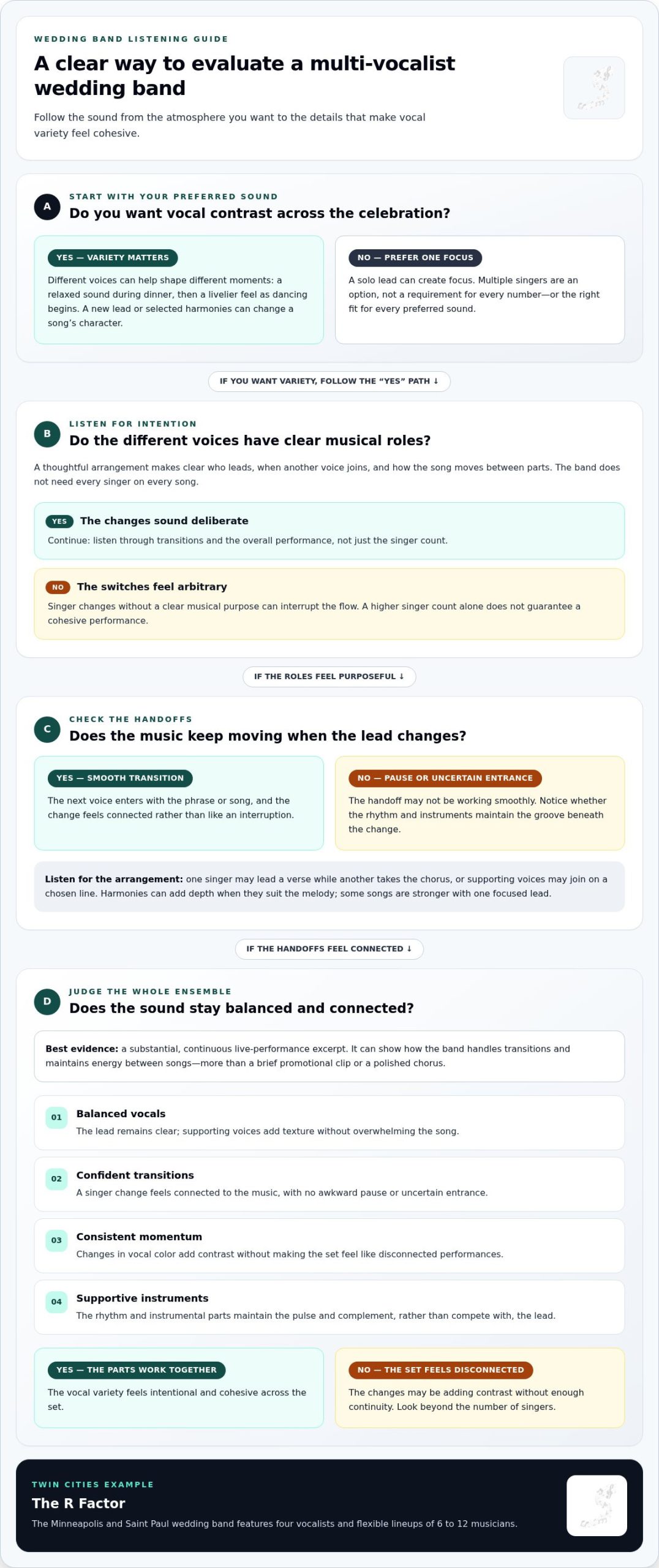
How to Choose a Wedding Band with Multiple Vocalists in the Twin Cities
Choosing a band is easier when you know what you want the music to do. For Minneapolis and Saint Paul couples, start with the reception atmosphere and the role live music will play, then evaluate how the singers and instrumentalists work together. This keeps the decision grounded in the experience you want, not just the number of vocalists onstage.
Set the musical brief before comparing bands
Before reviewing options, agree on the feeling you want the reception to have. Consider whether you prefer a steady musical identity or noticeable changes in vocal tone and energy. Then map where live music fits into the celebration, such as the reception alone or other parts of the day. A clear brief helps you compare performances against your priorities.
Separate must-haves from preferences. Essential details might include a particular overall sound or the importance of vocal variety. Optional details can remain flexible. This distinction helps you make a confident decision without expecting one band to satisfy every possible musical preference.
Evaluate singers as part of the full band
Listen to the whole ensemble, not only the lead vocals. Notice how each voice sits alongside the rhythm and instrumental sections, and whether changes in lead feel deliberate. A cohesive sound depends on that relationship. For broader local planning considerations, consult this Minneapolis wedding music planning guide.
- Define your desired atmosphere. Describe the reception sound in practical terms: consistent, varied, relaxed, energetic, or a blend that changes as the evening progresses.
- Map where live music fits. Decide which parts of the celebration should feature live performance. This gives you a clearer sense of the overall role the band needs to play.
- Sort priorities from possibilities. Write down essential musical preferences, then list details you’re open to adapting. Keep the brief focused on what will shape the experience most.
- Watch substantial performance footage. Choose longer live excerpts when available, not only short highlight clips. A fuller view makes it easier to assess how the band sustains its sound beyond a single standout moment.
- Assess the performance as a whole. Listen for distinct vocal tones, clear transitions between singers, balanced vocals and instruments, and energy that feels consistent. Consider whether those elements support the atmosphere you defined at the start.
As you compare a wedding band with multiple vocalists, look for evidence that the singers belong to one coordinated ensemble. A change in lead should feel connected to the song, while the rhythm and instruments keep the performance anchored. Don’t treat a high number of singers as a shortcut to quality; listen for the musical choices that make their variety work.
Use your brief and listening notes to make the final comparison. Explore The R Factor’s Twin Cities wedding entertainment as you consider the sound and ensemble that fit your celebration.
What a Multi-Vocalist Wedding Band Looks Like with The R Factor
For couples planning a wedding in Minneapolis and Saint Paul, The R Factor brings several vocalists together in one live ensemble. The band features four vocalists and a flexible lineup ranging from 6 to 12 musicians. That combination offers vocal variety and options for choosing an ensemble size suited to your event.
The R Factor performs for wedding ceremonies, cocktail hours, and receptions. Thinking about each part of the day separately can help clarify the kind of live music you want and where the band fits into the celebration. A ceremony, a conversation-filled cocktail hour, and a reception each serve a different purpose, so consider the atmosphere you want the music to support at each stage.
How The R Factor’s lineup supports vocal variety
Four vocalists bring distinct voices into one ensemble, creating the potential for contrast across a wedding set. The number of singers doesn’t, by itself, determine the quality or cohesion of a performance. What matters is how the voices work within the musical whole and whether their variety suits the experience you want.
The ensemble also includes a horn section, rhythm section, and violin. These instruments contribute to the band’s overall sound alongside its vocalists. Rather than focusing only on singer count, listen to how the voices and instruments fit together in performance.
For a closer look at how a larger lineup can shape event planning, explore the 11-piece wedding band planning guide. It offers a relevant reference as you consider what ensemble size could suit your celebration.
Bringing the right live-band experience to a wedding
The R Factor’s 6-to-12-musician range provides flexibility for different event scales. Start with the atmosphere you want, identify where live music belongs in the day, and evaluate the band’s overall sound rather than treating vocalist count as a quality score. Those priorities help you focus on how the full ensemble can support your wedding.
- Consider the whole celebration: Think about the role of live music at the ceremony, cocktail hour, and reception.
- Look beyond the headcount: Assess how the vocalists, horn section, rhythm section, and violin contribute to the complete sound.
- Match the ensemble to the event: Keep the flexible lineup range in mind as you decide what scale feels right.
A wedding band with multiple vocalists can offer a broader range of voices, but the right live-band experience depends on the fit between the ensemble, the occasion, and your musical priorities. Explore The R Factor’s wedding entertainment as you plan the sound for your Minneapolis and Saint Paul celebration.
Shape a Soundtrack That Feels Like Your Wedding
Think beyond the band’s lineup and picture the emotional thread you want music to create across the day. A memorable reception doesn’t need every moment to reach the same intensity. It can move naturally from meaningful and personal to celebratory, with the music supporting each shift while still feeling like part of one occasion.
Choose a few words that capture the atmosphere you want guests to feel. Maybe you’re aiming for elegant, joyful, lively, or relaxed. Use those priorities to talk through what matters most to you as a couple, then listen for a performance that feels aligned. A shared vision can make the final choice clearer than comparing singers by number alone.
The right wedding band with multiple vocalists should feel like a considered part of your celebration, not a feature added for its own sake. Ready to plan live music for your Minneapolis and Saint Paul wedding? Explore wedding entertainment with The R Factor and start with the sound you want for your day.
Frequently Asked Questions
Is a wedding band with multiple vocalists a good choice for a small wedding?
Yes, a wedding band with multiple vocalists can suit a small wedding if the musical footprint fits the room and the experience you want. Guest count alone isn’t decisive: a tight Minneapolis venue has different space and volume needs from an intimate reception in a spacious hall. Consider the stage area, seating, dance-floor plan, and whether live music will anchor the whole evening or feature at selected moments.
Can multiple vocalists in a wedding band sing different music styles?
Yes, singers in the same band can perform different styles when the musicians’ repertoire and arrangements support them. Distinct vocal tones can contribute to contrasting interpretations, but having several singers doesn’t guarantee every genre or song. For a Minneapolis and Saint Paul celebration, identify the styles that matter most and listen for performances that shift character while keeping the band’s sound intentional and connected.
Does a wedding band with multiple vocalists need more stage space?
Potentially. Stage footprint depends on the full lineup, instruments, and venue layout, not just the number of singers. A band with horns or other instruments needs room for those musicians as well. Before finalizing a Minneapolis or Saint Paul venue plan, compare the stage dimensions with the chosen band configuration. Account for pathways, sightlines, and nearby tables so the performance area doesn’t crowd the dance floor.
Do multiple singers perform together on every song?
No, multiple singers don’t need to perform together on every song. An arrangement might feature one lead throughout, bring in another vocalist for a verse, or combine voices only at selected moments. Instrumental passages can also give the singers a break. This lets the band choose an approach that suits each song instead of making every number sound crowded. Listen for purposeful vocal choices, not a constant stack of voices.
Can a multi-vocalist wedding band perform during the ceremony and reception?
Yes, a band can perform during both the ceremony and reception, with music planned for the different roles those moments play. A ceremony may require carefully timed pieces around key transitions, while the reception can call for a different musical flow. The R Factor performs at wedding ceremonies, cocktail hours, and receptions in Minneapolis and Saint Paul. Include the music and timing priorities for each part in your event plan.
How can I tell whether several wedding singers sound cohesive?
Listen to an uninterrupted performance excerpt that includes more than one song. Notice whether entrances and endings feel secure, lyrics stay clear when voices overlap, and instruments support the vocals without overpowering them. Then compare a quieter song with a more energetic one. The mood can change while the overall performance still feels connected. This is a useful way for Twin Cities couples to assess the full ensemble beyond short highlight clips.
Recent Comments