
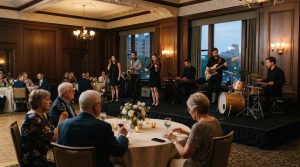
Wedding entertainment for an older crowd doesn’t have to begin on the dance floor. Acoustic music can set a relaxed tone during cocktails or dinner, while a live band can bring guests together later with familiar songs, varied tempos, and the option to dance or simply listen. The right mix depends on the couple’s plans, the venue, and the atmosphere they want to create.
It’s natural to want every generation to feel included without assuming what guests enjoy based on age. Consider acoustic music for quieter moments and a live band that brings energy without making dancing the only way to participate. The room, performance schedule, and budget all shape the right choice. Balancing live music with conversation and offering guests different ways to enjoy the celebration can help you plan an evening that fits the wedding as a whole.
Key Takeaways
- Match a string quartet or acoustic set to the mood and part of the reception, rather than treating live music as one-size-fits-all.
- Make dancing feel inclusive by planning a varied musical flow and moments that recognize guests across generations.
- Assess how the venue’s layout and performance requirements shape the right band setup and how the budget is allocated.
- Offer conversation-friendly activities alongside music so guests who prefer not to dance still have ways to join in.
1. String quartets and acoustic music
A string quartet can provide an elegant, measured sound without competing with conversation during a reception. Acoustic guitar can also work well during cocktail hour, as guests mingle. Instrumental arrangements of familiar songs add a personal touch while remaining easy to talk over.
Match the music to the wedding’s setting and theme. A quartet can suit a formal ceremony or dinner, while a solo guitarist may fit a smaller space and a more relaxed atmosphere. Consider where musicians will perform and how their sound will complement each part of the reception.
Activities such as familiar board games, cornhole, giant Jenga, or trivia about the couple give guests alternatives to dancing. A magician can also entertain guests from close up, including those who prefer to stay seated.
For guests with limited mobility, plan activities near seating and keep routes through the room clear. For guests with hearing difficulties, discuss musician placement, comfortable volume, and a quieter area where conversation is easier.
If loud music or certain entertainment might make guests uncomfortable, discuss acoustic sets, lower-volume periods, familiar songs, and breaks when planning the performance. Explain which effects or styles you want to avoid, and plan a clear transition from quieter music to dancing.
A live band can make that transition feel natural. A saxophone player moving through the crowd can add a lively moment, while a dance-off with music chosen for varied tastes gives guests the option to join at their own pace. The aim is not to assume what any age group enjoys, but to offer choices, from listening to dancing.
2. Live bands and dance-floor entertainment
A live band can turn a reception from dinner into a shared celebration, but the sequence matters. Start with music that supports conversation, then build toward songs that invite guests onto the floor. This gradual change gives friends time to settle in and lets older guests choose when, or whether, to dance.
Plan a mix of tempos and eras instead of relying on one narrow style. A dance-off can feature music chosen for varied tastes, giving guests a playful reason to join without putting one generation in the spotlight. The band can also alternate energetic numbers with slower songs, creating natural moments to dance or take a break.
A couples dance offers a personal way to celebrate married guests. Invite couples onto the floor, then ask the longest-married couple to share advice for a lasting relationship. Or try a couples-elimination dance: the host calls out years of marriage, and couples leave when the announcement applies to them. Either format can turn the dance floor into a shared story.
Set expectations with the band before the reception. Share songs and styles that matter to the couple, describe the atmosphere you want, and discuss how the performance can shift from background music to dancing. A clear schedule helps coordinate the music with dinner, speeches, and other planned moments.
For wedding entertainment for an older crowd, inclusion means offering choices rather than assuming guests share the same tastes or energy. Keep seating close enough for guests to enjoy the performance without standing, and leave room for those who want to watch friends dance. Discuss comfortable volume and song transitions as part of the performance plan. To explore a live-music approach for your reception, consider wedding entertainment options that can shape the evening around your plans.
4. Choosing a wedding entertainment provider to suit the venue and budget
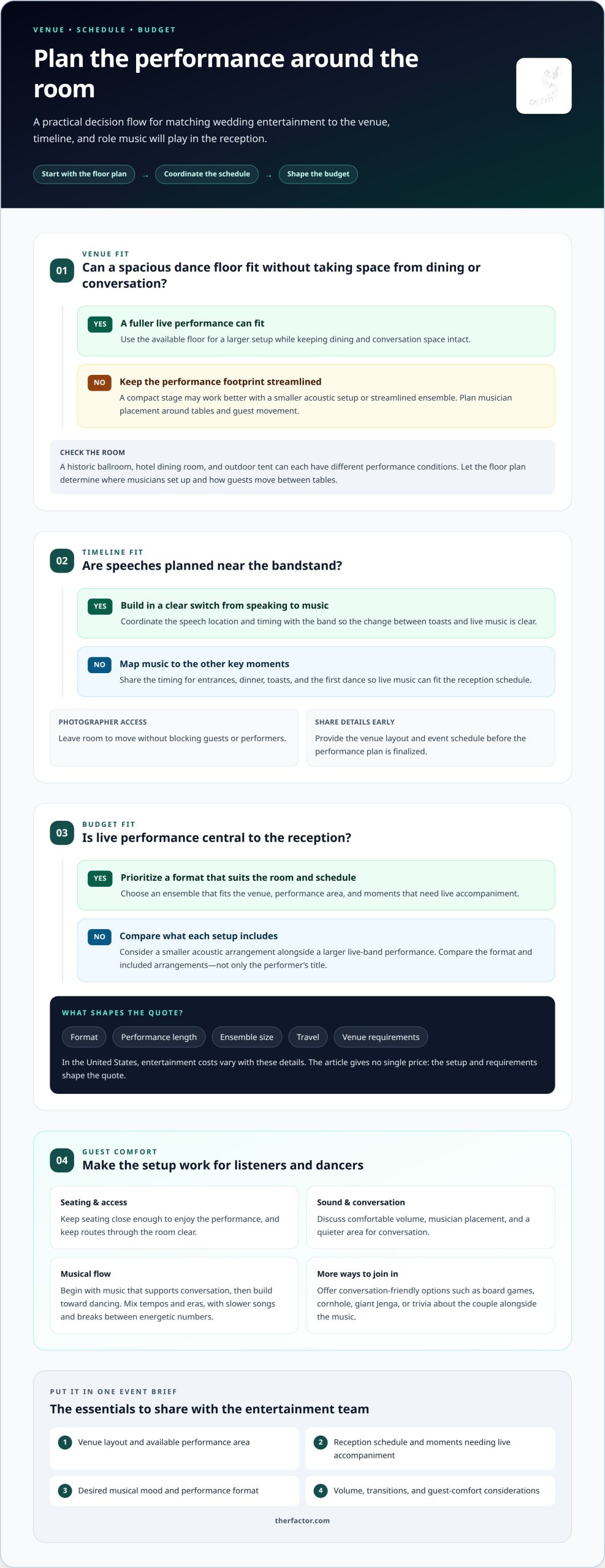
Start with the room, not an assumed band size. A historic ballroom, hotel dining room, and outdoor tent each present different performance conditions. The floor plan determines where musicians can set up, how guests move between tables, and whether the dance area can remain separate from dinner. Shape the performance plan around those venue details.
Share the event schedule and venue layout early. For example, if speeches are planned near the bandstand, allow a clear transition between speaking and live music. The photographer also needs room to move without blocking guests or performers. Discussing these details helps coordinate music with entrances, dinner, toasts, and the first dance.
In the United States, the cost of wedding DJs, live bands, and other entertainers varies with the format, performance length, ensemble size, travel, and venue requirements. These details shape the quote. A smaller acoustic setup and a larger live-band performance involve different arrangements, so compare what each format includes rather than focusing only on the performer’s title.
Let the role of music in the reception guide your budget decisions. If live performance is central, choose a format that suits the room and schedule. A compact stage may work better with a streamlined ensemble, while a spacious dance floor can accommodate a fuller performance without taking space from dining or conversation.
Useful planning details include the venue’s performance area, the reception timeline, the desired musical mood, and the moments that need live accompaniment. Put these priorities in one event brief. It gives the entertainment team a clear basis for planning a performance that suits both the venue and the budget, without treating either as an afterthought.
4. What alternatives to dancing can entertain older wedding guests?
Include activities that invite guests to talk, play, or share memories without using the dance floor. At dinner, an older relative might tell a favorite story to others at the table. A lounge with classic board games and comfortable seating gives guests another place to relax and connect.
For a personal group activity, plan trivia about the couple. Questions might cover where they first met or where their first date took place. The wedding shoe game offers another option, with a curated list of at least 30 questions for the couple. Casino games can add a different style of interaction, using hired dealers, funny money, and prizes for the highest rollers.
Outdoor receptions can make use of the lawn. Croquet suits guests who enjoy a measured game, while ring toss offers casual play between dinner and dancing. Cornhole, giant Jenga, and oversized Connect Four are easy to play. A fishing game, in which four players compete to catch wooden pegs, offers a focused activity rather than a crowd-wide contest.
Some alternatives create keepsakes instead of competition. An audio guest book station lets guests leave recorded voice messages. Disposable cameras on each table encourage candid photos, while a photo scavenger hunt gives guests moments to capture using their own cameras. A digital reception hunt can invite guests to photograph 10-20 memories on their phones.
Choose activities that fit the venue and the reception’s pace. A foosball setup, for example, can use a row of three or four tables, while a quiet game lounge needs comfortable seating and room for conversation. Place activities where they complement dinner and live music rather than competing with speeches or the dance floor. Include professional wedding entertainment in the plan, then balance its lively moments with seated games, stories, and photo activities.
The R Factor: Wedding Entertainment
The R Factor provides wedding entertainment for couples planning live music for a reception shared by guests of different ages. Its cover band features four vocalists, a horn section, a rhythm section, and a violin, giving the ensemble a varied musical lineup for the event. Flexible performance options let the group’s size suit the scale and requirements of the occasion.
Consider The R Factor when you want live music to carry the reception from dinner into dancing while leaving room for conversation and quieter moments. Share the venue, schedule, and musical priorities so the performance can fit the room and the flow of the celebration. The band also performs at corporate events, birthday parties, and private parties.
Contact The R Factor to discuss wedding entertainment for your celebration.
Make the music feel personal to your celebration
The strongest choice is one that reflects the people and priorities behind your wedding. Think about the moments you want guests to remember, the atmosphere that feels right, and how music can support both lively celebration and comfortable conversation. These decisions give your entertainment plan a purpose beyond simply filling the schedule.
For wedding entertainment for an older crowd, build the evening around inclusion, not assumptions about age. A meaningful song, a well-timed performance, or space to enjoy the music from a seat can help different guests feel part of the same occasion. Share your priorities and reception plans when discussing the performance, so the music can be shaped around your celebration.
When you’re ready to take the next step, discuss your wedding plans with The R Factor. Bring your ideas, and make the soundtrack your own.
Frequently Asked Questions
What wedding entertainment do older guests enjoy?
Older guests may enjoy live music, familiar songs, shared stories, or activities that make conversation easy. Preferences vary, so age alone is not a reliable guide to taste. You might invite relatives to suggest meaningful songs or share a memorable story during dinner. A mix of listening, socializing, and optional participation gives guests different ways to enjoy the reception.
What are inclusive wedding entertainment ideas for guests of all ages?
Offer choices that suit different interests, energy levels, and ways of participating. A music request station lets guests suggest songs, while table trivia can bring relatives together without requiring anyone to dance. Consider where each activity fits in the schedule. Keeping speeches, games, and performances distinct helps guests follow along and choose what interests them.
How can a wedding DJ play music that appeals to older guests?
A live band can shape its set around the couple’s preferences and guest requests instead of relying on age-based assumptions. Share meaningful songs, along with styles or tracks to avoid. A balanced sequence can move between familiar favorites and newer choices, giving guests different reasons to listen or dance without dividing the reception into age-specific blocks.
What are popular wedding songs for guests in their 50s, 60s, and 70s?
No single song list represents everyone in these age groups. Personal memories, regional tastes, and music enjoyed with family or friends all shape what feels familiar. Ask relatives for songs tied to shared celebrations or important moments, then blend their requests with the couple’s favorites. The result is more personal than choosing songs by age alone.
How can a wedding entertainment provider help couples plan for a mixed-age crowd?
The couple’s timeline, musical preferences, and guest requests can shape a performance to suit the reception. Share the venue layout and identify moments for attentive listening, conversation, or dancing. For a Minneapolis or St. Paul wedding, discuss how The R Factor’s performance can fit the room and flow of the celebration while giving guests space to enjoy the event in their own way.
What entertainment should couples avoid if older guests may find it uncomfortable or too loud?
Discuss any music or performance styles and effects that guests may find uncomfortable. Plan acoustic sets, lower-volume periods, familiar songs, and breaks to give guests different ways to enjoy the reception.
Recent Comments