
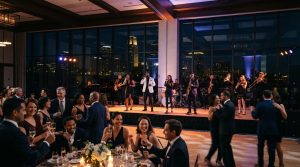
The biggest band in the room isn’t always the best fit. Professional event entertainment services work best when the music supports the occasion, suits the venue, and gives guests the experience you want, whether that means an elegant wedding atmosphere, polished corporate entertainment, or a lively private celebration in Minneapolis or St. Paul.
Choosing live music raises practical questions. How much space can the band use? Should music sit in the background or take center stage? Which moments in the schedule need a musical transition? Answering these questions early helps you choose an ensemble and plan its role. This guide shows how to match live music to your event’s purpose, guests, venue, and timeline.
The R Factor brings live music to Minneapolis-St. Paul events with flexible ensembles ranging from 6 to 12 musicians. Four vocalists, a horn section, a rhythm section, and violin give planners options to consider for the scale and feel of a performance. Read on to see how lineup size can suit different celebrations and how live musicians can contribute to an engaging event experience.
Key Takeaways
- Choose professional event entertainment services by starting with the occasion’s purpose and the atmosphere you want guests to experience.
- Plan wedding music around the distinct roles of the ceremony, cocktail hour, and reception rather than treating the day as one continuous performance.
- Compare entertainment options by event purpose, guest experience, venue scale, and performance role to find a fitting live-band setup.
- Coordinate event goals, venue considerations, performance needs, and schedule early to make entertainment planning more straightforward.
- The R Factor serves Minneapolis-St. Paul weddings, corporate functions, and private celebrations with a 6-to-12-musician lineup featuring four vocalists, horns, rhythm section, and violin.
What Professional Event Entertainment Services Can Bring to a Live Event
Professional event entertainment services are live performances chosen to support an event’s purpose, atmosphere, and guest experience. At a Minneapolis-St. Paul gathering, music might welcome guests as they arrive, provide a backdrop for conversation during a reception, mark a celebratory moment, or bring live energy to a dance-focused evening.
Entertainment is one part of a larger event plan. The broad discipline of event management brings together the event’s goals, schedule, and guest experience. Music works best when its role is planned alongside those elements, rather than added as an afterthought. For example, a performance can provide a social backdrop early in the event and take a more prominent role when the program shifts into celebration.
A live-band service centers on musicians performing together. That differs from standalone DJ services, which focus on recorded music, and from equipment rental, which provides gear rather than a live musical performance. These are distinct entertainment categories. When you plan for a live band, be clear about the role you want musicians to play: performing cover songs, supporting a particular part of the event, or serving as a central feature.
What counts as professional live event entertainment?
Professional live event entertainment includes musicians performing cover songs at private and professional gatherings. The musical choices and performance role can reflect the occasion. A more understated presence may suit a time for conversation, while a celebratory section can put live music closer to the center of the experience. The goal is to find a considered fit for the event, rather than assume every guest will respond in the same way.
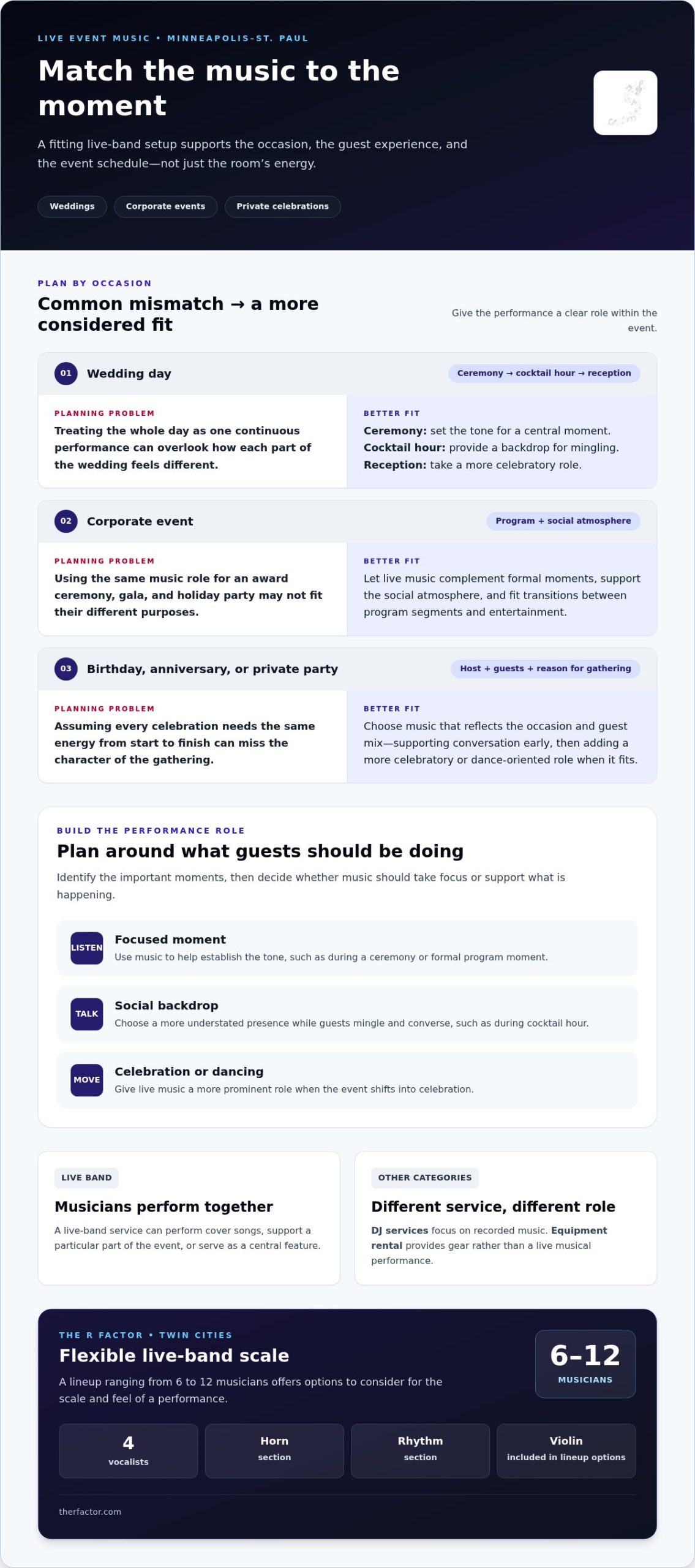
Start by identifying the moments that matter. Think about when guests should listen, talk, celebrate, or dance, then decide how live music can support each moment. This gives the performance a clear purpose and helps it fit naturally into the event schedule.
Which events benefit from a live band?
Weddings, corporate functions, birthday celebrations, and private parties can all include live music, but each has its own purpose and guest mix. A wedding may use music differently during the ceremony, cocktail hour, and reception. A corporate gathering may need music that complements a formal program before the celebration begins. For wedding-specific decisions, explore this Minneapolis wedding entertainment planning guide.
At a birthday or other private celebration, live musicians can help establish the mood, provide a shared focal point, or support a dance-oriented part of the gathering. Rather than asking only whether a band can play at an event, decide what role live music should play and how it fits the people, setting, and schedule. The R Factor brings live cover-band entertainment to Twin Cities weddings, corporate events, and private celebrations.
Match Live Event Entertainment to Weddings, Corporate Functions, and Private Parties
The right live-music approach depends on what the gathering needs music to do. A wedding may move from a meaningful ceremony to a social cocktail hour and then a reception. A corporate event may need music to complement a formal program before the celebration begins. At birthdays and private parties, music can help shape a personal, welcoming atmosphere. Effective professional event entertainment services account for the event’s purpose, schedule, and guests instead of applying one format to every occasion.
Live music for weddings and milestone celebrations
Wedding music can serve distinct roles across the day. Ceremony selections help establish the tone for a central moment. Cocktail-hour music can provide a live backdrop while guests mingle. Reception entertainment can take a more celebratory role. As you plan, identify which moments call for focused listening, conversation, or dancing. The wedding music planning checklist offers a closer look at coordinating those parts of the day.
For birthdays and anniversaries, consider why you’re gathering and who will attend. A milestone celebration may call for music that feels personal and familiar, while a broader guest mix may benefit from a varied live performance. Make choices that connect to the occasion instead of assuming every celebration needs the same energy from start to finish.
Corporate event entertainment in the Twin Cities
Corporate galas, award ceremonies, and company holiday parties each call for a different balance between music and the program. At an award ceremony, live music can complement formal moments. At a gala or company celebration, it may contribute more directly to the social atmosphere. A polished performance should fit the organization’s tone and the event schedule, including transitions between program segments and entertainment.
Planning brings together people in different event roles. Resources from the National Association for Catering and Events (NACE) reflect the wider network of professionals involved in producing events. For planners organizing a Twin Cities company gathering, this guide to live music for corporate events explores how music can align with different corporate occasions.
Live music for private parties
Private parties reflect their hosts, guests, and reason for gathering. A birthday, anniversary, or informal celebration may call for music that supports conversation early on and adds a more festive feel later. Consider the guest mix and the moments you want to stand out. The R Factor performs at private celebrations across the Minneapolis-St. Paul area, bringing live music to gatherings with different purposes and atmospheres.
For a celebration where a live band feels like the right fit, explore The R Factor’s Twin Cities live music and consider how a performance can complement your event’s character.
Will a Live Band Fit Your Event? Compare the Factors That Matter
A live band can suit many types of events, but the right setup depends on more than the event label. A conversation-led reception has different priorities from a celebration centered on dancing. The venue’s scale, the occasion’s formality, and the performance’s place in the schedule all matter. One ensemble size or approach won’t fit every gathering.
Ensemble size should reflect the event’s scale and requirements, not a one-size-fits-all rule. Use the factors below to clarify what the music needs to do before choosing a lineup.
| Factor | Questions to consider | How it shapes the fit |
|---|---|---|
| Event purpose | Is the music supporting a formal program, a social gathering, or a celebration? | Set the performance role to complement the occasion. |
| Guest experience | Should guests be able to converse, focus on a moment, or dance? | Clarify the energy and prominence you want from the live music. |
| Venue scale | How does the performance area relate to the event space? | Consider an ensemble size that makes sense for the room and gathering. |
| Performance role | Will musicians play during one part of the program or anchor a celebration? | Plan the music around the event schedule and transitions. |
How event purpose and guest experience shape the entertainment
Start with the experience you’re planning, not an assumption about what guests will want. During a conversation-led portion, live music can support the atmosphere without becoming the main focus. At a dance-focused celebration, the performance can play a more central role. Guest interests and the event’s level of formality can help guide decisions, while your priorities keep the music aligned with the occasion.
Live Nation’s Living for Live Report offers a broader look at live entertainment and experiences. For event planning, the practical question is specific: what role should live musicians play in this gathering?
How lineup size and venue scale work together
The R Factor offers flexible lineups ranging from 6 to 12 musicians. The ensemble includes four vocalists, a horn section, a rhythm section, and violin. This range gives planners options to weigh against the event’s scale and performance needs. A larger gathering does not automatically require the largest lineup.
To narrow the fit, define the performance area, decide whether music will be a focal point or a supporting element, and note how the schedule shifts between activities. Consider those requirements together. Venue scale matters, but it does not replace the event’s purpose or the experience you want guests to have.
Plan Professional Event Entertainment in Minneapolis-St. Paul
A clear plan helps live music fit the event instead of competing with it. For professional event entertainment services in Minneapolis and St. Paul, begin with the experience you want to create, then share practical details about the program, venue, and priorities. A concise brief and a shared schedule make decisions easier to communicate.
Build a clear event entertainment brief
Give the band a useful overview of the gathering. Include the event type, audience, overall tone, schedule, and role you want live music to play. Explain whether music should accompany guest arrival, complement a formal moment, or become part of the celebration. Add relevant venue context, such as the event space and where the performance fits.
Make your priorities explicit. If the event’s tone, a particular moment, or a change in the program matters most, say so. Clear information gives the musicians a sound basis for planning and helps keep the performance aligned with the event rather than relying on assumptions.
Coordinate performance around the event schedule
Map the points where the event changes pace. Guest arrival, speeches or other formal moments, and the transition into celebration may each call for a different musical role. Share relevant timing with the band and the person coordinating the event so everyone is working from the same plan.
Use this practical sequence to bring the details together:
- Define the event’s purpose and the atmosphere you want to establish.
- Describe the audience and the experience you want music to support.
- Identify the performance moments and their place in the event schedule.
- Share the venue context and any priorities that will shape the performance.
- Communicate schedule changes to the people coordinating the event and musicians.
This overview applies across weddings, corporate gatherings, and private celebrations. It keeps planning focused on the event’s flow, while leaving room for the detailed timeline each occasion requires.
Based in the Minneapolis-St. Paul area, The R Factor works with planners to shape live music around each gathering’s purpose and schedule. With event goals and key moments outlined, you can have a focused conversation about the performance that fits. Discuss live music for your Twin Cities event.
Book The R Factor for Professional Event Entertainment
The R Factor is a Minneapolis-St. Paul cover band providing live music for weddings, corporate functions, and private celebrations. Its professional event entertainment services are shaped around the occasion, with a flexible lineup that lets planners consider the event’s scale and what they want the music to contribute. The focus is a tailored live performance, not a fixed format applied to every gathering.
That flexibility gives event planners a practical starting point. Consider band size alongside the guest experience, venue context, and performance role. Whether you’re planning a company celebration or a personal milestone, clear priorities help frame a useful conversation about live music.
A flexible live-band lineup for different event scales
The R Factor’s lineup ranges from 6 to 12 musicians and includes four vocalists, a horn section, a rhythm section, and violin. These ensemble components give planners options to consider for different event scales and requirements. The right fit depends on the space, the schedule, and how central the performance should be to the occasion.
For one event, the priority may be music that complements a gathering. For another, it may be a more prominent part of the celebration. The lineup’s range lets those needs inform the ensemble choice, without assuming every wedding, corporate function, or private party calls for the same scale.
Take the next step with The R Factor
A focused discussion can begin with a few essentials: the type of event, the date and location, the atmosphere you’re aiming for, and the moments when live music matters most. Share key schedule details and what you want guests to experience. This gives the conversation a clear direction and helps connect your priorities to a fitting live performance.
For Minneapolis-St. Paul planners, The R Factor brings a flexible live-band ensemble to weddings, corporate events, and private celebrations. Set out the occasion and the role you envision for the music, then take the next step.
Plan live entertainment with The R Factor.
Give Your Event’s Music a Clear Direction
Start by choosing the moment you most want guests to remember. Let that priority guide your entertainment decisions, from the role live music should play to how it fits the flow of the occasion. You don’t need to solve every detail at once. A clear sense of purpose gives planning conversations a useful starting point.
That’s the value of approaching professional event entertainment services as part of the experience you’re creating, rather than as a separate item on a checklist. Share what matters most, whether it’s setting a welcoming tone, complementing a meaningful moment, or making room for a lively celebration. From there, you can shape a performance that feels considered and true to your event.
Ready to turn your priorities into a live-music plan? Plan live entertainment with The R Factor and take the next step toward a celebration that feels distinctly yours.
Frequently Asked Questions
What types of events can professional event entertainment services cover?
Professional event entertainment services can support weddings, corporate functions, birthday celebrations, and private parties. The right role for live music depends on the occasion and program. It might complement a formal moment, create a social backdrop, or take a more prominent place in a celebration. For Minneapolis-St. Paul events, share the event type, guest mix, and key moments to make the entertainment conversation practical and focused.
Is a live band suitable for a corporate event?
Yes, a live band can suit a corporate event when its role matches the tone and schedule. At an awards ceremony, music can complement formal proceedings. At a company celebration, it may become part of the social experience. Consider whether guests will be listening, conversing, or celebrating at each point. The R Factor performs live music for corporate functions in the Minneapolis-St. Paul area.
How many musicians should I book for my event?
Choose an ensemble size based on the event’s scale, venue context, and the role music will play. The R Factor offers lineups from 6 to 12 musicians, with four vocalists, a horn section, a rhythm section, and violin. Decide whether the performance will be a supporting element or a central feature, then share those priorities when discussing the event. There isn’t one ideal size for every gathering.
Can a live band perform at different moments during a wedding?
Yes, live music can be planned for different parts of a wedding, such as the ceremony, cocktail hour, and reception. Each moment has a different purpose, so identify where you want music to be most prominent and where guests will need time to talk or move between activities. Include these moments in the event schedule so the band and coordinator can work from the same plan.
Does The R Factor provide standalone DJ services?
No. The R Factor provides live band performances, not standalone DJ services. If you’re looking for live music in Minneapolis-St. Paul, focus your planning on the performance’s role, the occasion, and how it fits the schedule. For example, note whether you want music to accompany a formal program or contribute to a celebratory portion of the event. That helps keep the discussion centered on the live-band experience.
How should I brief a live band for a Minneapolis-St. Paul event?
Give the band a concise picture of the event: its type, audience, tone, schedule, venue context, and the moments when music matters most. Be specific about priorities, such as keeping a portion of the program conversation-friendly or making a later segment more celebratory. If event plans change, share the updated timing. A clear brief helps musicians understand the occasion and coordinate their performance with the program.
When should I start planning live entertainment for an event?
Start once you have an event date and a basic sense of the venue and schedule. Early planning gives you time to define the music’s role, compare ensemble options with the event’s needs, and coordinate performance moments with the program. If the schedule is still developing, share what’s settled and update the details as plans take shape. For a Minneapolis-St. Paul celebration, a clear starting brief helps move planning forward.
Recent Comments