

What if the most expensive vendor on your wedding checklist is the one who actually kills the energy of the night? Most couples focus on the setlist, but the difference between a packed dance floor and an empty room often comes down to logistics you haven’t considered yet. You want a celebration that feels effortless, but the anxiety of hidden costs or technical failures like power surges can weigh heavy on your planning process. It’s vital to have a definitive list of questions to ask a wedding band before booking to ensure your entertainment is handled by experts who truly control the room.
We understand that you’re looking for more than just music; you’re looking for peace of mind. You deserve to know that your band can navigate the specific load-in requirements of Minneapolis venues and manage a complex timeline without missing a beat. This guide moves past the basic “do you play jazz” inquiries to reveal the professional standards that define a top-tier ensemble. You’ll learn how to verify a band’s experience, uncover potential hidden fees, and ensure they have the technical infrastructure to support a 6 to 12 piece lineup. By the end of this article, you’ll have a clear framework to interview any band with the confidence of a seasoned event producer.
Key Takeaways
- Learn why a larger 6-12 piece ensemble offers superior volume control and a fuller sound, even in intimate reception spaces.
- Master the specific questions to ask a wedding band before booking to uncover hidden fees like travel, meals, and overtime before you sign.
- Identify the essential contract clauses that guarantee professional reliability and protect your entertainment investment.
- Understand why prioritizing a “Do Not Play” list allows experienced musicians to read the room and maintain a packed dance floor all night.
- Discover the logistical advantages of hiring a band with deep experience navigating the unique acoustics and load-in requirements of Twin Cities venues.
Beyond the Basics: Why Most Wedding Band Checklists Fail
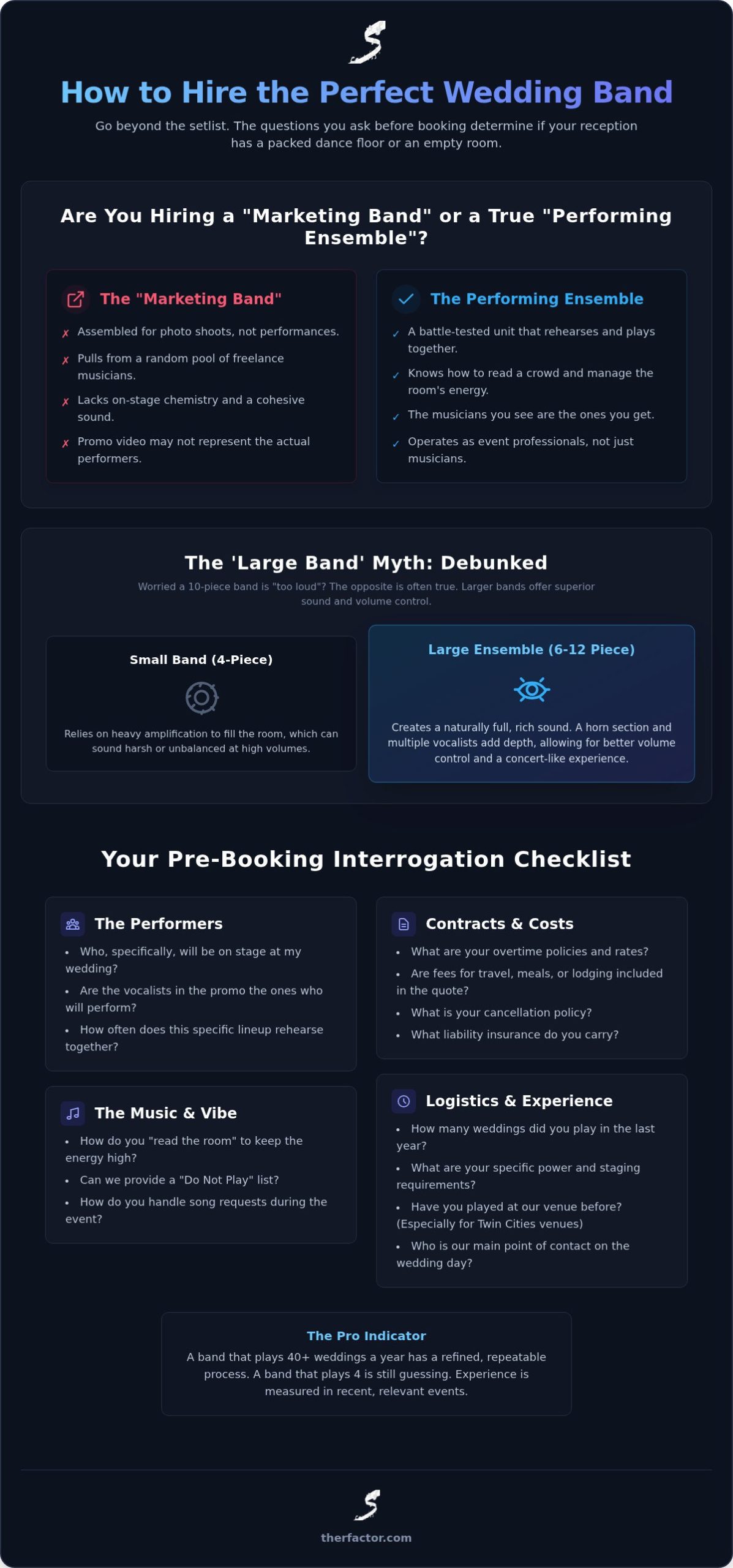
Most checklists you find online suggest starting with entry-level inquiries like “Are you available?” and “How much do you cost?” While these are necessary logistical hurdles, they don’t reveal the actual quality of the service you are hiring. High-end entertainment requires a deeper dive. When considering questions to ask a wedding band before booking, you must look past the polished marketing. A promo video is often a best-case scenario filmed in a controlled studio environment. It doesn’t show how the band handles a difficult acoustic room or a sudden schedule delay. You need to distinguish between a “marketing band” built for social media and a “performing ensemble” built for live events. A marketing band is a group of session players assembled for a photo shoot; a performing ensemble is a battle-tested unit that knows how to read a crowd.
The history of wedding music shows that live performance has always been about more than just playing notes. It’s about managing the room’s energy and facilitating the flow of the evening. A professional band leader acts as an extension of your wedding planner. They don’t just play songs; they manage transitions and ensure the timeline remains intact. If a band cannot explain their logistical process during the initial interview, they’re likely just musicians, not event professionals. You aren’t just paying for a setlist; you’re paying for the certainty that the night will run without a single technical hitch.
The Myth of the ‘Fixed’ Band Lineup
One of the most critical questions to ask a wedding band before booking is: “Who exactly will be on stage for my wedding?” Many agencies operate as collectives. They book several weddings on the same night and pull from a pool of freelance musicians to fill the slots. This often leads to a lack of chemistry and a generic sound. You want a group that rehearses and performs together regularly. Ask if the vocalists you see in the promotional materials are the ones who will actually be at your reception. A diverse repertoire requires at least three distinct vocalists to cover everything from Motown to modern pop effectively. At The R Factor, our flexible 6 to 12 piece lineup is managed by Marsh Productions, which ensures the same high standards regardless of the ensemble size you choose for your venue.
Vibe vs. Reality: Questions for True Professionalism
Experience isn’t just about how long the band has existed, but how active they are in the current market. Ask how many weddings they have performed at in the last year. A band that plays 40 weddings a year has a refined, repeatable process; a band that plays four is still guessing. Professional event entertainment is a seamless blend of high-level musicality and meticulous logistical precision. Your band leader should be comfortable discussing power requirements, load-in schedules, and venue-specific restrictions in the Twin Cities area. This level of detail removes the burden of coordination from your shoulders. When you hire a band managed by a professional production company, you’re buying the peace of mind that every technical detail is already under control.
The ‘Large Band’ Myth: Questions About Ensemble Size and Space
A common misconception among couples is that a 10-piece band will be “too loud” for an intimate reception. In reality, a larger group often provides better volume control than a smaller ensemble that relies on heavy amplification to fill the room. A full band creates a natural, rich sound that feels balanced even at lower decibels. When preparing your questions to ask your wedding band, don’t shy away from the bigger lineup out of fear. A larger ensemble allows for more nuanced arrangements that a four-piece simply cannot replicate.
High-energy dance floors thrive on the presence of a full horn section and multiple vocalists. There’s a specific kinetic energy that an 11 piece wedding band Minneapolis brings to the stage. It’s about the “fullness” of the arrangement rather than the volume. A violin or a dedicated rhythm section adds layers of acoustic texture that keep the music interesting throughout the night. This depth ensures the performance feels like a concert experience rather than background noise.
Sizing Your Sound to the Venue
One of the essential questions to ask a wedding band before booking is whether they can scale their performance to match the different phases of your day. Can a 12-piece band provide a 6-piece ensemble for the cocktail hour? Flexibility is the mark of a professional service. Horn sections are often misunderstood; they add harmonic depth and visual excitement without necessarily increasing the decibel level. A violin, for instance, offers a sophisticated touch for dinner music before the rhythm section takes over to pack the dance floor later in the evening. Understanding how to integrate wedding reception violin music Minneapolis professionals use can help you plan a seamless transition from an elegant dinner atmosphere to a high-energy celebration.
Logistics of the Large Ensemble
Managing a large group requires logistical expertise. You need to ask about specific power requirements and stage dimensions early in the process. Professional bands usually require at least two dedicated 20-amp circuits to run sound and lighting safely. Any group managed by a professional production company will include a dedicated sound engineer. This person is the most important member of the team. They ensure the mix is perfect for the room’s specific acoustics, regardless of the band’s size. In historic Twin Cities venues where space might be limited, an experienced band knows how to optimize their footprint. They’ll coordinate directly with the venue to handle load-in without bothering you. If you want this level of precision for your event, you can explore our performance options to see how we handle these technical details.
Protecting Your Investment: Questions About Contracts and Reliability
A signed contract is not just a formality; it is your primary defense against a ruined evening. Many couples assume that every agreement offers the same level of protection. This is a dangerous myth. A generic contract often lacks the specific clauses that cover technical failure or performer illness. When considering questions to ask a wedding band before booking, you must demand clarity on their liability insurance. Most reputable Minneapolis venues require proof of coverage before a band can even load in. If a band cannot provide a certificate of insurance upon request, they are not a professional operation. This is a foundational part of the essential questions to ask a wedding band because it protects both you and the venue from unforeseen accidents.
Transparency regarding “hidden” costs is equally vital. Professional bands don’t hide their fees in fine print. You should explicitly ask about travel expenses, parking fees, and hospitality requirements. Providing a hot meal for a 12-piece band is a standard industry expectation, but it must be factored into your catering budget early. We’ve seen many couples surprised by these late-stage additions because they didn’t vet the financial details during the initial consultation. A professional partner will provide an all-inclusive quote that leaves no room for guesswork.
The ‘Plan B’ Framework
Equipment fails and people get sick. It is a reality of live performance. A professional outfit has a redundant system for every piece of gear. This means having extra microphones, cables, and even backup instruments on-site. Ask your band: “What happens if the lead singer loses their voice on the morning of the wedding?” True live wedding music Minneapolis professionals maintain a deep roster of vetted substitutes. Because we are managed by Marsh Productions, we have access to a network of elite musicians who can step in seamlessly without compromising the quality of the show. You are paying for the certainty that the music will play, regardless of individual circumstances.
Financial Transparency and Overtime
The party doesn’t always end exactly when the itinerary says it will. You need to know the cost of an extra hour before the dance floor is packed. Ask about their overtime policy during the initial interview. Professional management companies provide a layer of security that independent “weekend warrior” bands cannot match. A company like Marsh Productions, founded in 1994, ensures that every financial detail is documented and every performer is held to a professional standard. This removes the stress of chasing down individual musicians for signatures or payments. You get a single, clear point of contact and the confidence that your investment is fully protected by decades of industry experience.
Managing the Energy: Questions About Repertoire and Room Reading
Many couples believe they must pick every single song to ensure the night’s success. This is a myth that often leads to a disjointed atmosphere. Professional musicians need the flexibility to adjust the tempo based on who is actually on the floor. One of the most effective questions to ask a wedding band before booking is how they pivot when a specific genre isn’t landing. You want a band that can read the room’s energy in real-time, shifting from classic soul to modern hits without losing the momentum. This ability to “read the room” is what separates a bar band from a professional event ensemble.
A “Do Not Play” list is often more valuable than a “Must Play” list. It sets the boundaries while allowing the band to use their expertise to keep the party moving. You should feel confident that your band understands your taste without needing to micromanage every minute of the performance. A professional band leader uses the setlist as a guide, not a rigid script. They watch the guests, notice which age groups are most active, and select the next track to keep that specific group engaged.
The Art of the Setlist
Ask how the band handles song requests from guests. A professional ensemble knows how to politely filter requests that might kill the vibe while incorporating those that add to the celebration. A versatile repertoire spanning from Motown to contemporary pop is essential for multi-generational weddings. Our specialized horn and rhythm sections don’t just play background noise; they create “musical moments” that draw people to the floor. This could be a horn line that moves into the crowd or a violin solo that adds a layer of unexpected sophistication to a modern track.
Breaks and Continuous Music
Professional room reading is a skill developed over thousands of performances. It’s the difference between a band that just plays music and one that controls the event. When you interview potential performers, focus on their strategy for managing these energy shifts. If you’re ready to see how a professional 6-12 piece lineup can transform your reception, you can learn more about our performance style. This level of expertise ensures your guests stay engaged from the first toast to the final song of the night.
The Minneapolis Advantage: Why Local Experience Matters
Many couples assume that a touring band with a great Instagram feed can handle any room. This is a mistake. The Twin Cities’ historic ballrooms and modern industrial lofts present unique acoustic challenges that only a local expert can navigate. When compiling your questions to ask a wedding band before booking, you must focus on their familiarity with the local landscape. A band that doesn’t know the difference between the echo in a St. Paul marble hall and the dampening required in a North Loop warehouse will struggle to deliver a balanced sound. You don’t want your wedding to be a band’s first time testing a room’s physics.
Local experience also means established relationships with other vendors. Professional private party band Minneapolis experts have spent years working alongside the city’s top caterers, planners, and venue managers. This network ensures that the load-in process is silent and the sound check doesn’t disrupt your wedding cocktail hour music Minneapolis guests are enjoying. These professionals already know the local noise ordinances and the specific power capacities of historic sites. They don’t need to ask where the outlets are because they’ve already powered a dozen galas in that same room. This familiarity prevents technical failures before they ever have a chance to occur.
Venue-Specific Expertise
Ask: “Have you performed at my specific venue before?” Knowing the location of the freight elevator at a St. Paul hotel or the specific power grid limitations of a 19th-century ballroom saves hours of frustration. In high-ceilinged industrial lofts, a local band knows exactly where to place speakers to minimize reverb and keep the sound crisp. This granular knowledge allows the musicians to focus on the performance rather than fighting the room’s physics. It’s a level of precision that a touring group simply cannot provide without extensive on-site testing. When you’re finalizing your questions to ask a wedding band before booking, prioritize their technical history with your chosen location.
The R Factor: Twin Cities’ Premier Wedding Ensemble
Choosing a band managed by a local production company like Marsh Productions offers a layer of security that “weekend warrior” groups lack. We’ve been a staple of the Minneapolis music scene since 1994, providing versatile 6 to 12 piece lineups that adapt to any venue scale. This local roots approach means we aren’t just performers; we are partners in your wedding’s success. We understand the high standards of Twin Cities couples and have the infrastructure to meet them every single time. Our team handles the logistics so you can focus on the celebration. Contact The R Factor today to discuss your Minneapolis wedding vision!
Secure Your Perfect Wedding Soundtrack
You now have a framework that goes far beyond surface-level setlists. A successful reception depends on technical precision and the ability to read a room’s energy in real time. By focusing on local Minneapolis expertise and ensemble flexibility, you ensure your entertainment is a professional asset rather than a logistical liability. These questions to ask a wedding band before booking serve as your roadmap to a stress-free night where the music feels effortless and the dance floor stays full.
Choosing the right performers is the most significant investment you’ll make for your reception’s atmosphere. When you work with a team managed by Marsh Productions, you gain the security of over 30 years of Twin Cities event experience. Our flexible 6 to 12 piece ensemble options are designed to adapt perfectly to your specific venue and vision. Book The R Factor for Your 2026 Minneapolis Wedding and let our experts handle the coordination while you enjoy the celebration. Your wedding deserves the calm confidence that only true professionals can provide.
Frequently Asked Questions
How many musicians do I actually need for a 150-person wedding?
A 6 to 8 piece ensemble is the ideal baseline for a wedding of 150 guests. This size provides a full, rich sound that carries across a ballroom without overwhelming the conversation during dinner. While a smaller group can work, having a dedicated rhythm section and at least two vocalists ensures the energy remains high enough to keep a crowd of this size on the dance floor all night.
Can a wedding band play my ceremony and cocktail hour too?
Most professional bands offer specialized configurations like a solo violinist or a jazz trio for your ceremony and cocktail hour. This is one of the most practical questions to ask a wedding band before booking because it creates a seamless musical transition throughout the day. Using the same vendor for all segments simplifies logistics and often ensures a more cohesive aesthetic for your entire event. To explore how professionals approach this transition, reviewing a comprehensive guide to wedding cocktail hour music in Minneapolis can help you plan each segment with confidence.
Do I need to provide a meal for the entire band?
Providing a hot meal for every performer and technical staff member is a standard industry expectation. Musicians and sound engineers often work ten-hour days when you factor in travel, load-in, and sound checks. Ensuring the team is fed during a scheduled break keeps their energy levels high. It’s a small investment that guarantees the band is ready to deliver a high-impact performance during the reception.
How much space does a 10-piece band with a horn section require?
A 10-piece band typically requires a stage area of at least 24 feet wide by 12 feet deep. This footprint is necessary to accommodate the drum kit, multiple vocalists, and the physical movement of a horn section. In historic Minneapolis venues with limited space, an experienced ensemble can often optimize their setup. We coordinate directly with venue managers to ensure the band fits perfectly without sacrificing the dance floor.
What is the difference between a ‘management’ band and a ‘franchise’ band?
A management band is a consistent unit overseen by a professional production company, ensuring long-term reliability and a stable roster of musicians. A franchise band is a “brand name” where multiple versions of the group perform simultaneously in different cities. Management bands, like those at Marsh Productions, offer a more personalized experience because the musicians perform together regularly, resulting in superior chemistry and a more polished sound.
How far in advance should I book my Minneapolis wedding band for 2026?
You should secure your band 12 to 18 months in advance for peak 2026 Saturdays. Popular dates in June, September, and October are often the first to disappear from the calendar. If you’re planning a Friday or Sunday celebration, a lead time of 8 to 10 months is usually sufficient. Booking early ensures you get the specific lineup and vocalists you want for your vision.
Is it okay to ask for a live showcase before booking?
Requesting a live showcase or high-quality live video is a standard part of the vetting process. While most top-tier bands perform primarily at private functions, they should provide unedited footage that demonstrates their true sound. This is another one of the vital questions to ask a wedding band before booking to verify their current chemistry. Seeing a band “in action” confirms they can handle the energy of a live crowd.
What happens if the venue has a strict sound decibel limit?
Professional bands use dedicated sound engineers and “in-ear” monitoring systems to manage volume with extreme precision. If your venue has strict noise ordinances, the engineer can adjust the mix so the music feels powerful on the dance floor while remaining quiet enough for guests at the back of the room. This technical control is a hallmark of a professional ensemble and prevents any mid-party interruptions from venue staff.
Recent Comments